I think the PC ecosystem and its support and promotion of the Oculus brand will continue to be extremely important – even for the Quest, and the best way to achieve this is to have content that justifiably needs the high-performing hardware it’s running on. Even though the Quest is a standalone HMD, the PC and its ecosystem is still an important umbilical cord for Oculus, and it benefits them greatly to do their all to maintain that.
Epilog
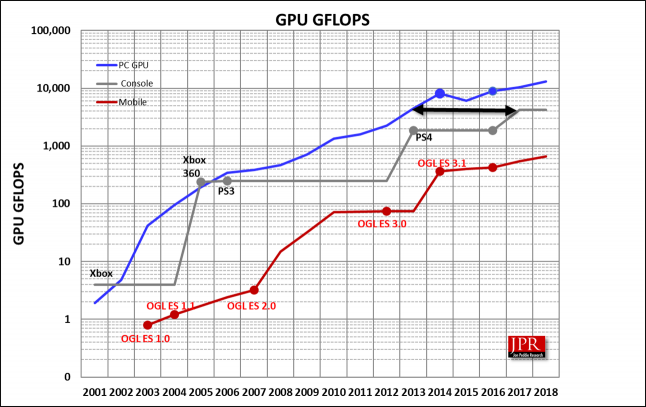
With the advent of AMD providing their custom APUs for the Microsoft and Sony consoles (plus two new Chinese consoles), the game developers can develop once and introduce a new game to all platforms at the same time. They’ve been doing this since 2015, and instead of trying to scale up a console version, they now scale down a higher quality PC version. Also, the game developers have also woken up to the fact that Gaming PCs outsell consoles almost three-to-one.
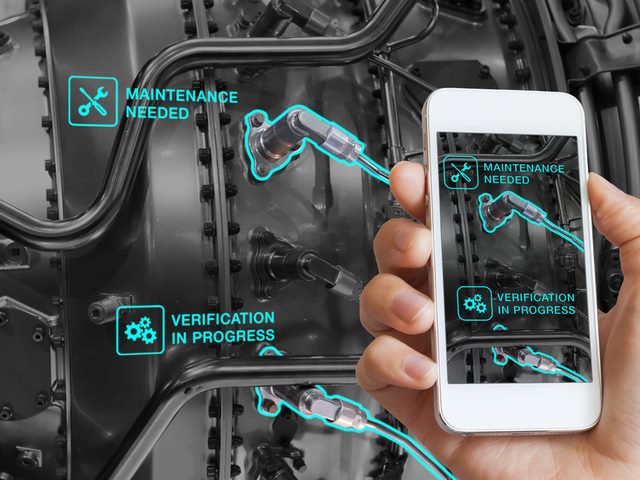
In the construction sector, the SmartReality app, developed by JBKnowledge, enables engineers and architects to see their 2D designs and plans projected as 3D models through smartphones or tablets. Mortenson Construction, one of the companies that used the app, stated that the app helps architects get a “better feel of spatial recognition” of the final product before construction commences.
In the medical sector, AccuVein is an AR handheld device that allows nurses and doctors to scan a patient’s body to make a vein appear visible. According to a study presented at the Infusion Nurses Society Conference, there was a 45 percent reduction in escalation calls following the deployment of the AR device. Plus, 81 percent of nurses reported that using AccuVein resulted in an improved ability to cannulate (the procedure to introduce a thin tube into a vein).
In his latest Failed Architecture piece, Joshua McWhirter offers an insightful history of noteworthy augmented reality-powered works of art, activism, game design, and simulation while also issuing a warning call about the impending privatization and commodification of the virtual public space without much input from architects. "And as this landscape increasingly constitutes a public realm in and of itself," McWhirter writes, "a collection of hybrid real-virtual public spaces, there are even glimmers of direct challenges to its creeping privatization."
Smiling african woman wearing virtual reality headset in office. Young female at startup using VR goggles.
Based on a study published in the Journal of Food Science earlier this year, Cornell News recently published a story stating that, indeed, “Virtual reality can alter taste.” A team of four researchers came to this conclusion after having about 50 panelists try three identical samples of blue cheese while viewing three very different “custom-recorded 360-degree videos”: a “standard sensory booth” (yes, it was a virtual one), a “pleasant park bench,” and the Cornell cow barn (yes, Cornell apparently has its own cow barn for you undecided students out there).
“When we eat, we perceive not only just the taste and aroma of foods, we get sensory input from our surroundings—our eyes, ears, even our memories about surroundings.”
Santa Monica, Calif.-based virtual reality startup Tyffon has raised a new $2.17 million round in funding from investors including SEGA SAMMY Holdings, Mizuho Capital, Tokyu Recreation and Canal Ventures. The new round of funding brings the total raised by Tyffon thus far to $4 million.
Tyffon launched out of the Disney Accelerator program back in 2014, and initially built mobile apps like “Show Your Disney Side.” More recently, the company switched course to focus in location-based virtual and mixed reality attractions.
As part of those efforts, Tyffon has developed two location-based experiences: “Corridor,” which is being described as a mixed reality horror experience, and “Fluctus,” a mixed reality fantasy ride on a floating ship.
Both have been available in a so-called Tyffonium, which opened about a year ago in Tokyo. The company now plans to open a second Tokyo location in November, and open a first U.S. location in Los Angeles in the coming months.
STRIVR, the leader in immersive virtual reality (VR) training, announced a $16-million round of financing led by GreatPoint Ventures (GPV) to advance the company’s expansion into the enterprise market. With this investment, GPV Managing Partner Ray Lane also joined the company’s Board of Directors.
A fast-growing list of enterprise customers including JetBlue, Fidelity, Tyson Foods and United Rentals are also working with STRIVR to innovate and transform employee learning. Results from these innovations are being realized quickly, as evidenced by Tyson Foods in its general safety/hazard awareness training. In the initial pilot, the company experienced a more than 20% reduction in injuries and illnesses compared to the year prior, with 89% of learners saying they felt more prepared after VR training.3
“Ray and his team bring a wealth of knowledge and experience to help us effectively operate at scale as we expand in the enterprise space – and we're humbled by the belief in our team and our winning approach to helping customers take learning and training to new heights.”
To support STRIVR’s growing base of customers, the company has now also opened offices in New York, Seattle, and Nashville, TN in addition to its existing offices in Los Angeles and Menlo Park, CA.
The database is a collaboration between MIT’s Media Lab, Google, Cisco and the United States Patent and Trademark Office, which certainly has the most to gain here. Using the MIT-hosted archive, patent applicants can find easily accessible examples of prior art and other technical information for reference.
“The patent examination process should stop patents from being issued on old or obvious technology,” MIT writes. “Unfortunately, just because technology is old doesn’t mean it is easy for a patent examiner to find. Particularly in the computer field, much prior art is in the form of old manuals, documentation, web sites, etc. that have, until now, not been readily searchable.”
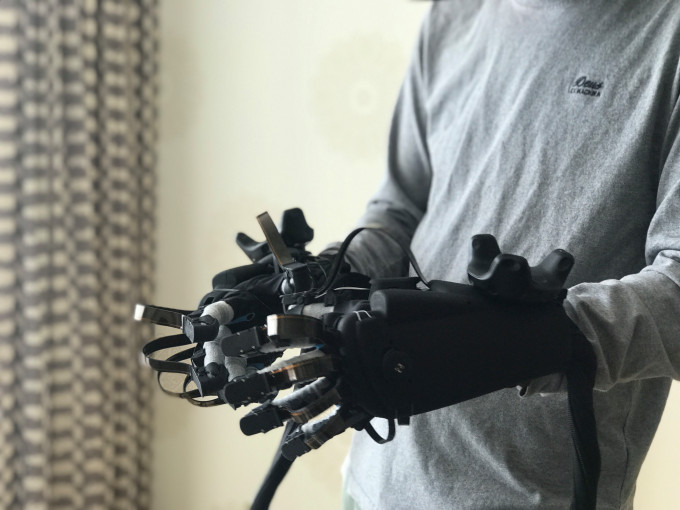
I haven’t seen a virtual reality glove system that also includes a suitcase-sized pneumatic box accessory, but then again there aren’t too many VR peripherals that have delivered quite the depth of immersion of the HaptX system.
Today, HaptX announced the release of their Gloves development kit that will allow its users to feel pressure and resistance in their virtual reality interactions, all while delivering smooth hand-tracking.
The big highlight of the system is the pressure sensitivity it offers, meaning that you can roughly tell what an object feels like when you grab it because little air bubbles are building out the shape of the object inside the gloves. This is the reason there’s a suitcase-sized box filled with pneumatic actuators, which the company says has been rapidly shrinking and will be much smaller by the time the product exits the dev kit phase. Alongside the pressure offered by the 130 feedback points, there’s also a bit of an exoskeleton around your hands designed to give your fingers some resistance as you try to close them on solid objects.
... the startup is using magnetic planar tracking to track the movement and position of your fingers and joints. It’s the same kind of tracking tech used in the Magic Leap remote, but it’s a bit more of a stress test here, given just how much is being tracked.
Feeling a spider jump on to my hand and all of its legs move across my palm was honestly one of the least pleasant things I’ve experienced in VR and left my spine crawling while I flicked the digital spider off my very disturbed real body.
France, Germany and the U.K. “generate 51 percent of all delisting requests, for instance, while Greeks barely assert the right all,” and enforcing the right in the U.S. “could well be unconstitutional.” Unknown is if and how Google would “respect similar demands from Turkey … or enforce Thailand’s lèse-majesté law.”
“Confronting such a complicated and nuanced challenge is a matter for legislatures, not private companies,” concludes Bloomberg, which notes that, in practice, “countries with the most severe restrictions would effectively determine policy worldwide.”
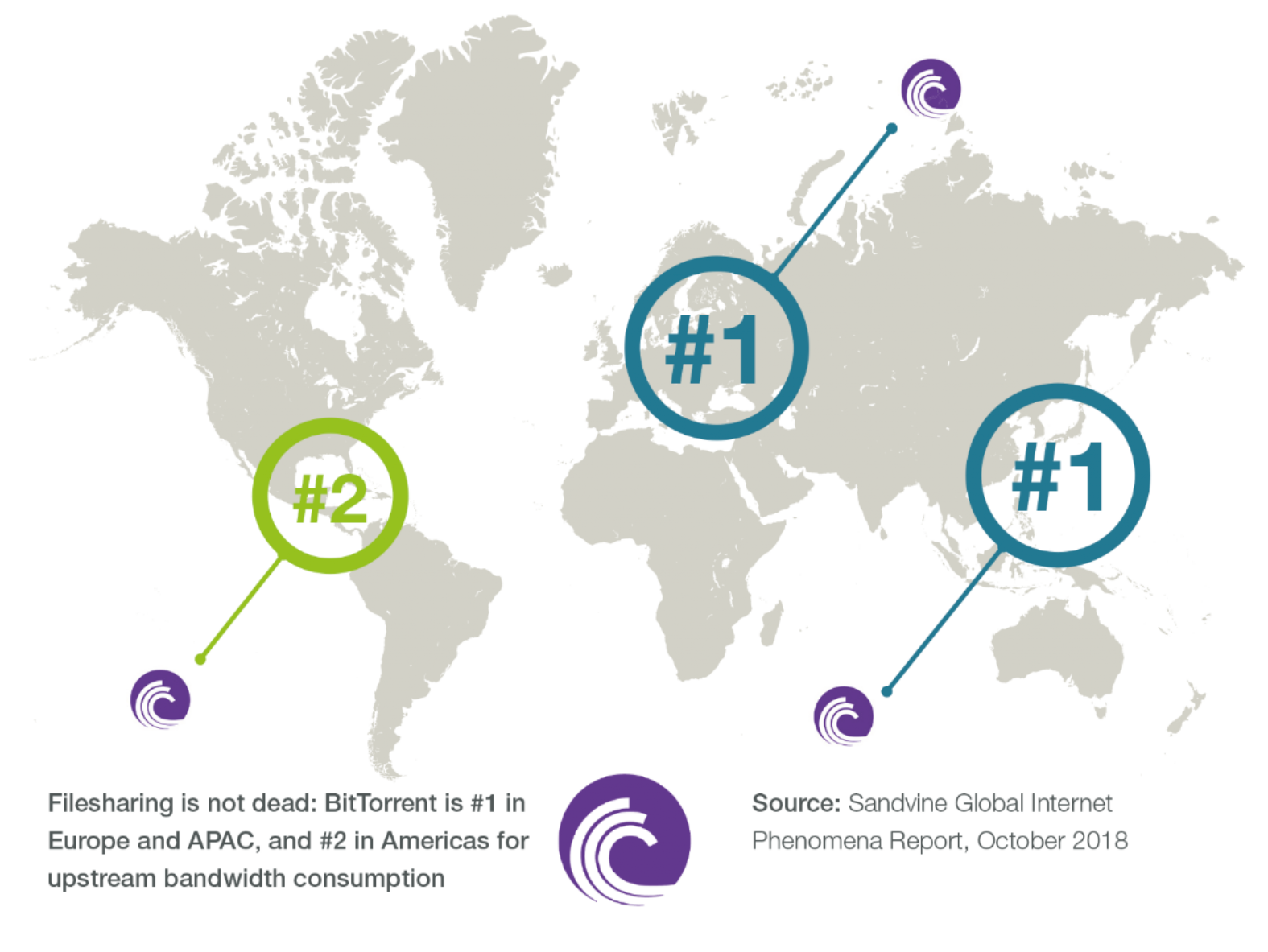
A new study shows that after years of declines, BitTorrent usage and piracy is on the rise again. The culprit: an increase in exclusivity deals that force subscribers to hunt and peck among a myriad of streaming services to actually find the content they’re looking for.
Sandvine’s new Global Internet Phenomena report offers some interesting insight into user video habits and the internet, such as the fact that more than 50 percent of internet traffic is now encrypted, video now accounts for 58 percent of all global traffic, and Netflix alone now comprises 15 percent of all internet downstream data consumed.
According to Sandvine, file-sharing accounts for 3 percent of global downstream and 22 percent of upstream traffic, with 97% of that traffic in turn being BitTorrent. (Kodi - https://motherboard.vice.com/en_us/article/mbk3bp/fcc-demands-amazon-ebay-crack-down-on-kodi-based-pirate-tv-boxes )
The content industry spent years trying to battle piracy via all manner of heavy handed-tactics and lawsuits, only to realize that offering users inexpensive, quality, legitimate services was the best solution.
Now, if the industry isn’t careful, it could lose a sizeable chunk of this newfound audience back to piracy by making it overly expensive and cumbersome to access the content subscribers are looking for.