Why One Size Does NOT Fit All in Virtual Reality
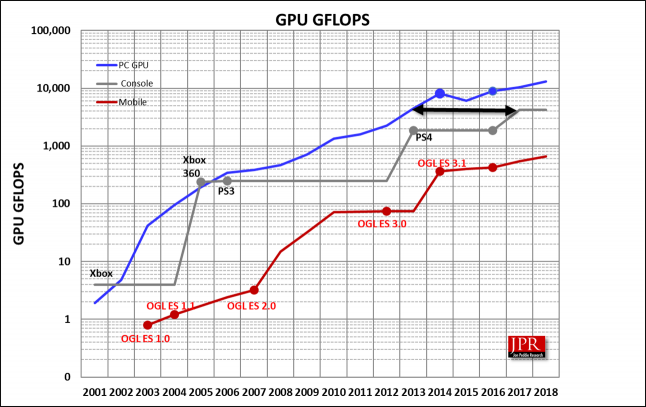 I think the PC ecosystem and its support and promotion of the Oculus brand will continue to be extremely important – even for the Quest, and the best way to achieve this is to have content that justifiably needs the high-performing hardware it’s running on. Even though the Quest is a standalone HMD, the PC and its ecosystem is still an important umbilical cord for Oculus, and it benefits them greatly to do their all to maintain that.
Epilog
With the advent of AMD providing their custom APUs for the Microsoft and Sony consoles (plus two new Chinese consoles), the game developers can develop once and introduce a new game to all platforms at the same time. They’ve been doing this since 2015, and instead of trying to scale up a console version, they now scale down a higher quality PC version. Also, the game developers have also woken up to the fact that Gaming PCs outsell consoles almost three-to-one.
See the full story here: http://www.gamasutra.com/blogs/NeilSchneider/20181003/327702/Why_One_Size_Does_NOT_Fit_All_in_Virtual_Reality.php
8 Augmented Reality Companies Changing the Digital Workplace
 7. Smart Reality
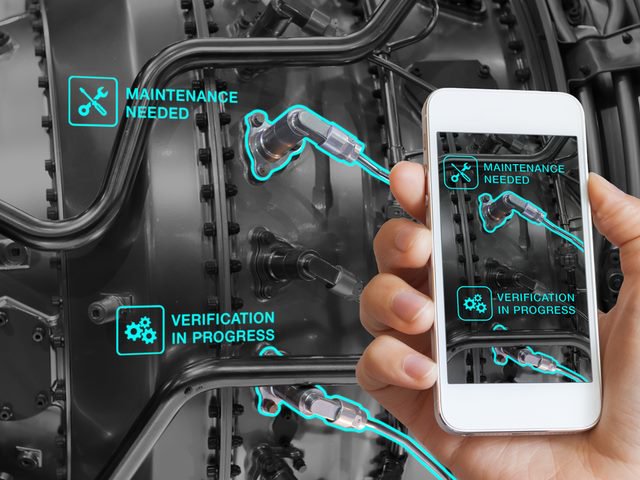
In the construction sector, the SmartReality app, developed by JBKnowledge, enables engineers and architects to see their 2D designs and plans projected as 3D models through smartphones or tablets. Mortenson Construction, one of the companies that used the app, stated that the app helps architects get a “better feel of spatial recognition” of the final product before construction commences.
8. AccuVein
In the medical sector, AccuVein is an AR handheld device that allows nurses and doctors to scan a patient’s body to make a vein appear visible. According to a study presented at the Infusion Nurses Society Conference, there was a 45 percent reduction in escalation calls following the deployment of the AR device. Plus, 81 percent of nurses reported that using AccuVein resulted in an improved ability to cannulate (the procedure to introduce a thin tube into a vein).
See the full story here: https://www.cmswire.com/digital-workplace/8-augmented-reality-companies-changing-the-digital-workplace/
As augmented reality further permeates the urban environment, do architects play a role in planning virtual spaces?
 In his latest Failed Architecture piece, Joshua McWhirter offers an insightful history of noteworthy augmented reality-powered works of art, activism, game design, and simulation while also issuing a warning call about the impending privatization and commodification of the virtual public space without much input from architects. "And as this landscape increasingly constitutes a public realm in and of itself," McWhirter writes, "a collection of hybrid real-virtual public spaces, there are even glimmers of direct challenges to its creeping privatization."
Can VR make food taste better?
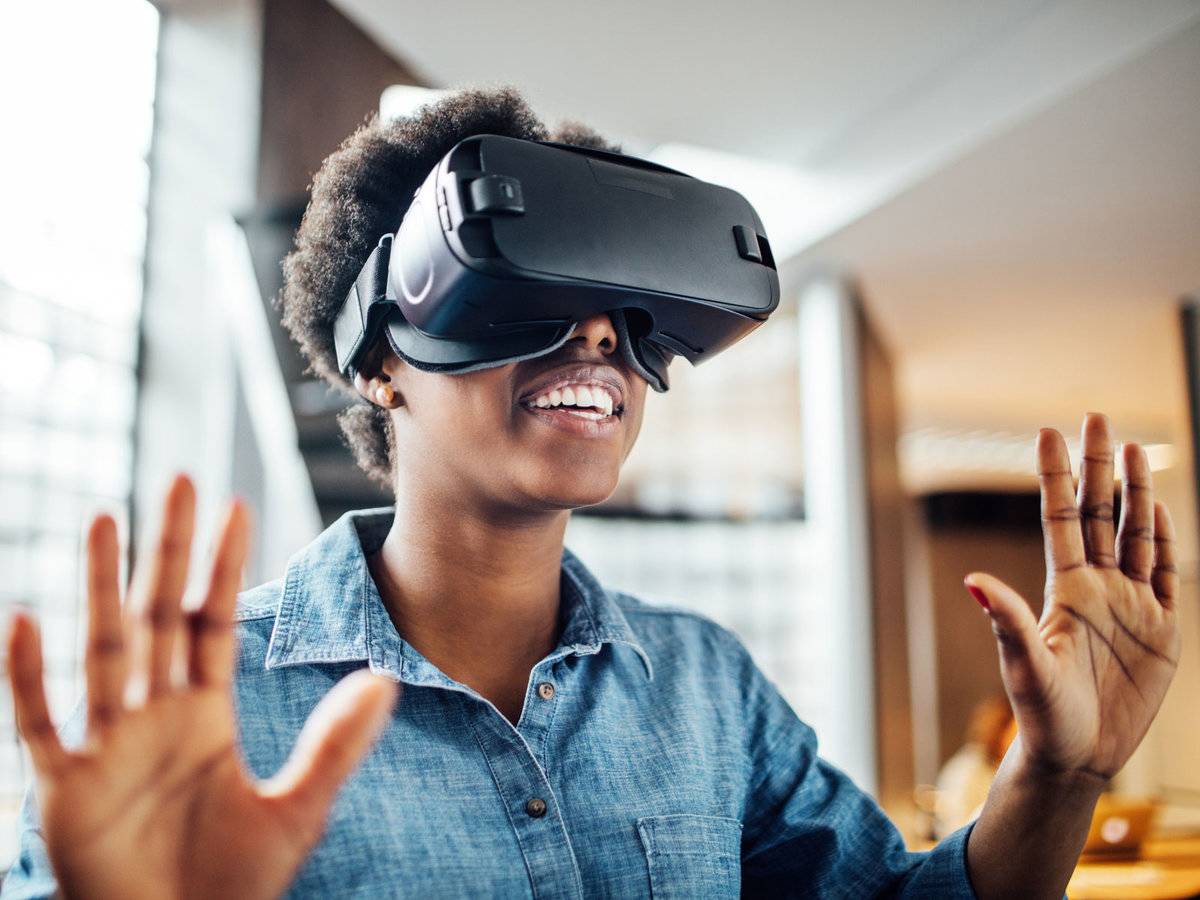
Smiling african woman wearing virtual reality headset in office. Young female at startup using VR goggles.
Based on a study published in the Journal of Food Science earlier this year, Cornell News recently published a story stating that, indeed, “Virtual reality can alter taste.” A team of four researchers came to this conclusion after having about 50 panelists try three identical samples of blue cheese while viewing three very different “custom-recorded 360-degree videos”: a “standard sensory booth” (yes, it was a virtual one), a “pleasant park bench,” and the Cornell cow barn (yes, Cornell apparently has its own cow barn for you undecided students out there).
“When we eat, we perceive not only just the taste and aroma of foods, we get sensory input from our surroundings—our eyes, ears, even our memories about surroundings.”
See the full story here: https://www.foodandwine.com/news/virtual-reality-food-taste-study
HaptX is bringing touch to VR with a pair of scary-looking gloves and a pneumatic suitcase
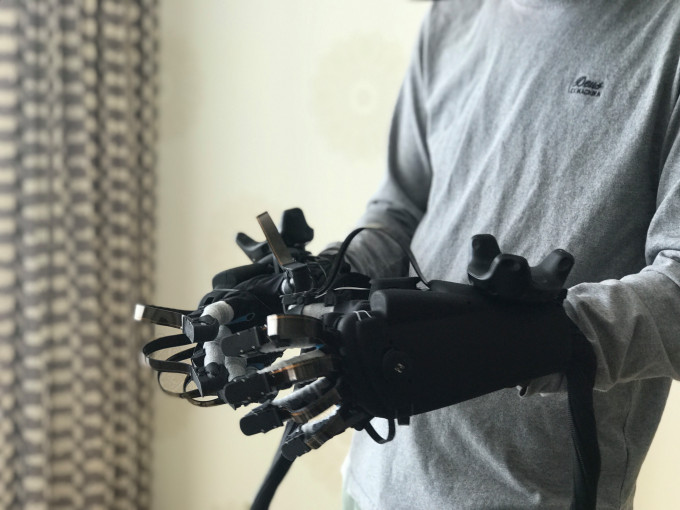 I haven’t seen a virtual reality glove system that also includes a suitcase-sized pneumatic box accessory, but then again there aren’t too many VR peripherals that have delivered quite the depth of immersion of the HaptX system.
Today, HaptX announced the release of their Gloves development kit that will allow its users to feel pressure and resistance in their virtual reality interactions, all while delivering smooth hand-tracking.
The big highlight of the system is the pressure sensitivity it offers, meaning that you can roughly tell what an object feels like when you grab it because little air bubbles are building out the shape of the object inside the gloves. This is the reason there’s a suitcase-sized box filled with pneumatic actuators, which the company says has been rapidly shrinking and will be much smaller by the time the product exits the dev kit phase. Alongside the pressure offered by the 130 feedback points, there’s also a bit of an exoskeleton around your hands designed to give your fingers some resistance as you try to close them on solid objects.
... the startup is using magnetic planar tracking to track the movement and position of your fingers and joints. It’s the same kind of tracking tech used in the Magic Leap remote, but it’s a bit more of a stress test here, given just how much is being tracked.
Feeling a spider jump on to my hand and all of its legs move across my palm was honestly one of the least pleasant things I’ve experienced in VR and left my spine crawling while I flicked the digital spider off my very disturbed real body.
See the full story here: https://techcrunch.com/2018/10/03/haptx-is-bringing-touch-to-vr-with-a-pair-of-scary-looking-gloves-and-a-pneumatic-suitcase/?ncid=tcdaily&utm_medium=TCnewsletter
Right to Be Forgotten Case Could Affect Borderless Internet
 France, Germany and the U.K. “generate 51 percent of all delisting requests, for instance, while Greeks barely assert the right all,” and enforcing the right in the U.S. “could well be unconstitutional.” Unknown is if and how Google would “respect similar demands from Turkey … or enforce Thailand’s lèse-majesté law.”
“Confronting such a complicated and nuanced challenge is a matter for legislatures, not private companies,” concludes Bloomberg, which notes that, in practice, “countries with the most severe restrictions would effectively determine policy worldwide.”
See the full story here: http://www.etcentric.org/right-to-be-forgotten-case-could-affect-borderless-internet/