Pornhub’s VR porn awards show gives you front-row seat for ceremony hosted by Asa Akira in virtual reality
 PORNHUB is inviting randy viewers to its first-ever porn awards show using virtual reality.
XXX star Asa Akira will be on hosting duties on the night of September 6 in Los Angeles, California, with the proceedings beamed in 360-degree live video to your Oculus Rift or HTC Vive VR headset.
See the full story here: https://www.thesun.co.uk/tech/6971219/pornhub-vr-new-award-show-hosted-asa-akira/
Facebook Spaces – The way we hang out on social media could look (and feel) very different soon
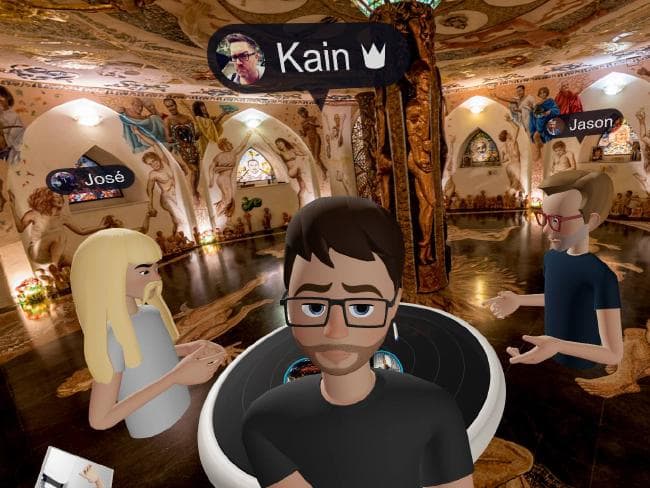 To take part in Facebook Spaces you need an Oculus headset (which comes equipped with a microphone and earpieces so you can chat away) and two accompanying sensors that measure your depth when doing things like selecting menu items by pointing with you hand, grabbing things or drawing on the walls.
You’ll also need a pretty decent computer with a good graphics processor unit to power Facebook Spaces. So all together you’re probably looking at upwards of $1200 for everything you need.
The headset also comes with two handheld controllers which you can use to manipulate your facial expressions while in Facebook Spaces. Eventually, I would expect that sort of thing to be automatically read by facial recognition sensors but that’s still a long way off.
The BBC Proms is to enter virtual reality for the first time, with a production that puts viewers in the centre of the Royal Albert Hall.
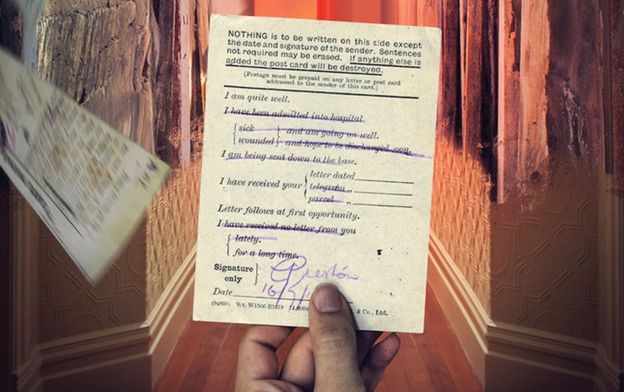 The centrepiece is a seven-minute movement called Nothing To Be Written, inspired by the multiple-choice postcards sent home from the trenches.
The pre-written cards allowed soldiers to choose one of three options: "I am quite well", "I have been injured" or "I am in hospital."
They were allowed to sign their name and date it - but if they wrote anything else, the cards would be destroyed.
The VR experience will put viewers in the shoes of the soldiers and their loved ones, contrasting the horror of the trenches with the quiet dread of their families as they waited for news to arrive.
The Proms film takes a different approach, using the Royal Albert Hall to illustrate the music by having the building's walls and geometry morph and change.
"The space feels real but heightened," said Lysander Ashton of 59 Productions. "As the music begins, the hall begins to transform in response to the music.
"The architecture around you shifts and changes, becoming a canvas on which the music is painted."
The film will be released for home users on platforms including Oculus VR and the BBC website later this year.
Nothing To Be Written will also be made available as a stand-alone VR experience.
See the full story here: https://www.bbc.co.uk/news/entertainment-arts-45101664
Magic Leap One Creator’s Edition
 See the full lengthy review here: https://www.cnbc.com/2018/08/08/magic-leap-one-creators-edition-first-look.html
It costs $2,295. That's a lot, but it's not being sold to consumers just yet. Instead, Magic Leap will sell it to people who the company hopes will build more apps and games for the device.
The first edition is targeted at developers who want to make apps for the platform, as well as "creators" like cinematographers who want to learn how to shoot video or create other content for Magic Leap.
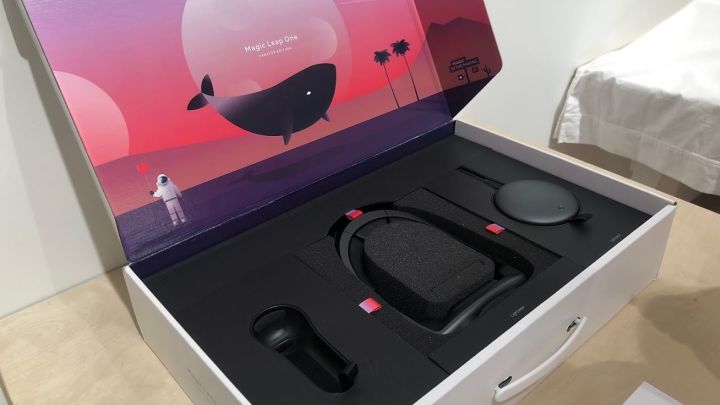
The whole product consists of three main components. There's the Lightwear headset, a pair of computerized goggles that drop over your eyes. The Lightwear is connected to the Lightpack, a puck-shaped computer about the size of a portable CD player, which clips to your pocket. The Lightpack houses a chip from Nvidia and provides power to the headset. Then there's a remote that you hold in one hand that allows you to control the experience with a digital pointer that you can see through the glasses. (The author forgot #4, the battery pack!)
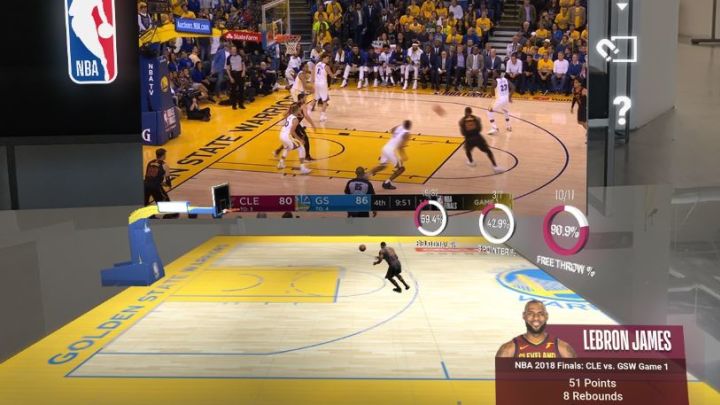
In a beta version of an NBA app, I was able to put a video clip of LeBron James on a wall in the room and then see a 3-D rendering on the floor of LeBron's scoring play in slow motion.
The video of the basketball game was good enough that, if it were live, I'd have no issue watching the full game wearing the headset. The 3-D rendering on the floor didn't look real, but more like renderings you'd see in a modern game console.
The text on it was sharp enough to understand and read. The experience didn't hurt my eyes or give me a headache in the brief time I spent with it, either.
The Magic Leap One doesn't work if there's too much or too little light in the surrounding environment, but it should be fine in most indoor settings. There's also a field-of-vision issue. The Magic Leap One is sort of like looking through a window within your field of view.
I knew the experiences weren't real, but it was unlike anything I've experienced before. None of the demos fooled me into thinking these images were really in front of me, but there was something calming about sharp, clearly rendered jellyfish swimming around me. And I loved the idea of being able to place a digital TV screen anywhere I wanted.
The "magic" component of the Magic Leap One is the "photonics chip," which is manufactured in a factory that I toured below Magic Leap's offices. In an interview, Abovitz told me the company can already build millions of the components that are required for the Magic Leap to work.
He said that the technology is different from other augmented reality devices because it projects light directly into the user's eye.
When I took the goggles off, I could see a small rectangular area superimposed on each lens. It seems that Magic Leap is displaying the images within these rectangular areas, and the light from those images was traveling into my eyes when I put the headset on. It's not clear how this is technically different from looking at a computer monitor or phone screen, both of which generate light that travels into the viewer's eyes.
But whatever Magic Leap has done, the experience with the goggles on was like a computer-generated 3-D world with real depth. For instance, a fish can appear to swim from behind you, up past you, and into the distance. That wouldn't be nearly as realistic on a regular screen.
The processing for rendering the graphics is done by an Nvdia Tegra X1 chip included in the Lightpack that clips to your pocket. The Lightwear headset includes cameras that can scan the room around you, which tells the computer how big the room is and where virtual objects can be placed. Lightwear also includes eye-tracking technology, so it knows where you're looking.
Abovitz said people around the world might be worried about artificial intelligence replacing their jobs, but that Magic Leap can help keep those jobs intact.
"That's the most important theme we are bringing in," he said. "When you have a human working with AI, they always beat the AI. That's super powerful."
He cited his previous start-up, Mako, which made robotic arms to help doctors perform surgery. "That was my combo at Mako — robotics and a surgeon. We can make people into superheroes. They have heightened sensing, intelligence and can see and do things better. Whether that's an athlete or a business person."
Abovitz also said that intelligent assistants will play a big role in Magic Leap's future. I didn't get to test one, but Abovitz says he's working with a team in Los Angeles that's developing high-definition people that will appear to Magic Leap users and assist with tasks.
Finally, there's a whole world of entertainment that Abovitz imagines can take advantage of spatial computing....Abovitz calls this "volumetric cinematography." He has an entire team at Magic Leap dedicated to building these experiences while working with potential partners in TV and movies.
The technology still needs to change on the other end, however. Instead of filming for the TV, producers and movie studios will need to think about how to film for Magic Leap. That will be a tough sell for a company that still doesn't have a customer base.
Yet, after using it, I'm pretty convinced this is where computing is going.
Increasing VR Creativity
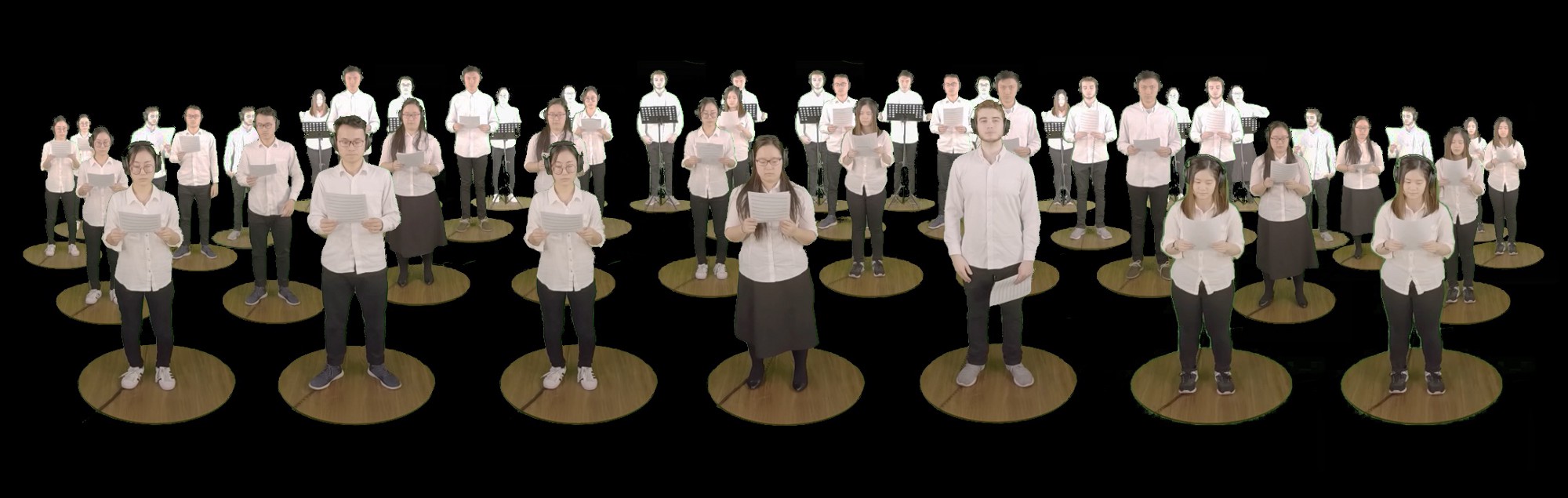 by Michael Naimark
The first half-semester was pretty easy on the students. They sat back through several weeks of richly audiovisual presentations on “VR / AR Fundamentals.” They unboxed and set up all five major VR platforms, then curated and experienced dozens of VR titles. They enjoyed the buzz of our “VR / AR News of the Week” class time.
But by the last two weeks of the semester, the students were neck-deep in highly experimental production, working through sleepless weekends, and were both excited and frustrated. We were all in over our heads. I sent frantic emails to my best-and-brightest VR colleagues for advice (which also validated that we were working on hard, timely issues). By showtime at the end of the semester, some things worked and some things didn’t.
This is a brief report — and exhibition venue — about teaching two rounds of “VR / AR Fundamentals” at NYU Shanghai. Its purpose is to share what we’ve learned, highs and lows, to help others working in VR and AR, and to encourage others to do the same.
See the full, long article here; https://medium.com/@michaelnaimark/students-pushing-boundaries-ce13a4950f46
The OpenAI Dota 2 bots just defeated a team of former pros
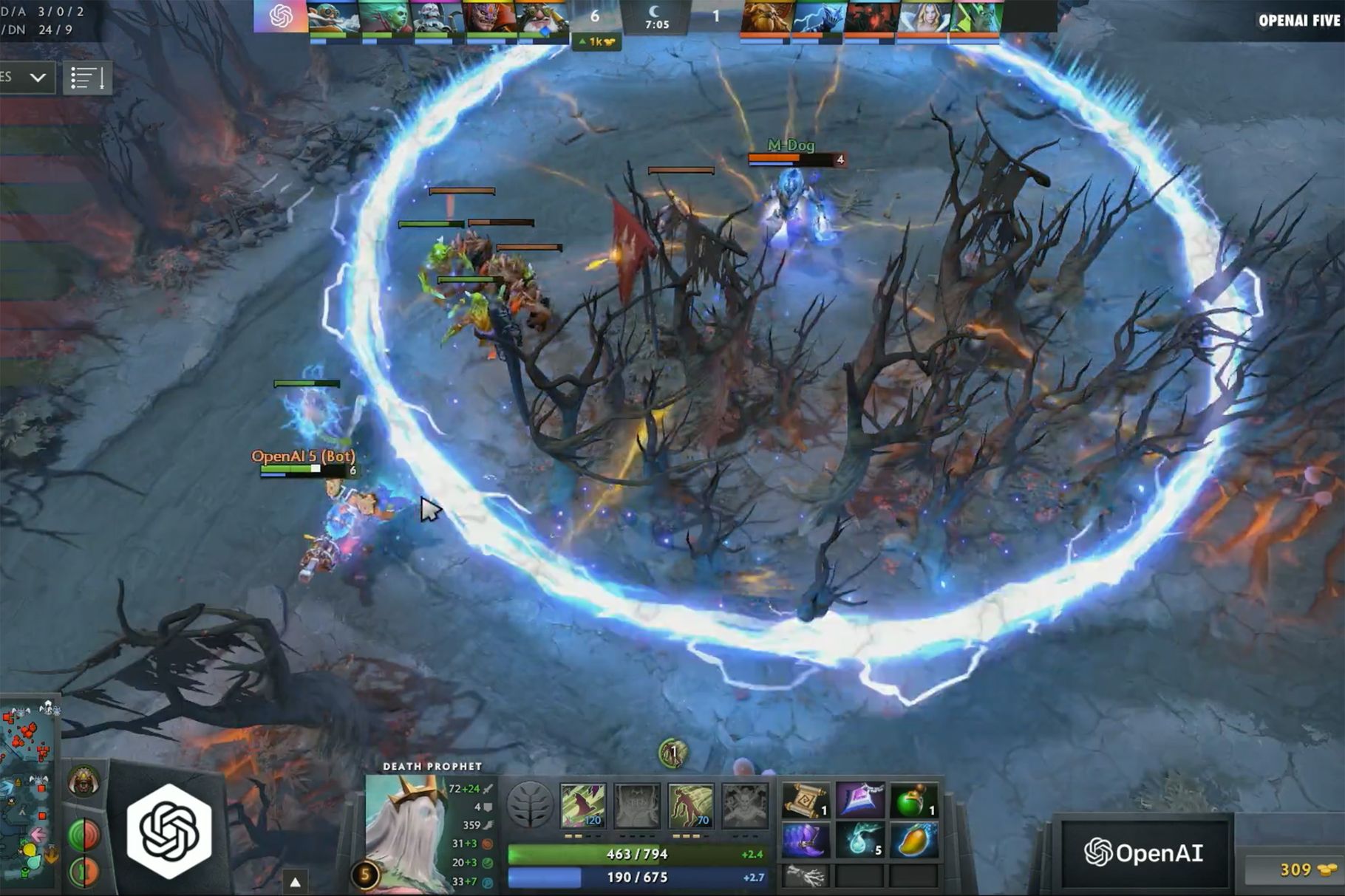 A month and a half ago, OpenAI showed off the latest iteration of its Dota 2 bots, which had matured to the point of playing and winning a full five-on-five game against human opponents. Those artificial intelligence agents learned everything by themselves, exploring and experimenting on the complex Dota playing field at a learning rate of 180 years per day. Today, though, the so-called OpenAI Five truly earned their credibility by defeating a team of four pro players and one Dota 2 commentator in a best-of-three series of games.
What stands out when you watch the matches is the apparent intelligence of the AI’s decisions and the inhuman absence of any indecision.
See the full story here: https://www.theverge.com/2018/8/6/17655086/dota2-openai-bots-professional-gaming-ai
How VR’s Next Generation Shows Key Signs of a Maturing Market
 VR feels like it’s simultaneously moving fast and slow. It’s been two years and four months since the leading PC VR headsets, the Oculus Rift and HTC Vive, hit shelves. The leading high-end headset overall, PSVR, has only been around for one year and nine months. That’s a significant amount of time for individual products, but just a blip in the context of the formation of a brand new ecosystem and medium. Looking forward to the next generation of VR, advancements in specs and experience are not the only improvement; the industry as a whole is becoming more cohesive, which will ultimately benefit everyone involved. Here’s how.
OpenXR is an in-development standard that’s open and royalty free. It’s being developed by a consortium consisting of effectively every major player in the VR market, including chip makers, headset makers, game engines, publishers, and VR app stores ….
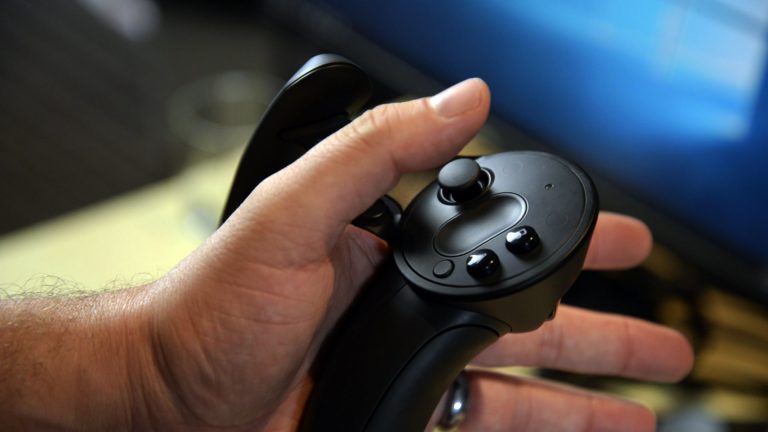 When it comes to input and control schemes, Knuckles is significantly more in line with Oculus Touch, which also features an easy to use grip, two face buttons, and a thumbstick.
How Survios Crafted A Creative Music VR Experience With Electronauts
The founders at Survios are true believers in virtual reality, and they’ve poured a lot of effort into the hit VR games Raw Data and Sprint Vector. Now they’re switching from games to something more like an immersive music experience with Electronauts.
The VR app will enable music fans to remix, compose, and perform their own music, riffing on works by artists such as The Chainsmokers, Odesza, Steve Aoki & Boehm, and many other bands that I am intimately familiar with (not).
At the core of Electronauts is the Music Reality Engine, which lets anyone perform and produce their own versions of the hits. It doesn’t skip a beat thanks to a technology called quantization. I spoke with Nathan Burba, CEO and cofounder of Survios in Los Angeles, about the new technology and the creativity that it brings to VR music.
See the full story here: https://uploadvr.com/how-survios-crafted-a-creative-music-vr-experience-with-electronauts/
or link directly to the video tutorial here: https://www.youtube.com/watch?time_continue=177&v=izMU5ePLxko
Also a review here: https://www.roadtovr.com/electronauts-review-vr-express-your-inner-groove/
Electronauts has you standing in one place, so there’s no need for any artificial locomotion, largely ensures things will remain perfectly comfortable. While you’ll occasionally see some full screen movement (like the visualizer background that’s constantly coming toward you), I never once felt dizzy or uneasy in the game, even after continuous sessions of an hour or more.
The tools in Electronauts work well and are easy to understand. They’re all triggered in simple and intuitive ways without any unnecessary or uncomfortable gestures or hand positions. Importantly, the interface mostly keeps you looking forward rather than down, which greatly helps prevent headset-induced neck fatigue (due to the front-heavy nature of VR headsets).
Hydrus VR camera system captures 360 8K video deep underwater
 Marine Imaging Technologies has announced a new camera system that’s capable of capturing incredible 360-degree video at underwater depths with almost no light. Dubbed Hydrus VR, it’s not meant for underwater photography hobbyists, but instead for professional VR experiences and documentary filmmakers.
The Hydrus VR is a 10-camera array that captures 360-degree video in 8K, 4K, or stereoscopic 4K, at depths up to 300 meters (984 feet), with light as minimal as 0.004 lux. Eight of the cameras are arranged horizontally in a circle, with the remaining two capturing vertical. Each of the cameras are Sony’s new UMC-S3CA with ultra-sensitive sensors and custom SLR Magic E-Mount lenses, allowing video to be recorded at up to ISO 409,600.