Virtual Reality’s Role In Building The Next Generation Of Jails
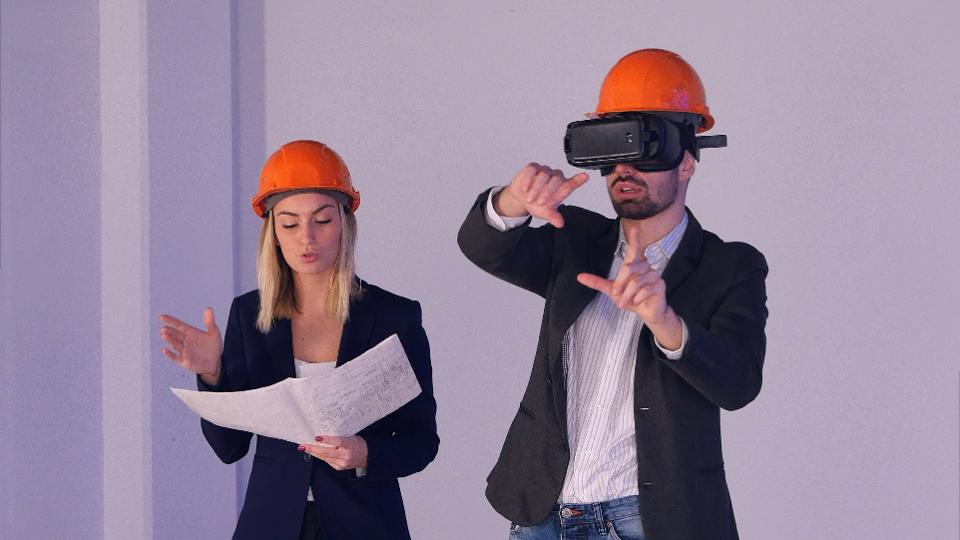 Strolling down the hall of the brand new El Centro jail expansion, opened April 2018, Correctional Officer Sergio Romero points out the holding cells near the processing center, the strip search room, and the nursing station. Comprised of 274 beds, the jail is arranged in dormitories instead of the traditional cells, each with a restroom, laundry area, and a 150-foot outdoor exercise space. Every bathroom has modesty panels, so inmates can have some privacy when changing.
At this point, I need to clarify that I’m not actually at the jail, but 600 miles away in a conference hall in Sacramento., attending the American Jail Association's annual conference and jail expo. The jail I’m looking at is a virtual reality construction, used by Vanir Construction Management to aid in the building of the jail. In front of me, officer Romero is encased in an Oculus Rift, his movements in the jail broadcast onto a large screen above his head. It might seem like another industry is jumping on the VR bandwagon, but in this case, it has already proved surprisingly useful.
See the full story here: https://www.forbes.com/sites/zarastone/2018/06/24/virtual-realitys-role-in-building-the-next-generation-of-jails/#65a1e77f311e
AR+VR in the Criminal Justice System

This photo taken on February 5, 2018 shows a police officer wearing a pair of smartglasses with a facial recognition system at Zhengzhou East Railway Station in Zhengzhou in China's central Henan province.
Chinese police are sporting high-tech sunglasses that can spot suspects in a crowded train station, the newest use of facial recognition that has drawn concerns among human rights groups. / AFP PHOTO / - / China OUT (Photo credit should read -/AFP/Getty Images)
History of technology in law & order
Surprisingly, virtual reality isn’t new to the law. In 1992, jurors in a California courtroom used headsets to watch a VR-like, POV reconstruction of an accident in which a woman had crashed her Honda motorcycle. Dennis Seley, defense attorney for Honda Motor Co., aimed to show that the path the motorcyclist had chosen to take was a dangerous one. His presentation successfully persuaded the jury that his client was not responsible.
Preserving the crime scene
Using hand gestures, on-site officers mapped entire crime scenes without touching anything; that, along with the technology limiting the number of people required on scene, greatly reduced the chance of evidence contamination or tampering.
On duty
For several months now, Chinese police in Zhengzhou have been testing smart glasses with facial recognition technology to identify potential suspects and criminals traveling by plane or train. ... It’s easy to imagine the kind of useful in-FOV data and intelligence AR glasses could show officers on the job, especially when endowed with robust Wi-Fi, advanced sensors, and voice and image recognition tech—alerts about known criminals in the area, GPS directions, 3D maps of buildings, emergency procedure information, real-time language translations, infrared views, etc.
Presenting evidence & providing testimony
In 2015, the German Public Prosecution Service engaged Ralf Breker, a forensic engineer, to create a VR version of the Auschwitz concentration camp. At the time, the German state was trying to convict former SS guard Reinhold Hanning. Hanning, who worked at Auschwitz, claimed he was unaware of what was going on there. Using a laser to capture Auschwitz’s physical geometry, Breker was able to virtually reconstruct the camp to its wartime state and show the judges – wearing HTC Vive headsets – that from his post Hanning could in fact see the rail yard where prisoners were sentenced to either slave labor or death.
Future
Will XR become a standard investigative tool or a staple of the court/legal system in the future? There are a number of hurdles that could hold back immersive technology indefinitely in law and order; including technical issues, high costs (one party may not be able to afford a VR exhibit), judicial opposition (the judge, after all, has final say on what is permissible in the courtroom), public acceptance, and fears around how the technology will affect impressionable jurors.
See the full story here: https://augmentedworldexpo.com/law-order-xr-arvr-in-the-criminal-justice-system/
National Geographic uses augmented reality to create world’s first open-air planetarium in Canada
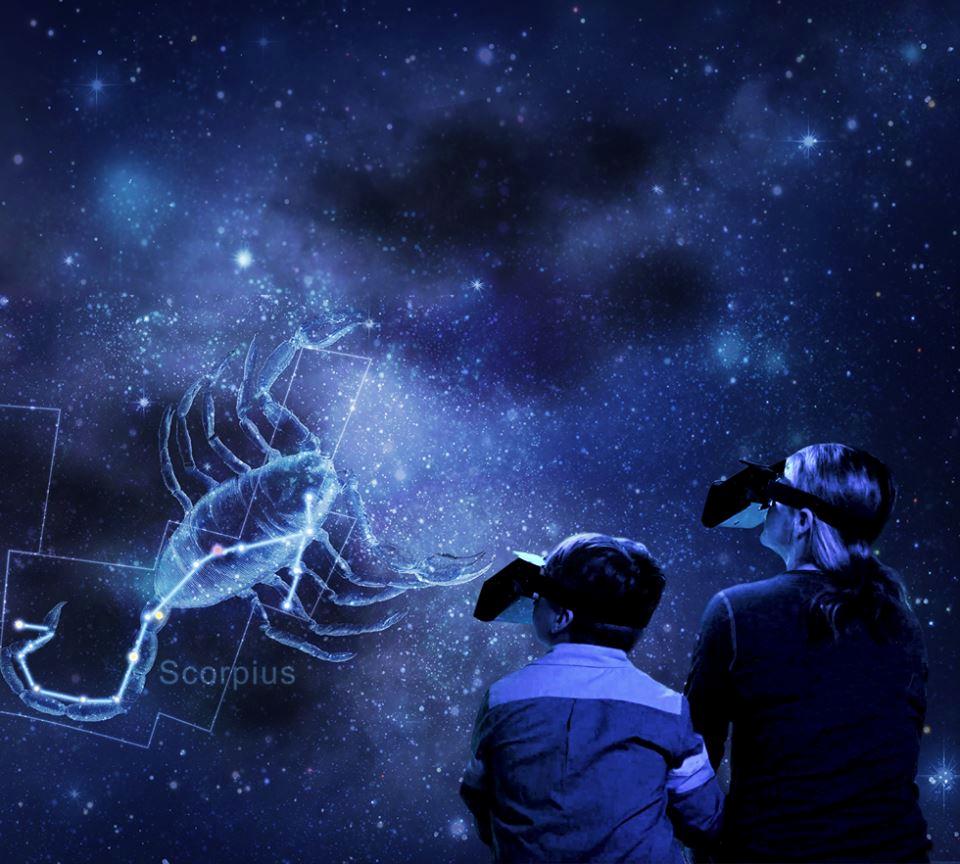
 National Geographic has teamed up with augmented reality provider Aryzon to create the world's first open-air planetarium, using AR to project images into the night sky for a unique stargazing experience.
Taking place at the Au Diable Vert Station Montagne in Quebec, Canada, "ObservEtoiles" debuts tomorrow (23 June) and will allow up to 180 visitors the chance to observe the night sky with a digital overlay showing the constellations and names of the stars and planets.
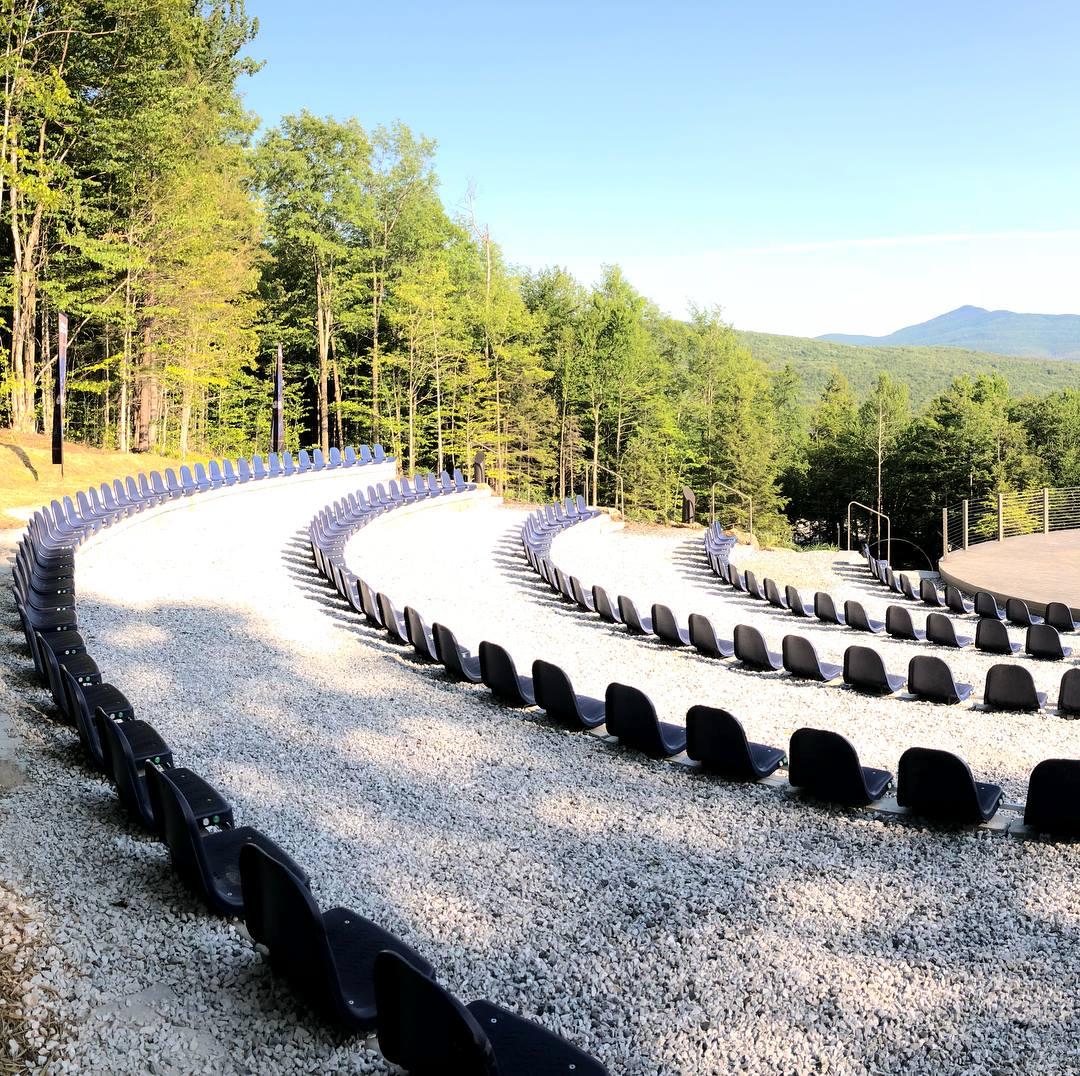
For the two-hour experience, guests will be seated 1,000ft (304m) above sea level in a mountain-side amphitheatre created especially for ObservEtoile. Equipped with heated seats, the space has been created by Arena Comfort Products and will be useable at any exterior temperature or in any weather conditions.
Using the Aryzon headset, which was developed in the Netherlands and uses mirrors to project 3D mixed reality images, visitors can observe a selection of 17th-century illustrations of the constellations overlaid over the real stars and planets, without obstructing viewers’ line of site. British company Escapist Games has developed the application, which runs on an Asus Zenfone 3 Zoom. Minus the smartphone, the headset can be kept by users after the show, where they can then use the app to explore the stars from home.
See the full story here: http://www.attractionsmanagement.com/index.cfm?pagetype=news&codeID=338083
Playing a Role in Jurassic Park Virtual Reality Experience
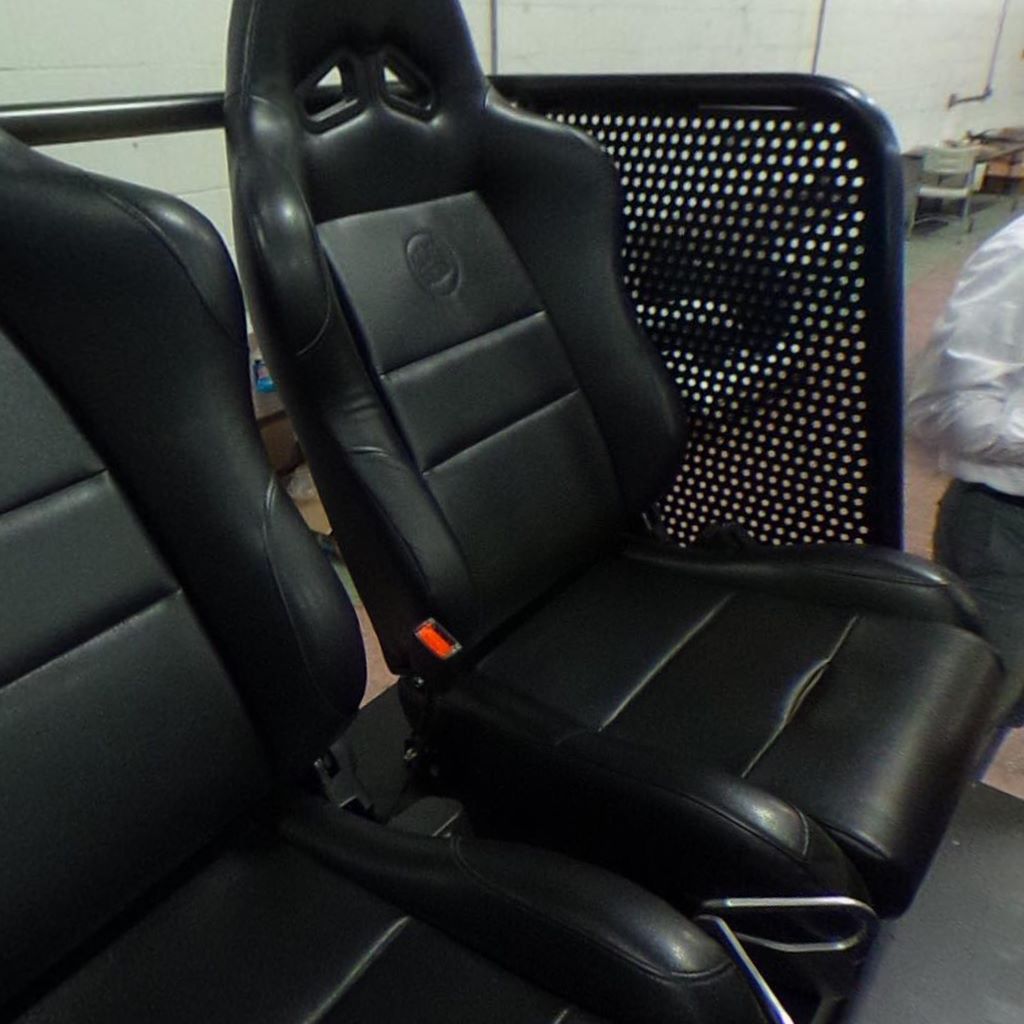 Ashland Technologies in Delano Township built and shipped out more than 100 of these platforms for a new Jurassic Park virtual reality experience at Dave & Buster's locations all across the country and there's still more being assembled.
Ashland Technologies in Delano Township built and shipped out more than 100 of these platforms for a new Jurassic Park virtual reality experience at Dave & Buster's locations all across the country and there's still more being assembled.
See the full story here: https://wnep.com/2018/06/21/playing-a-role-in-jurassic-park-virtual-reality-experience/
Laurie Anderson Adds Virtual Reality to Artistic Milieu
 In her VR piece, Chalkroom, viewers fly through an enormous structure made of words, drawings and stories. Once guests enter they are free to roam and fly. Words sail through the air as emails, fall into dust, and form and reform. Chalkroom won Best Virtual Reality Experience at the 74th Venice International Film Festival.
A second VR piece, Aloft, gives the participant the sensation of being in an airplane that comes apart. They find themselves suspended in the air with plane components floating around them as they enter a blue abyss.
Anderson’s unique vision of life brings a new perspective to art and storytelling and offers an unforgettable experience in this virtual realm.
Admission to Laurie Anderson is free, however you must reserve a 15-minute time slot if you wish to experience Chalkroom or Aloft. You must make separate reservations for each show, and each reservation is for one individual.
Guild Hall is located at 158 Main Street in East Hampton. For more info, visit guildhall.org or call 631-324-0806.
See the full story here: https://www.danspapers.com/2018/06/laurie-anderson-virtual-reality-guild-hall/
New York Times AR Coverage of Guatemala Volcano Disaster Shows AR Isn’t Ready for Breaking News
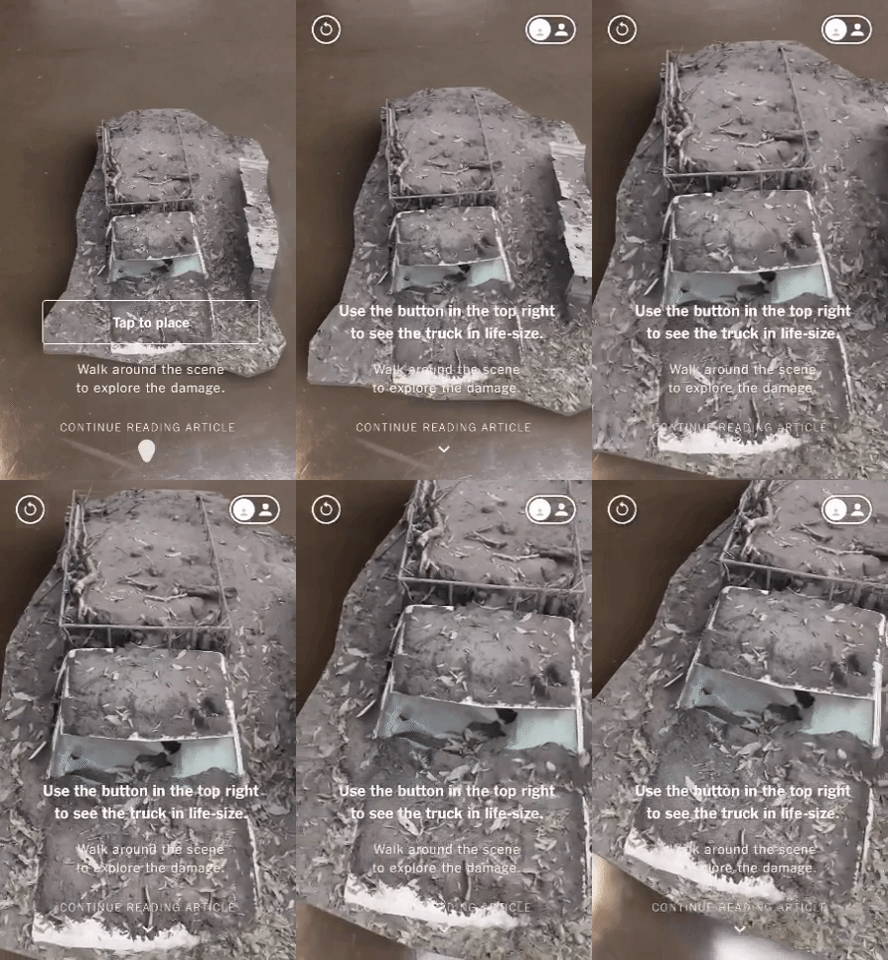 The experience was captured through 727 photos captured in the span of 29 minutes by photographer and Guatemala resident Daniele Volpe on June 8, five days after the eruption.
The story and its AR experience were published on June 19, or 16 days after the eruption. While the experience gives readers a perspective on the damage left behind by the volcano, which killed more than 150 people with nearly 200 still missing, the coverage underscores the fact that augmented reality is still not a tool that's well suited for reporting breaking news. In a world where news breaks in seconds via tweets, not hours on TV, or days in newspapers, two weeks is just not fast enough.
Critics Argue GDPR’s Article 13 Threatens Future of Internet
 A European Parliament committee just voted on Article 13, a controversial provision in the EU’s General Data Protection Regulation (GDPR) that wasn’t in the final draft but was re-introduced on May 25, the day it went into effect. Article 13 requires Internet platforms to vet uploads such as news articles and music videos for copyright infringement. Such filters could encourage platforms to block more content and place an undue burden on smaller platforms, argue the critics. Worse, they continue, filters could be modified to block content critical of governments.
The Verge reports that over 70 experts, including World Wide Web founder Tim Berners-Lee and Wikipedia founder Jimmy Wales, believe Article 13 will turn the Internet into “a tool for automated surveillance and control of its users.” Author/activist Cory Doctorow is organizing against Article 13 with the Electronic Frontier Foundation on these grounds.
Although European Parliament member Axel Voss argues that the proposed language doesn’t mention filters, “that just raises the question of what using ‘effective technologies’ to prevent copyright infringement means, other than filtering.” Voss also said that, “he cannot predict which platforms will be affected.”
The argument over Article 13 highlights “two competing view of the Internet and its possible futures,” says The Verge. Whereas Doctorow, Berners-Lee, Wales, Vint Cerf, and others “might still believe in an open web of smaller competing platforms that keep information flowing freely,” U.S. and European lawmakers “seem to have accepted the status quo of a digital landscape that’s dominated by a handful of giants with self-perpetuating silos” — meaning Facebook and Google.
The proposal would shift the responsibility for publishing copyright-infringing work online from the users of a platform to the platforms themselves. It would mandate that services intended to store and publish copyrighted materials take "appropriate and proportionate measures” to ensure that copyrighted material is not available without the permission of its owner. It does not specify that sites must apply YouTube-style automated blocking, and it says that the "implementation of measures by service providers should not consist in a general monitoring obligation." But critics argue that the directive will result in the widespread use of automatic filters. In some cases, platforms could avoid blocking content by licensing the content from rights holders.
--------------------------------
See the full story here: http://www.etcentric.org/critics-argue-gdprs-article-13-threatens-future-of-internet/
and the source article here; https://www.theverge.com/2018/6/19/17480344/eu-european-union-parliament-copyright-article-13-upload-filter
and the related Wired piece here: https://www.wired.com/story/europe-considers-a-new-copyright-law-heres-why-that-matters/