CryptoHunt Aims To Mix Cryptocurrency With Augmented Reality
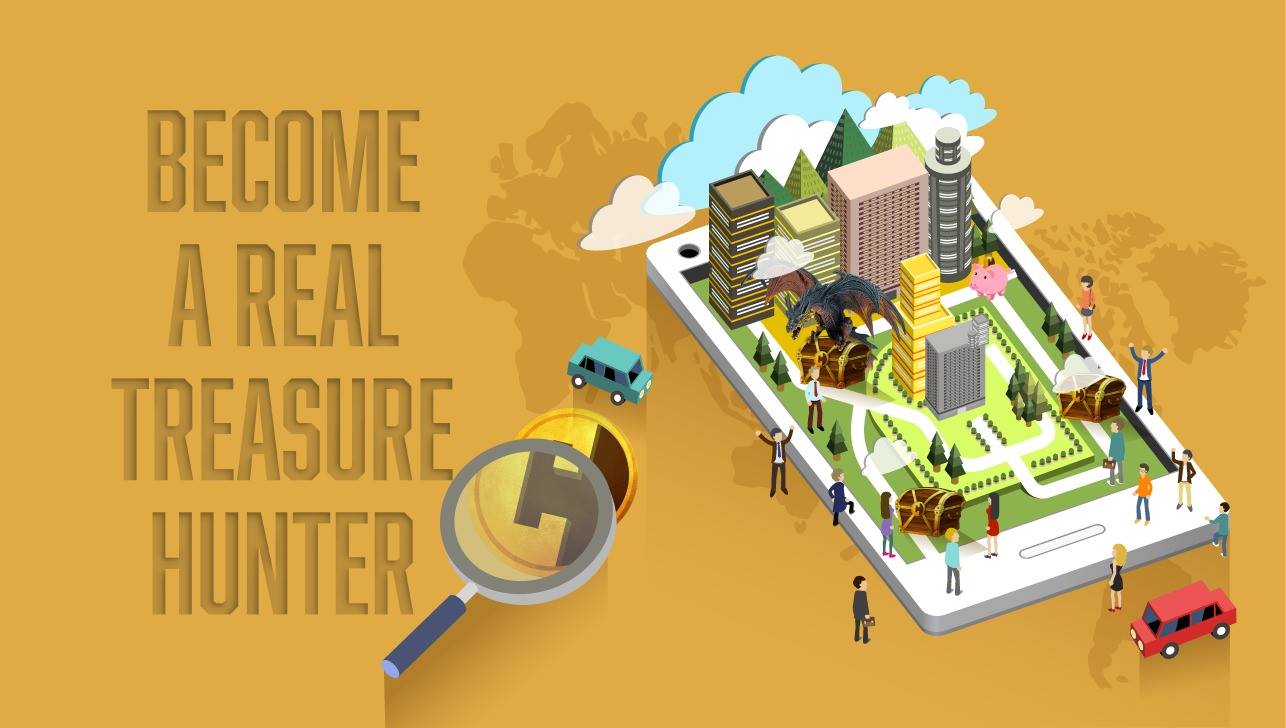 Those interested in a new way to earn some extra Cryptocurrency will be pleased to know that it is getting the gamification treatment with CryptoHunt.
CryptoHunt is a location based augmented reality (AR) videogame that is designed to make the act of farming Cryptocurrency a more social and fun activity. By using a similar setup to that of Pokémon Go, players will be able to walk about, earning real value coins as they explore, hunt and solve riddles to collect the CryptoHunt tokens.
A demo for CryptoHunt allows users on both iOS and Android to create an account and start exploring the title in real time.
See the full story here: https://www.vrfocus.com/2018/02/cryptohunt-aims-to-mix-cryptocurrency-with-augmented-reality/
Moss Review: Virtual Reality Done So, So Right
 Leaning forward, craning my head down, I come face to face with Quill, an adorable mouse with a scarf around her neck and a sword in her hand. Having just worked together to dispatch a small army of mechanized insects, Quill smiles up at me and raises her paw. I reach out with my controller, giving her a high five. Moss, for PlayStation VR, is utterly enchanting.
Moss is most easily described as a fairy tale, only one that the player gets to take an active role in telling.
As "The Reader," you soon learn that you have the ability to influence Quill, guiding her along paths, up and over obstacles and into battle. At the same time, you'll be manipulating various parts of the environment; pushing, pulling, twisting and sliding all manner of objects in order to help Quill move from one page of her story to the next.
At its heart, Moss is a puzzle platformer with some brief bursts of combat thrown in for good measure. The objectives start out nice and simple, but eventually grow in size and complexity.
Each locale has been lovingly crafted with a sometimes staggering attention to detail, all ready to be explored by a brave little mouse and her trusty companion, the ever-present Reader.
Each page of the adventure is a diorama, one you can fully explore simply by leaning into the world and seeing what secrets it hides.
Wanting a better view of the higher platform, I finally stood up from my couch and marveled all over again at the wonders of VR gaming. There was plenty to see up there, so long as I was willing to move around move and take the time to look.
I've been vague about the game's mechanics simply because discovering all of the ways you can interact with Quill, the world and even her enemies is a large part of the fun in Moss.
See the full story here: https://www.cinemablend.com/games/2317271/moss-review----virtual-reality-done-so-so-right
Augmented Reality: Google partners with three OEMs to bring AR to China
 Most Google services in China do not work due to the censorship, but Xiaomi, Huawei and Samsung have all signed on to release devices that will include ARCore support over the coming months, the report added.
These devices would be "higher-end" smartphones. The software side is "trickier since the Google Play Store is not available in the country and the third-party app store is fragmented", Xiaomi, Huawei and Samsung would release ARCore apps through their own app stores.
Recently, Google partnered with Tencent, invested in China-based startups and announced an AI lab in Beijing.
Google also gained a large tech presence in Taiwan via the completion of its acquisition of a chunk of HTC and it opened a presence in Shenzhen.
See the full story here: http://www.business-standard.com/article/technology/augmented-reality-google-partners-with-three-oems-to-bring-ar-to-china-118022400233_1.html
Google’s ARCore hits version 1.0, brings augmented reality to 100 million devices
 Flagship smartphones from Google, Samsung, OnePlus, and LG are now compatible.

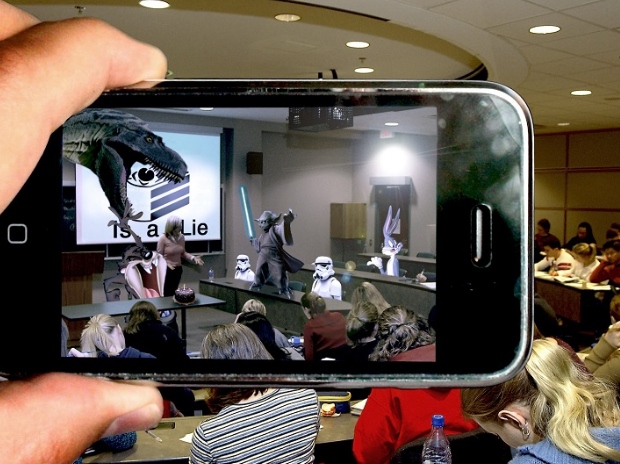
Just like Apple's ARKit, ARCore allows normal smartphones to run augmented reality apps. ARCore apps will either overlay 3D objects on top of the phone's camera feed or allow you to use the phone as a camera in a 3D world, moving your viewpoint around as you move the phone.
Google's blog post lists the following phones as compatible: "Google’s Pixel, Pixel XL, Pixel 2 and Pixel 2 XL; Samsung’s Galaxy S8, S8+, Note8, S7 and S7 edge; LGE’s V30 and V30+ (Android O only); ASUS’s Zenfone AR; and OnePlus’s OnePlus 5." All together, that's about 100 million devices that can run augmented reality apps. In the future, Google says, "Samsung, Huawei, LGE, Motorola, ASUS, Xiaomi, HMD/Nokia, ZTE, Sony Mobile, and Vivo" will bring ARCore to their upcoming smartphone releases.
Another interesting tidbit is that Google is also launching ARCore in China.
See the full story here: https://arstechnica.com/gadgets/2018/02/googles-arcore-hits-version-1-0-brings-augmented-reality-to-100-million-devices/
The One Reason Why Many Millennials Would Use Virtual Reality Products At Work
 Better training opportunities
The above study reported that 66% of millennials believe that VR for training purposes will allow them to train from anywhere and on their own time schedules. And AR/VR training experiences, because of their realistic nature, provide a realistic experience for those involved in the training.
Improved collaboration and virtual sharing
The current “buzzword” of collaboration refers to the concept that people working in collaborative teams can accomplish more in a shorter period of time. And in the contemporary corporate world, remote workers are becoming more and more common.
Developing and testing new ideas
Consider automobile design engineers as just one example. Designs can be tested in virtual reality environments, so that the actual user experience can be evaluated. This is also true for the real estate industry.
Organizational improvement
Many offices still “live” in a paper world – files, post-it notes, papers, etc. And, even when digital “paper” is used, it is in the form of email and document attachments that require devices to open them and print them out. Suppose, instead, that information and data could all be accessed and just swiped through with finger flicks?
After all, 83% of millennials say that workplace setting, furniture and tech has an impact on their decision to take a new job and up to 42% say that they will quit a job with substandard tech.
Improved focus and privacy
Donning a VR headset can allow employees to place themselves in a virtual environment that “works” for them. Some may prefer a beach with the sounds and sights of the ocean; others may prefer a quiet coffee shop or library. VR allows employees to set up their ideal work environment that allows them to focus more on the tasks at hand.
Recess time
We all remember our recess times at school. It allowed us to shed the challenges and anxieties of the classroom and just “blow off some steam” in total non-academic activity. After that type of break, we were better able to focus on the upcoming instruction.
See the full story here: https://www.forbes.com/sites/andrewarnold/2018/02/23/the-one-reason-why-many-millennials-would-use-virtual-reality-products-at-work/#7cd49838fe79
Philip Lelyveld comments to EU – Preserving Democracy in the Digital Age
Here are my comments as one of five panelists before the EU commission exploring ways to combat Russian interference and 'fake news.' February 22, 2018 at EU headquarters in Brussels.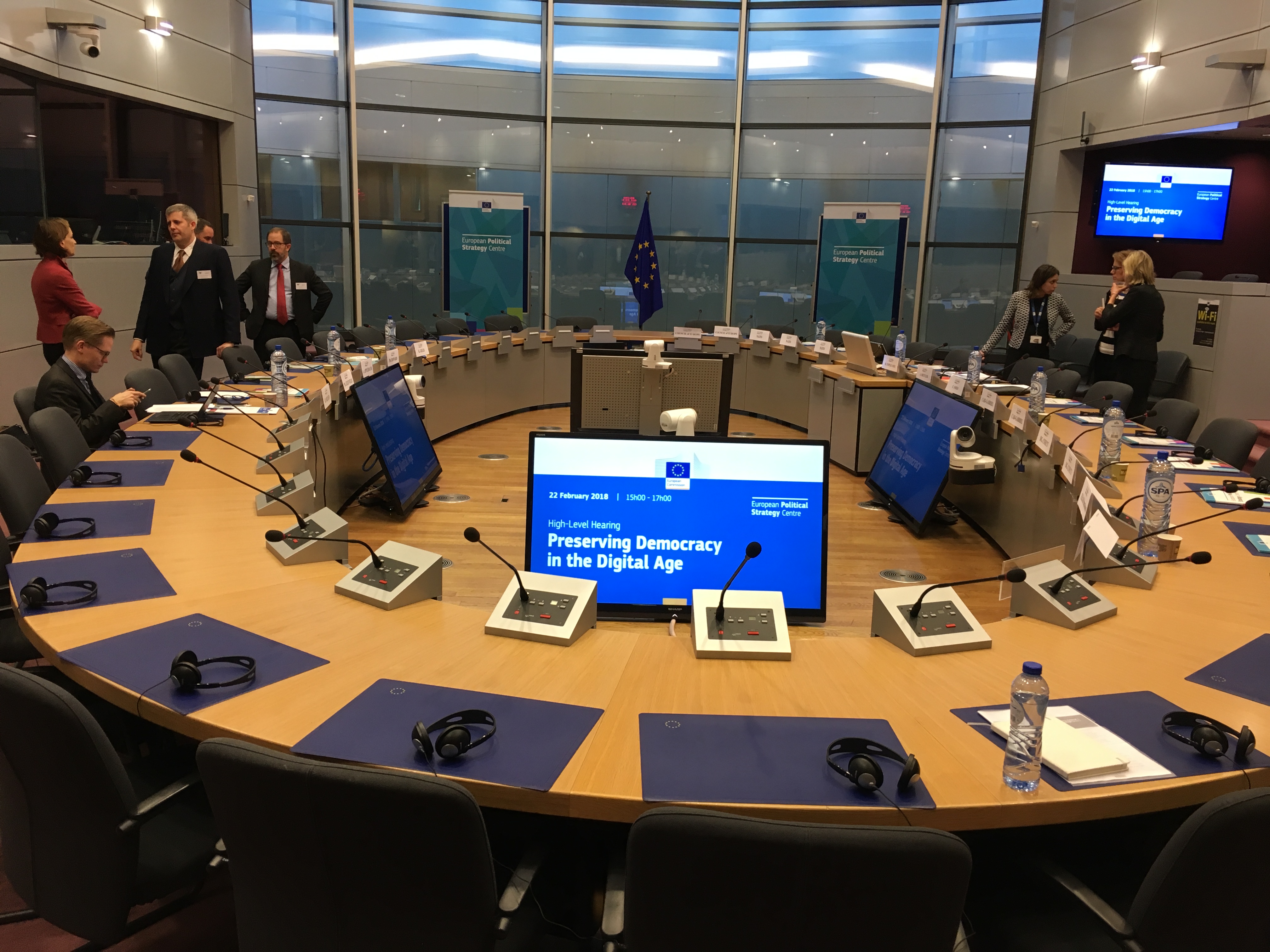

How to Monitor Fake News
By Tom Wheeler, the chairman of the Federal Communications Commission from 2013 to 2017, is a visiting fellow at the Brookings Institution and a fellow at Harvard Kennedy School.
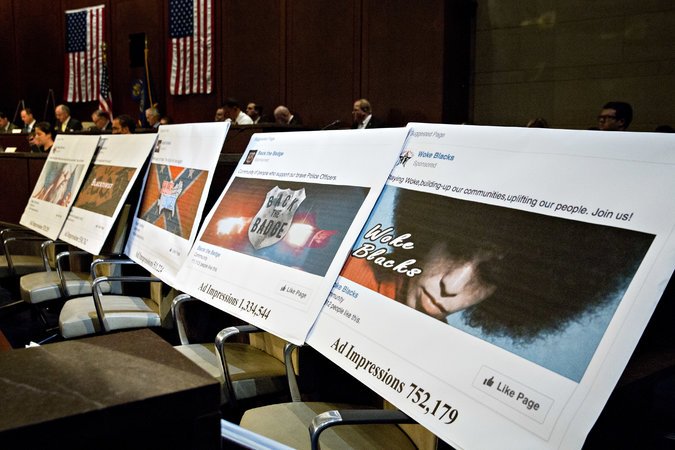 The editorial decisions of a newspaper or television news program are immediately apparent (articles published, segments aired) and so can be readily analyzed for bias and effect. By contrast, the editorial decisions of social media algorithms are opaque and slow to be discovered — even to those who run the platforms. It can take days or weeks before anyone finds out what has been disseminated by social media software.
The government should require social media platforms like Facebook and Twitter to use a similar open application programming interface. This would make it possible for third parties to build software to monitor and report on the effects of social media algorithms. (This idea has been proposed by Wael Ghonim, the Egyptian Google employee who helped organize the Tahrir Square uprising in 2011.)
And one effective form of information-sharing would be legally mandated open application programming interfaces for social media platforms. They would help the public identify what is being delivered by social media algorithms, and thus help protect our democracy.
See the full story here: https://www.nytimes.com/2018/02/20/opinion/monitor-fake-news.html