SingularityNet: Converging AI & Blockchain for the greater good
 ...AI is currently dominated by a few giant corporations who want to monopolize AI and maximize their own share value, at the individual’s expense. But they can only do so because there is no efficient, network alternative available to the general public.
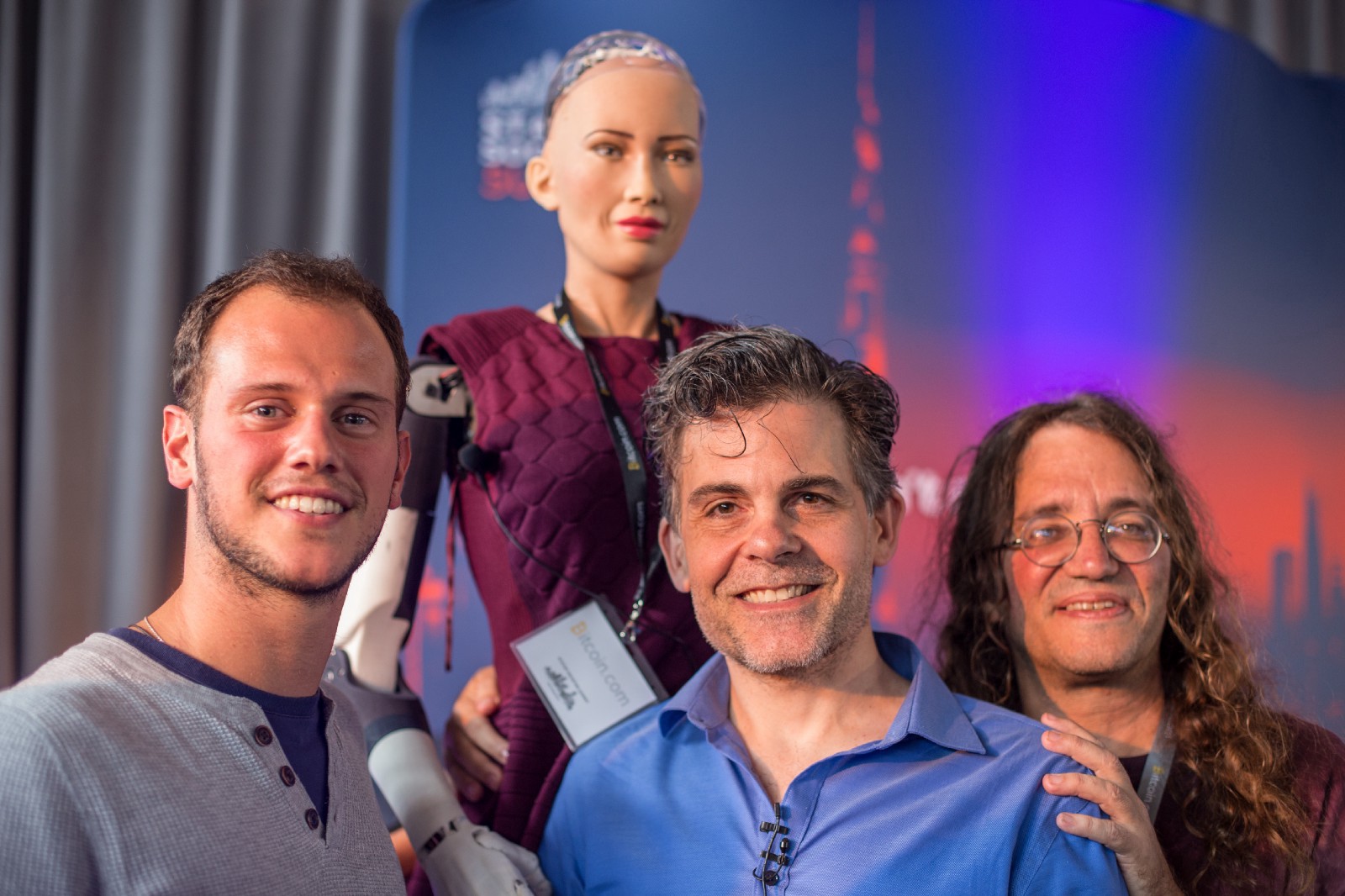
This has to change, and that is why Ben Goertzel, David Hanson, and I are creating SingularityNET, a protocol that allows anyone monetize AI algorithms at scale in a permissionless market.
SingularityNET is a collaborative effort that brings several teams of different expertises, backgrounds, and walks of life together, including:
- Hanson Robotics — the world’s most advanced robotic company in the world
- OpenCog — global open-source software initiative aimed at building AGI
- Novamente — an AI-based R&D and consulting company
- Vulpem Ventures — a blockchain and cybersecurity agency
We envision a future AI economy that is pervasive and sustainable, in which the immense knowledge and wealth that AI creates is distributed to all sentient beings .
See the whole story here: https://becominghuman.ai/announcing-my-next-big-adventure-716806c88be9
Quantum encryption is now fast enough for voice calls
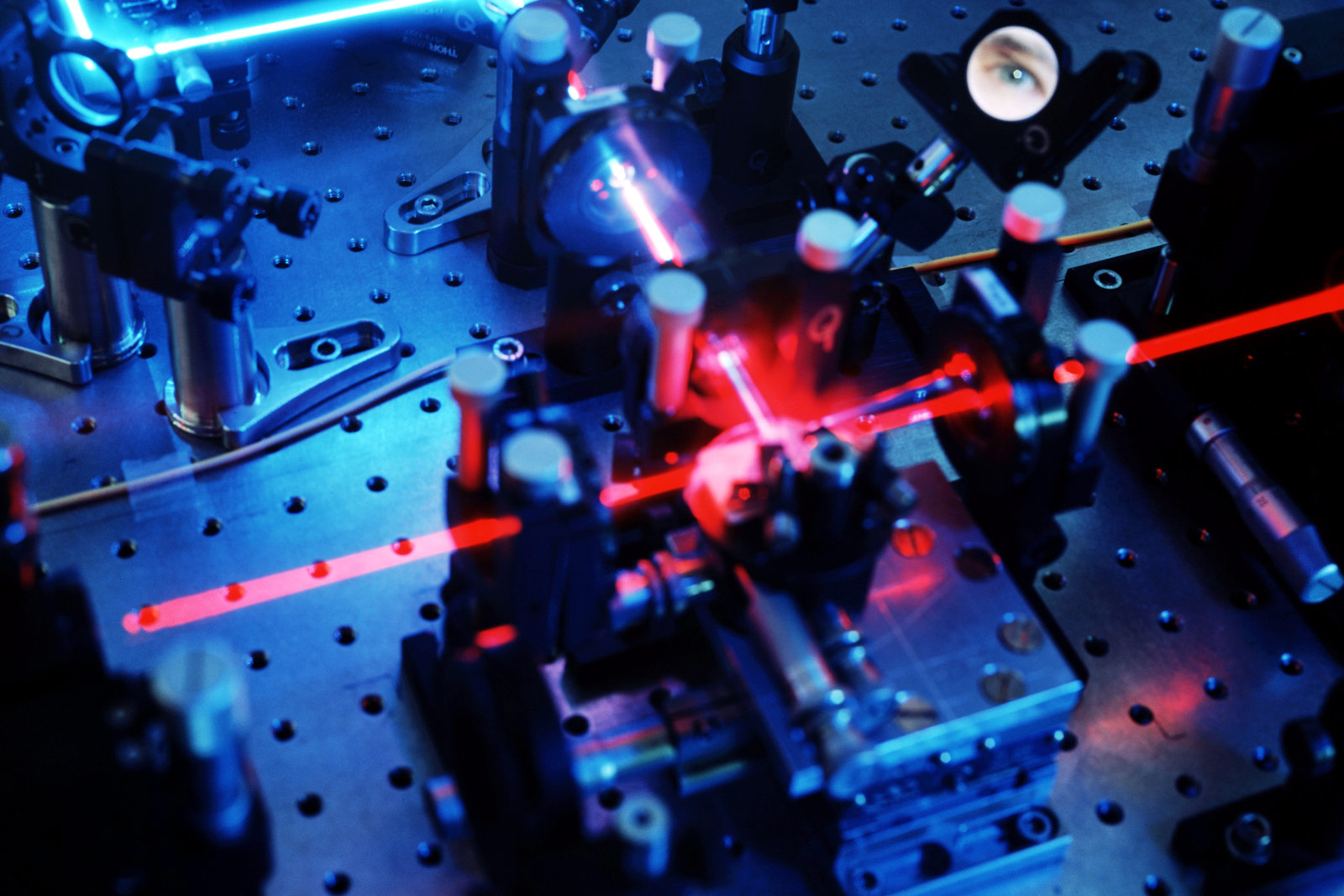
Quantum cryptography. Eye of an observer reflected in a mirror in quantum cryptography apparatus. Quantum cryptography is based on the principle of entanglement, a property of a pair of particles in which a change to one has an instantaneous effect on the other, no matter how far apart they are. Cryptography in this case refers to the encoding of data so that only specified targets can access it. If the sender and the receiver of the data share entanglement then any data is only readable by them alone. This is more secure than existing encryption methods, most of which rely on mathematical algorithms. Photographed at the lab of Anton Zeilinger at Vienna University, Austria.
...researchers have developed a quantum encryption key distribution system that promises to be five to 10 times faster than existing methods, or roughly on par with conventional encryption when run in parallel. The trick was to cram more data into each photon.
Normally, you can only encode one bit per photon by using a weak laser. The team discovered that it could encode two bits by tweaking the release time of photons and using high-speed photon detectors to track these changes. Effectively, they're giving photons properties they couldn't have before.
There's a lot of effort left before this becomes practical, not the least of which is the size: a transmitter/receiver combo would be about as large as a computer. It's more realistic than you might think, mind you. All the parts beyond the single-photon detector are readily available, and it could even be used for "free space" (read: over the air) transmissions. Eventually, there may be a time when you could hold a secure voice chat knowing that even the most determined spy couldn't listen in.
See the full story here: https://www.engadget.com/2017/11/26/scientists-develop-fast-quantum-encryption/
Professor Vikram Explains the Integration of Mixed Reality/Augmented Reality/Virtual Reality into Various Technologies
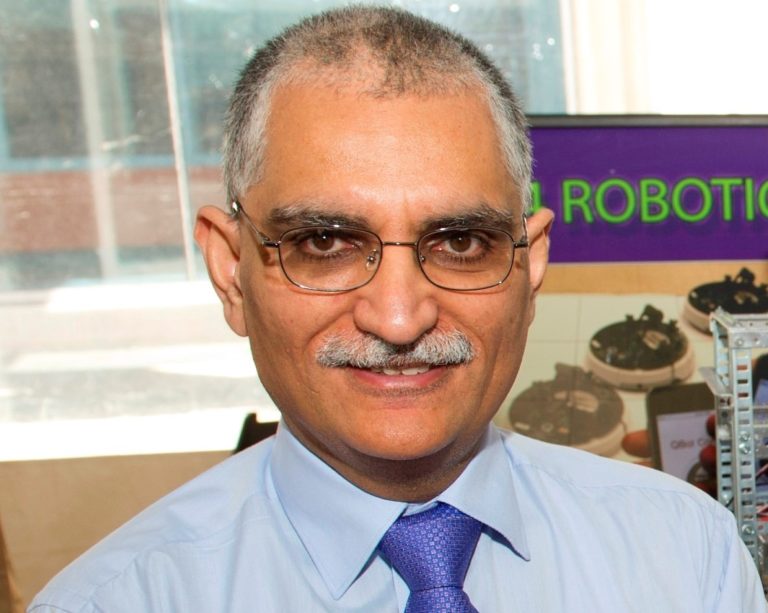 IEEE Senior Member Vikram Kapila, Professor, Department of Mechanical and Aerospace Engineering Director, Mechatronics, Controls, and Robotics Laboratory New York University, Tandon School of Engineering
IEEE Transmitter: How can MR/AR/VR benefit the world’s next leaders in research and teaching, medicine and exploration (e.g. space, underwater, archaeology)?
Professor Kapila: The MR/AR/VR technologies can benefit the world’s next leaders by allowing their frictionless integration in applications that employ convergent-technologies, e.g., robotics, computer vision, machine learning, additive manufacturing, among others. Similar to open-source hardware and software platforms such as Arduino, Raspberry Pi, ROS, OpenCV, etc., development, dissemination, and deployment of corresponding open-source hardware and software for MR/AR/VR can enable researchers from disparate domains to explore these technologies.
Compelling use-cases will further showcase broad utility of these technologies to potential users. These technologies can of course facilitate highly intuitive, natural, and immersive telerobotics which is highly relevant to remote exploration in space, underwater, and archaeology; remote observation of land and sea creatures without human invasion of their natural habitat; as well as in surgery. MR/AR/VR have myriad applications in education, for example, laboratory education, anatomy, astronomy, engineering graphics, spatial relations, etc. Moreover, in a manufacturing environment, maintenance workers can benefit from the MR/AR/VR technologies during inspection and repair operations.
See the full story here; https://transmitter.ieee.org/professor-vikram-explains-integration-mixed-reality-augmented-reality-virtual-reality-various-technologies/
Apple acquired augmented reality headset startup Vrvana for $30M
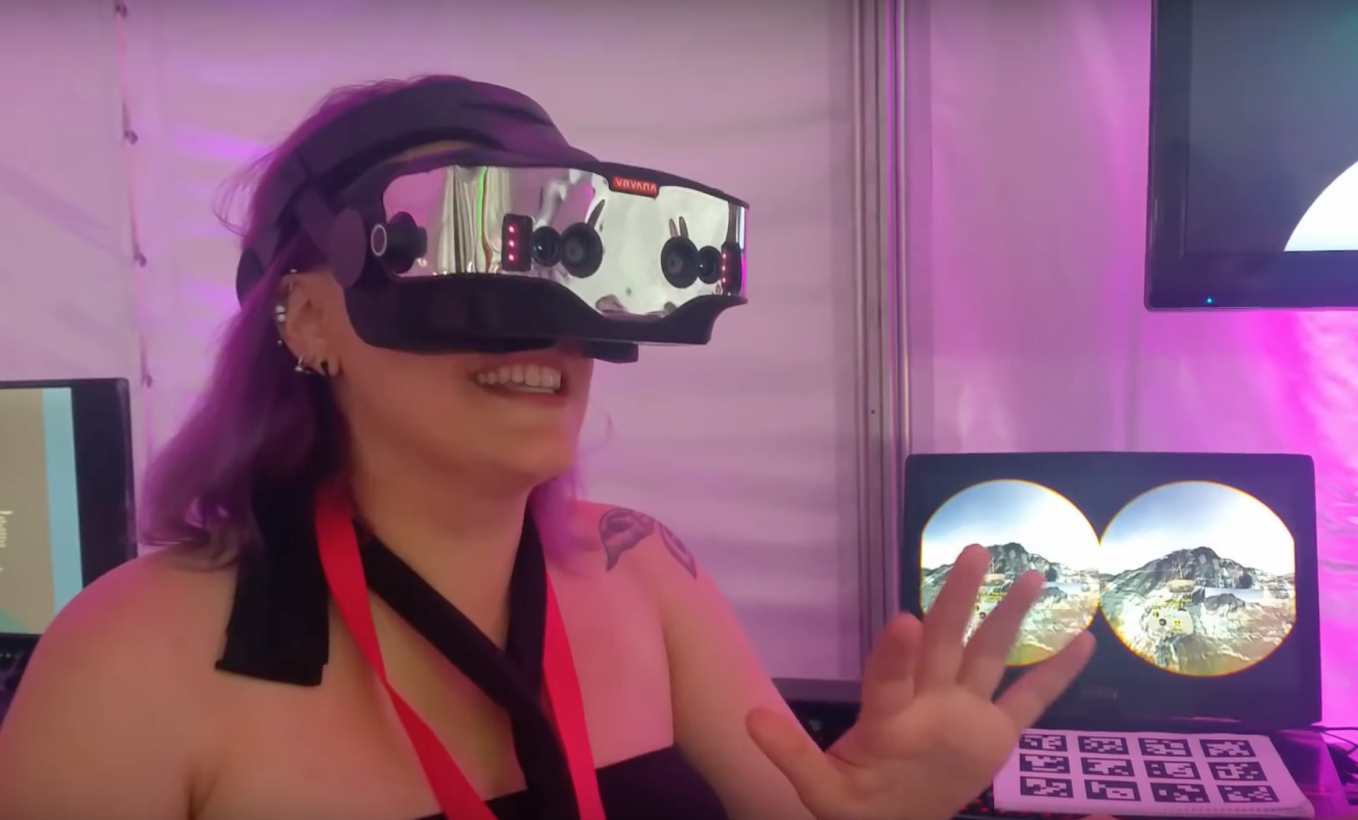 As Apple reportedly ramps up work to ship an augmented reality headset in 2020, it has acquired a startup from Montreal, Canada that could help it get there. TechCrunch has learned that Apple has acquired Vrvana, maker of the Totem headset — which had rave reviews but never shipped. The deal was for around $30 million, two sources tell TechCrunch.
The only product that Vrvana shows off on its site is the unreleased Totem headset, an “extended reality” device utilizing key technologies from both AR and virtual reality to allow for both experiences on a single headset.
The tethered device had a form factor similar to many of today’s VR headsets, but uniquely relied on several forward-facing pass-through cameras to replicate the outside world on its OLED displays inside the headset. The system of cameras enabled 6DoF tracking, a technology which allows the device to track its position in 3D space, while also using infrared cameras to track a user’s hands.
A key disadvantage in these types of systems, aside from bulky aesthetics, is that there is often noticeable lag between the cameras capturing the outside world and how quickly it is displayed in-headset.
See the full story here: https://techcrunch.com/2017/11/21/apple-acquires-mixed-reality-headset-startup-vrvana-for-30m/
YOU CAN NOW MIX ON VINYL USING VIRTUAL REALITY
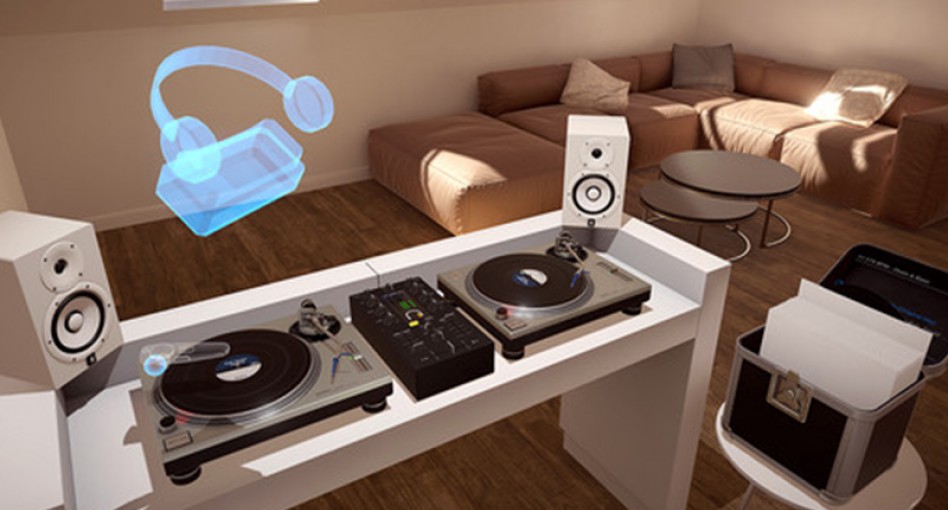 With help from professional DJs, Vinyl Reality has been created to provide an accurate and realistic simulation of DJ'ing with vinyl inside virtual reality with the help of two VR controllers and VR headset.
The software features two accurately modelled turntables, with realistic behaviour, and a two-channel mixer with EQs, PLF and gains.
The German software developer has even gone to the trouble of creating a record crate so users can sift through virtual records in between mixes.
See the full story here: https://djmag.com/news/you-can-now-mix-vinyl-using-virtual-reality
Lightform raises $5 million to make projected augmented reality mainstream
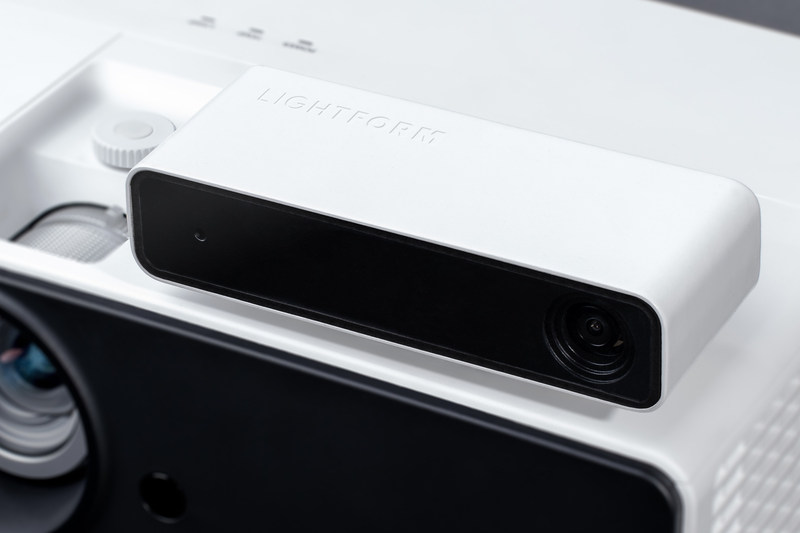 [Philip Lelyveld comment: this is projection mapping using what looks like a leap motion sensor and software for real time surface mapping.]
Lightform Inc., an augmented reality hardware company, is announcing a $5 million round of funding led by Lux Capital. Other participants in the round include Dolby Family Ventures, CrunchFund, Comet Labs, Presence Capital, and Anorak Ventures. Lightform is using the capital to fund the manufacturing of their projected AR device, which lets artists and designers easily map digital video content onto 3D objects and spaces. The technology can be used in retail, restaurants, offices, and events to inform, advertise or entertain customers.
As an example, Lightform partnered with local San Francisco bakery Vive la tarte for a pilot installation using their system. A digitally updatable menu is projected onto a sculpture made of wood and steel. "We wanted to do something different and saw Lightform's technology as a great way to push the boundaries of what a menu could be," says Arnaud Goethals, Vive la tarte's co-founder and CEO. "The menu is alive, like our food, and it perfectly integrates in our space."
See the full story here: https://www.prnewswire.com/news-releases/lightform-raises-5-million-to-make-projected-augmented-reality-mainstream-300560690.html
Phones for urns: Hong Kong turns to virtual reality to honor ancestors
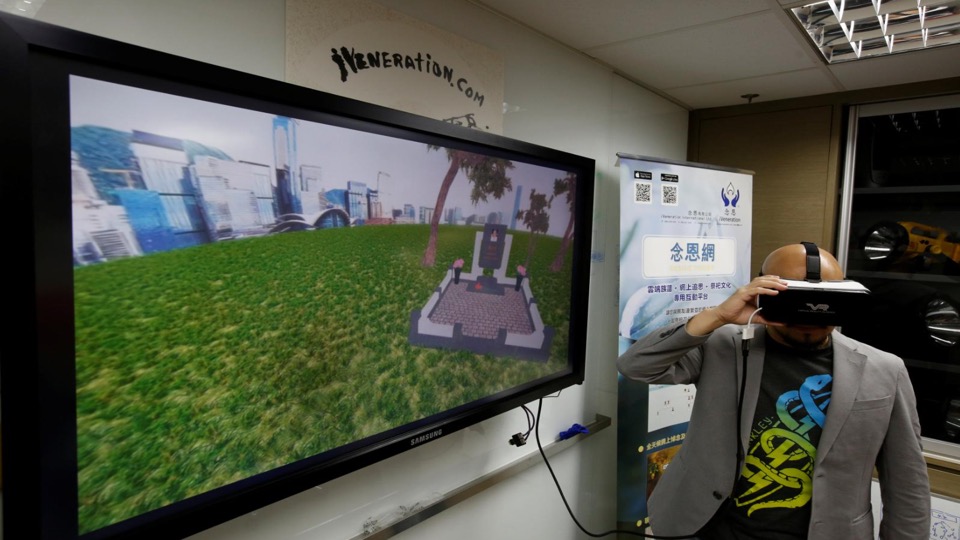 Anthony Yau’s firm, iVeneration.com, offers users the ability to create virtual headstones anywhere in an augmented reality landscape of Hong Kong, including such unlikely places as a downtown park.
...allowing people to honor Confucian traditions of filial obligation in the territory where it can cost up to $130,000 to store the ashes of loved ones.
“The dead are taking so much more space than those who are still alive, as those buried use that piece of land for many years,” said Yau, as he manipulated his mobile telephone to correctly position a candle in front of a virtual headstone.
“For me, you don’t have to go to a thing to remember those passed away, it’s all in your heart.”
See the full story here: https://www.reuters.com/article/us-hongkong-cemetery-vr/phones-for-urns-hong-kong-turns-to-virtual-reality-to-honor-ancestors-idUSKBN1DL0YEhttps://www.reuters.com/article/us-hongkong-cemetery-vr/phones-for-urns-hong-kong-turns-to-virtual-reality-to-honor-ancestors-idUSKBN1DL0YE