VR As An Empathy Machine: With Great Power Comes Great Responsibility
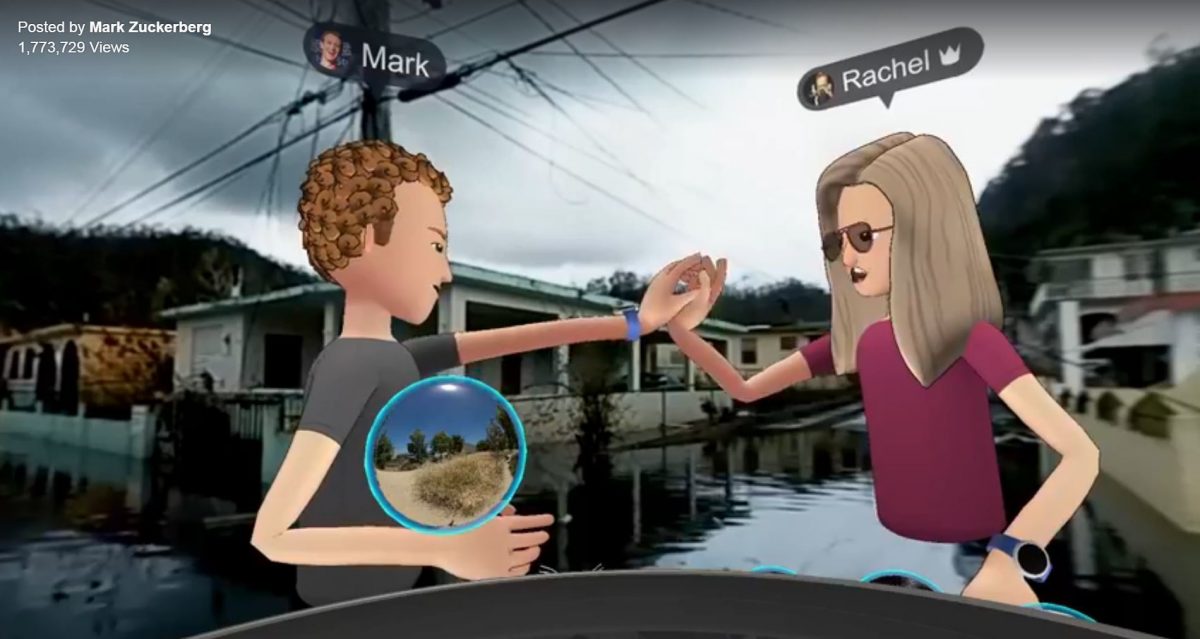 I have no doubt there will be AR apps that will become literal rose-colored glasses to erase homeless people from view on the streets and make dilapidated dwellings appear to be sparkling, grand mansions, but we can’t let technology disconnect us from real societal issues; that’s not a cure, it’s a curtain. Technology can be fantastic and magical, but it can also be horrifying, and it’s the responsibility of creators to understand the implications of their designs.
See the full story here: https://uploadvr.com/vr-empathy-responsibility/
With Tiny Stereoscopic 360-Degree Camera, Live Planet Aims To Succeed Where Others Failed
 Startup Live Planet plans to deliver its first cameras in December as part of an end-to-end stereoscopic 360-degree video platform aimed at making it easier for creators to stream live high-quality content.
Live Planet is led by serial entrepreneur Halsey Minor, who largely self-funded this company after a long track record at the start of businesses like CNET, Salesforce and GrandCentral (which later became Google Voice).
The Live Planet system starts with a tiny 360-degree camera equipped with 16 lenses capturing stereoscopic video, with NVIDIA silicon on board powering it. The system is aimed squarely at the professional market just vacated with Nokia’s decision to end development of the OZO camera. The Live Planet camera costs around $10,000, which is a fraction of OZO’s price. And because the Live Planet camera is so small — a little larger than a coffee cup — Minor believes it will be able to be placed in tighter spots closer to the action.
The camera stitches footage on-board and streams a finished stereoscopic file over Wi-Fi, ethernet or USB. It can be operated locally or through the Web, allowing for its settings to be easily adjusted through a Web page.
Live Planet’s cloud tools include adaptive streaming techniques...
The camera shoots at 30 frames per second and is said to provide a 4K stereoscopic view with USB to support accessories, an SD card slot, Toslink and HDMI.
See the full story here: https://uploadvr.com/live-planet-360-video-platform/
Swing and a miss: Why virtual reality is striking out with sports fans
 I hate to say it, but even with all of its failings, VR still has immense potential to revolutionize how we watch sports. One way to do that is to truly leverage the immersive technology of VR to deliver engaging content you can’t get anywhere else. ...
The Fox Sports VR app took a huge step toward social VR by allowing people to watch a game in a virtual lounge while talking to floating avatar heads that represent people sharing the experience. In the app, you can virtually hang out with either Facebook friends of yours or complete strangers.
Mobile VR is also on the precipice of a revolution with the introduction of standalone VR headsets. Mobile headsets like the Gear VR and Google Daydream provide you with only three degrees of freedom (3DOF), allowing you to look horizontally and vertically, but not move in a 3D space. Standalone VR headsets that require no phone, such as the upcoming Oculus Go, offer six degrees of freedom (6DOF) allowing you to move up, down, left, right, backward, and forward in a 3D space. NextVR co-founder and CEO David Cole is bullish on the potential such standalone VR headsets can have on sports. “For instance, you are watching our center court camera feed and something obstructs the camera — like if a ref stands in front of the camera — you can physically move your body and look around it,” Cole told Digital Trends in June.
See the full story here; https://www.digitaltrends.com/features/virtual-reality-sports-failures/
Virtual Reality Makes Real Gains Across Africa
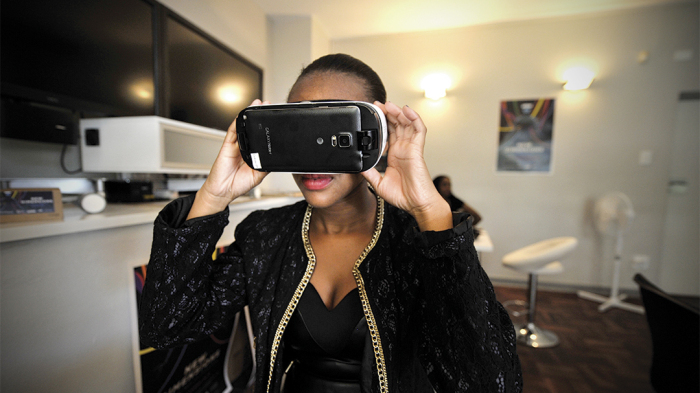 South Africa has already gotten a taste of what VR can offer in sectors like healthcare, real estate and tourism. Developers are optimistic that the technology will have a transformative effect in classrooms across the continent, too. “It’s such a natural way to bring things alive,” says Gillis.
“As proofs of concepts and well-funded VR campaigns have come out globally, we’re seeing a sustained interest from corporations,” he adds. “As a company we have quadrupled our staff base in the last year.”
That hasn’t necessarily trickled down to widespread adoption at the consumer level, where hardware is still out of the reach of most South Africans.
One of the goals in Johannesburg this week is “demystifying VR for filmmakers,” according to producer Steven Markovitz, CEO of Big World Cinema, which last year helped to launch “New Dimensions,” a pan-African narrative VR collaboration featuring artists from five countries.
“With VR, we’re right at the beginning of [creating] a film language,” he says. “The more people who are participating and experimenting, the more we can move that along.”
See the full story here: http://variety.com/2017/tv/festivals/virtual-reality-makes-real-gains-across-africa-1202596308/
ODG, Mastercard, and Qualcomm show off augmented reality shopping
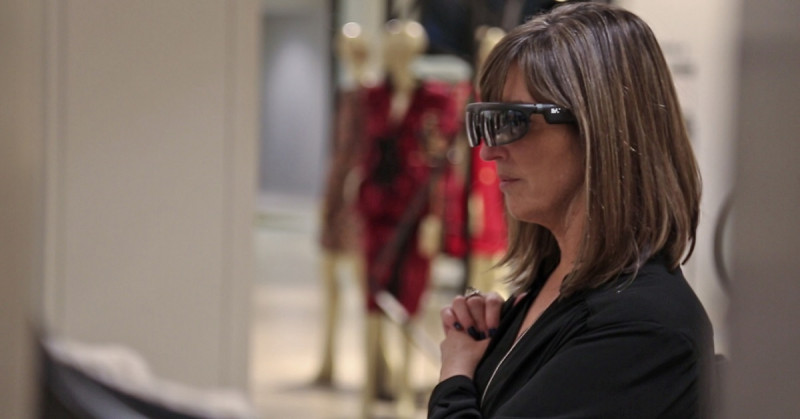 Augmented reality may be a big part of the future of shopping. Mastercard, Osterhout Design Group, and Qualcomm have created a prototype retail experience that incorporates augmented reality glasses, iris authentication, and seamless mobile payments.
The tech showcase will be displayed with Saks Fifth Avenue clothing at the Money2020 event in Las Vegas from October 23 to 25. The exhibit is meant to show off the full shopping experience, from browsing inventory to making secure payments.
The demo uses photorealistic augmented reality, enabling the shopper to look at clothing on the racks and view digital details, such as the price. While looking at a physical item, you can view digital details on the display of your glasses. Mastercard’s Masterpass will authenticate the shopper, using the Qualcomm iris scan tech, which scans your eye to identify you. The shopper then selects a card from their Masterpass-enabled wallet and completes the purchase by selecting the Masterpass button on the screen. Items can be taken home from the store or shipped, depending on availability.
See the full story here: https://venturebeat.com/2017/10/23/odg-mastercard-and-qualcomm-show-off-augmented-reality-shopping/
See another story on this here: https://www.medianama.com/2017/10/223-mastercard-augmented-reality-iris/
Regal Plans 2018 Launch For 28-Page, Augmented-Reality Program Moviebill
 As ShowEast gets under way today in Miami, one company is lifting the curtain on an exhibition product that is both high-tech and old-school: a 28-page augmented-reality program to be handed out free to ticket buyers.
Moviebill will offer an array of activations and digital content via smartphone, but its physical manifestation will launch in 2018 at Regal Entertainment Group theatres.
A custom visual recognition scanner, built directly into the Regal Cinemas app, will link to online content. Moviebill will be available on the more than 7 million devices currently connected to the Regal app. Moviebill creators James Andrew Felts and Matthew Shreder, principals in Concourse Media, say that base makes Moviebill the largest entertainment-focused AR platform to date.
See the full story here: http://deadline.com/2017/10/regal-plans-2018-launch-for-augmented-reality-program-moviebill-1202193092/
Here Are Some Of The Legal Implications Of Virtual Reality In Esports
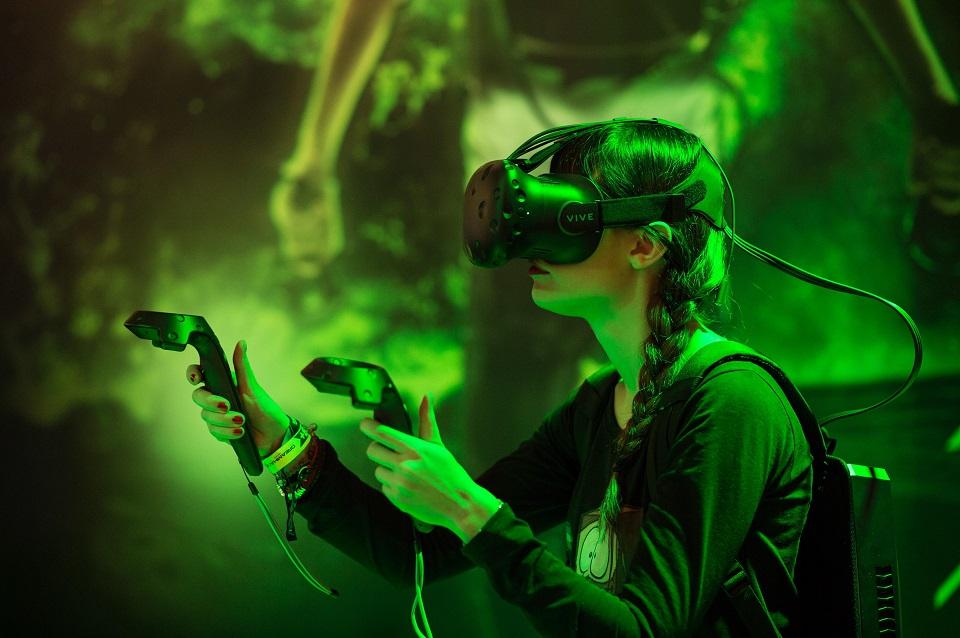 Esports now has a competitive VR esports league and games such as Dota 2 and Halo incorporate these new technologies. Although we have a few years before we see VR’s full impact, slowly, but surely, the reality of esports is virtual.
The use of gaming content and software technology in this collaboration will raise issues of intellectual property rights. There’s no doubt the game developer owns the content of the game, but as VR enables the user to interact with the content in a variety of ways, what was once clear ownership becomes blurred.
...copyright law does protect the expression of ideas and the unique expression of the game’s underlying concepts that make up the character and content of the game. Patent law does provide the owner with a right to exclude others from making, using, selling, and importing the same machines and methods. Ultimately, patents provide necessary protection over the technology behind the game.
Developers will continue to seek protection over their creations, but as VR becomes another player on an already crowded playing field of developer, gamer, streamer, spectator, etc., it may make it more challenging to answer the central question of both copyright and patent law—who owns what?
Q: Do you think there will be a point where the line between gamer and spectator will be blurred with the incorporation of VR into esports?
A: Yes, and that could be the most rewarding aspect of this partnership.
See the full story here: https://www.forbes.com/sites/allabouttherupees/2017/10/24/here-are-some-of-the-legal-implications-of-virtual-reality-in-esports/#208337ce36ce
AdHawk’s Tiny Sensors Could Enable Much Smaller VR Headsets And AR Glasses

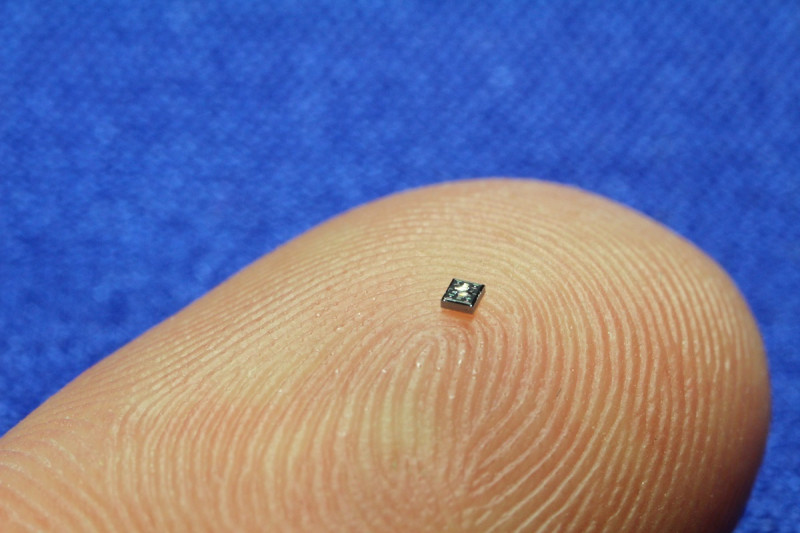 The Kitchener, Canada-based company has raised $4.6 million in a funding round led by Intel. AdHawk Microsystems said that its smaller, faster, more power-efficient motion-tracking solutions will render camera-based eye tracking obsolete. And they will pave the way for a new generation of highly immersive AR/VR experiences.
So far, most eye-tracking systems, like Tobii’s products, have relied on cameras.
Unlike camera-based eye-tracking that needs to be tethered to a computer, the AdHawk system can be embedded in AR/VR headsets or glasses and worn comfortably all day.
AdHawk can capture thousands of data points per second, enabling a system based on the chips to be able to predict where a user will look next, leading to more immersive AR/VR experiences.
AdHawk’s eye-tracker replaces the cameras with ultra-compact micro-electromechanical systems — known as MEMS — that are so small they can’t be seen by the naked eye. These MEMS eliminate power-hungry image processing altogether, resulting in big improvements in speed and efficiency and size.
The AdHawk can predict where an eye will move up to 50 milliseconds (50 one-thousandths of a second) in advance.
See the full story here: https://uploadvr.com/adhawks-tiny-sensors-could-enable-much-smaller-vr-headsets-and-ar-glasses/