High Fidelity’s content protection plan has high costs (Vendor articulates problems)
 Specifically, if you care about content ownership then focus on helping build the ecosystem of open-source virtual reality platforms such as High Fidelity. Even if you’re planning on using a walled garden solution — such as a “closed grid” — make sure that it will be based on a platform that is open source and has more than one vendor offering services for it.
...the very nature of the public ledgers that blockchains utilize makes anonymity very hard to protect over time, especially if transactions can be correlated with data gathered from third parties.
See for example this article which explains how various techniques used to anonymize Bitcoin transactions can be overcome using data from online marketplaces to find the real identities of the buyers.
Given that all information stored in public blockchains is permanently accessible to everyone, no data stored in a public blockchain can be considered permanently anonymous.
This is a problem for a system that defines content ownership, especially if the people designing it assume that they can promise anonymity to the people using it, which the High Fidelity article does.
... As the proportion of content that isn’t registered in the blockchain increases compared to that which is included in it, the inventory blockchain’s value will decrease for determining who should be allowed to rez particular content.
A third problem is that even if all the transaction speed problems that currently exist with various blockchain implementations were to be resolved and the global inventory blockchain was able to handle hundreds of thousands of transactions per second, storage and bandwidth costs would make it very expensive to host a copy of the blockchain.
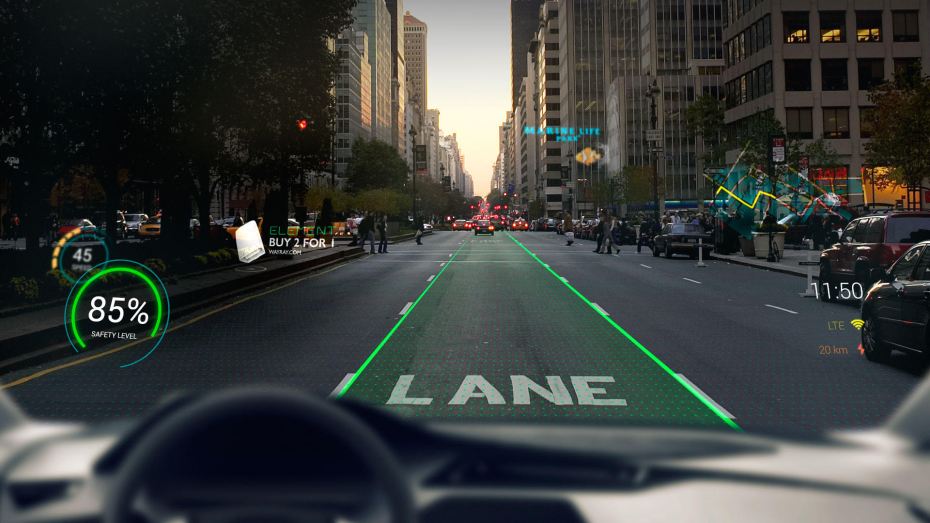
Augmented reality’s future isn’t glasses. It’s the car
 New transportation paradigm
Sooner or later, the global automotive industry will be dominated by MaaS(mobility-as-a-service) companies. Uber, Lyft, Didi, and others are already making money on transportation rather than car sales. With driverless solutions on the way, we predict car manufacturers will continue to lose ground as they are able to offer nothing more than commodity.
How AR can benefit automobiles
In the automotive industry, AR can open unlimited opportunities for location-based content serving specific business purposes, such as:
- New navigation and geolocation features which adjust the experience to the real time environmental conditions
- New types of relevant and time-conscious ads
- Gamification of transportation processes and in-car entertainment
- New types of social networks — the functionality that Waze is already exploring
See the full story here: https://venturebeat.com/2017/08/23/ar-will-drive-the-evolution-of-automated-cars/
Meet Eugene Chung, Penrose Studio, The D.W. Griffith Of Virtual Reality

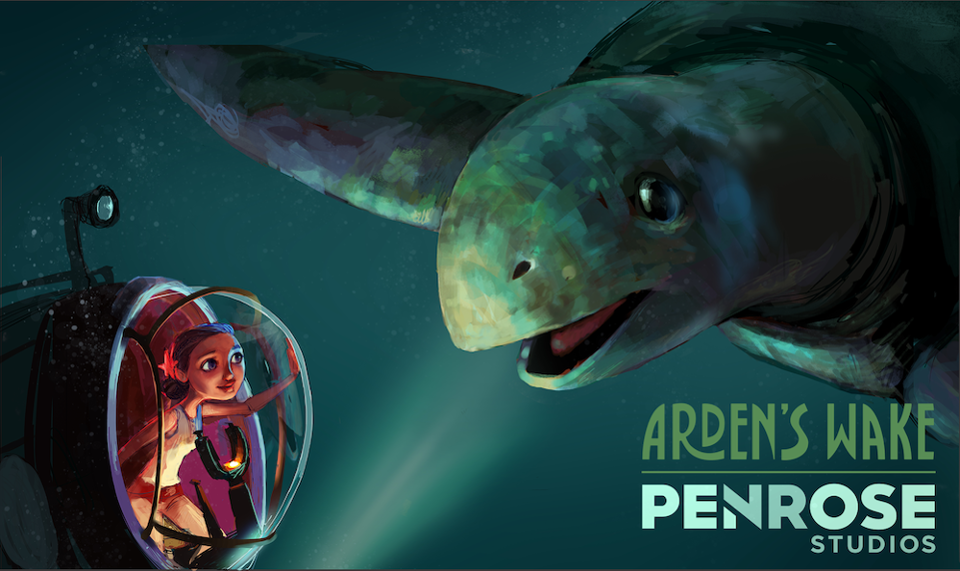 I was blown away by his sixteen-minute narrative VR masterpiece Arden's Wake at the Tribeca Film Festival's Immersive Arcade in April so I jumped at the chance to meet Chung at Penrose's San Francisco office, and to experience Arden's Wake again.
Arden's Wake was even better the second time I saw it. It's a completely new, original approach to immersive storytelling that mades me think differently about how third person narratives will work in this new medium.
Arden's Wake takes us inside a Waterworld-like post apocalyptic world, where a teenage girl lives in a Nemo-like lighthouse built atop a decaying underwater skyscraper. When her inventor father is lost while diving, she takes his underwater vehicle into the ruins to find him. The 3D animation is simply amazing. We follow the tiny characters and their narrative as if we are giants looking into a dollhouse.
It has main characters, though they are stylized like the stop motion maquettes featured in the movies Nightmare Before Christmas and James and the Giant Peach. Certainly, like all VR, we experience it, though experience doesn't quite capture it, either. Escape Rooms are experiences, too. "Sleep No More", the smash hit New York show now entering its sixth blockbuster year, is called immersive theater, which Chung says strongly influenced him, along with the operas in which his father performed. He says he is also inspired by video and strategy games, whose miniature style suggested the god-like perspective of his narrative VR experiences.
Chung's eclectic background uniquely suits him to this unique moment in time. He grew up in suburban Washington, DC. His mother was a CPA and his father a professional opera singer.
For Chung and Penrose, 2018 will bring the next installment of "Arden's Wake", which ends with a cliff hanger as our heroine is swallowed by a sea monster the size of a skyscraper. "No one knows the ideal length of the VR experiences of the future," the director said. "What we're doing is not glamorous. It's just the hard work needed to move the medium forward."
Allumette is available on Playstation VR, Oculus Rift, Steam VR, and Viveport. A release date and platforms for Arden's Wake have not yet been announced.
See the full story here: https://www.forbes.com/sites/charliefink/2017/08/24/meet-the-d-w-griffith-of-virtual-reality/#429340d727a7
Stevenson University Professor Receives Prestigious Award for Virtual Reality Work
 Assistant Professor of Digital Rhetoric at Stevenson’s School of Humanities and Social Sciences, Amanda Licastro, was recently awarded the Alliance of Digital Humanities Organizations’(ADHO) Paul Fortier Prize for her paper entitled “Teaching Empathy through Virtual Reality.”
“This project demonstrates the potential for digital humanities to foster a deeper, human understanding, specifically by focusing on and exploring the question of empathy in an educational context,” ACH representative to the ADHO awards committee, Micki Kaufman said. “The project illustrates the possibilities that innovative teaching provides as well as the power of digital humanities to foster greater social engagement and understanding through pedagogy.”
“My presentation gave me the chance to showcase the innovative ingenuity of our students, and to demonstrate the power of collaborative, project-based pedagogy,” Licastro said. “Introducing any new technology into a learning environment is risky, but I believe it is vital to prepare our students to be leaders in their chosen industries, which means making the most cutting edge tools available to them for consideration.”
Licastro added that she is an English professor, yet taught herself the skills necessary to understand digital technology and teach it to others. She encourages students to explore the unknown and learn new skills that are outside of their comfort zones.
See the full story here: http://www.stevenson.edu/about/news-events/news/stevenson-university-professor-receives-prestigious-award-for-virtual-reality-work
QVC looks to augmented reality to boost shopper engagement
 The aim with the AR experiment is to create an immersive dual-screen experience that brings shoppers closer to the network and the brands that sell within it.
Shopping network QVC is experimenting with augmented reality in an effort to boost consumer engagement during TV broadcasts.
The retailer on Tuesday began prompting shoppers and TV viewers to download an AR-based app called YouCam Makeup in order to "test" beauty products before they make a purchase. The app supposedly uses facial recognition, 3D renderings, and skin tone analysis to give shoppers an idea of how products being demoed on-air will look on their actual faces.
See the full story here: http://www.zdnet.com/article/qvc-looks-to-augmented-reality-to-boost-shopper-engagement/
AR & VR Technology Set to Grow in an Augmented Way – market research mkt res
 The global virtual reality marketwas valued at USD 2.19 billion in 2016 and is expected to reach $33.90 billion by 2022, at a CAGR of 57.84% between 2016 and 2022.
See the full article here: http://www.ebnonline.com/author.asp?section_id=4043&doc_id=282928
Millennials Regularly Use Variety of Apps for Digital Services
 For example, while only 39 percent of consumers over 35 use two or more apps to stream music, almost 60 percent of millennials will commonly do so on a regular basis.
Millennials also consume music differently than other age groups, suggests the study. “These younger users are 21 percent more likely to choose songs to play on demand, instead of streaming music without making changes,” notes TechCrunch.
Millennials are also more likely to use such apps for photo-sharing, sending videos and group chats.
“This is one of the larger differences between younger users and older users,” adds TechCrunch. “The 35-plus crowd prefers plain text messages to communicate, while their younger counterparts have since moved on."
See the full story here: http://www.etcentric.org/millennials-regularly-use-variety-of-apps-for-digital-services/