Peter Jackson’s Augmented Reality Demo Debuts At Apple Conference
 The demo was introduced today in San Jose by WingNutAR creative director Alasdair Coull, formerly head of R&D at Weta Digital, and featured a sci-fi-based aerial attack at a remote space outpost. It was used to show off Apple’s new AR tool ARKit.
Jackson was not at the conference; he’s back in New Zealand working on his next pic Mortal Engines. He and co-founder Fran Walsh formed the AR unit more than a year ago and have since been developing software, conducting R&D, and beginning to create content.
The plan is for WingNutAR to have its first commercial AR content available in Apple’s app store by late 2017.
See the full story here: http://deadline.com/2017/06/peter-jackson-augmented-reality-demo-apple-wwdc-2017-1202107785/
Interview: Two Bit Circus is using VR to cram 50-acre amusement parks into 50,000 sqft spaces
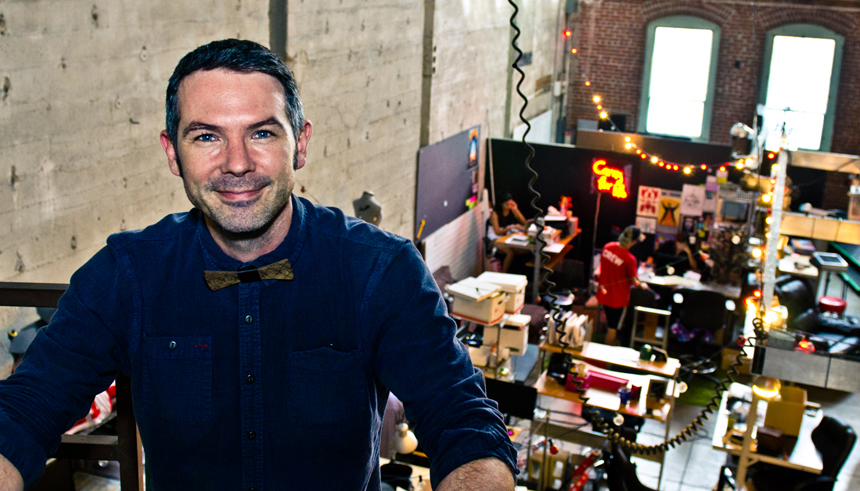 Brent Bushnell is the co-founder of a company that wants to build a family of high-tech amusement park-type operations around the country. And as if that’s not enough, when he’s not busy laying the groundwork for the first of those facilities – which is planned for Downtown Los Angeles and set to launch in early 2018 — he married Maggie Grace, the actress on Lost and Taken, this month.
“There’s kind of this backlash against technology, this idea that people are always on their phones and that their interactions with other people are mediated by technology,” Bushnell said. “We’d sort of like to reposition it and facilitate it with technology. At the end of the day, you and I are going to be elbow-to-elbow playing a game together, as opposed to being connected to our million closest friends while we’re just alone in our basement.”
The target market the company has identified is affluent young adults. Professionals perhaps out for a drink after work, 20- and 30-somethings who might otherwise be going bowling or looking for an escape room experience in the area. The founders even foresee company team-building events taking place in their spaces, maybe even client presentations there.
“Most people get to go to Disneyland maybe twice in their life,” he said. “Once as a kid and maybe once as a parent. We’re looking for something smaller that can be deployed in every major city — in the 40,000-80,000 square foot range, which you can just about put in every major city. We’re also looking for much more regular visitors. You’d come here more than twice in your life. We’re looking at all sort of different ways to engage people on a week-to-week or a month-to-month basis.”
See the full story here: http://bgr.com/2017/05/30/vr-amusement-parks-two-bit-circus-interview/
Osram IR LED will enable augmented and virtual reality headsets
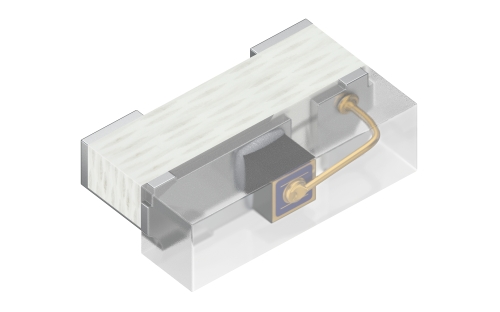 Emitting in the infrared spectrum at 850 nm, the new Osram Opto Semiconductors SFH 4055 LED targets eye-tracking applications including headsets for augmented and virtual reality systems.
The IR LED has a tiny footprint that will allow integration into or around glasses in headsets worn by users, from gamers to scientists.
Osram based the new LED on the Firefly LED architecture that has been utilized as the basis for numerous LEDs that emit in the visible spectrum. The packaged LED emits light sideways. And the 1×0.325×0.55-mm footprint allows a number of the LEDs to be mounted in a typical headset. The LEDs direct IR light at the eye and the reflection is captured by camera-based sensors to track eye movement.
See the full story here: http://www.ledsmagazine.com/articles/2017/06/osram-ir-led-will-enable-augmented-and-virtual-reality-headsets.html
Why Daqri has spread its bets with augmented reality technology
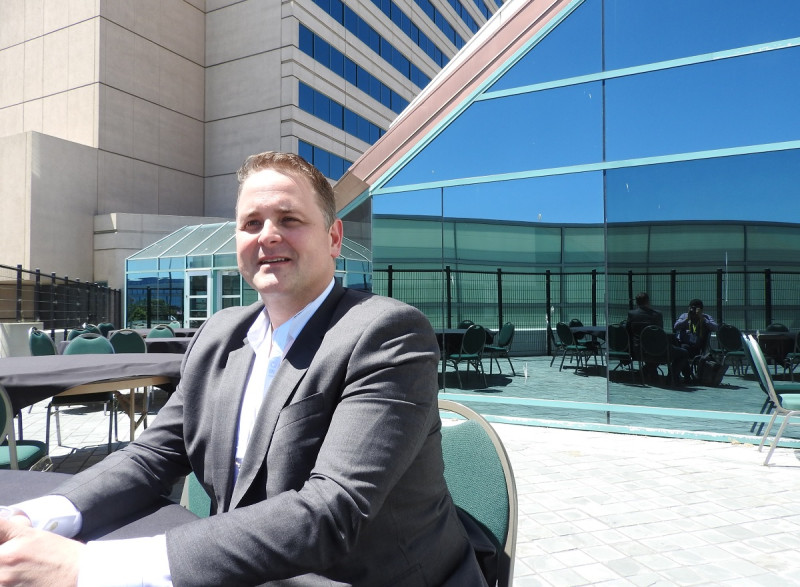 Certain types of displays you don’t need, but experiences will change to support it. Mimicking a display in AR will probably never be as good as a physical display. However, the benefit of it being virtualized could outweigh that, and the perceptible differences can be smoothed out. The question is, if I can have anything I want in real space, would I want it to look like a display, or do I change it completely into something more intuitive? Do I have a screen with an email icon and a little notification on it, or do I have a 3D model of a piece of mail sitting in front of me? I can physically intuit certain things by seeing a 3D model.
See the full story here: https://venturebeat.com/2017/06/03/why-daqri-has-spread-its-bets-with-augmented-reality-technology/
This New Lab company wants to use augmented reality to improve indoor farming
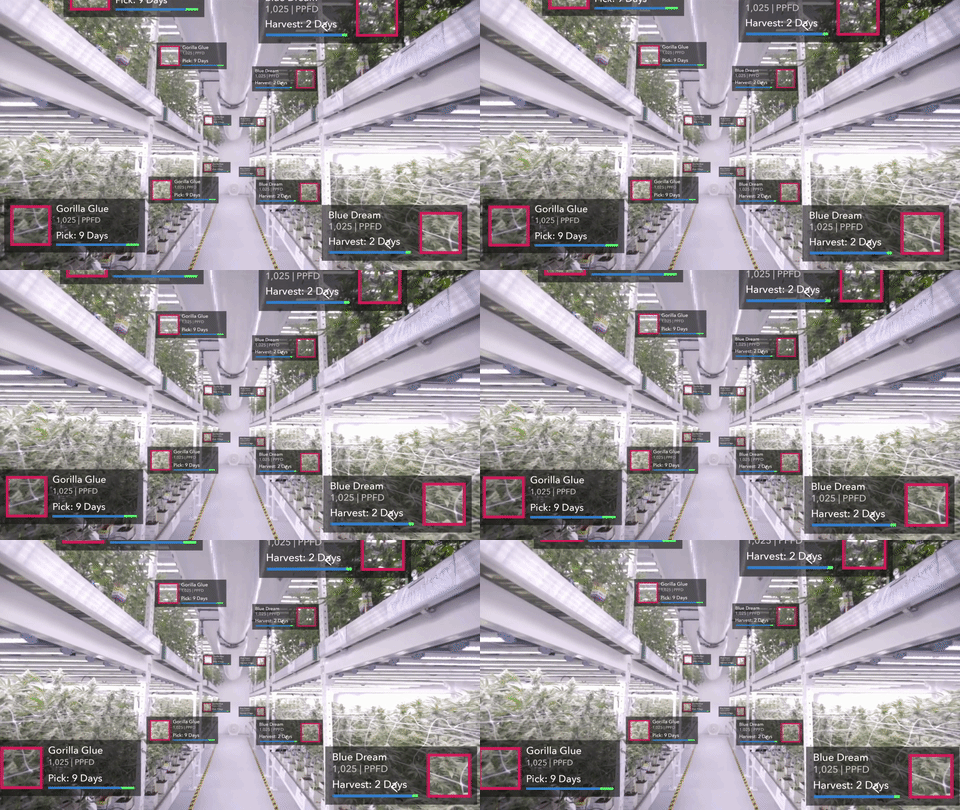 “Imagine a future where farmers wander through the rows of a greenhouse, wearing augmented reality glasses that tell them what type of tomato or strain of marijuana they’re looking at,” writes Motherboard. “Cameras installed above watch for signs of disease and pests, and monitor watering needs and growth rates. If the system spots an anomaly, it pings one of the augmented farmers to isolate the problem before it spreads.”
See the full story here; https://technical.ly/brooklyn/2017/06/02/new-lab-company-wants-use-augmented-reality-improve-indoor-farming-motherboard/
Launch Academy’s startup visa program gives entrepreneurs permanent residency in Canada
 As the U.S. seems to be hell-bent on making itself less attractive to immigrants and visitors, its neighbors to the north are sensing an opening and going the other way in an effort to attract the smartest tech entrepreneurs.
Launch Academy and its advisers will vet applicants and recommend them to the Canadian government for the visa and permanent residency process. Because of this, it’s not just an option for startups but also for founders of more mature companies that want to put their roots down in North America.
Successful applicants — and their families and core team — will be immediately eligible to apply for work visas and permanent residency. Those visas should arrive within weeks (and potentially faster) and the residency process should take about six months.
The Launch Academy team tells me that it received about 100 pre-applications with more than 20 promising candidates. Geographically, they hail from all over the world and include Harvard, Yale and MIT grads, as well as former Google and Facebook employees.
See the full story here: https://techcrunch.com/2017/06/02/launch-academys-startup-visa-program-gives-entrepreneurs-permanent-residency-in-canada/?ncid=tcdaily&utm_medium=TCnewsletter