Bungee jump off the Space Needle in ExpediaLabs’ first virtual reality release
 If visiting Seattle’s Space Needle and even bungee jumping from the top of the iconic structure was on your must-see list, the first release from ExpediaLabs could help in that (partially unrealistic) endeavor.
“Space Needle VR” is available to experience via HTC Vive on Steam. It is a collaboration between Expedia, the Bellevue, Wash.-based travel company, and the Space Needle Group.
Users can tour the iconic 605-foot structure and ride an elevator to the top — pretty standard fare for any tourist visiting the Emerald City. But access to the roof is where things turn into more than just sightseeing, as the option to bungee jump from a platform is included in the tour.
See the full story here: https://www.geekwire.com/2017/bungee-jump-off-space-needle-expedialabs-first-virtual-reality-release/
Take a wild ride down the world’s first virtual reality waterslide
[Philip Lelyveld comment; so this is a suitable PhD topic now?]
The Finance & Investment People to Watch in Augmented & Mixed Reality
 Ori Inbar
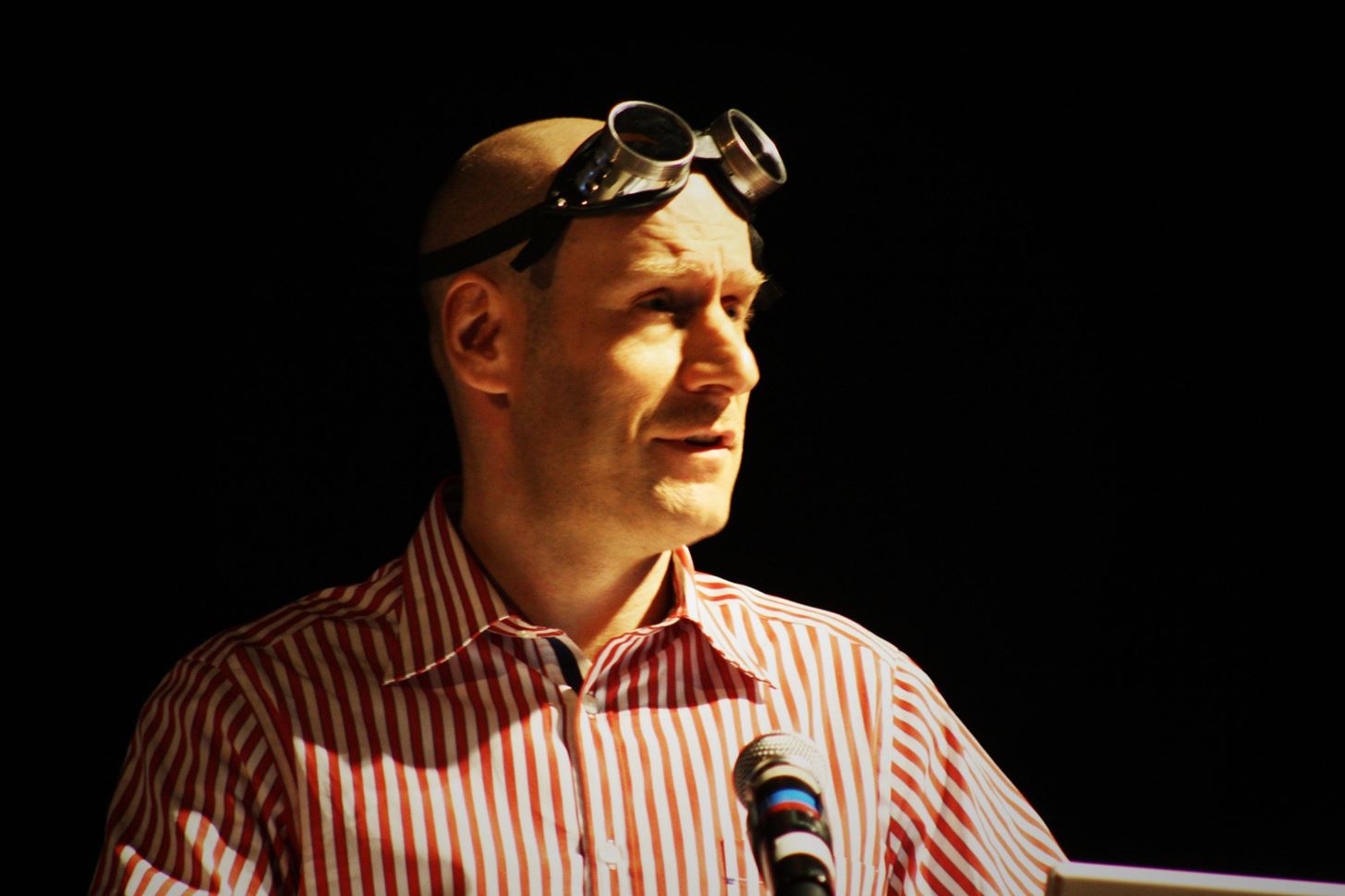
Like his business partner, Tom Emrich, Ori Inbar's influence in augmented and mixed reality touches the finance world and the development community. In 2016, he founded of Super Ventures, the first incubator and venture fund dedicated to augmented reality, where he serves as general manager. The firm's initial investments went to Fringefy, an image recognition platform for mobile devices and wearables, and Waygo, a visual translation app focused on Asian languages. Inbar has been a participant and leader in the community since 2007.
Inbar is also the co-founder and CEO of AugmentedReality.org, a worldwide non-profit organization purposed with evangelizing augmented reality and catalyzing innovation in the industry. In 2009, Inbar co-founder Ogmento, one of the first venture-backed augmented reality game development and publishing companies. In 2010, he and Emrich co-founded the Augmented World Expo (AWE), billed as "the world's largest and most influential conference for AR." He also started Games Alfresco, an influential augmented reality blog. Inbar was a double major in Computer Science and Cinema at Tel Aviv University and graduated from INSEAD University business leadership program. You can learn more about him on the Superventures website.
Tipatat Chennavasin
General partner and founder at The Venture Reality Fund, Tipatat Chennavasin cites virtual reality as the catalyst for curing his fear of heights. Since then, he has established himself as a subject-matter expert for the VR/AR industry, with several publications and presentations at industry events to his credit.
See the full story here: https://next.reality.news/news/nr50-finance-investment-people-watch-augmented-mixed-reality-0176812/
VR Porn – This porn star can do anything you want her to

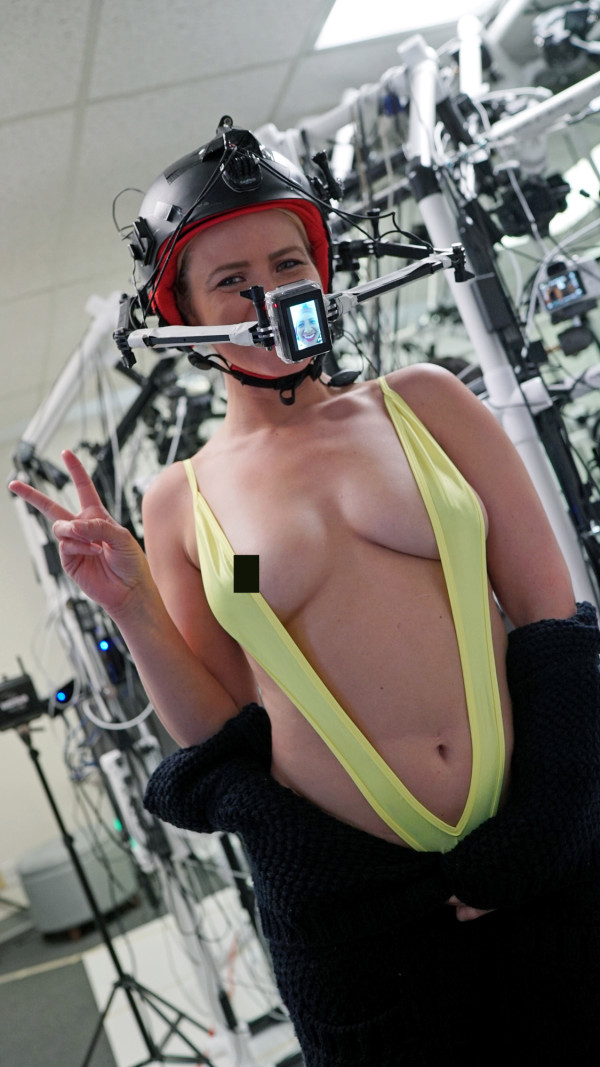
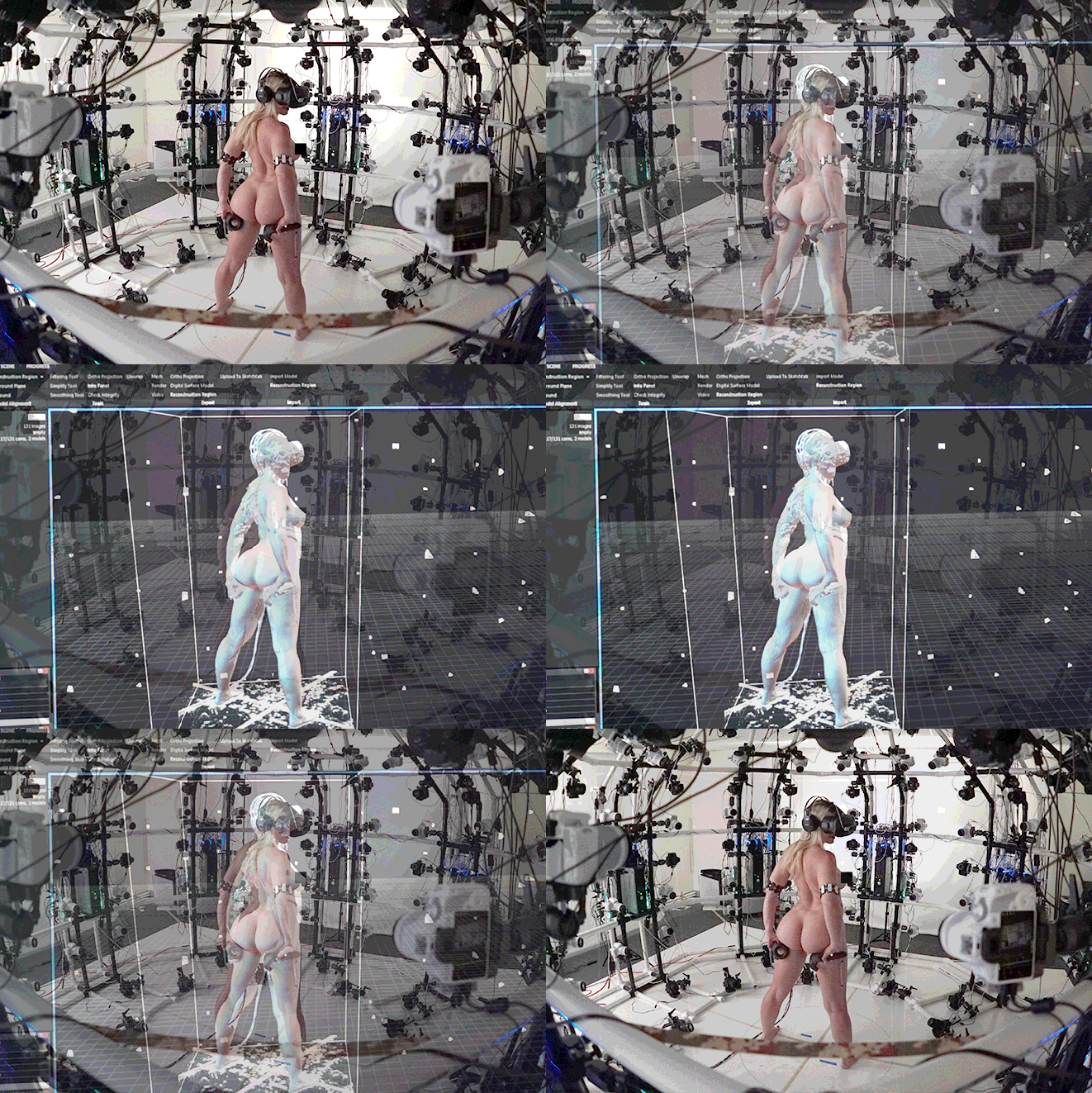 Contrary to common misconception, true virtual reality is not the same as 360 video. In 360 video, the viewer can look all around them, but they can’t move within the space and they can’t interact with the characters. In virtual reality, both of those things will be possible. And thanks to the team at virtual porn company CamasutraVR — and a hard day’s work by Albrite — it’s looking like that reality isn’t too far in the future. But what does it take to get there? Tucked in a nondescript office building not too far from Los Angeles International Airport, CamasutraVR’s recent virtual reality porn shoot revealed a few key ingredients: some serious technology, a seriously hot porn actress and a whole lot of cameras.
The biggest difference between VR porn and a high-end computer game is that the game can get away with just having a realistic face and sticking the body in a military uniform or other action-ready outfit, but there’s nowhere for the uncanny body to hide in VR porn. It’s realism or bust, and particularly, realism in the bust. Changes in the flesh are crucial — in an intimate setting, boobs and butts have to move, bounce and dimple when squeezed, or it just looks weird.
She stands under fluorescent lighting, posed like the letter T, dotted from breast to bum with tiny white motion capture dots, in the middle of what appears to be a giant white birdcage laced with cameras, 132 of them, to be exact. On cue, there’s a bright flash, actually four synchronized camera flashes to capture every angle. This scanning of full-body poses — the T pose is one of many — is the first stage of the process to generate a realistic face and body in virtual reality. Stage two is for the details of her face, running through all the expressions that will be reconstructed — naughty, nice, oh-so-enticed — and the three Bs of triple-X: boobies, booty and baby-maker.
The third and final stage of the scanning process is motion capture of the full skeleton and the face.
Albrite is liberated from the cage, and “release” is certainly the word that comes to mind to describe the sounds she’s making as she sits on the couch in her monokini with a helmet on her head, imagining double penetration. She’s showing off her versatility, imitating five orgasms in a row, as little sensor dots stuck to her visage capture her facial movements.
See the full, lengthy story here: http://nypost.com/2017/05/01/cybersex-gets-real-on-a-virtual-reality-porn-shoot/
How a hospice’s new virtual reality treatment has a striking similarity to a Black Mirror episode
See the full story here: http://www.croydonadvertiser.co.uk/how-a-hospice-s-new-virtual-reality-treatment-has-striking-similarity-to-a-black-mirror-episode/story-30269526-detail/story.html
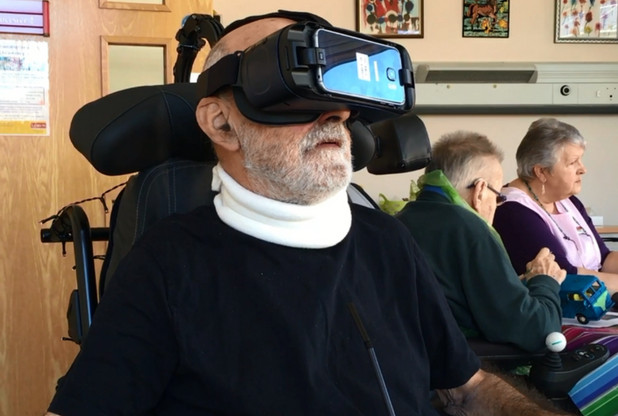
Fans of Charlie Brooker's Black Mirror are likely to recognise similarities in how a hospice has taken on a new approach to caring for terminally ill patients to an episode of the famous sci-fi series.
In similar fashion to the San Junipero episode of the show on Netflix, where terminally ill patients are given the chance to enter a virtual reality where they are in a different location, patients at a Leicester hospice can wear a headset to be transported virtually to a location they are fond of.
John Lee, 70, has Motor Neurone Disease (MND) and was the first one to try this out at LOROS.
He said it was "just like" walking through a park in Leiecester he used to visit, as he had a 360 degree view.
"You soon relax, it's just like you're there, I loved it. I nearly waved at somebody, as they walked past," Mr Lee said.
LOROS CEO, John Knight, believed it may be the first hospice in the country to use a virtual reality film of a familiar setting as a therapeutic setting.
He said: "Research suggests that the brain accepts the virtual world within 20 seconds after which the experience becomes all absorbing.
Tencent poised to launch virtual reality headset
 See the full story here: https://www.ft.com/content/71644274-2add-11e7-bc4b-5528796fe35c
High quality global journalism requires investment. Please share this article with others using the link below, do not cut & paste the article. See our T&Cs and Copyright Policy for more detail. Email ftsales.support@ft.com to buy additional rights.
https://www.ft.com/content/71644274-2add-11e7-bc4b-5528796fe35c
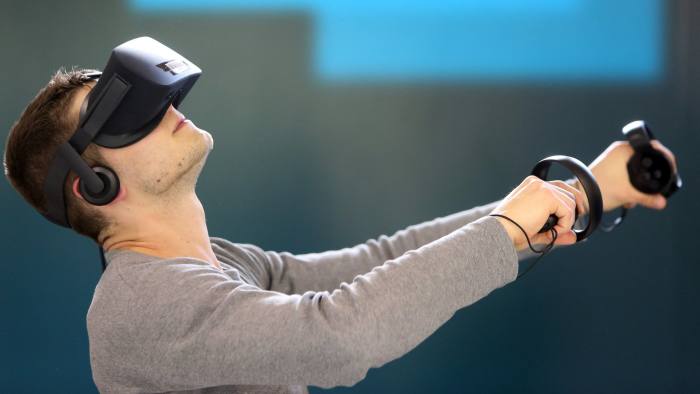
An internal research team at Shenzhen-based Tencent has been developing both PC-based VR systems, similar to Facebook-owned Oculus Rift, and mobile headsets, akin to Samsung’s Gear VR or Google’s Daydream. Whichever headset it decides to launch, Tencent is planning a release in the second half of 2017, according to people familiar with its thinking.
High quality global journalism requires investment. Please share this article with others using the link below, do not cut & paste the article. See our T&Cs and Copyright Policy for more detail. Email ftsales.support@ft.com to buy additional rights.
https://www.ft.com/content/71644274-2add-11e7-bc4b-5528796fe35c
Goldman Sachs has estimated that China accounted for a third of VR headset sales last year. According to Digi-Capital, a tech mergers and acquisitions adviser, Asia will be the largest market for such headsets by revenue by 2021, with a 45 per cent global share.
High quality global journalism requires investment. Please share this article with others using the link below, do not cut & paste the article. See our T&Cs and Copyright Policy for more detail. Email ftsales.support@ft.com to buy additional rights.
https://www.ft.com/content/71644274-2add-11e7-bc4b-5528796fe35c
“China has a large number of VR headset makers today, so fragmentation remains high,” says Tim Merel, managing director of Digi-Capital. “We expect consolidation as the market grows in the next 12 to 18 months.”
Interview: Lightform’s exciting new tech can turn anything around you into a screen
 Back when he was at Disney Imagineering eight years ago, Brett Jones saw a demo of projected augmented reality that he thought was one of the coolest things he’d ever seen. It featured an entire enchanted forest set covered in projection, with lightning and rain, fluttering butterflies and running waterfall.
The problem, though, was the demo cost millions of dollars, and only Disney could build it. That started an idea in Jones’ head — an idea to try to help make that technology more ubiquitous.
Fast forward to today, and he’s on the road to doing so. Jones is the co-founder and CEO of Lightform, a company developing a computer made specifically for AR.
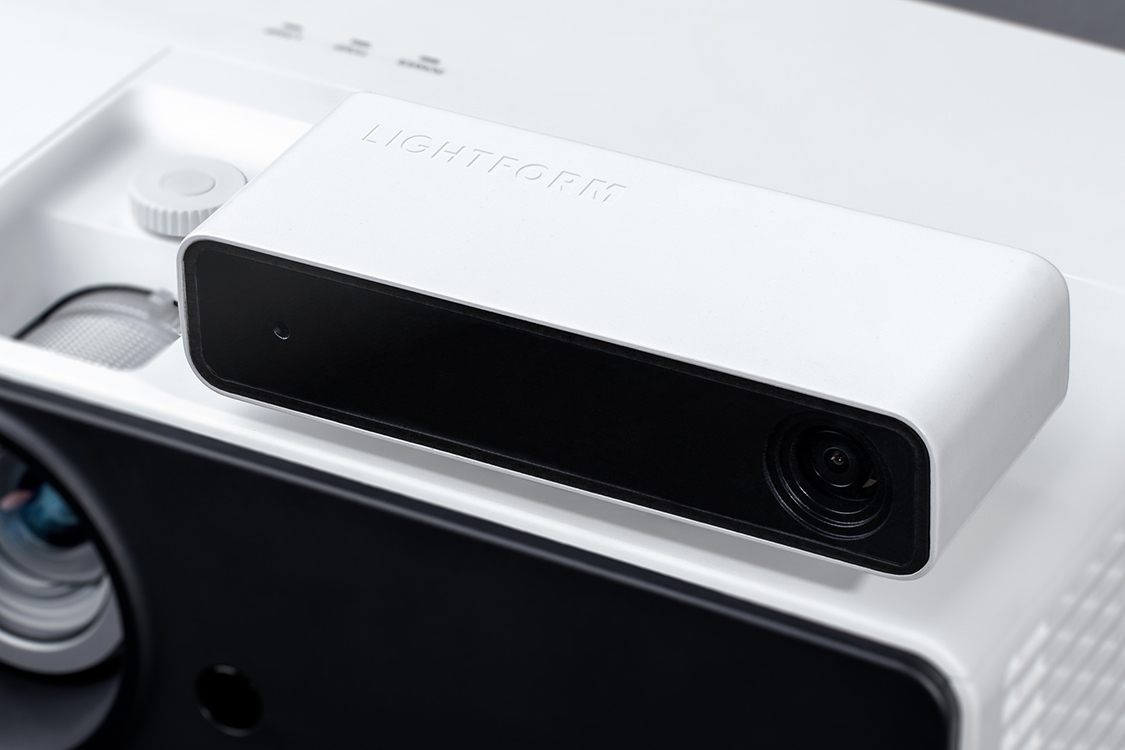
The device Lightform is developing is a computer and 3D scanning device. When connected to a video projector, it lets you scan complex scenes fast and turn basically any object into a screen. AR without a headset, as the company puts it.
The basic technology behind the company’s computer is known as projection mapping. The Lightform team’s experience with projection mapping ranges from large-scale entertainment experiences to Ph.D. research experiments, everywhere from Disney Imagineering to Microsoft Research.
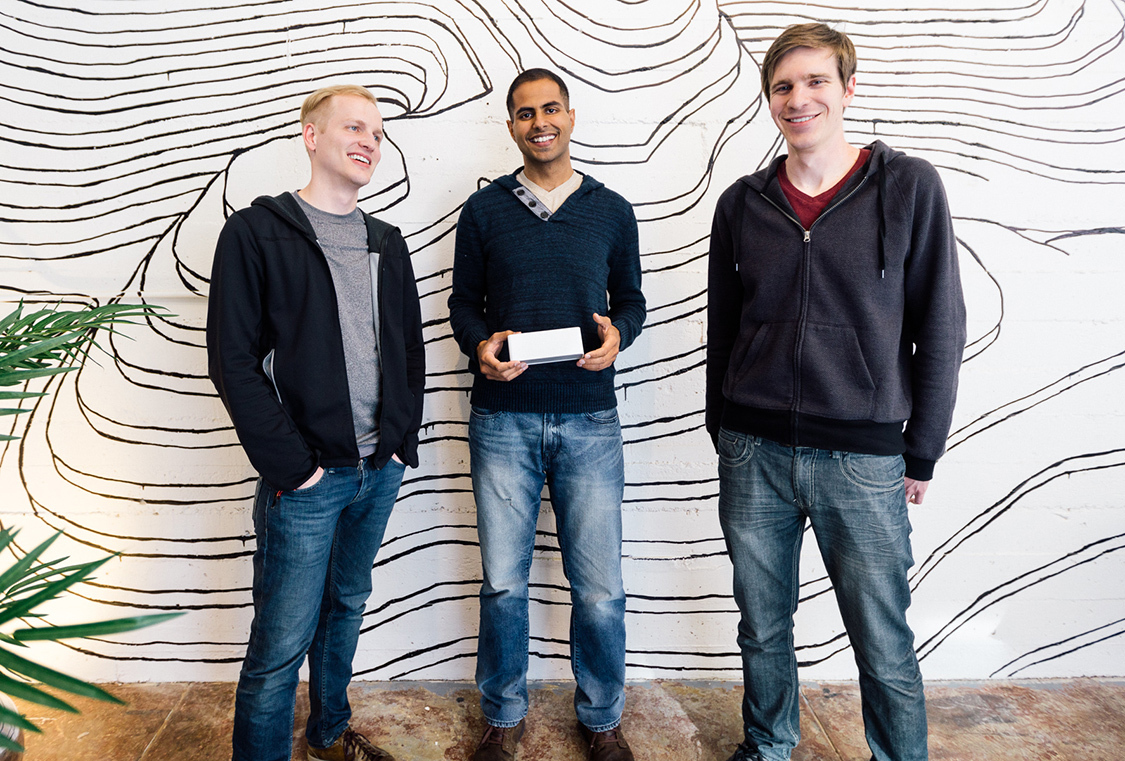
“The three founders, they were completing Ph.D.’s in human computer interaction and computer vision at the University of Illinois Urbana-Champaign,” said Lightform design director Phil Reyneri.
See the full story here: http://bgr.com/2017/04/28/augmented-reality-glasses-not-needed-lightform-interview/