HTC Vive, Oculus Rift, PlayStation VR: Virtual Reality Gaming Cost Comparison
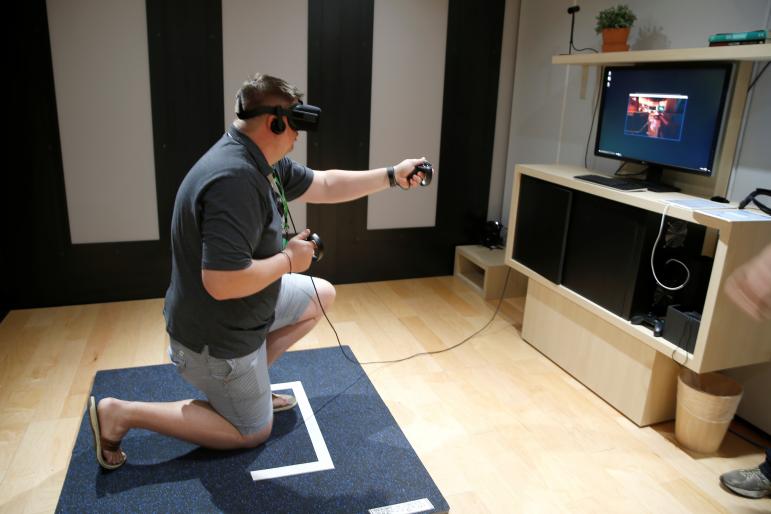 According to a post on fixr.com — a website that offers cost estimations for remodeling — which takes the higher end of expenses to set up your VR gaming experience from scratch, HTC Vive weighs in at a heavy $2,225, the Oculus Rift somewhat lower with a $1,838 price tag while the PlayStation VR, without an expensive PC to go with it, comes in far lower at $1,099.
See the full story here: http://www.ibtimes.com/htc-vive-oculus-rift-playstation-vr-virtual-reality-gaming-cost-comparison-2442558
We took the Google Pixel and iPhone 7 Plus to France for an epic camera shootout

 [Philip Lelyveld note: this long article contains many side-by-side comparisons of photos by the two cameras.]
So what have I learned in my time using the two flagship phones? The iPhone 7 Plus and Pixel have excellent cameras, and declaring a winner isn’t cut and dry. There are times the Pixel offers superior photos, but there are plenty of moments where the iPhone comes out on top. Photos from the Pixel often have bluer hues, whereas iPhone images are warmer. The latter also has more realistic photos, but that doesn’t mean the shots are better. A lot of times I prefer the more saturated images on the Pixel, especially in daylight conditions, but your personal preference may vary.
See the full story here: http://www.digitaltrends.com/photography/google-pixel-vs-iphone-7-plus-camera/
The Future Group Raises $20 Million to Blend Real-world Video With Virtual Worlds
 The team started with the idea of augmented reality, or putting animated things in the real world, via something like glasses. It then veered off to instead put real people into an animated world. The virtual environment will be built using the Unreal game engine, with technology built on top of it. And the game studio is essentially being moved into the game engine, Kasin said. The technology will use motion trackers to track movements and will translate that into the virtual environment in real time. The technology could work for either live shows or edited, time-delayed programs.
Developers will use the platform to blend the real world video with the virtual environment. And consumers will be able to access a mobile app that they can use to participate in the content. That participation could range from simply voting on what will happen in the game show to things that are more interactive, Kasin said.
See the full story here: https://uploadvr.com/future-group-20-million/
Face electrodes let you taste and chew in virtual reality
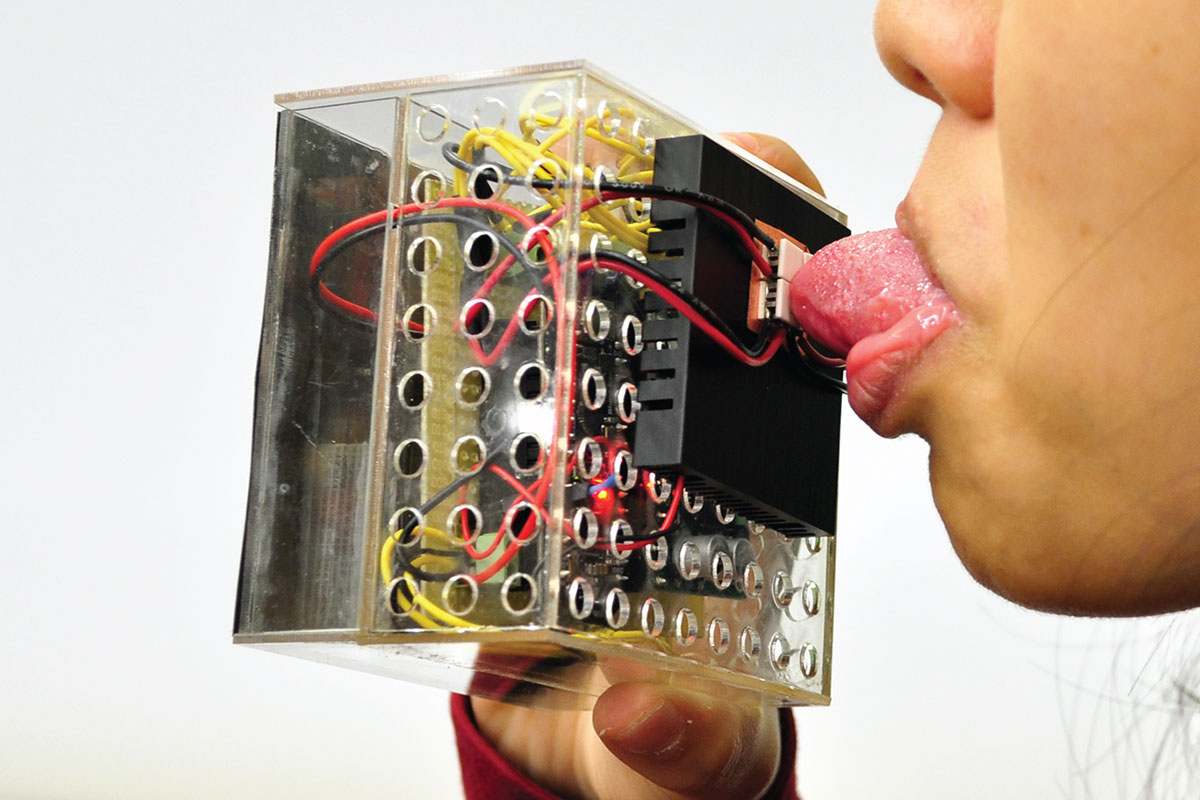 Experiments with “virtual food” use electronics to emulate the taste and feel of the real thing, even when there’s nothing in your mouth. This tech could add new sensory inputs to virtual reality or augment real-world dining experiences, especially for people with restricted diets or health issues that affect their ability to eat.
Several projects have succeeded in tricking us into tasting things that aren’t there. Nimesha Ranasingheat the National University of Singapore has already experimented with a “digital lollipop” to emulate different tastes, and a spoon embedded with electrodes that amplify the salty, sour, or bitter flavour of the real food eaten off it. However, his experiments with electrical stimulation had less success simulating sweetness compared to the other tastes. But digitising this taste could be particularly useful in, for example, helping people cut back on sugary food or drinks.
So Ranasinghe and his colleague Ellen Yi-Luen Do started experimenting with thermal stimulation instead. Their new project, presented at the 2016 ACM User Interface Software and Technology Symposium (UIST) in Tokyo, uses changes in temperature to mimic the sensation of sweetness on the tongue. The user places the tip of their tongue on a square of thermoelectric elements that are rapidly heated or cooled, hijacking thermally sensitive neurons that normally contribute to the sensory code for taste.
In an initial trial, it worked for about half of participants. Some also reported a sensation of spiciness when the device was warmer (around 35 °C) and a minty taste when it was cooler (18 °C). Ranasinghe and Do envisage such a system embedded in a glass or mug to make low-sugar drinks taste sweeter.
This week, a team from the University of Tokyo presented a device that uses electricity to simulate the experience of chewing foods of different textures. Arinobu Niijima and Takefumi Ogawa‘s Electric Food Texture System also uses electrodes, but not on the tongue, instead they place them on the masseter muscle – a muscle in the jaw used for chewing – to give sensations of hardness or chewiness as a user bites down. “There is no food in the mouth, but users feel as if they are chewing some food due to haptic feedback by electrical muscle stimulation,” says Niijima.
Ranasinghe says that a Singapore hospital is planning a long-term study with the electrode-enhanced spoons to try to reduce sodium intake in its elderly patients. Many older people lose their sense of taste and prefer stronger flavours, but adding too much salt can contribute to health problems such as high blood pressure. The spoon acts like electronic seasoning instead.
See the full story here: https://www.newscientist.com/article/2111371-face-electrodes-let-you-taste-and-chew-in-virtual-reality/
Should virtual reality forget about video games and try something new?
 At PAX Australia on Friday, broadcaster and panel host Nic Healey went and asked the question: "When am I going to get my virtual reality Skyrim?"
Five leading local voices in VR development were in Melbourne to discuss the VR "hype train," and some of the day's biggest themes were existential. Most of all, how much should the emergent industry take from traditional gaming, and how much should it leave behind?
Sally Kellaway, the senior VR audio designer for Zero Latency, works at a Melbourne startup that's created free-roam VR in an area about the size of a basketball court.
"We have just made a couple that are 12-minutes long, and it's so we can offer a range of different genres and different experiences," she said. "I feel like bite sized content is quite good. It means you can jump in and then jump out again. Try something new."
This Harry Potter-Inspired Augmented Reality Game Is Moving Forward, Despite Official Game From Google
 On Oct. 10, Maguss Wand began an Indiegogo campaign to crowdfund its production. Within 48 hours, the campaign had raised one third of its $50,000 goal. The game was fully funded on Oct. 23. The next day, the campaign added five stretch goal expansions ranging from $100,000 to $300,000. At the time of this writing, Maguss Wand has received more than $68,000 from 1,100+ backers, more than 125 of whom have claimed perks worth $99 or more.
"[Maguss Wand] is AR with an optimal physical device for more immersive gameplay," Tokar says. "We think it could have higher potential [than Fantastic Beasts], as it is more accessible to almost anyone without a need to be attached with wires to a console."
Maguss Wand may be poised to correct many of the problems users have had with Niantic's "Pokemon Go" gameplay. Pokemon trainers from rural areas had difficulty finding monsters near their homes to capture, and were forced to buy Incense or travel to more populated cities in order to catch 'em all. The emphasis on walking in "Pokemon Go" posed problems for players with mobility impairments.
Tokar's game will reward players for their activity, as "Pokemon Go" does, but the creator says he also wants to ensure that the experience is enjoyable for all users.
Beta-test access is available to all Maguss Wand backers who pledge $25 or more to its crowdfunding campaign. The Maguss Wand beta launches on Dec. 1, with an open beta scheduled for February 2017.
See the full story here: https://www.bustle.com/articles/190313-this-harry-potter-inspired-augmented-reality-game-is-moving-forward-despite-official-game-from-google
Lowe’s launches augmented reality app to help consumers visualize home improvement projects
 Virtual Reality might be useful for more than just games. Retailers are using it to increase their sales. With its new Tango-enabled Augmented Reality app, Lowe’s is hoping to give customers a new way to visualize improvements to their home.
Using Lowe’s Vision on the Phab2 Pro by Lenova, customers can see how different home furnishings, fixtures, and flooring would look in their actual living rooms, kitchens, and bathrooms. The app may even spare shoppers from wasting time using a tape measurer, thanks to its ability to capture room dimensions and surface measurements.
“By testing and rolling out different AR and VR technologies and applications, we have the opportunity to learn how customers engage with these solutions and stay ahead of their rapidly changing expectations and differing needs,” he told MIT Technology Review.
See the full story here: https://www.consumeraffairs.com/news/lowes-launches-augmented-reality-app-to-help-consumers-visualize-home-improvement-projects-110316.html