China’s 13th Five Year Plan: innovation, Internet Plus, new media and information technology
 Targets
Household broadband coverage - 40% in 2015 to 70% by 2020
Mobile broadband subscriptions - 57% in 2015 to 85% by 2020
Gov’t supported strategic initiatives;
-the industrialization of Virtual Reality and Interactive Film technologies
From planning to implementation; legal and regulatory matters
-Relaxed restrictions on foreign investment
-Finalisation of the Network Security Law to protect personal data and facilitate the development of Internet-related industries
-Finalisation of the Film Industry Promotion Law to adapt to changes in the Internet Era
-Enhanced Intellectual Property protections
See the full story here: http://www.kwm.com/en/cn/knowledge/insights/china-13th-5-year-plan-innovation-technology-media-internet-plus-20160414
Atari cofounder’s son takes video games beyond the couch
 Brent is focused on creating “narrative reality” experiences that combine immersive interaction of tools such as virtual reality with the real life.
“My cofounder and I were frustrated with out-of-home entertainment, which hasn’t changed since laser tag and mini golf,” he said.
It is also creating virtual reality entertainment and its “story rooms” such as an interactive space adventure. In one version, one person is in VR and another is not. And that person has to describe what the other has to do, and the person in VR has to describe what they see. In other versions, a group of people are placed in a room and they have to use what is in the room to escape it.
“People would rather have a life experience, and that’s good for us in the game industry, where we make experiences,” he said.
See the full story here: http://venturebeat.com/2016/06/29/atari-cofounders-son-takes-video-games-beyond-the-couch/
Tasting Victory: Why Gamers Are Hacking Taste and Smell
 In Planet Licker, a single-player game originally created over 48 hours at the Ludum Dare game jam last August, players guide a pixelated monster by physically licking ice pops. The inch-and-a-half-tall pops sit in tiny metal cups that are wired to a Makey Makey circuit board in the game’s controller. When players hold the controller and touch their tongue to any of the three brightly colored pops in it, the action controls the on-screen monster. Licking a specific flavor—grapefruit-honey, pink lemonade, or beet, for instance—guides the monster to the nearest digitized ice planet corresponding with that pop’s color.
Other technologies aimed at making games smellier and tastier include National University of Singapore’s “electronic lollipop,” which sends electrical signals to the tongue to give users the sensation of tasting something bitter, sweet, salty, or sour, and the FeelReal VR, a mask that fits over the nose and mouth and connects to a virtual-reality headset like an Oculus Rift or Sony Morpheus. FeelReal can deliver up to seven different scents, including flowers, meat, and burning rubber, and for $300, users can create their own customized smells.
See the full story here: https://www.technologyreview.com/s/601783/tasting-victory-why-gamers-are-hacking-taste-and-smell/
VR Cinematography Studies for Google
Michael Naimark
 Several timely and relevant areas of exploration emerged.
1. Close-up VR imagery from camera-originated material is awesome but tricky.
2. High quality spatial sound is as important as image.
3. Filling (and unfilling) the panoramic sphere has novel challenges.
4. The “hyperimage,” a Holy Grail of interactive media, is well-suited for VR.
5. Metadata-based interactivity, another Holy Grail, may also be well-suited for VR.
6. Community buy-in is essential.
Starting with Studies ...
See the full story here: https://medium.com/@michaelnaimark/vr-cinematography-studies-for-google-8a2681317b3#.mtkt8lrf7
Sony: More to VR than Games
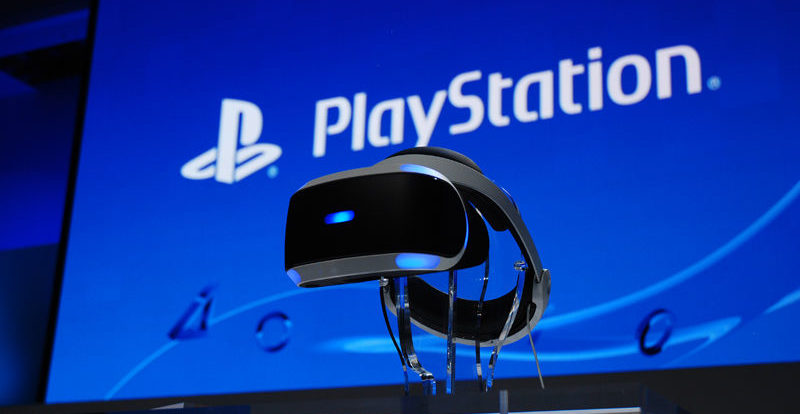 The PS VR headset ships Oct. 13 in the U.S. at $399, and as part of a $499.99 bundle with the headset, two PlayStation Move controllers, the PlayStation Camera and PS4 VR title “PlayStation Worlds.”
“There are several key benefits that I think PlayStation VR has vs. the competition,” House said. First, thanks to the PS4, PS VR has “unified architecture” that will provide a “very stable quality of experience that developers can rely on,” he said. The hardware pricing is also “very affordable,” he said. After all, the rival Oculus Rift costs $599 for a comparable bundle that also includes accessories and software, while the HTC Vive is even costlier, at $799.
VR applications beyond gaming are part of a “longer-term strategy” for Sony, House said. Live sports and education are a couple of the areas that the company is “starting to focus on,” he said. But Sony “will build this market carefully and cautiously, looking at areas where we can maximize the right business-to-business model,” he added.
The company achieved “solid continued expansion” of the PS4 installed base in the past fiscal year, growing it to more than 40 million units globally, he added. Despite “expectations of decline” in the game console market, Sony has “maintained the fastest penetration in PlayStation history,” he said. At the same time, Sony saw “continued substantial growth” in the company’s network business, with sales growing more than 50% over the previous fiscal year, he said.
See the full story here: http://www.mesalliance.org/2016/06/29/sony-more-to-vr-than-games/
Seven Startups From South Korea’s Thriving VR Scene
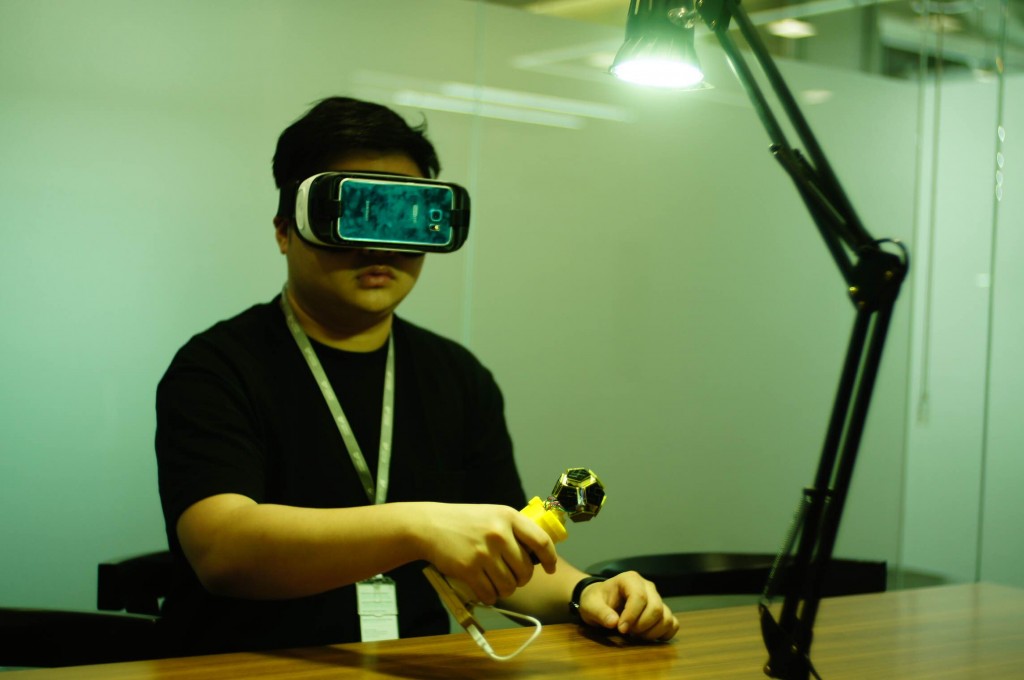 The 7 include facial expression tracking for avatars, spatial audio, and content developers.
See the full story here: http://technode.com/2016/06/29/korean-content-creators-game-developers-now-makes-vr-contents-vr-technology/
Virtual Reality is the Next Big Business Frontier [Infographic]
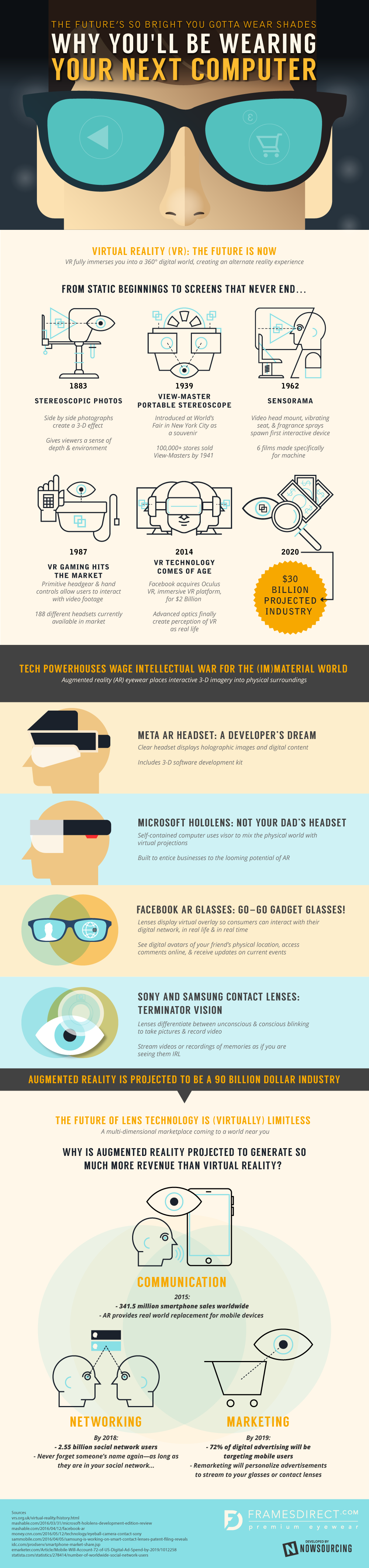
See the full story here: http://www.business2community.com/infographics/virtual-reality-next-big-business-frontier-infographic-01581469#sKPqhb1xbrg67cE2.97
Columbia Univ & vMotion – tools against sim-sickness

They have discovered that by restricting the field of view of one eye as the images are creating the impression of motion the brain becomes less susceptible to dizziness (watch the first clip).
This approach seems to work, however it is not a real solution. It would be much better if a VR system could provide a full, coherent, slate of sensory information. That is send to the brain motion sensations from the proprioceptors. It would seem impossible, at first glance, unless you are going to experience the VR in a sort of vehicle that through simulated motion can affect your proprioceptors. This is what is being done in professional flight simulators, the ones used to train pilots. These are very complex and very expensive systems that for sure we cannot think of having back home.
Here comes vMotion, a company that is using the discovery made at Mayo Clinics on the effects of Galvanic Vestibular Stimulation, GVS.
This approach should provide a better sensation and should further decrease dizziness when using VR systems. On the downside whilst the Columbia approach can be embedded in the VR system itself, the GVS requires an additional equipment. Samsung has announced a set of headphones, Entrim 4D, that exploits GVS to provide a senso of motion (watch the third clip).
It is interesting to see how entangled is ICT with bioengineering when the goal is to communicate with our brain. This is an area that is being addressed by the Digital Sense Initiative at IEEE.
See the full story here: https://www.eitdigital.eu/blog/article/feeling-dizzy-with-virtual-reality/
Rolls-Royce’s Vision Of The Future: A Fleet Of Drone Ships Controlled By Augmented Reality
 In a whitepaper released this month the company has unveiled its futuristic vision for the oceans.
Drone ships would replace the huge manned cargo vessels we see today, instead they would be controlled by a single pilot nestled thousands of miles away in a control centre.
See the full story here: http://www.huffingtonpost.co.uk/entry/rolls-royce-vision-of-the-future-are-drone-ships-controlled-by-augmented-reality_uk_57711a89e4b0232d331e5e26