Virtual Reality Arachnophobia Therapy Is A Definite Nope
Arachnophobia is a VR application within the field of health and psychology, a ‘self-controlled’ virtual reality exposure therapy session where you gradually expose yourself to spiders.
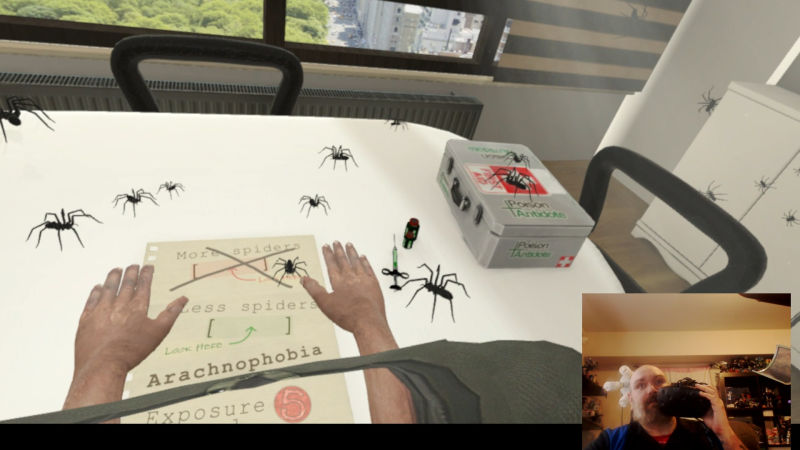
It bears noting that just about everyone gradually exposes themselves to spiders at some point in their life. They are everywhere.
Arachnophobia basically ties you to a chair and glues your hands to a desk. A comforting sign warns you that you are about to be exposed to some of the most venomous and aggressive creatures on the planet. This is not how you begin date.
If your office is filled with deadly creatures, leave the office. Do not glue your hands to the desk and just sit there.
See the full story here: http://kotaku.com/virtual-reality-arachnophobia-therapy-is-a-definite-nop-1780550604
Augumenta introduces a new augmented reality interface
 The company unveiled the Augumenta SmartPanel, an augmented reality (AR) interface that uses hand-gesture controls and visual display panels to provide an AR display surface.
“Augumenta’s goal is to provide simple and intuitive interaction environments for augmented reality,” said Tero Aaltonen, cofounder and CEO of Augumenta.
“The SmartPanel was developed at the request of an industrial machinery company that wanted to eliminate physical control panels,” said Aaltonen. “This potentially lowers cost of the equipment (fewer moving parts) while concurrently providing the flexibility of a configurable display and improving security.”
See the full story here: http://sdtimes.com/augumenta-introduces-new-augmented-reality-interface/
Sorry games industry, but VR won’t wait—Hollywood is coming for it
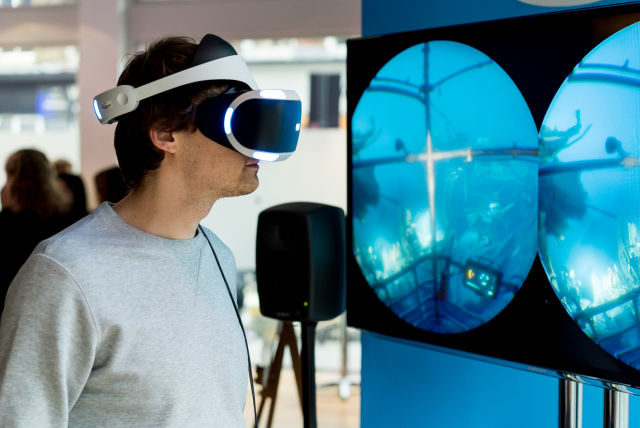 But here's the thing: while the games industry might be abandoning VR, that couldn't be further from the truth for Hollywood and the VFX industry. Arguably, they're producing the best VR content right now.
VFX companies started early. Before the HTC Vive was even announced, Framestore created the first fully motion tracked VR experience, using its expertise in film VFX to graft existing motion capture technology onto a headset. The result, dubbed Merrell TrailScape, took players on a 4D virtual hike, complete with a physical rope bridge, rock wall, and wind machine. It scared the heck out of users as they were made to shimmy across the edge of a virtual chasm. Framestore later made an experience for the film Interstellar on Oculus Rift—built in Unreal Engine 4 no less—that took players on a impressively detailed tour of the Endurance space ship. It's far more detailed than anything a games company has yet produced in VR.
What is and isn't a video game?
While these aren't gaming experiences, the games industry would be wise to watch what VFX companies like Framestore are doing. These are companies with vast experience in storytelling—far more than any games studio—and expertise in graphics technologies. Plus with VR being so young as a medium, who's to say what is and isn't a VR video game? Just as Sony would unexpectedly come to dominate 3D gaming in the '90s with the launch of the PlayStation, so too can other companies come in and upset the status quo with VR. Headset sales might not be there just yet, but for the games industry's biggest publishers to sit it out now, early or not, risks more than just short term losses—it risks losing the market altogether.
See the full story here: http://arstechnica.com/gadgets/2016/06/hollywood-will-win-virtual-reality-industry
Moosejaw Bets On Outdoor Retail With Virtual Reality App
 The Moosejaw Virtual Reality App offers a unique experience,delivering breathtaking interactive landscapes filmed with 360-degree cameras in Moab, Utah. In a bold move, Moosejaw has put substantial development behind the project and is hoping to see 100,000 downloads to engage outdoor consumers in a whole new way.
Get the free app for your for iPhone now (Android version still in the works).
The VR ‘Experience’
Four virtual “experiences” are available through the app: rock climbing, trail running, backcountry hiking, and hangin’ by a river. (Spoiler alert: this one turns into a wacky dance party, in true Moosejaw fashion.)
The video is clear, the gear is high-end, and it truly makes you want to book a flight to Utah. For an even more immersive experience, grab a Moosejaw Google Cardboard (free at Moosejaw.com with any purchase), slide your phone in the back, and look through the lens at a three-dimensional southern Utah.
Gamification
Moosejaw gamified the experience by offering five questions on each video. Once you sign in, you’re able to enter the contest to earn badges and compete against others to win a $500 Moosejaw Gift Card and gear.
See the full story here: https://gearjunkie.com/moosejaw-virtual-reality-app
AMD Moves Aggressively to Drive Virtual Reality at an Amazing Computex
 There are three problems delaying the ramp of virtual reality. One is content—and that is slowly being sorted—two is hardware, including the need for complete solutions that include controllers, and third is cost. Currently it is estimated that to get an acceptable video game experience you need both a headset bundle costing in excess of $600 and a PC with enough power to run the thing which typically prices out at $1,500 or more.
Well, this week AMD aggressively drove a stake through that third problem by launching the Radeon RX 480, a VR-ready video card expected to cost under $200 so you can make your existing PC powerful enough to make the grade.
AMD RX 480
According to AMD this packs the VR performance of a $500 card because it is tuned for VR. That’s not to say that it won’t play other video games as well, but that for VR it is one hell of a bargain. As noted above, this allows you to enter the VR segment for a lot less money than otherwise would have been required and the end result is one of the biggest bargains of the year. The card includes High Dynamic Range, AMD’s FreeSync, and it uses AMD’s new Polaris architecture to pack a lot into a very small package.
This could be just the ticket to get you started on VR and I can hardly wait for my card to show up so I can play the games I’ve listed above.
See the full story here: https://techspective.net/2016/06/03/amd-moves-aggressively-drive-virtual-reality-amazing-computex/
Canada’s First Virtual Reality Arcade Opens Its Doors
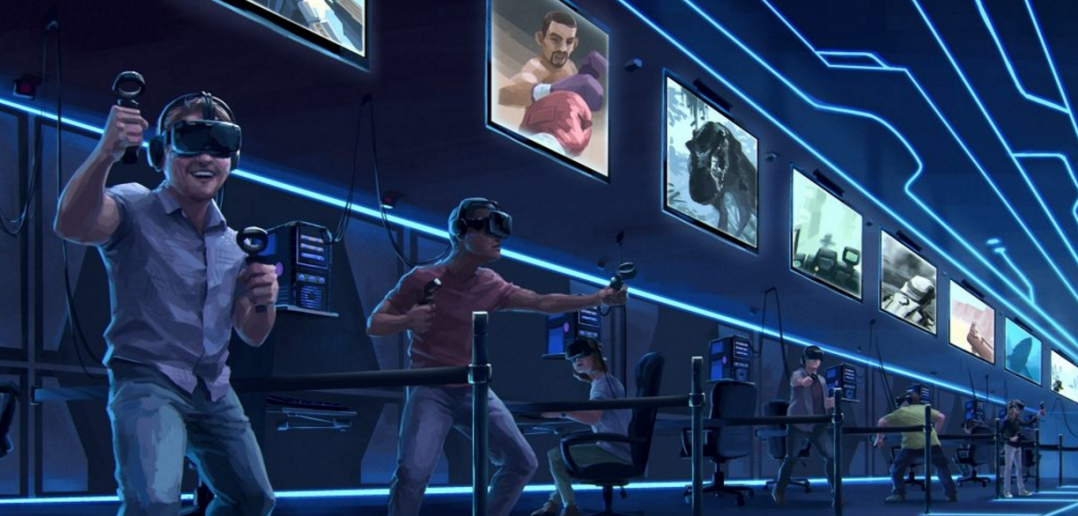 Ctrl V, a virtual reality arcade based in Waterloo, Canada, opened its doors to the public on May 30. CEO Ryan Brooks said it was the first of its kind to open in Canada, and highlighted the hundreds of people that had attended the arcade’s previous soft opening.
The arcade features 16 gaming stations, each of which can be reserved for $20 an hour and has a selection of 10 games. Ctrl V’s owners are hoping to entice students at the University of Waterloo to create more content for the arcade, tapping into a growing interest in developing for VR systems.
See the full story with links here: http://www.replaymag.com/canadas-first-virtual-reality-arcade-opens-its-doors-2/
IEEE – Nausea Ratings for Virtual Reality
As virtual reality headsets and VR content become more mainstream, the need for a different type of rating system has emerged—one that ranks motion or nausea risk.
Oculus Rift, a company that has particularly strong name recognition in the VR industry, is operating ahead of the curve by releasing a comfort rating system. Their color and shape-based system helps to classify the content in their store as Comfortable, Moderate or Intense. They want to avoid discomfort when users consume content on Oculus headsets. While the Oculus Rift rating system focuses on comfort, it paves the way for the potential of setting an industry standard in comfort as it extends to motion sensitivity.
From: https://transmitter.ieee.org/nausea-ratings-virtual-reality/
Researchers aren't entirely sure yet why some VR games trigger such physical reactions in their players, but the inherent sensory conflict involved in entering a virtual world — when your eyes and ears are incorrectly informing your brain that you're moving — is key. So, too, is refresh rate, the measure of how many frames per second a headset is capable of displaying. If this drops below 60 per second, it can start to affect the human brain, making us feel dizzy and disoriented. Studies have also pointed to a person's posture, ethnicity, and field dependence or independence— how much of the background they absorb while looking at an object — as changing susceptibility to sickness, but much of this research was conducted before this current wave of headsets arrived on the scene.
From: http://www.theverge.com/2016/3/31/11336430/first-click-does-vr-need-a-nausea-rating-system
Oculus comfort ratings
 Comfortable
"Comfortable" experiences are appropriate for most people, although this rating does not confer that an experience is going to be comfortable for everyone. These experiences generally avoid camera movement, player motion, or disorienting content and effects.
 Moderate
"Moderate” experiences are appropriate for many but certainly not everyone. These experiences might incorporate some camera movement, player motion, or occasionally disorienting content and effects.
 Intense
“Intense” experiences are not appropriate for most people, especially those who are new to VR. These experiences incorporate significant camera movement, player motion, or disorienting content and effects.
From: https://support.oculus.com/help/oculus/918058048293446/
Ctrl is Astonishing Proof that VR Storytelling is Growing Up
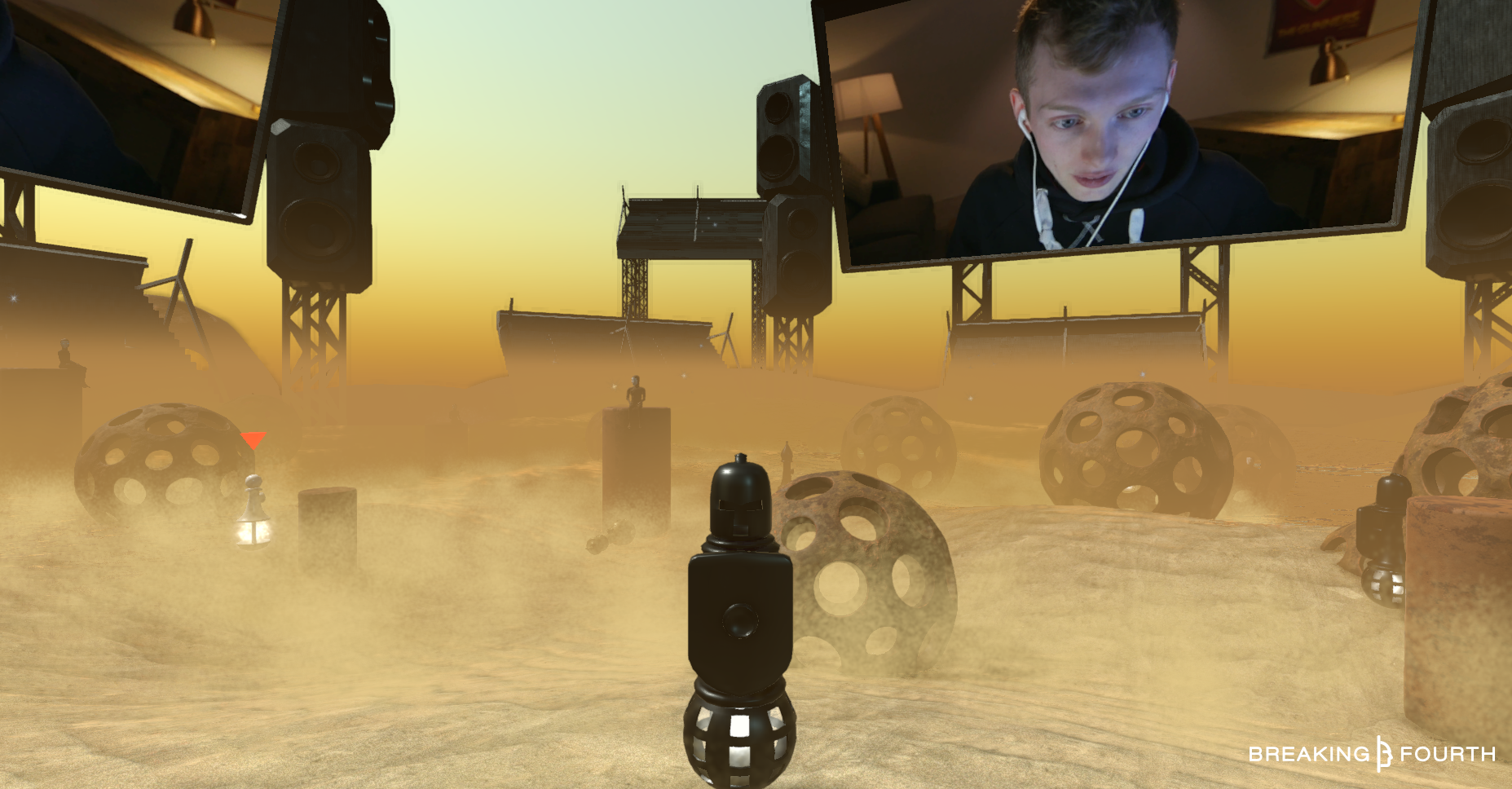 Ctrl is unlike anything else I’ve seen in VR, both in terms of subject matter and delivery.
It’s cleverly set inside a videogame, and we get to watch a young boy named Liam take part in the finals of a tournament that could win him some money that he could sorely use. Over the course of around 20 minutes Liam’s desperate situation is made ever clearer as he struggles to balance play and pain.
It’s a story about power, escalation, silent suffering and, as the name suggests, control. It explores these themes with uncompromising conviction, making full use of VR to lose you in an experience you won’t soon forget. Its setting is a gateway into looking at issues that will be close to home for many and although VR empowers the storytelling, it remarkably makes you feel utterly helpless.
That said, VR is crucial to just how well the story pulls you in.
“It’s more about that with the use of the sound and the use of the 360 space that people get so absorbed and so immersed into it that accentuate all the emotional feelings behind it. And it’s very much not just the actual themes itself; it’s a combination,” Frankland tells me.
See the full story with video here: http://uploadvr.com/ctrl-preview/
The Perceptoscope Lets You Sight-See in Augmented Reality
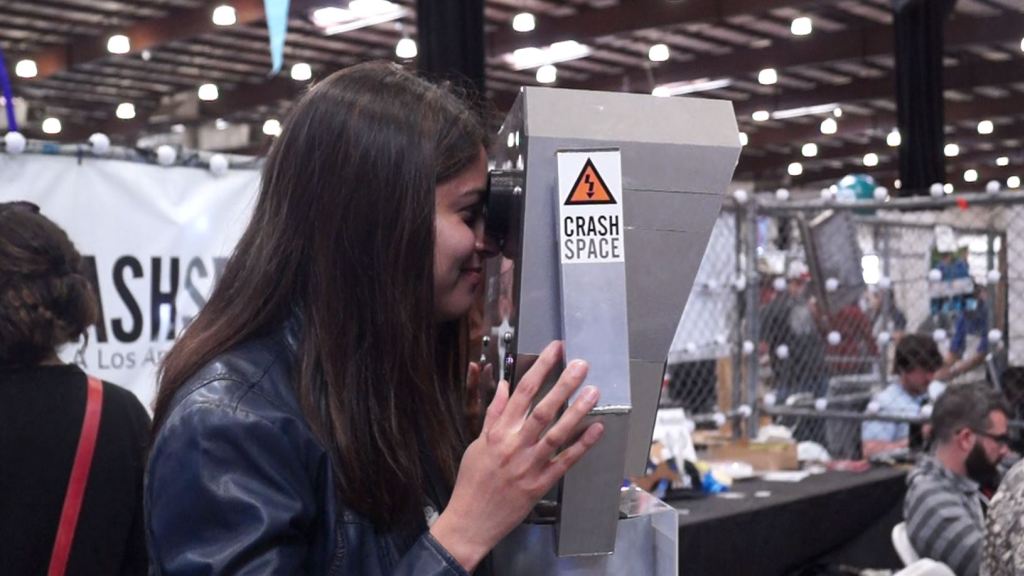 [Philip Lelyveld comment: this is such a great idea for theme parks and historic sights.]
The perceptoscope is an augmented reality device for fixed locations. Before getting too much into the specifics, imagine that you could walk up to a perceptoscope placed near the Empire State building. You look through the eye pieces and you see the city as it was before the building was constructed. At the flip of a switch you can watch the building take shape right in front of you. All this, with true 3D vision and motion tracking.
The stationary aspect of the perceptoscope gives it several advantages making implementation much easier than something like the Microsoft hololens or CastAR. Since it is stationary, you can program it with an exact position in mind. The angles of rotation in both axes are measured precisely in a mechanical fashion, so no complicated tracking systems are necessary at all. The standard form factor of a landscape viewer allows for plenty of room to add electronics and fancy optics.
See the full story here: https://makezine.com/2016/06/03/the-perceptoscope-lets-you-sight-see-in-augmented-reality/