Billing itself as a showcase for "the best in virtual reality film, art, and immersive experiences", the Kaleidoscope World Tour is the VR equivalent of a travelling film festival.
After starting in Paris last month, the showcase embarked on a whistle-stop tour of the world: 10 cities in just 42 days. It wrapped up in Melbourne, Australia, where I got to have a look at some of the 30-plus experiences on offer.
Kaleidoscope is not only the name of the festival, it's a community of visual artists, developers, filmmakers and anyone else working on VR experiences. Nick Ochoa is the global VR evangelist for Kaleisoscope, a role that also seems to include a lot of community wrangling.
See the full story here: http://www.cnet.com/news/kaleidoscope-vr-virtual-reality-festival-world-tour-is-a-whirl-2016-winners/
Here is a skilled-consumer guide to posting 360 videos.
http://www.sitepoint.com/embedding-virtual-reality-across-the-web-with-vr-views/
Google’s VR View works on the latest versions of the following browsers on both desktop and mobile:
- Chrome on Android, iOS, Windows, Mac OS X and Linux.
- Safari on iOS and Mac OS X.
- Firefox on Windows, Mac OS X and Linux.
- IE 11 and Edge on Windows.
With desktop versions, your “virtual reality” experience is mostly a panorama experience where you drag the view around with your mouse.
In order for the potential of AR to be realized, though, companies have to resist the urge to hastily create AR apps (that risk appearing gimmicky), and instead focus on better understanding how consumers will interact with the technology. Based on research I have been conducting on consumer responses to AR over the past four years, I have found that designing and implementing valuable AR apps requires the following: a better idea of how consumers would use such technology; more collaboration among computer scientists, designers, and marketers; and a strategy for integrating the applications into the existing consumer journey.
When I started working on AR as the topic for my PhD, almost no established knowledge about it existed in the marketing field. However, computer science and human-computer interaction research have been tackling AR for years, and borrowing insights from those fields can greatly help marketers understand what this technology will mean in commercial contexts.
Working with professor Yvonne Rogers from the UCL Interaction Centre and AR designers Ana Moutinho and Russell Freeman from the AR agency Holition, we conducted one of the first studies of how consumers use AR to “try on” make-up in a store. The app we used allows people to put on virtual lipstick or eye-shadows that moves with their faces.
...when the AR app was integrated in a familiar retail setting as a part of the shopping experience, people not only thought highly of the technology, but they also positively related to the products. They were more likely to buy them and view the app as a convenient tool for shopping, not just for playing around.
Marketers should remember that AR is not about creating a completely new reality; it’s about enhancing what already exists. ... This is one of the reasons why people like Snapchat’s AR feature, where users can play with different visual effects to transform ordinary videos into shareable stories.
The crucial part of the AR experience is whether the technology adds real value.
See the full post here: https://hbr.org/2016/04/what-marketers-need-to-understand-about-augmented-reality
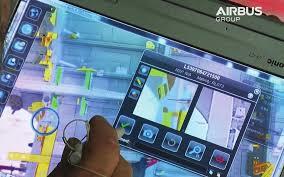 [Philip Lelyveld comment: I assume the humans will be replaced by computers when computer vision is adequately precise.]
Airbus Group Innovation (Ottobrunn, Germany) developed MiRA technology to reduce the inspection time for tens of thousands of brackets that hold hydraulic pipes and wire bundles in place and attach them to the composite fuselage sections of the latest production aircraft. Using a tablet-based interface equipped with a camera for visual inspection, operators superimpose a digital mock-up over “as built” reality. In other words, workers access the 3D model of the aircraft and compare the built and installed assemblies to their digital designs to inspect for missing, wrongly positioned or damaged brackets. At the end of the inspection, a report is automatically generated that includes details of any non-conforming parts which can be replaced or repaired quickly.
See the full story here: http://www.compositesworld.com/news/spirit-aerosystems-deploys-airbus-augmented-reality-tool-for-composite-fuselage-brackets
 It’s fair to say that bauma 2016 might feel like Augmented Reality for Grindex.
Among world leaders in electric submersible pumps, the firm is this week unveiling a digital tool based on Augmented Reality technology – offering an X-ray vision of the firm’s products.
“Simply point the tablet’s camera at a pump and a cut-away image will be added on the screen, providing the user with buttons that explain and/or animate certain features,” Grindex sales manager Peter Uvemo explained.
See the full story here: http://www.worldhighways.com/event-news/bauma/2016/news/grindex-unveils-augmented-reality-digital-tool/
 Sin City is about to get a bit more sinful, as VR content platform VR Bangers and headset maker AuraVisor are teaming up to offer in-room adult experiences (via virtual reality) at hotels on the strip in Las Vegas.
What makes this partnership particularly interesting is that users who purchase the in-room AuraVisor will be viewing content that was filmed in a hotel room that looks similar to the one where they’re staying, making the fantasy that much more immersive.
Interested hotel guests simply pay $20 on their credit card to have an AuraVisor headset in the room. This headset is pre-loaded with sexy-time content, and all the user has to do is specify the preferred gender of their virtual partner.
See the full story here: http://techcrunch.com/2016/04/19/vr-porn-is-coming-to-hotels-on-the-las-vegas-strip/
By Phil Lelyveld for ETCentric.org
YouTube has begun supporting 360-degree live streaming video and spatial audio on its service. Google has supported 360-degree video since last year and spatial audio in the Cardboard since January in their VR platform. This announcement broadens that support to the main YouTube platform. For YouTube creators, all that’s required to take advantage of this new feature is a camera that captures 360 video. From the end-user perspective, there’s no extra technology or headsets required to watch 360-degree live streams. The 360 videos will play on any device, including desktop, tablet, iOS or Android. One of the first videos to take advantage of this more immersive format will be this year’s live stream from music event Coachella, where select performances from the festival will now be live streamed in 360 degrees.
At launch, spatial audio is only available for on-demand videos, not live videos, and is also limited to Android smartphones used with headphones.
To make support for both 360 live streams and spatial audio possible, YouTube has been working with camera and software vendors, including VideoStitch, Two Big Ears, ALLie, Vahana VR and Orah 4i. YouTube also opening up its “Live API,” which will allow any camera manufacturer interested in 360 the ability to use YouTube’s Live Streaming API to send 360-degree live streams to the service. Creators will be able to try the technologies at all YouTube Space locations worldwide, including LA, New York, London, and Tokyo. YouTube Spaces are production facilities where creators can produce content, learn new skills and collaborate with others in their local video communities.
According to the ETC’s Phil Lelyveld, there are a growing number of consumer 360 VR cameras coming onto the market in the $300-$800 range. They often come with stitching software and work with common video editing packages. Because the 360 videos play on hardware that consumers already have, there is no barrier to consumers trying them. If 360 videos start going viral, this could drive rapid audience growth for base-level VR experiences, and establish a market for more professional, revenue-generating VR experiences.
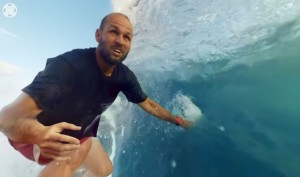 YouTube will today begin supporting 360-degree live streaming on its service, confirming reports from earlier this year stating that such a feature was in development. One of the first videos to take advantage of this more immersive format will be this year’s live stream from music event Coachella, where select performances from the festival will now be live streamed in 360 degrees.
Also new today is support for spatial audio for on-demand YouTube videos, the company says.
For YouTube creators, all that’s required to take advantage of this new feature is a camera that supports the technology. Other than that, there’s no change to the current live streaming process, YouTube tells us.
YouTube additionally announced today the support of 1440p 60fps resolution for live streams on its service.
...no extra technology or headsets required to watch 360-degree live streams — they’re available on any device, including desktop, tablet, iOS or Android.
YouTube has been working with camera and software vendors, including VideoStitch, Two Big Ears, ALLie, Vahana VR and Orah 4i, it says.
Starting today, anyone will be able to do live 360-degrees on YouTube, the company says. Coachella will happen on the weekend, and will be the first high-profile example of the new live streams on the site.
See the full story here: http://techcrunch.com/2016/04/18/youtube-rolls-out-support-for-360-degree-live-streams-and-spatial-audio/
Sheikh laid out a world where users could play a poker game with friends over VR that is so sensitive that you can read their tells. He describes what it could mean to people who live far away from their families to be able to interact with them through a headset. And he said that eventually his team hopes to make VR social interaction "indistinguishable from real life."
Of course, this will all take a lot of work.
A study released Wednesday by Greenlight VR predicted that it will take six to eight years for virtual reality to go fully mainstream.
See the full post here: http://www.houstonchronicle.com/business/technology/article/Facebook-wants-to-broaden-the-virtual-reality-7251885.php
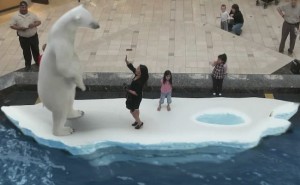 “We believe that this experience perfectly complements our educational exhibits,” says Toby Forer, General Manager of the Sea Life London Aquarium, which also offers live animal exhibitions but no interaction programs. “There are some species and creatures which we do not believe are suited to life in captivity (including cetaceans) but we are now able to bring some of these awe-inspiring animals to our visitors through cutting edge technology and incredible BBC Earth footage.”
See the full story here: http://www.care2.com/causes/could-we-offer-wildlife-encounters-without-holding-animals-captive.html
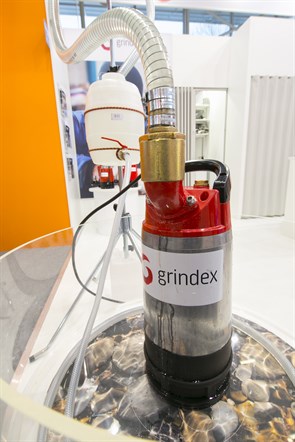 It’s fair to say that bauma 2016 might feel like Augmented Reality for Grindex.
 Sin City is about to get a bit more sinful, as VR content platform VR Bangers and headset maker AuraVisor are teaming up to offer in-room adult experiences (via virtual reality) at hotels on the strip in Las Vegas.
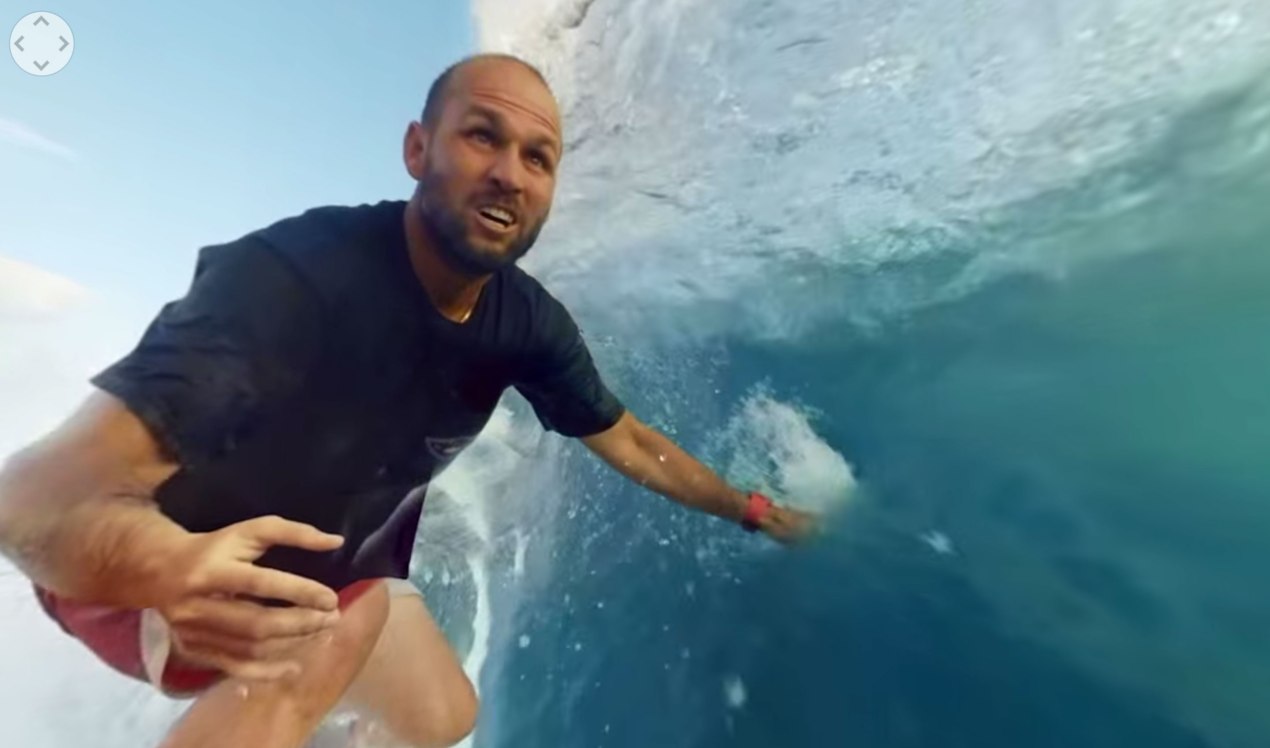 YouTube will today begin supporting 360-degree live streaming on its service, confirming reports from earlier this year stating that such a feature was in development. One of the first videos to take advantage of this more immersive format will be this year’s live stream from music event Coachella, where select performances from the festival will now be live streamed in 360 degrees.
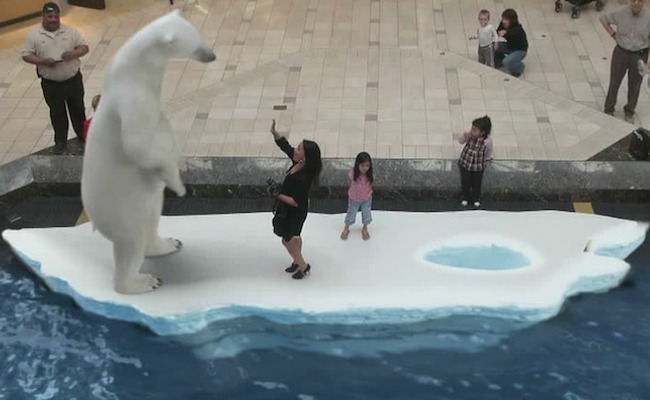 “We believe that this experience perfectly complements our educational exhibits,” says Toby Forer, General Manager of the Sea Life London Aquarium, which also offers live animal exhibitions but no interaction programs. “There are some species and creatures which we do not believe are suited to life in captivity (including cetaceans) but we are now able to bring some of these awe-inspiring animals to our visitors through cutting edge technology and incredible BBC Earth footage.”