McDonald’s and the gold rush to fill virtual reality with ads
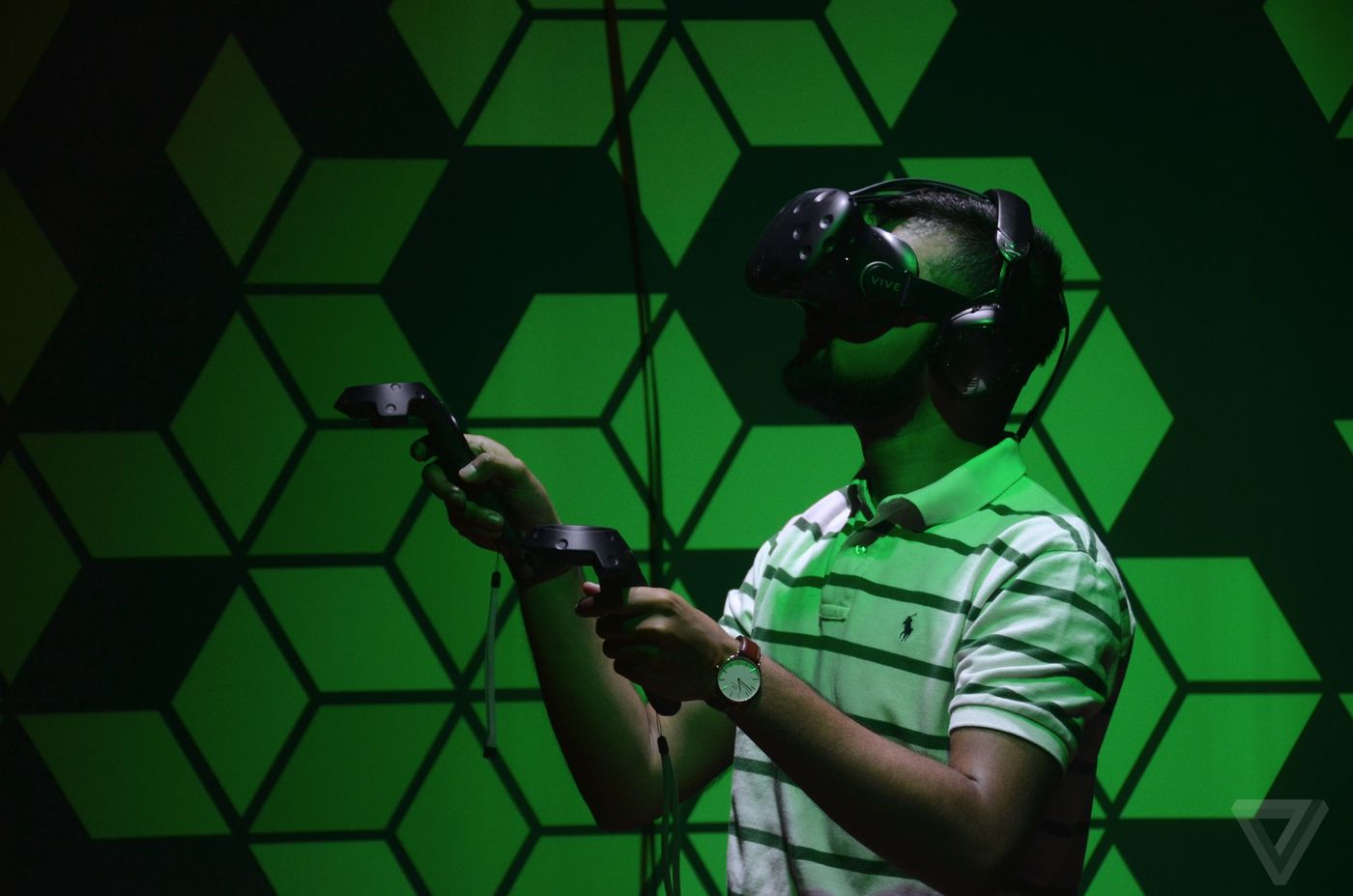 VR promises to change our relationship with what’s real, giving us otherwise impossible experiences and sensory escapades into the unknown. At SXSW 2016, McDonald’s is reminding us that VR will just as easily be a vehicle for corporate consumption. Like the early web being irreversibly branded by the banner ad, VR too will face its own unique struggle with the forces that wish to monetize and market with it.
MCDONALD'S SHOWS US THE CAPITALIST DYSTOPIAN SIDE OF VR
See the full story here: http://www.theverge.com/2016/3/14/11214484/mcdonalds-vr-htc-vive-sxsw-2016-capitalist-dystopia
New Virtual Reality App Timelooper Takes You Back in History
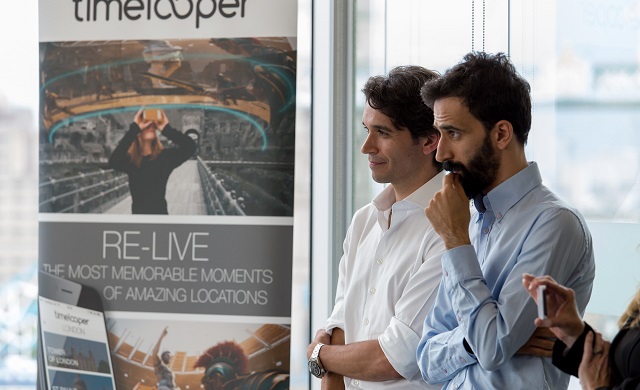 The Timelooper app allows users to experience key moments in London history with just a smartphone and a cardboard headset.
For example, when Timelooper cofounder Andrew Feinberg visits the Tower of London, a historic castle on the banks of London's Thames River, he doesn't queue up with hordes of tourists to catch a glimpse of the royal family's crown jewels. Instead, he uses Timelooper's time travel tourism app to experience the tower over 750 years ago, in 1255.
Timelooper's travel app is also used by those working in London's booming tourism industry. Blue Badge tourist guide Ruth Polling pulls her cardboard headset out as she escorts visitors to Trafalgar Square and lets them see what happened on Sept. 23, 1940, when a bomb dropped by Nazi Germany exploded near Nelson's Column, a famous landmark and iconic part of the victory celebrations held five years later to mark the end of the war in Europe.
Timelooper plans to launch in New York City this April, allowing tourists to witness the famous kiss that was photographed in Times Square in August 1945 on VJ Day, the day World War II officially ended with the surrender of Japan, and to see the iconic picture of workers eating lunch atop a skyscraper during construction of the Rockefeller Center in 1932.
See the full story here: http://abcnews.go.com/Health/wireStory/virtual-reality-app-timelooper-takes-back-history-37629889
Splash’s virtual reality app aims to make 360-degree videos as easy as Snapchat
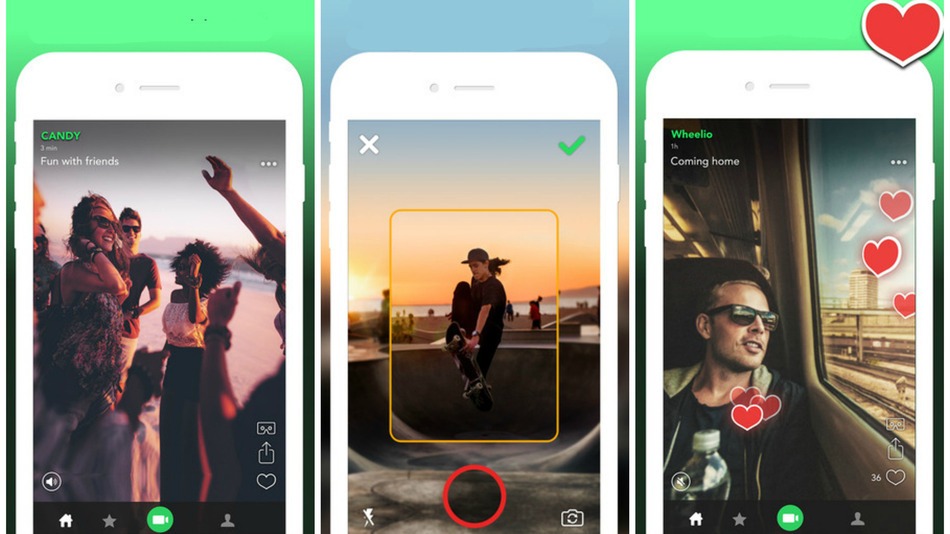 [philip Lelyveld comment: this is pseudo-360, creating video panels within a panorama rather than 'streaming VR video.']
Splash, a new iOS app launched at South by Southwest Interactive, is aiming to create a Snapchat-like platform for casual sharing in virtual reality.
The easiest way to describe Splash is a sort of mashup of Periscope and Snapchat but all the content is 360-degree images and video. The app allows you to quickly share 360-degree videos of your surroundings that can be viewed on both smartphones and VR headsets like Google Cardboard.
What sets it apart from other apps that allow you to capture 360-degree views, though, is that you can also record video in addition to a static image. While shooting a scene — a process that will be familiar to those who have shot panoramas on their smartphones — you can opt to record a video clip in parts of the frame.
The results can vary from impressively immersive to wildly abstract depending on how you shoot (you can overlay multiple clips shot at different times on top of one another, for instance.) But Splash cofounder Michael Ronen says that flexibility — allowing people to create an "emotional landscape" — is the whole point.
Semantics aside, Splash, which won the top prize in the VR category at SXSW's startup accelerator Sunday, offers an intriguing glimpse into the future of social applications for virtual reality.
See the full story here: http://mashable.com/2016/03/14/splash-vr-app/#mmq9kNCNJ5q7
SULON Q VIRTUAL REALITY AND AUGMENTED REALITY HEADSET WITH BUILT-IN COMPUTER UNVEILED
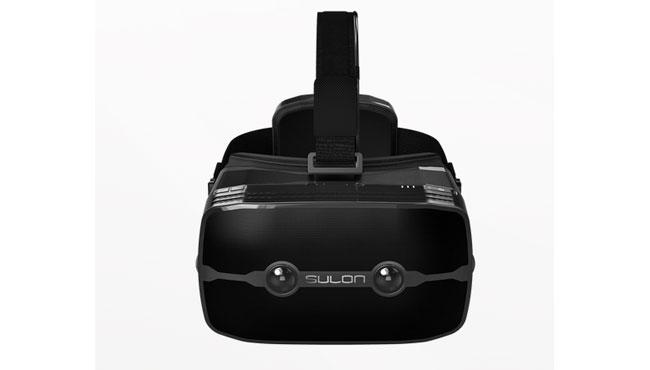 At the GDC 2016 Sulon Technologies gave a sneak peek of the Sulon Q, the world’s first and only all-in-one, tether-free, headset for virtual reality, augmented reality, and spatial computing. The Sulon Q is a combines the Microsoft HoloLens and the Oculus Rift into one wearable device.
While this would already be great, the Sulon Q does not require a computer. It has an AMD based computer built into the headset. The Sulon Q headset harnesses the power of the recently launched AMD FX-8800P processor at up to 35W with Radeon R7 Graphics leveraging AMD’s Graphics Core Next architecture.
The result is a solution that is optimized for modern workloads and media formats, capable of driving the latest graphics APIs including DirectX 12 and Vulkan, and able to render stunning video game console-quality visuals on a beautiful 2560x1440 OLED display. The Sulon Q headset also integrates AMD’s LiquidVR technologies to help ensure smooth and responsive VR and AR experiences.
See the full story here: http://www.i4u.com/2016/03/107111/sulon-q-virtual-reality-and-augmented-reality-headset-built-computer-unveiled
PlayStation VR will arrive in October for $399
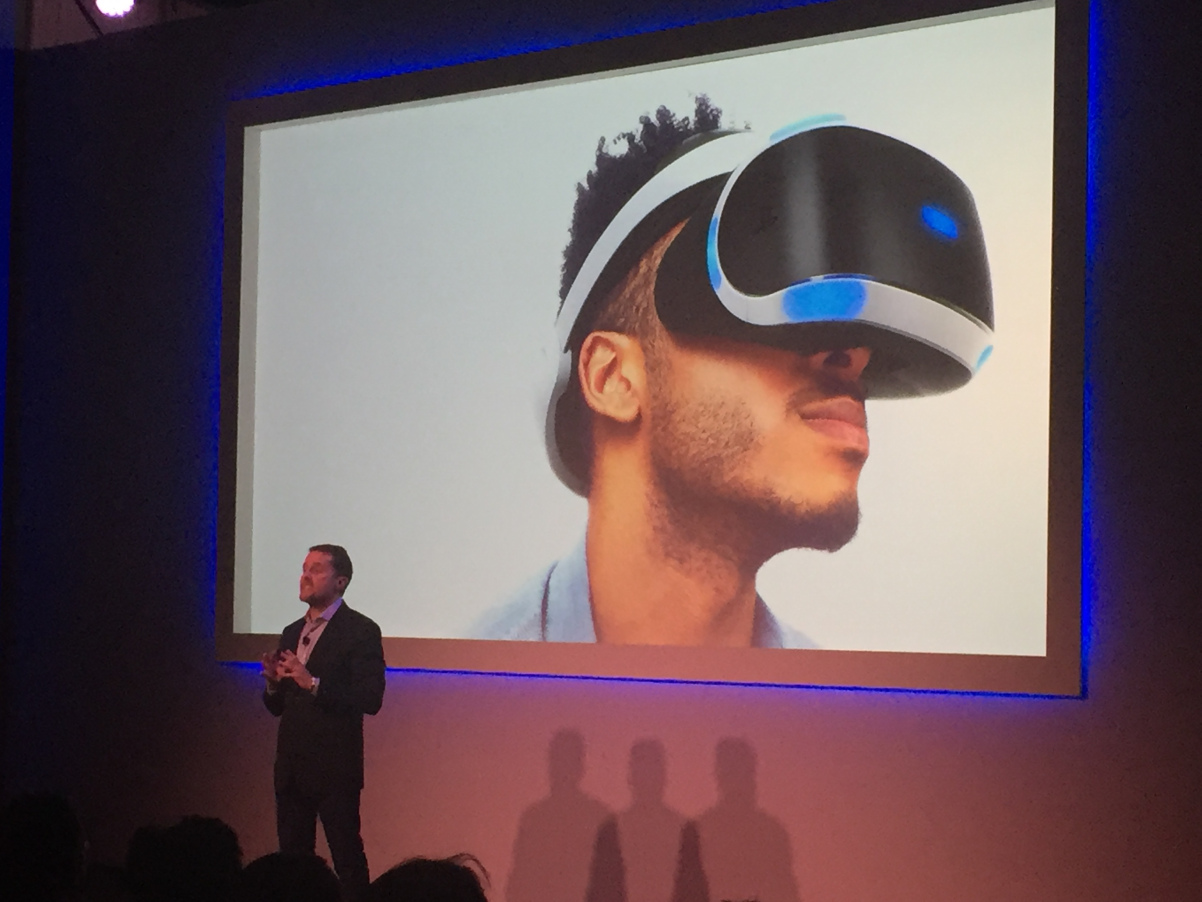 This places the barrier of entry for PSVR dramatically lower for gamers looking to take a whack at virtual reality. With the Oculus Rift and HTC Vive priced at $599 and $799, respectively, while also requiring pretty hefty PC builds, PSVR has a real shot at being the headset to beat in terms of popularity.
The $399 price tag notably doesn’t look like it includes the PlayStation Camera, which will be required for gameplay. The camera is going for around $45 on Amazon at the moment so it’s not a major cost...
Also not included are the glowing orb Move controllers, though PSVR users will definitely be able to use the motion-tracked DualShock controller that’s included with the system.
To keep VR gamers and console gamers engaged, PlayStation will be offering local multiplayer thanks to what they call a “Social Screen.” It will allow the PS4 to power both the TV and PSVR displays so someone with a PSVR headset can still sit on the couch and play with their buddies.
Sony has said that the FoV of the PSVR is 100 degrees. The FoV for the consumer versions of Oculus’s Rift and HTC’s Vive have yet to be publicly disclosed but rumor is they both are somewhere in the 100 to 110-degree region. For comparison Gear VR’s field-of-view is 96 degrees.
But right now, the key to building a top-of-the-line VR experience that won’t leave users reaching for barf bags is also keeping frame rates above 60fps. Having both of those (FoV and high fps) right now will probably require users to drop a few thousand bucks on a high-end graphics card, ...
The PSVR will operate at a constant 120hz refresh rate, a system level standard that is quite a bit higher than the 90hz offered by the Rift and Vive. This refresh rate is powering a 5.7″ OLED screen operating at 1920×1080.
Sony claims that their subpixel screen design significantly lessens visible Screen Door Effect by having individual red, blue and green subpixels make up each onscreen pixel.
See the full story here: http://techcrunch.com/2016/03/15/playstation-vr-will-arrive-in-october-for-399/?ncid=tcdaily
Former Oculus VP of Engineering Jack McCauley Demonstrates Long Range VR Tracking System
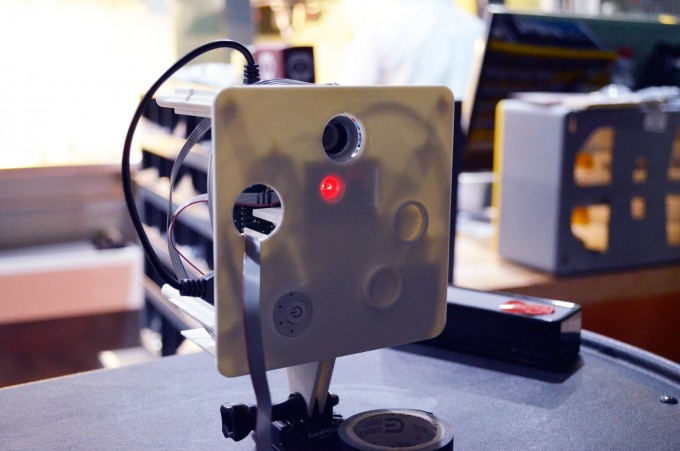 The face of the enclosure is about the surface area of a square box of tissues, but only about a quarter as deep. The back is seemingly missing a rear plate, which gives a clear view of an array of circuit boards and wires. Like Valve’s Lighthouse system, this is a laser-based tracking system. But unlike Lighthouse—which sweeps the room with lasers regardless of what’s in the area—this one actively seeks its intended target.
The MEMS Tracking System (or MTS, which I’m going to call it for ease of use) shoots its laser in a unique way compared to Lighthouse. Lighthouse uses lenses to stretch the laser’s landing area from a point into a line, then it sweeps those lines around a space by mounting the lenses on precisely spinning motors. MTS on the other hand, uses a tiny mirror (which tilts but doesn’t spin) to point the laser in any singular direction.
When initialized, MTS begins scanning a cone area in front of it in a grid-like pattern to search for its target. The target it’s looking for is a point of high reflectivity, measured by the amount of laser light that’s returning to the origin point. Of course, the laser could stop on any slightly reflective surface, so you need to make sure that the target is much more reflective than anything else in the environment, then set a minimum floor for detection, such that the laser continues to scan until a sufficiently bright reflection is found. A retroreflective marker, placed on a headset or motion controllers, serves as that sufficiently bright object, ensuring that much of the laser’s energy is reflected back to the receiver.
McCauley is clear to point out that much of what comprises MTS are off the shelf parts and algorithms pioneered for other purposes.
“Why nobody [applied this tech] for VR/MOCAP, I do not know. Perhaps nobody thought of it recently but it’s 16 years old and very established. They use these mirrors for optical switches in fiber optic bundles,” McCauley told me.
McCauley explained why he thinks this cameraless approach is important. Primarily it’s about range and cost.
See the full story here: http://www.roadtovr.com/mts-virtual-reality-vr-tracking-system-jack-mccauley-oculus-vp-engineering/
SXSW: Augmented reality tipped to be the next marketing channel
 “Augmented reality really bridges traditional and digital marketing channels and creates, what I’m calling, the next marketing channel,” she says. “It leverages the best of traditional channels, such as direct mail and print, that high touch, very tangible experience and it bridges it to a very digital place. You can now track it, you can measure it, and it can be very successful.”
Part of the measurement piece, Weinberger revealed HP is driving serious results, with a campaign the business ran for a client using direct mail saw conversation rates jump from 3% to 37%, all by adding AR that incorporated a click to purchase button. AR can also be used to add extra content to static images on clothes, launch extra video content over a print add, or even make contact information come alive on a business card.
Read the full story here: http://www.adnews.com.au/news/sxsw-augmented-reality-tipped-to-be-the-next-marketing-channel
VR & AR Certification Program
 See the full story here: http://www.cogswell.edu/virtual-reality-certification.php
Cogswell Polytechnical College is pleased to announce the launch of a new VR/AR certificate program, which addresses the development of content for virtual reality (VR) and augmented reality (AR). VR is a new human-user interaction paradigm utilizing computer-generated immersive environments. Users participate in VR using headsets which project images within a closed visual space, special immersive sound technologies, and optionally, articles of clothing that provide tactile sensations that increase the sense of “presence.” AR overlays interaction with the physical world with computer-generated three-dimensional visual and auditory sensory information to provide an enriched experience without excluding the surrounding environment. This program is a 15-credit (CEUs) set of specialzed classes that will be offered weekday evenings and weekends to accommodate the schedules of industry professionals. The purpose of this certificate program is to provide professionals in the computer graphics industry the opportunity to join development teams that create VR or AR content.
VR and AR Courses Include:
VAR400 Perception, Cognition and Presence in VR/AR - starting Summer 2016
This is about how the eyes and ears respond to rich, interactive virtual and augmented stimuli, how they pass that information to the brain, how the brain processes that data and builds representations from those stimuli, and how this is then relayed on to the motor regions of the brain to become action. VR and AR provide very strong stimuli and an understanding of how those stimuli are processed and what responses they evoke, provide useful suggestions for creating powerful and vivid subjective experiences. The experience of virtual and augmented worlds depends upon the mediation of perceptual faculties that can be cognized as 'being in' a virtual or augmented space. This course will first present the perceptual and cognitive fundamentals of sight, sound and touch and then present ways in which these faculties are mediated by technology to create a sense of 'presence,' i.e, of being in that world. The course will include theories of presence as well consider health-related impacts of sensory mediation in VR & AR.
Prerequisite: None
VAR450 Human Computer Interface & Interaction Design - starting Summer 2016
Human Computer Interface design addresses problems of usability in VR and AR systems. This course will begin with fundamental techniques of interaction and address progressively more challenging problems. The course will engage both theory and practice of HCI with hands-on projects. It will include an introduction to spatial audio relevant to VR and AR for non-audio specialists. Essentials of multichannel matrixed audio for designers. HCI design theories focus on techniques and rationales for effective interaction between humans and computing machines. This is a multi-disciplinary subject that includes elements of computer science, behavioral sciences, design and media studies among others. In the end, good HCI design results in flexible and responsive computers interfaces that allow humans the power and freedom for productivity and expression. This particular offering of HCI Design will focus on what VR and AR technologies bring to HCI that increase the immersive impact of a user's experience.
Prerequisite: VAR400 or concurrent enrollment in VAR400
VAR500 VR/AR Design Principles 1
Moving beyond design principles for 2D and 3D art, VR Design Principles 1 addresses semantic vs. responsive gestures, the reactivity of objects in virtual space, interactive element targeting, ergonomics, economy of gestures and other factors specific to VR and AR. This course integrates theory and practice with many hands-on projects.
Principles of motion and design applied to VR/AR environments. The success of VR/AR with the public ultimately might come down to the stories that can be told with these technologies. At the time, these new technologies hold promise of adding something valuable to storytelling. Our program will offer two courses in design principles that will address such issues as addresses semantic vs. responsive gestures, the reactivity of objects in virtual space, interactive element targeting, ergonomics, locomotion, optimization for VR tracking, hand and body design, space and perspective, and progress toward the development and implementation of stories as immersive content.
Prerequisite: VAR400
VAR525 VR/AR Design Principles 2
Following on the foundations established in VR Design Principles 1, VR Design Principles 2 addresses locomotion, optimization for VR tracking, hand and body design, space and perspective. The course will integrate introduce elements of storytelling in an immersive virtual space.
Principles of motion and design applied to VR/AR environments. The success of VR/AR with the public ultimately might come down to the stories that can be told with these technologies. At the time, these new technologies hold promise of adding something valuable to storytelling. Our program will offer two courses in design principles that will address such issues as addresses semantic vs. responsive gestures, the reactivity of objects in virtual space, interactive element targeting, ergonomics, locomotion, optimization for VR tracking, hand and body design, space and perspective, and progress toward the development and implementation of stories as immersive content.
Prerequisite: VAR500
VAR550 VR/AR Studio
The capstone of the VR/AR certificate program is the VR/AR studio project, a multidisciplinary collaborative project that will engage the efforts of engineers, VR/AR content designers and audio specialists. All of the theory and practice of previous courses will come together in the implementation of projects inspired by 'real world' applications and in some cases commissioned by actual clients. Industry professionals will be brought in at intervals to provide expert feedback and to inspire best practices. This feedback will enable students to understand what mixes of elements result in in powerful and informative immersive user experiences. The projects will become a part of students' professional portfolios and will demonstrate their preparation for professional activity within the industry.
Prerequisite: VAR525