Daqri acquires 1066 Labs to power its augmented reality smart helmet
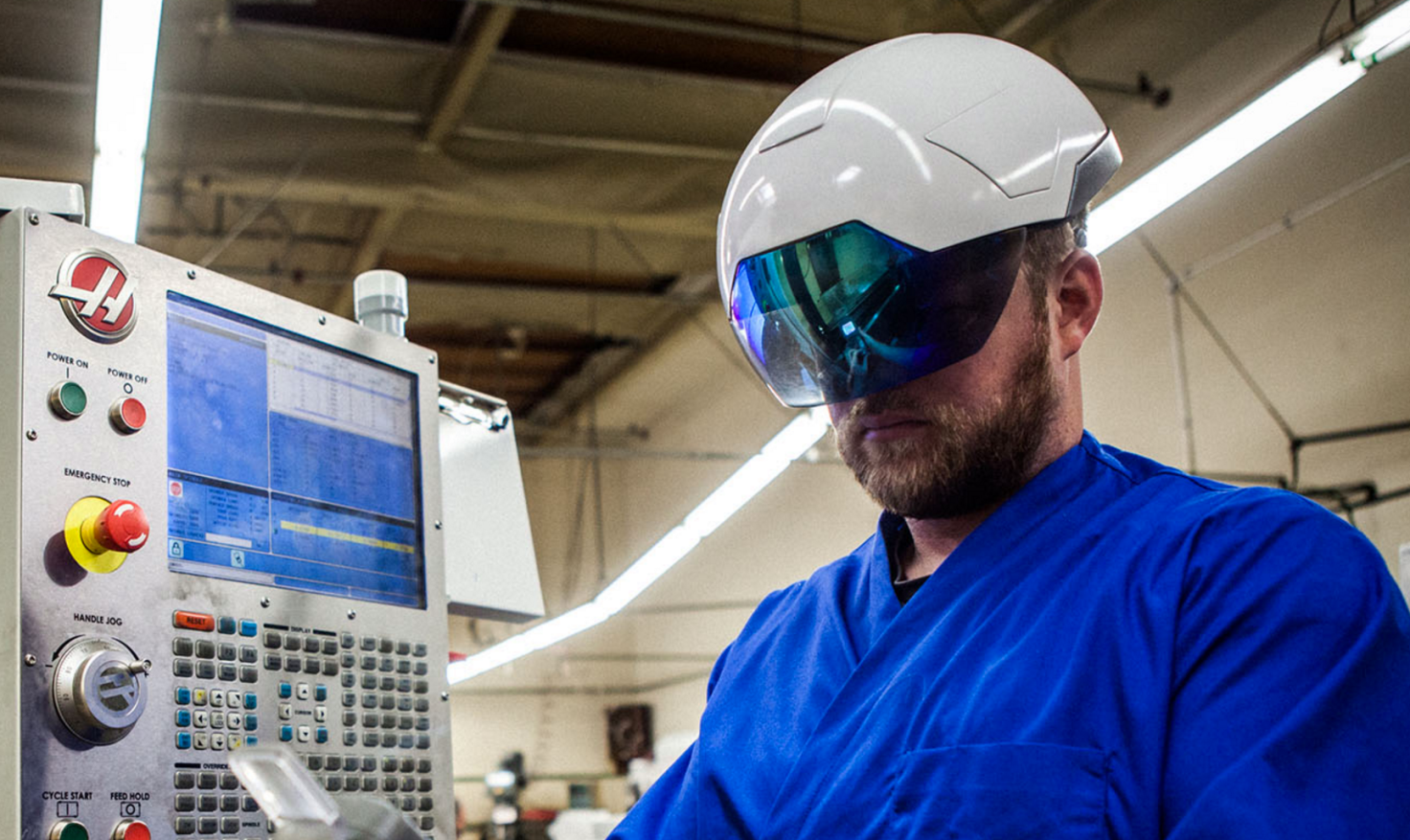 Augmented reality smart helmet company Daqri announced today that it had acquired 1066 Labs, a leading head-mounted display manufacturer focused on serving enterprise clients with augmented reality solutions. Terms of the deal were not disclosed.
Founded in 2007, 1066 Labs manufactures a variety of “see-through components” for head-mounted displays and has worked on implementing its tech with “advanced consumer electronics start-ups, Fortune 500 companies and Formula One dynasties” according to a company bio.
It also appears that several of the executives from 1066 Labs, which had offices in Hastings, UK and Redmond, WA, have made the move to Daqri, including 1066 Labs CEO David Hayes who is now serving as EVP at Daqri.
See the full story here: http://techcrunch.com/2016/03/01/daqri-acquires-1066-labs-to-power-its-augmented-reality-smart-helmet/
Dubai education show features augmented reality, smart boards
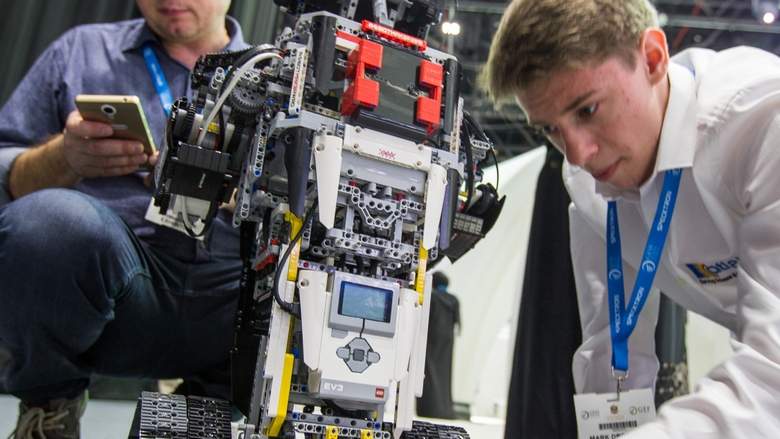 "The future of classrooms in the UAE is very exciting. It can be anything ... Smart boards and the current available technology in classrooms are essentially just the beginning," said Audai Altaie, regional director of sales, Middle East and North Africa for LG. "In comparison to other countries in the region, the UAE is still heavily investing into the education vertical."
Altaie spoke to Khaleej Times at the Global Educational Supplies and Solutions (GESS) and Global Education Forum (GEF) that opened on Tuesday in Dubai.
Organised by the Fand E Group in partnership with the Ministry of Education, this is the ninth edition of the Middle East's biggest education event. Over 500 exhibitors from over 35 countries are exhibiting at the three-day event.
"One of the technologies we have been focusing on is augmented reality. We started this with Kinect and then came up with XBOX and have lots of educational applications for it.
Intelligent screens were a prominent feature at the exhibition.
The smart screens are 84-inch 10-point built-in touch ultra HD display. "All of the data that the child needs to access to is on cloud ... In the future, I believe children will also use 3D and 4D models for learning," he added.
See the full story here: http://www.khaleejtimes.com/nation/education/dubai-education-show-features-augmented-reality-smart-boards
Hands-on with the $949 mind-bending Meta 2 augmented reality headset
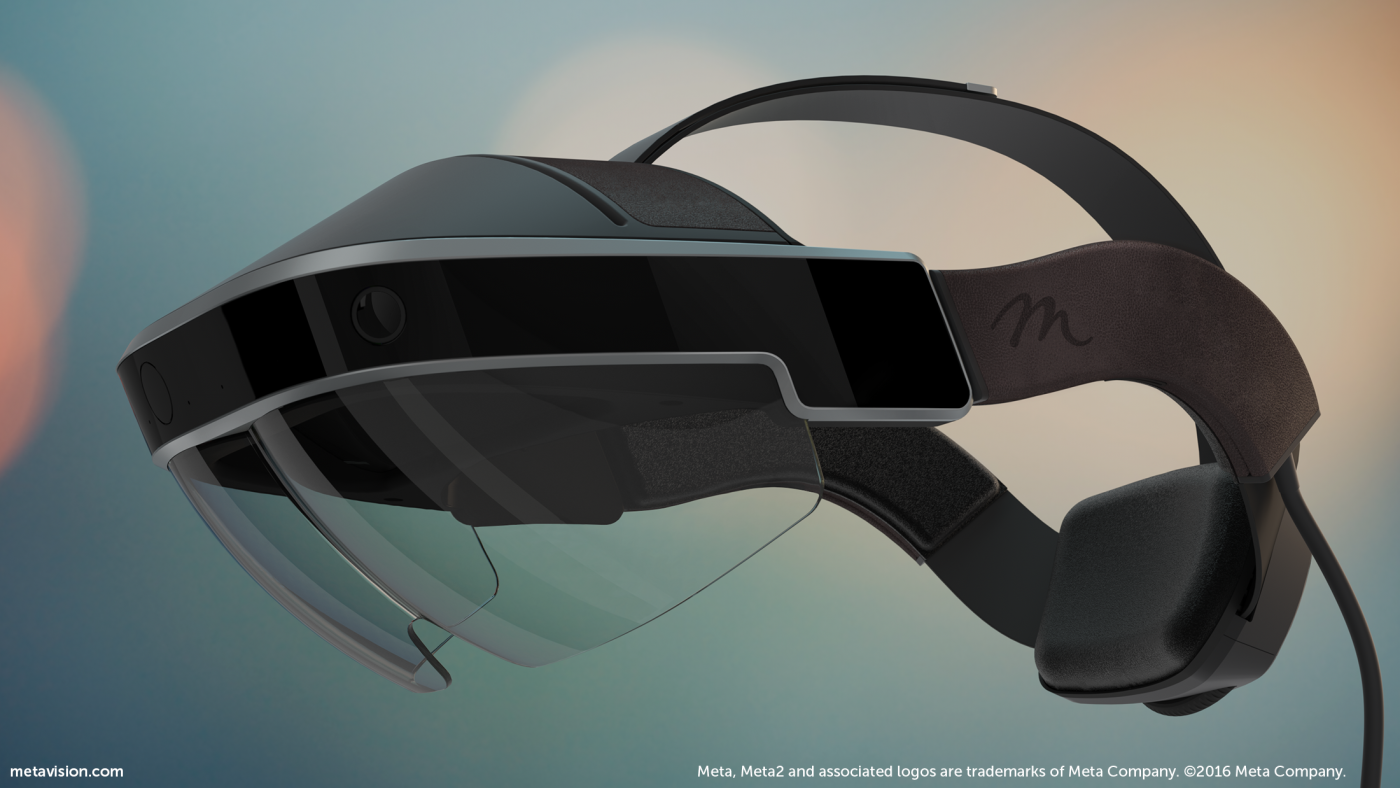 Meta CEO Meron Gribetz unveiled the Meta 2 augmented reality headset at TEDx 2016 last month, showing off — among other things — the headset’s incredibly large, near 90-degree, field-of-view.
...the Meta 2’s (2560×1440) display...
Field-of-view (FoV) matters a hell of a lot more on augmented reality devices than it does on VR headsets. With virtual reality, the more squashed the FoV, the more constrained your viewpoint is, but everything that isn’t the screen is just blackness and thus not all that distracting. In AR, low FoV means that it looks like there’s a little translucent window into the virtual world that you have to fit floating 3D content into. It sucks.
For comparison’s sake, the Gear VR mobile headset offers 98-degree field-of-view.
The tethered nature of the Meta 2 is undoubtedly what makes a FoV of this size possible.
“… in about 5 years, these are all going to look like strips of glass on our eyes that project holograms.” Gribetz said onstage at TEDx 2016 last month. “And just like we don’t care so much about which phone we buy in terms of the hardware; we buy it for the operating system, as a neuroscientist, I always dreamt of building the IOS of the mind, if you will.”
...the hand-tracking controls were a bit more brutish than I would hope, especially dim in comparison to my recent experiences with Leap Motion’s latest Orion update.
Much of these differences in quality come from the fact that while Leap Motion is making dynamic digital skeletons of your hands, Meta is using a variety of sensors and a high-def camera to actively map not only your hands but the environment they are manipulating.
Magic Leap, which has raised nearly $1.4 billion from investors like Google and Alibaba, is building a light field display which will beam holographic images directly onto your eyeballs. Light field displays, which Pamplin called “exciting,” have the potential to dramatically shrink the size of today’s existing AR headsets.
See the full story here: http://techcrunch.com/2016/03/02/hands-on-with-the-949-mind-bending-meta-2-augmented-reality-headset/
The VR Industry Is About to Make a Serious Mistake
 [Philip Lelyveld comment: the author makes a good editorial point]
When an industry is nascent, it’s hard to dream big. But that doesn’t mean time and resources shouldn’t be dedicated to doing it anyway.
VR teams would do well to put aside time each week to engage in divergent thinking on truly revolutionary applications of VR, in order to avoid this mistake. (We do it in our office).
As it stands, very industry-detrimental hardware & OS wars are brewing and low-quality VR titles are published daily. Rollercoaster or jump-scare haunted asylum VR titles are the equivalent of the Hamster Dance. They are early, obvious, and of little long-term significance.
See the full story here: https://medium.com/@gentrylane/the-vr-industry-is-about-to-make-a-serious-mistake-87958c1e1eb3#.9qss3j27d
Watching sports in virtual reality: Q&A with NextVR chairman after startup inks deal with FOX
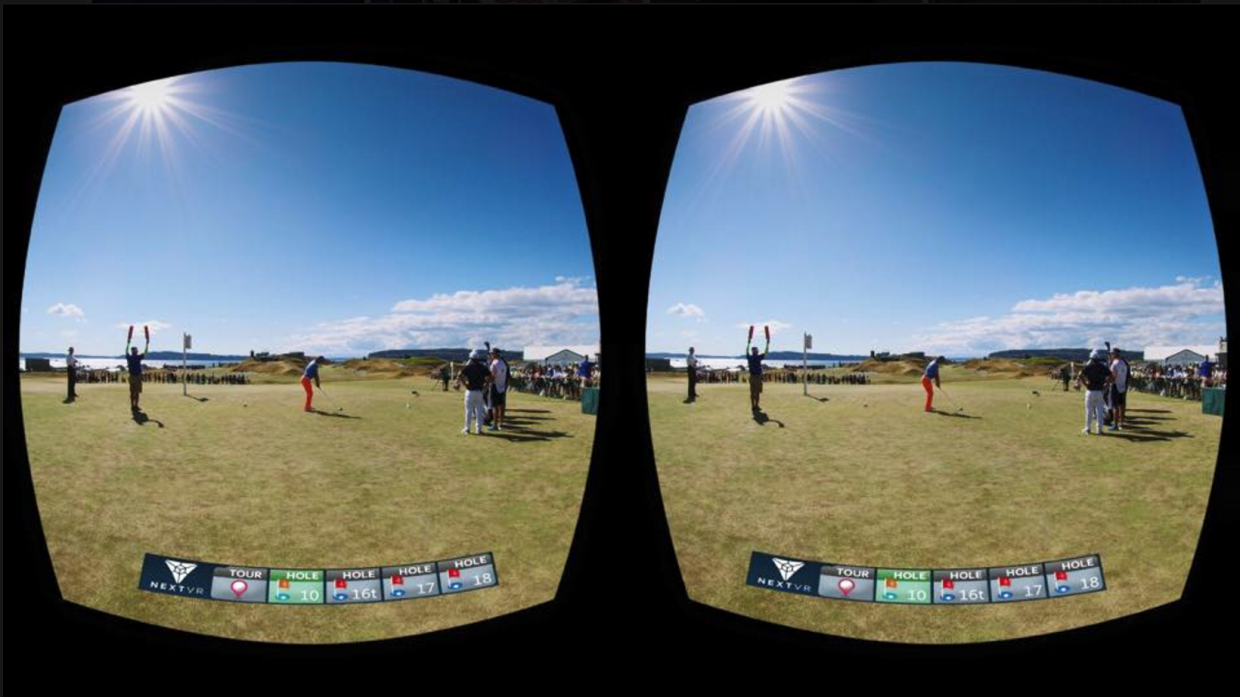 In what NextVR Chairman Brad Allen calls a “milestone for the industry,” FOX Sports inked a 5-year deal with the Laguna Beach, Calif.-based startup earlier this month to stream virtual content from its live sports broadcasts.
The partnership is another reminder of the fast-growing virtual reality industry and shows that traditional media giants like FOX are taking VR seriously. Given how fast the technology is improving and how hardware is becoming cheaper and easier to access — see Samsung’s most recent bundle deal — watching live sporting events in virtual reality could become a regular experience for fans faster than most people expect.
“It’s been a really fun partnership because we are both sitting on the same side of the table and helping to build the VR market together,” Allen told GeekWire about the deal with FOX. “That’s a big point.”
GeekWire: From a hardware and software perspective, this seems difficult. What does this production look like on the tech side?
Allen: “First off, from the camera side of things, we’re able to do this now because of the way we were compressing data for 3D TV back in 2009. That’s basically our secret sauce: the ability to compress all of the data. The cameras capture 24,000 pixels horizontally and 6,000 pixels vertically — that is a lot to send through to a mobile device. We compress it aggressively and we’re also able to send it through at 4-to-8 megabytes per second, with 60 frames per second. That’s about the same as a live HD stream from Netflix and really is what allows us to do what we do in real-time and also dynamically add in all these different elements during an event.
Microsoft says it will start shipping a developer version of its augmented reality device, HoloLens, for $3,000 by the end of March
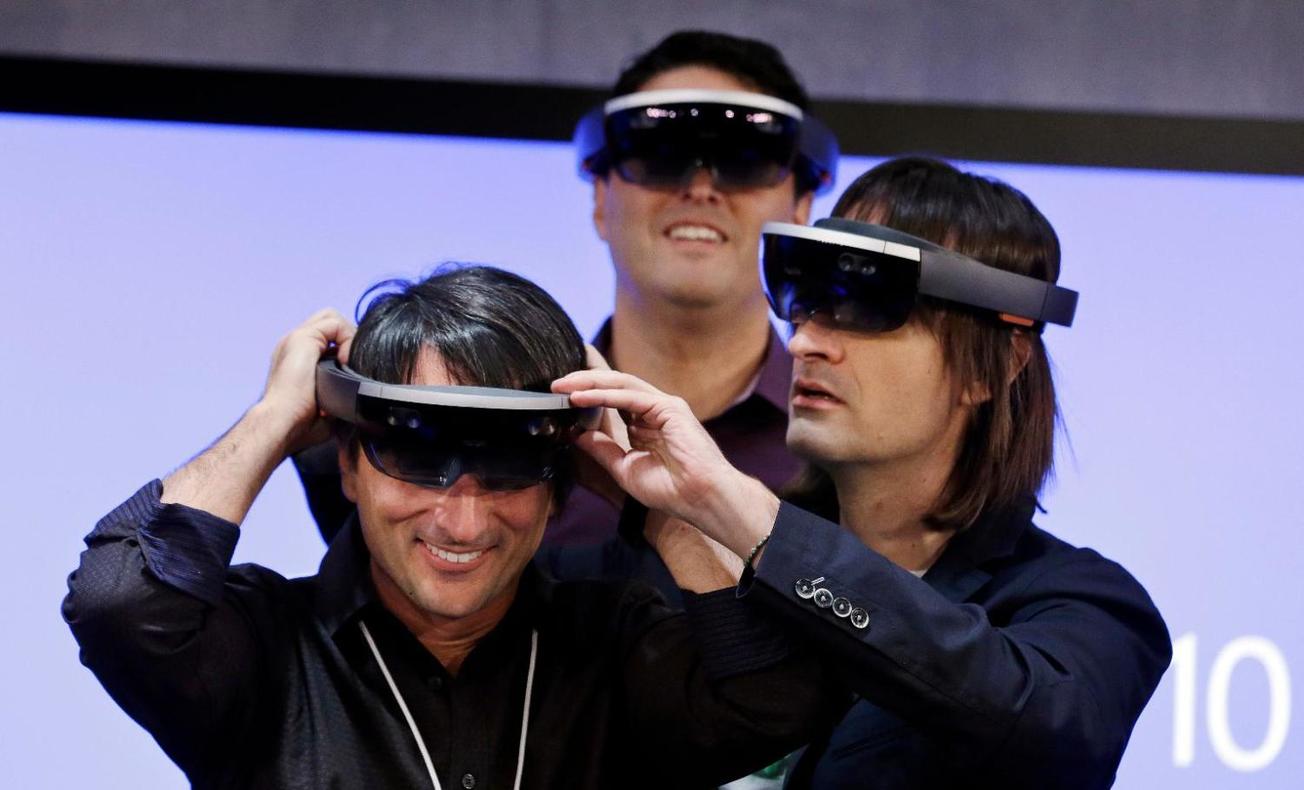 Microsoft says it will start shipping a developer version of its augmented reality device, HoloLens, for $3,000 on March 30.
That's around the same time Facebook's Oculus will begin shipping the consumer version of its Rift virtual-reality headset for $600. HoloLens differs from the Oculus Rift in that it makes the viewer see three-dimensional objects in the real world, rather than blocking out the real and replacing it with a 360-degree fictional universe.
See the full story here: http://www.usnews.com/news/business/articles/2016-02-29/microsoft-to-ship-developer-hololens-for-3-000-in-march
Augmented Reality Computer Vision Startup Wrnch Gets $1.8M Series A Led By Mark Cuban
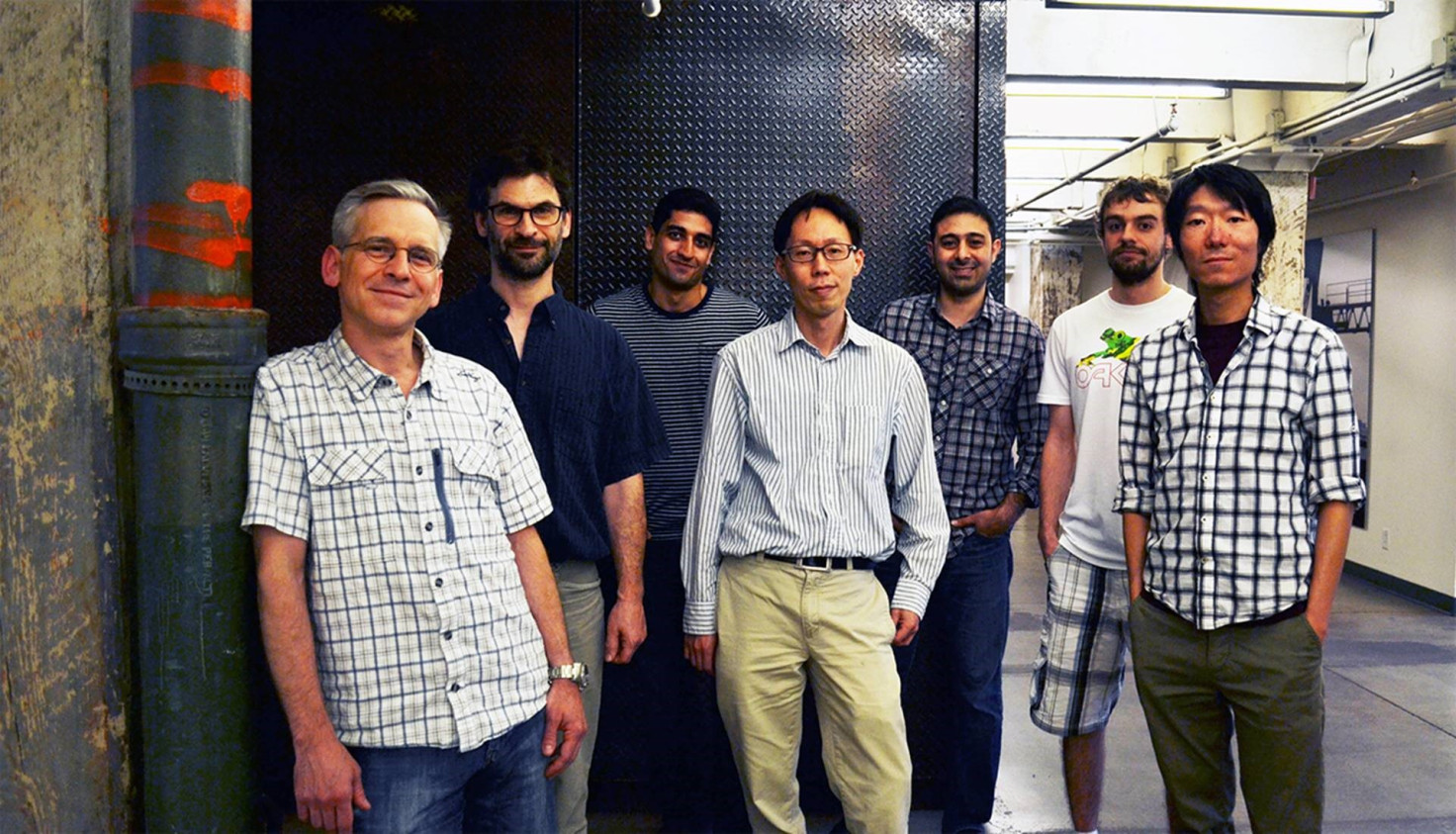 “As a diversified technology investor, I have a ring side seat to watch how AR/VR is set to change the world,” said Cuban in a statement. “I am excited to help the wrnch become the go-to tool for computer vision development.”
This funding will allow Wrnch to weather the commercialization phase and prove the business model surrounding their core engine, Kruszewski says.
“We’re working with the various crackerjack computer vision team units on actual production stuff right now,” Kruszewski said. People running Wrnch’s engine will eventually be able to use it to “make mass market Magic Leap kinds of experiences” across devices.
See the full story here: http://techcrunch.com/2016/02/26/augmented-reality-computer-vision-startup-wrnch-gets-1-8m-series-a-led-by-mark-cuban/
Sony files patent for ‘Powerglove’-like controller
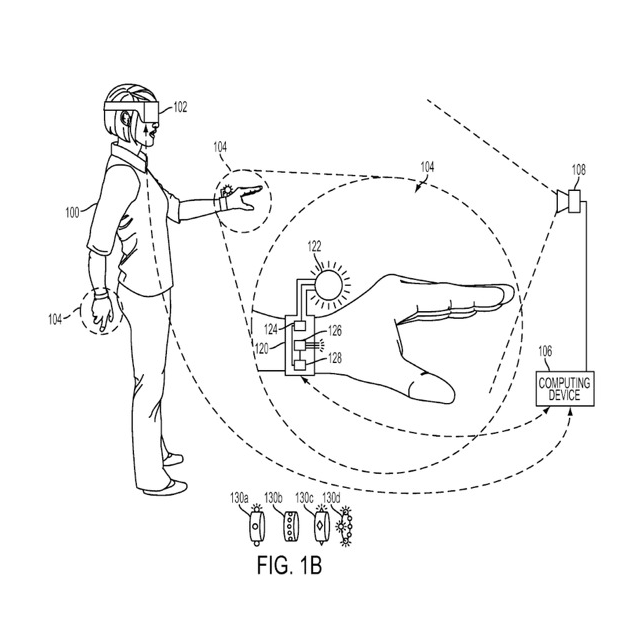 The system centers around a finger-tracking flex sensor, a separate contact sensor that registers when the user touches a physical object and a communications module that sends this data to a VR headset where it is incorporated into the simulated experience.
The filing describes the system as "a trackable object that is configured to be illuminated during interactivity" with "at least one inertial sensor for generating inertial sensor data" which sounds a lot like a more dextrous iteration of the PS3's Move motion controller. With it "users collaborating may use their gloves to touch objects, move objects, interface with surfaces, press on objects, squeeze objects, toss objects, make gesture actions or motions, or the like," the claim said of this emergent tech," the filing states.
See the full story here: http://www.engadget.com/2016/02/27/sony-files-patent-for-powerglove-like-controller/