Pixelbug: Bright idea now a reality thanks to MIT Enterprise Forum
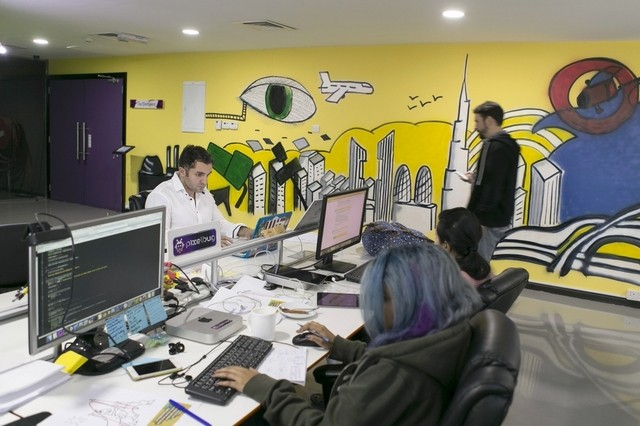 The competition, now in its ninth year, is organised by the MIT Enterprise Forum of the Pan Arab Region, one of the 28 worldwide chapters of the global MIT Enterprise Forum.
One of those who set up the competition is Hala Fadel, the Lebanese-French chairwoman of Mitef Pan Arab’s board, who is also chairwoman of the venture capital firm Leap Ventures.
“Our initial idea behind the competition was to impact mentalities in the Arab region to make them more entrepreneurial and risk-taking, and build the right spirit around competing and staying hungry,” says Ms Fadel. “The idea of changing mentalities is still there. In addition to that, now the competition provides training, mentorship, funding, networking opportunities and media exposure to aspiring entrepreneurs from throughout the Pan Arab region and supports much-needed economic development and job creation.”
For Mr El Eid, who has lived in Dubai for the past 11 years, the learning experience he gained from the competition started during the application process was immense.
Competitors apply to one of three tracks: ideas, start-ups and social entrepreneurship. Each track awards its first three ranked winners, with prizes totalling more than $150,000, as well as training, mentorship, coaching, media exposure and networking opportunities.
Pixelbug ticked all the boxes to win last year’s competition and its award money has been used as a much-needed buffer on operational spending. But learning insights as part of the competition process on how to thrive in the business world was just as valuable as winning.
“It has made our business a lot more meaningful. The move to a more product-orientated business strategy has allowed Pixelbug to focus a lot more on what really matters in terms of providing solutions that can help improve kids’ motor and imagination skills, while keeping them engaged through innovative use of technology. We saw immediate results after winning the competition from strong user uptake and positive feedback from the market for Colorbug.”
See the full story here: http://www.thenational.ae/business/the-life/pixelbug-bright-idea-now-a-reality-thanks-to-mit-enterprise-forum
How Apple’s wireless EarPods could change the way we hear everything
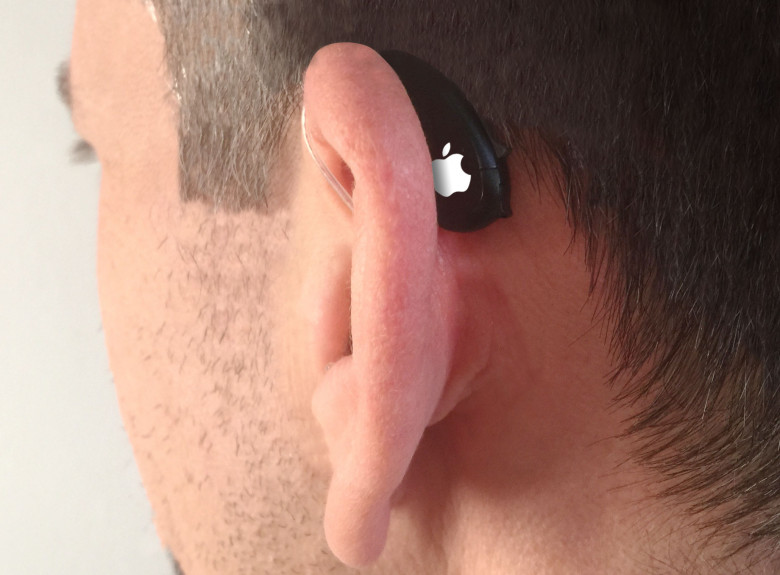 [Philip Lelyveld note: this is a speculative article - Apple has no announced plans - but it is a good idea.]
...it’s time for smart audio devices — or “hearables,” as they have become known — to grab our ears. Several such successful Kickstarter projects launched at CES earlier this month, and most aren’t targeting people with hearing loss.
Bragi’s Dash earbuds stream music wirelessly from your iPhone, but they also act as fitness trackers and recognize gestures, like nodding your head to accept a call.
Doppler Labs’ Here promises to bring the benefits of hearing aids to people with normal hearing, by providing a “live listening” experience for Coachella festival attendees. Even Twitter is getting in on the act. And there are many moreexamples.
iPhones already feature CoreMotion, a framework that provides applications with data from a magnetic compass, accelerometer and gyroscope. If Apple were to build CoreMotion into its Smart EarPods, it could quite literally add a new dimension to music.
Hearing aids today can cost as much as $5,000. One of the reasons they are so expensive is because the sales channel is complicated.
I realize Apple may have other priorities, like building electric, self-driving cars. But for anyone who could benefit from better, more affordable hearing aids, I hope Apple is listening.
see the full story here: http://www.cultofmac.com/407128/apple-wireless-earpods-hearing-aids/
Envelop VR Closes Series A Funding With Google Ventures to Deploy VR Productivity Environment
 While VR is great for entertainment, it’s also has potential to revolutionize the way we work. For many, work is done at a desk on a computer monitor which is limited in both size and functionality. Some of us work with two or even three monitors to increase efficiency.
Along comes VR and with it, the dream of being able to float your windows around you in a limitless space not restricted by the edges of a monitor. Envelop VR is working to make this a reality with the Envelop Virtual Environment, as they call it.
Beyond just creating a limitless workspace and allowing users to use existing desktop apps freely in VR, the company also wants to allow those apps to interface with the virtual environment. For instance, maybe you are working with a 3D model in Maya; instead of seeing it on a flat plane, it could be possible to make that model appear at life size right next to you in the virtual environment.
See the full story here: http://www.roadtovr.com/envelop-vr-raises-5-5-million-series-a-from-google-ventures-to-deploy-vr-productivity-environment/?platform=hootsuite
Google Cardboard Gets ‘Spatial Audio’ Support
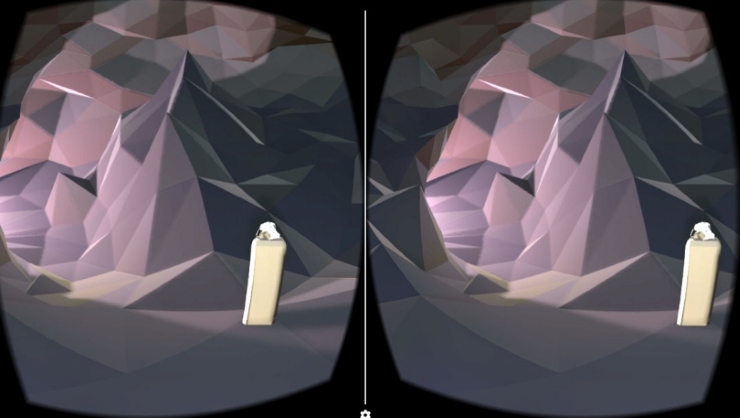 Google on Wednesday updated its Cardboard software development kits (SDKs) for Unity and Android with so-called "spatial audio" support, so developers can create more realistic audio experiences in their VR apps. Google Cardboard Product Manager Nathan Martz said many apps already create simple versions of spatial audio by playing sounds from the left and right in separate speakers. Today's SDK updates take this a step further, allowing apps to actually "produce sound the same way humans actually hear it."
See the full story here: http://www.pcmag.com/article2/0,2817,2497901,00.asp
Verge Fiction: The Empathy Machine / Hands-on with the PathoGlyph Wavelength
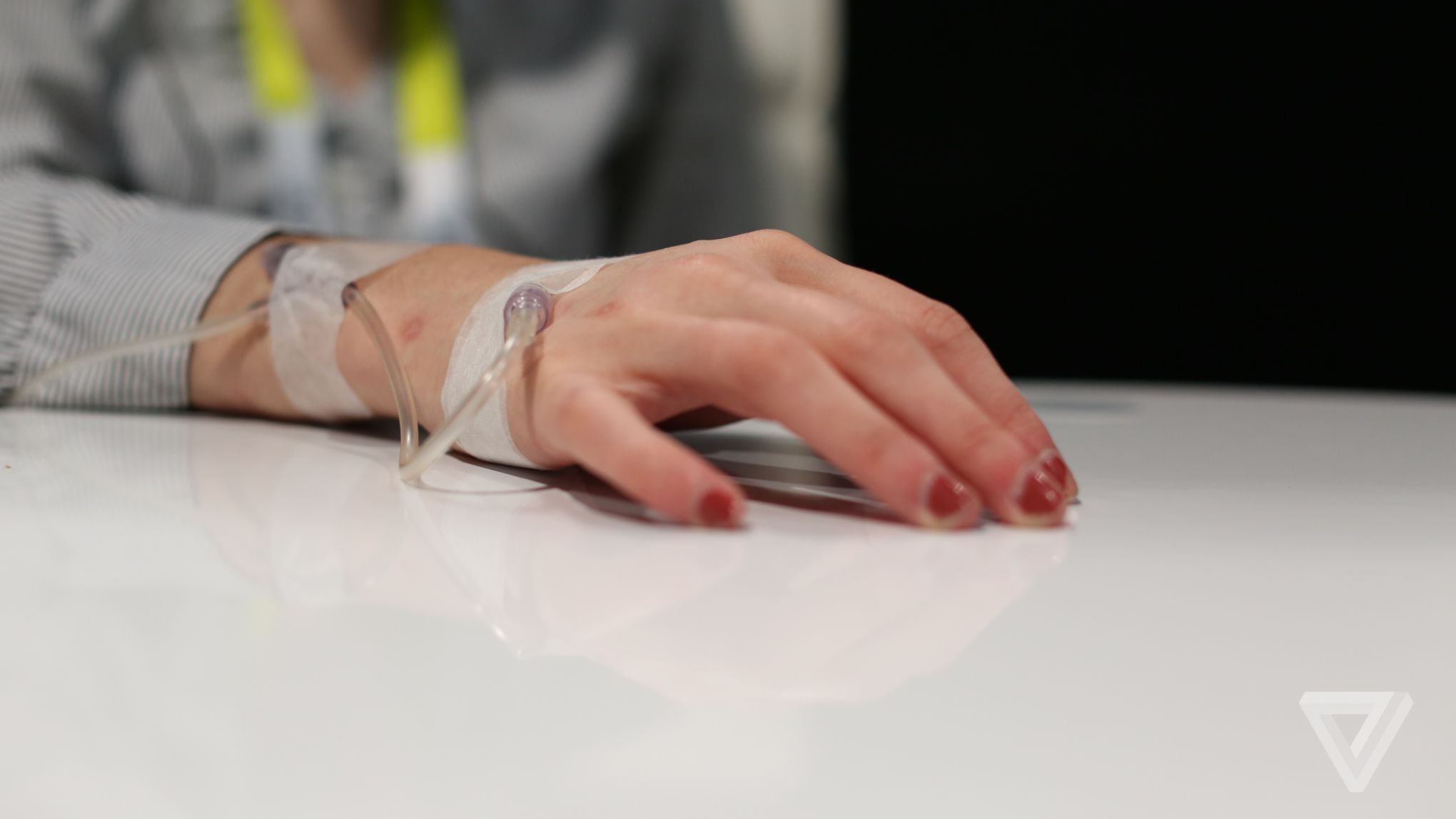 I don’t usually cry at CES. But then again, I’ve also never watched a film while being dosed with pharmaceuticals and lightly electrocuted — which is exactly what’s happening at virtual reality startup PathoGlyph’s tiny booth.
Based on a Samsung Gear VR paired with an IV drip, an electrode array, and some other tubes I don’t quite understand, it looks like someone described the basic concept of virtual reality to a mad scientist and let them loose in a hospital.
For most of the Wavelength’s "tracks," PathoGlyph developers construct and place different feelings at key places in the story, the way a film editor might layer audio cues. Nor are these feelings a precise translation of real human experience. They’re electrochemical cocktails that produce generic sensations — approximations of sadness, joy, or even complex concepts like jealousy, which White describes as the combination of anger, anxiety, despair, and desire.
The centerpiece of PathoGlyph’s demo is a companion track to Henry, Oculus Story Studio’s second animated film. ... This time, as Henry sighs at the sight of his empty birthday party, something clenches in my chest. ...
The Wavelength’s artificiality oscillates between the feelings of alcoholic magnanimity, major depressive episode, and crying at a montage set to Leonard Cohen’s "Hallelujah" — all those times where your conscious mind can’t stop your body from expressing something it knows is false.
The very real side effects of antidepressants and similar medications are balanced against potential health benefits, but the Wavelength is almost purely recreational, though White says that it could augment more established virtual reality treatments for phobias and PTSD.
See the full story here: http://www.theverge.com/2016/1/12/10742114/verge-fiction-pathoglyph-wavelength-hands-on?curator=MediaREDEF
$99 Intel RealSense Camera R200 Developer Kit With Windows And Android Support Now Up For Preorder
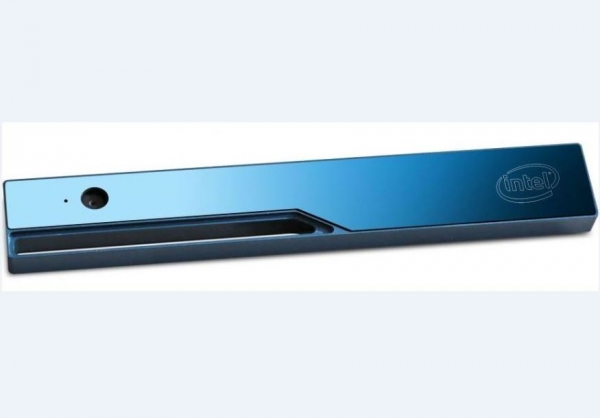 Notable highlights of the camera include a full VGA depth resolution, 1080p RGB camera, range of up to 9.8 to 13.1 feet or 3-4 meters (outdoor usage is also possible with the camera's longer range capability) and a USB 3.0 interface.
The dimensions are measured at 0.37 inch in thickness and 4.02 inches in length, which make the latest model relatively smaller than its older sibling.
The camera's augmented reality feature is part of the company's grand plan to bring the technology to tablets and PCs, similar to Project Tango of Google. Intel said that the camera was designed to work with sensors in order for device screens to deliver certain information such as the location of the user and viewed objects. Additionally, the camera will also be able to recognize the user's moods based on his facial expressions while it also maps out the surrounding area which can be useful in playing games and experiencing virtual worlds.
Pre-order here: http://click.intel.com/intel-realsense-developer-kit-r200.html
See the full story here: http://www.techtimes.com/articles/123735/20160112/99-intel-realsense-camera-r200-developer-kit-with-windows-and-android-support-now-up-for-preorder.htm
CNET Founder Launching Virtual Reality Network
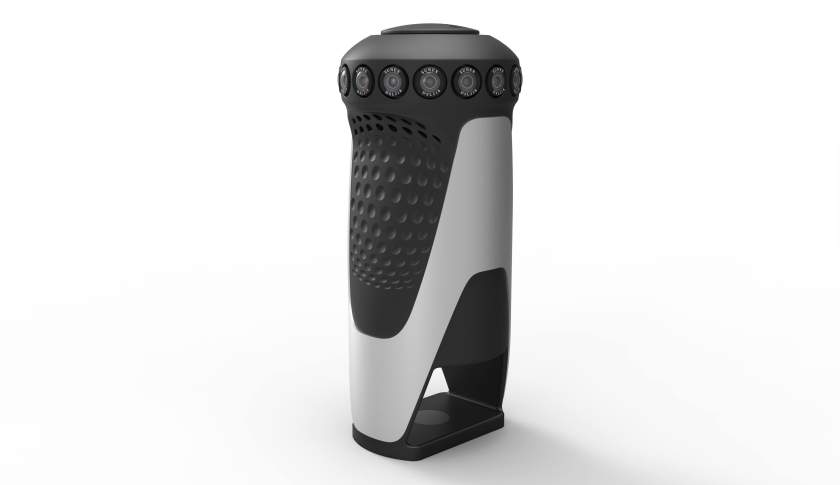 “Virtual reality won’t be a wholesale replacement of TV, but a massive new industry directly adjacent to the old one,” Reality Lab founder Halsey Minor says. “Virtual reality growth will come from entertainment.”
At CES 2016, Minor debuted Reality Lab’s Quantum Leap VR system, which was streaming live 360-degree 4K video content wirelessly over a Verizon VZ -0.07% LTE connection onto a Samsung SSNLF 0.00% Gear VR device in real time.
Each Quantum Leap camera features 16 individual HD cameras that produce two 360-degree stereoscopic images (one for each eye) for each viewer. Minor says the views are perfectly stitched together in real time, revealing none of the “seams” typically found in VR video content, despite running at 25 frames per second. Since the cameras support higher resolutions than any current VR headset, the technology is already built for the future.
In addition, the system supports Hyper VR, which allows three-dimensional objects and animations to be inserted into any 360-degree livestream.
But Minor isn’t selling this technology. Instead, he’s using it to create his own virtual reality network of channels, which will focus on individual sports and types of music at first. The company’s first partnerships will be announced in the coming months with content timed to launch in Q2.
Minor believe the future of virtual reality is untethered, which is why he debuted his technology on a mobile device.
Minor says the key to livestreaming 360-degree video is to get the best content—the Super Bowl, the presidential debates, big concerts, and soccer matches—and develop it in a different format. The Quantum Leap camera system will allow viewers to choose from multiple perspectives on the fly during event coverage.
See the full story here:
Say hello to VIDIUS, the world’s smallest first-person-view camera drone
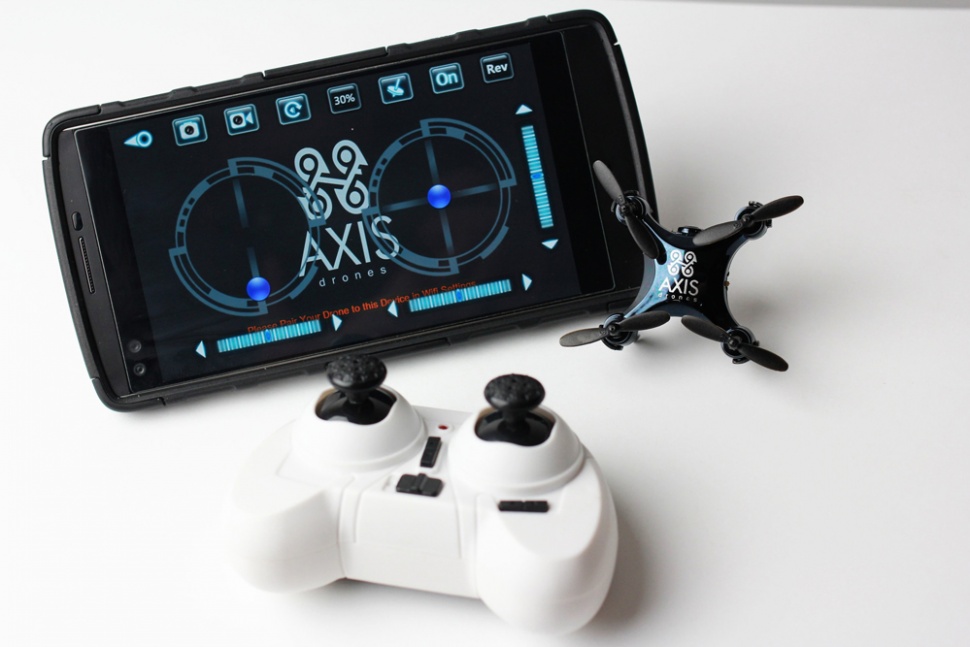 Measuring in at just 1.7 inches wide and standing just under an inch tall, the VIDIUS is a modern marvel of design and engineering. Due in large part to its diminutive size, owners need not register the VIDIUS with the FAA before flying.
Not only does the onboard camera boast the capacity to stream and record video in 420p, but it also allows pilots to snap stunning photos in-flight as well. Available next month on January 29, Axis currently allows preorders of the VIDIUS for $75 ($20 off its regular retail price).
See the full story here: http://www.digitaltrends.com/cool-tech/introducing-the-axis-vidius-drone/