Qantas Introduces Virtual Reality Tour of Hamilton Island
 An app is set to be released shortly, but the full immersive experience requires a special VR headset that is available on Qantas first class flights and at certain travel agencies. We’ve got to say, this is certainly one way to market Hamilton Island as a destination.
See the full story here: http://www.jaunted.com/story/2015/7/6/81841/34133/travel/Qantas+Introduces+Virtual+Reality+Tour+of+Hamilton+Island
New 4K 360-Degree Camera is Designed for Virtual Reality
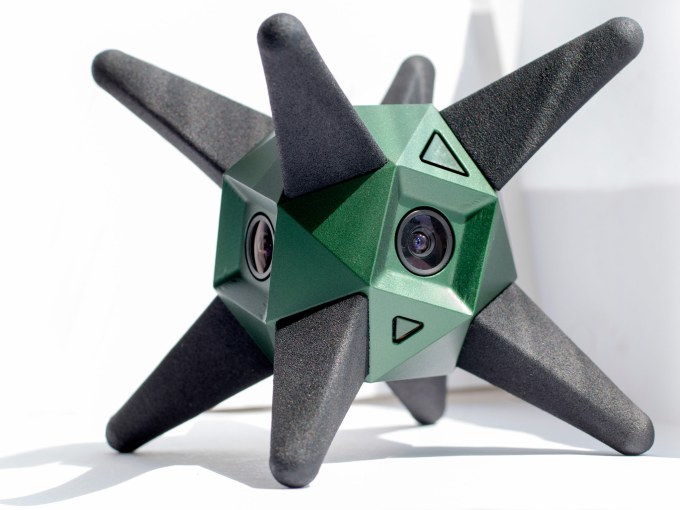 Sphericam 2 is a 4K spherical camera launched recently as a Kickstarter project with the intent of providing photographers, cinematographers and consumers with a means of easily capturing high-quality 360-degree video. The developers behind Sphericam see the camera is an ideal solution for producing content for VR hardware including Oculus Rift, Samsung Gear VR and Google Cardboard. The camera features six built-in 4K lenses and records 360-degree video at 60fps. With 23 days to go in the campaign, the project has already exceeded its $150,000 goal.
Sphericam 2 will retail for $1,499 but can be preordered now for a $200 discount via Kickstarter.
The first iteration of Sphericam shipped in 2013, following a successful Kickstarter campaign. The camera’s inventor, Jeffrey Martin, created a 320-gigapixel photo of London that holds the current world record for Largest Panorama Photo.
“VR has been steadily gaining popularity, especially with YouTube recently adding support for 360-degree video,” notes TechCrunch. “The music industry specifically seems to be quickly embracing the medium, with musicians ranging from Paul McCartney to Hardwell… releasing video of concerts shot in 360 degrees.”
See the full story here: http://techcrunch.com/2015/07/03/sphericam-2-is-a-4k-360-degree-camera-built-for-the-vr-era/
Tiny Camera Turns Your iPhone Into a Lens-Style Shooter
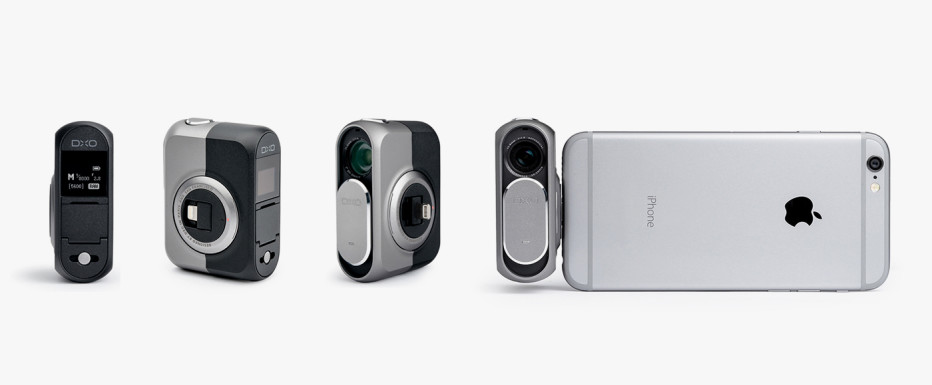 DxO One, and it’s built around the same 1-inch-type sensor Sony uses in the RX100 Mark III. (That alone is a great start.) It also has an F1.8 lens, manual exposure controls, a top shutter speed of 1/8000 of a second, and a few RAW-shooting modes.
But this is not your average premium point-and-shoot camera: It’s meant to be used while attached to your phone. It’s less than three inches tall, weighs about four ounces, and slips into a breast pocket with ease.
Like the Sony QX and Olympus Air lens cameras, the DxO One is meant to capture much better photos than your phone, then put those photos on your device for easy sharing and archiving.
There’s no optical zoom—the lens has a fixed focal length of 32mm—but the 20-megapixel sensor should allow plenty of room to crop and enlarge.
It’ll cost $600 with all that desktop software thrown in when it ships in September; you can preorder it on the DxO website now.
See the full story here: http://www.wired.com/2015/06/tiny-camera-turns-iphone-lens-style-shooter/
GoPro Shrinks the Camera Again: Hero4 Session Review
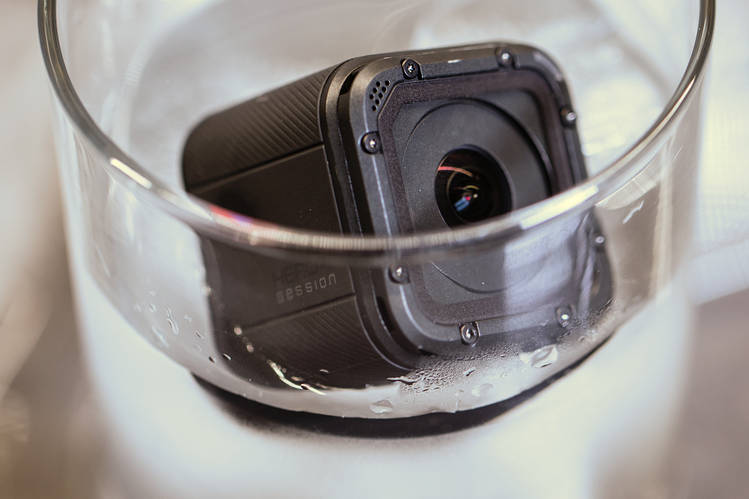 The new GoPro Hero4 Session is the size of an ice cube, about half that of previous GoPros. It can fit into the spokes of a bike, hang onto the end of a fishing pole or turn a toddler into a documentary filmmaker.
The Session goes on sale July 12.
$400.
The Session is the first new design in nearly a decade for GoPro, which has an astounding 70% of the U.S. video-camera market, according to NPD. Like the Shuffle, the Session sheds features to slim down and broaden its appeal. It has no screen to view pictures, no extra buttons to change modes, no way to swap its two-hour battery.
But the refinements in the new design are, for the most part, worth the sacrifices. They go a ways toward addressing my longstanding complaint that GoPros require too much futzing.
The Session still takes full-HD video, but is pool-party ready without the waterproof housing its predecessors required. The Session’s lens is covered by a clear shield, and the USB ports for charging and swapping out memory cards are pressure sealed (safe to an undersea depth of 10 meters). The microphone drains like a human ear when you take it out of the water, so you can go from the pool to the picnic table in seconds.
The Session also cuts GoPro’s number of buttons from three to two—really just one big one you use regularly. Tap the shutter button once to power it up and start recording video, or hold it down for still shots. (A tiny digital readout next to the button gives you confirmation that it’s working.) Press the shutter again to stop recording and turn it off. This is a significant speed improvement over older GoPros and competing action cams from companies like Sony.
A few aspects of the new design did aggravate me. The 1.5-inch, 2.6-ounce cube is cute, but when all sides are equal, how can you tell which way is up? The Session can sense its orientation, and will flip its video in 180-degree increments. But it can’t rotate 90 degrees. I held it wrong initially, and took video you have to watch with your head tilted like a confused puppy.
The session holds enough power to shoot about two hours of HD video, and doesn’t waste any juice when it isn’t shooting.
The big question, of course, is why you’d need a GoPro at all when you already have a smartphone. The answer is that you’re willing to stick them in places you’d never put your phone or regular camera.
See the full story here: http://www.wsj.com/articles/gopro-shrinks-the-camera-again-hero4-session-review-1436187558
Children’s books come to life through augmented reality
 At first glance, the children's book shows a one-dimensional picture of a lion. But hover a smartphone over the page, and the lion springs up in front of you.
Company founder Chris White released the first of its book series, Animal Kingdom, last fall. Since then, he's sold more than 15,000 copies at $29.95 each.
He expects to push out four more Animal Kingdom books this year, with $650,000 in funding from private investors. The new books will feature marine animals, insects, dinosaurs and household pets.
A tech consultant with friends at Pixar animation studios, Chris came up with the idea of using augmented reality to offer what he calls "tomorrow's learning."
White's first book does more then have pink flamingo rising from the page near a pond. It lets readers feed and pet the animals.
Readers also can see facts about each featured animal like their class, habitat, size, diet and population size.
The digital images she sees are generated using a software called Unity, the same one used to custom build video games for PCs, consoles, websites and mobile devices, White said.
See the full story here: http://www.sun-sentinel.com/business/consumer/fl-augmented-reality-book-20150701-story.html
Speeding Up 3-D Printing
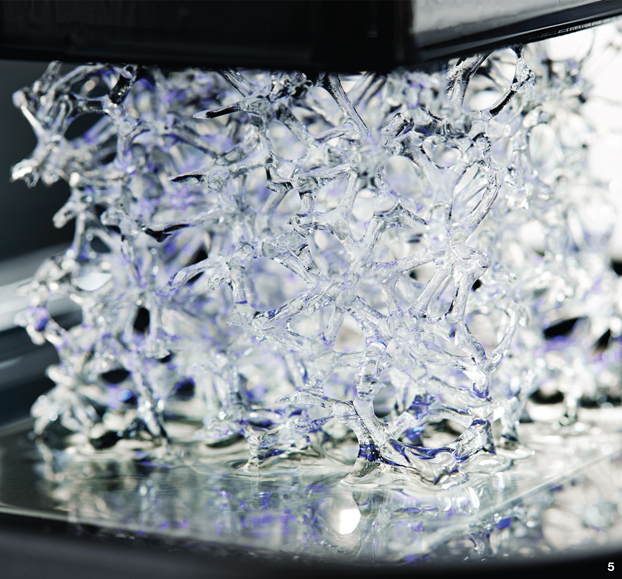 Carbon 3D, a startup in Redwood City, California. His company claims to have a technology that is 25 to 100 times faster, depending on the object and the material.
Carbon 3D’s process is a variation on a method called stereolithography, which uses projected patterns of ultraviolet light to catalyze the formation of solid polymers from a pool of resin.
In Carbon 3D’s version, the pool of liquid resin sits in a vessel with a window at the bottom. The window is permeable like a contact lens, so it lets in not only light but also oxygen—which inhibits the chemical reaction just enough to prevent the polymer from solidifying on the bottom. That allows Carbon 3D to continuously print one layer on top of the next, which makes the process much faster and the resulting materials stronger, says DeSimone. “It looks like something growing out of a puddle,” he says.
DeSimone says that while most commercial 3-D printing systems have been designed by mechanical engineers, his chemistry focus sets Carbon 3D apart. “We want to offer materials properties that haven’t been seen before,” he says.
B-Schools Get a Feel for Virtual Reality
 [Philip Lelyveld comment: Social VR makes it into the classroom. Originally sparked by hurricanes and snow at MIT. Students say it is 'almost' as good as being there.]
Stanford University’s Graduate School of Business in May launched an online certificate program that features customizable avatars for students who attend classes in a virtual space resembling the GSB campus. The Bay Area school joins the Massachusetts Institute of Technology’s Sloan School of Management, which uses similar technology in its executive-education programs.
A handful of other educational institutions and businesses have adopted the virtual-reality technology AvayaLive Engage, according to software company Avaya Inc.
Still, schools using the technology have found they are able to re-create the essence of the on-campus learning experience for students and faculty scattered across the globe.
...the technology made its in-class debut during Hurricane Sandy in October 2012. ... a “perfect opportunity to try using this technology to enable people who couldn’t attend because of the storm to attend virtually.”
The pilot was so successful, Mr. Hirst said, that it was incorporated into several of Sloan’s executive-education courses, including ones on big data and general management, where it caught the attention of Stanford’s GSB executive-education team.
Students and professors say the software, which allows avatars to gesture, jump and run, facilitates social interactions key to group projects and networking that would otherwise be absent from an online-learning experience.
Still, students and faculty say there’s no substitute—virtual or otherwise—for face-to-face interaction. “One drawback is not having the opportunity to really see facial expressions,” said Peter DeMarzo,professor of finance at Stanford’s GSB and faculty director of its remote-certificate program, though he added that a webcam shot of someone’s face could be placed on a wall or elsewhere in the virtual space.
See the full story here: http://www.wsj.com/articles/b-schools-get-a-feel-for-virtual-reality-1435776045
How to Stop Virtual Reality from Making You Want to Puke
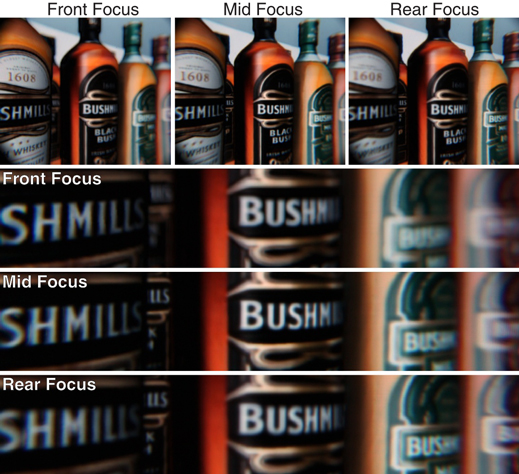 Stanford researchers are building a light field stereoscope in hopes of making it easier to add realistic focus cues to virtual reality.
I can focus on the different parts of the images at different depths as I would when gazing at something in real life, so when I look at, say, the chess pieces up close, those in the background look fuzzy, and vice versa when I focus on the pieces in the distance. And I don’t feel nauseous or dizzy like I sometimes do when I’m playing around with virtual reality, especially when looking at objects that are close to my face.
This conflict is what Wetzstein, an assistant professor of electrical engineering, and other researchers at Stanford are trying to solve with the headset I tried on, which they call a light field stereoscope—essentially, a device that uses a stack of two LCDs to show each eye a “light field” that makes virtual images look more natural than they typically do.
In hopes of making the stereoscopic virtual-reality experience more like what you see in real life, the Stanford researchers built a headset that contains two LCDs placed one in front of the other, with a backlight behind them, a spacer between them, and lenses in front of them. It’s connected to a computer that runs software necessary for the system to work.
The computer starts with a 3-D model, which the researchers’ software renders for each eye as a light field—in this case, Wetzstein says, it’s a five-by-five grid of slightly different 2-D images of the model, so 25 images in total for each individual eye. An algorithm uses the light fields to generate two images for each eye, and, for each eye, one of these images is shown on the rear LCD in the headset, while the other is shown on the front LCD. The images enter your pupils and are projected on your retinas.
What you see, Wetzstein says, is an approximation of the light field that’s being optically generated, which your eyes can freely move around and focus on where they want in virtual space.
A paper about the work will be presented in August at the Siggraph computer graphics and interaction conference in Los Angeles.
See the full story here: http://www.technologyreview.com/news/538976/how-to-stop-virtual-reality-from-making-you-want-to-puke/
See the Siggraph paper here: http://www.computationalimaging.org/publications/the-light-field-stereoscope/