‘Dexmo’ The VR Exoskeleton Glove with Force Feedback Launches Kickstarter Campaign
[Philip Lelyveld comment: I can see the usefulness of this in special circumstances beyond gaming (remote handling of hazardous material, telemedicine), but I can't see it going mass market in the current form factor. ]
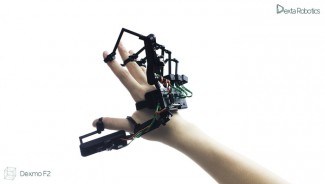 Dexta Robotics, a Chinese startup firm born in March of this year, was founded to bring this new product to life. After iterating through some 17 prototypes, the company have decided to release the Dexmo in to versions via a new Kickstarter campaign with a goal of $200k.
The Dexmo comes in two flavours, the Dexmo Classic and F2. The Classic is purely an input device which uses IMUs attached to each of your fingers and thumb to detect movement of the articulated links to each digit plus rotational input from the thumb. It can detect both the splitting (when you separate your fingers) and bending of your fingers plus 3 degrees of movement (rotational) of the thumb. The F2 adds digital force feedback for both your index finger and thumb, meaning that onboard servos ‘brake’ your movement according to information pulled from a VR experience. The upshot is that you can virtually ‘feel’ an object when your hand comes into contact with it.
See the full story here: http://www.roadtovr.com/dexmo-vr-exoskeleton-glove-force-feedback-launches-kickstarter-campaign/
11/10/14 follow-up story - the Kickstarter campaign was cancelled without explanation!!!!!!!!!!!!!!!!
http://www.roadtovr.com/raising-55000-dexta-robotics-cancels-kickstarter-haptic-hand-exoskeleton/
Why I don’t believe in “cinematic” VR
 I like to tease my silicon valley friends by stating that filmmakers have been augmenting reality since editing was invented in 1903. That’s because, beginning with editing (which is how filmmakers augment time and space, among other things), and on through the adoption of technologies like color, sound, and visual effects, we’ve gone to greater and greater lengths to augment every aspect of the reality we’re constructing so that we can tell our story in the best way possible.
By controlling what you see and hear, how you move, which people exist, how they look, the words they say, time itself… (Believe me, if David Fincher could tap directly into your nervous system, he would.) we craft a reality that’s not at all about arbitrary control or egomania; it’s about achieving perfect immersion. We call this suspension of disbelief.
In other words, the entire point of cinema is to lose yourself into another reality that you temporarily accept as your own. This sounds a lot like the goal of cinematic VR, if not the goal of VR in general.
Perhaps virtual reality is the future of video games. And perhaps having a screen on your face is totally awesome (your friend who bought a 3D TV will probably agree). But if virtual reality really is the future of cinema, it’s not just a departure from everything we’ve seen before in games and a millennia of storytelling, it’s a reversal of what we know works best, and it’s lacking in what we know is most important — all while supposedly striving to achieve the same goal.
See the full story here: http://pando.com/2014/10/24/why-i-dont-believe-in-cinematic-vr/?curator=MediaREDEF
How Magic Leap’s Augmented Reality Works
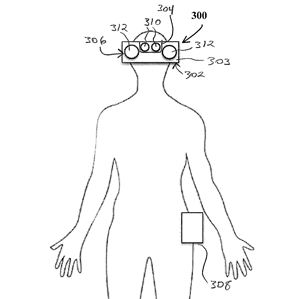 Magic Leap’s patents suggest an alternative approach. They describe displays that can create the same kind of 3-D patterns of light rays, known as “light fields,” that our eyes take in from the real objects around us. Wetzstein and other researchers have shown that this allows your eyes to focus on the depths of an artificial 3-D scene just as they would in the real world—providing a far more realistic illusion of virtual objects merged with the real world.
Earlier this year, Wetzstein and colleagues used that technique to create a display that allows text to be read clearly by people not wearing their usual corrective lenses (see “Prototype Display Lets You Say Goodbye to Reading Glasses”). He previously worked on glasses-free 3-D displays based on similar methods. And last year, researchers at chip company Nvidia demonstrated a basic wearable display based on light fields.
One of Magic Leap’s patents describes how such a device, dubbed a WRAP, for “waveguide reflector array projector,” would operate. The display would be made up of an array of many small curved mirrors; light would be delivered to that array via optical fiber, and each of the tiny elements would reflect some of that light to create the light field for a particular point in 3-D space. The array could be semi-transparent to allow a person to see the real world at the same time.
Multiple layers of such tiny mirrors would allow the display to produce the illusion of virtual objects at different distances. However, Magic Leap’s patent also claims that a single layer of the mirrors would be enough if they were formed from “magnetic liquid.” That would allow the mirrors to be reprogrammed using a magnetic field to rapidly display points at different depths fast enough to fool the eye, like the frames of an animation.
Magic Leap’s greatest challenge may be to find a way to seamlessly integrate virtual 3-D objects created by that display with what a person sees in the real world. Doing so would require the system to sense the world in 3-D and understand exactly what a person is looking at and its exact position, says Wetzstein.
Altogether, many of the underlying techniques Magic Leap needs to realize highly realistic augmented reality have been demonstrated, says Wetzstein. But the company will have to refine and combine them in ways no one has yet managed to do.
See the full story here: http://www.technologyreview.com/news/532001/how-magic-leaps-augmented-reality-works/?curator=MediaREDEF
First Look At 3D Camera App 3DAround
 Dacuda is famous for its PocketScan app that lets you wave your camera over a document to get a digital image of it without a bulky scanner. Now Dacuda’s 25-person team and 5 years of experience are combining to make your phone a 3D scanner that always gets the perfect angle…because it gets every angle.
The 3DAround app extracts depth and structure information from a success of rapid-fire photos to create the 360-degree views. You’ll be able to interactively view the swivel-able photo through the 3DAround app or WebGL-equipped browsers like Chrome, and share some version of the images to Facebook, Twitter, and Pinterst
The app will launch for free next month on iOS 8 devices for the iPhone 5 on up.
See the full story here: http://techcrunch.com/2014/10/24/3daround/?ncid=tcdaily
Augmented-reality startup Magic Leap nabs $542M from Google, others
 [Philip Lelyveld comment: Congratulations to Michael Leventhal, Vice President Corporate Legal & Business Affairs at Magic Leap, Inc. --- Oculus already announced their intention to make an AR version of their headset. It will come down to the richness of the ecosystem that they, or some other companies, build. (I'm working with the 'other' companies.)]
The search giant led a $542 million investment round in a startup called Magic Leap, which hopes to eventually replace computer and smartphone screens with virtual-reality interfaces. The company, founded in 2011 and based in Florida, makes a head-mounted device that acts like glasses. Turn the technology on, and it displays computer-generated images on top of what a wearer normally sees.
Now Google is investing in Magic Leap as well. And its interest goes beyond giving the company money: Sundar Pichai, the Google executive in charge of the company's Android mobile operating system and Chrome Web browser, will join Magic Leap's board of directors.
"We are looking forward to Magic Leap's next stage of growth, and to seeing how it will shape the future of visual computing," Pichai said in a statement.
See the full story here: http://www.cnet.com/uk/news/augmented-reality-startup-nabs-542m-from-google-others/
Google changes ‘to fight piracy’ by highlighting legal sites
 Google will now list these legal services in a box at the top of the search results, as well as in a box on the right-hand side of the page.
Crucially, however, these will be adverts - meaning if legal sites want to appear there, they will need to pay Google for the placement.
The BPI said that while it was "broadly" pleased with Google's changes, it did not think sites should have to pay.
"There should be no cost when it comes to serving consumers with results for legal services," a spokesman told the BBC.
See the full story here: http://www.bbc.com/news/technology-29689949
How movie-makers read your mind
 What kind of new technology?
Some are pinning their hopes on emotion-sensing software, such as Affectiva, a company with roots in the Massachusetts Institute of Technology. These firms use computer programs to analyse video feeds of a focus groups’ faces to judge their reactions: every subtle facial flicker can reveal whether they are amused, afraid, engaged or bored. So the next time a Hollywood studio previews a movie at a test screening, cameras in the auditorium might be viewing the audience just as intently as the moviegoers are watching the screen.
What’s the point? Aren’t test audiences already quizzed?
Yes – but people are unreliable. They might forget exactly which scenes they enjoyed and which they didn’t, or they might not articulate their engagement with the movie clearly. With a moment-by-moment breakdown of their emotional state, Hollywood studies should get a much better sense of the parts of a new film that moved an audience – and the parts that made them want to move towards the exit.
To find out more about the way that new technology is changing arts and the media, check out the World-Changing Ideas Summit in New York on 21 October. BBC Future will be covering the event in full – so watch this space.
See the full story here: http://www.bbc.com/future/story/20141017-how-movie-makers-read-your-mind?curator=MediaREDEF
The Keecker ‘home pod’ is a mobile projector, speaker, and security system all rolled into one
Lebeau’s project is called Keecker, an egg-shaped device that scoots around your house and uses a built-in projector and speaker array to turn any wall into a wide screen for displaying your movies, games, or digital art.
It’s hard to imagine a mass market for Keecker, especially at the $3,000 to $4000 price point Lebeau is currently planning. They definitely need to come up with a better descriptor than "home pod." But what’s appealing about the device isn’t affordable utility, but how quirky and unique it is. Keecker is a stab at the futuristic robot butler we’ve all dreamed of having, a smart servant that makes your living space feel genuinely sci-fi.
See the full story here: http://www.theverge.com/2014/10/14/6974457/keecker-robot-home-pod
Riftmax Theater Heads to Kickstarter to Improve the Social VR Theater Experience
 Riftmax Theater is one of the most interesting projects currently underway for virtual reality. The software acts as a theater for both videos and live performances, where users can come together from across the world to watch a film or be part of a live production, all with the immersive power of VR. The developers have been supporting the community with their software since the early days of the Oculus Rift and are now headed to Kickstarter to take it to the next level.
Riftmax Theater currently supports the Oculus Rift DK1 and DK2 VR headsets, along with the Razer Hydra motion controller. Players can host or join lobbies which transport them into a virtual theater which can be configured to watch movies, host theater productions, or even just to socialize. With the Razer Hydra motion controller, players can control their hands naturally to gesture while they speak, adding an impressive level of realism to virtual interactions with other players.
Riftmax Theater allows anyone to host their own virtual show, and is home to several recurring live events like the weekly Karaoke Night hosted by Troach & Bilago, and Virtually Incorrect With Gunter, a talk show focusing on virtual reality.
The developer provides the following list of ‘priority items’ they seek to add with funding from their crowdfunding campaign:
- Providing users with the means to put on a variety of different shows/performances including the ability to monetize them.
The game won ‘Best Social Experience’ at the Proto Awards in September.
See the full story here: http://www.roadtovr.com/riftmax-theater-kickstarter-virtual-reality-theater-oculus-rift-dk2-dk1-razer-hydra/
Will.i.am’s New Wearable Can Call And Text Without A Phone
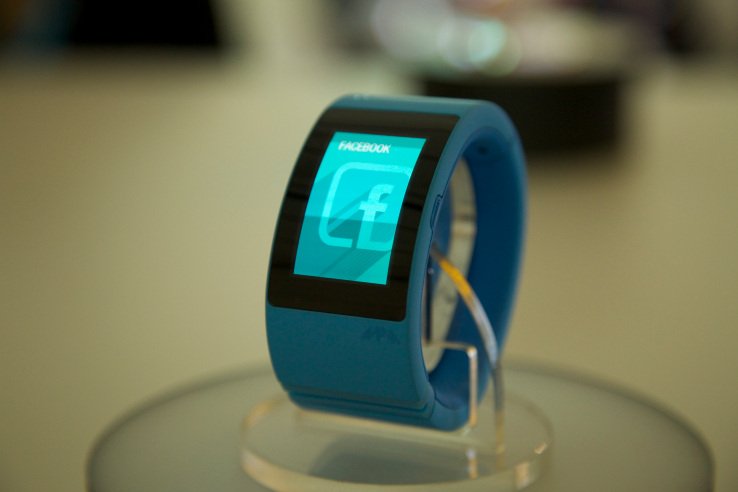 He’s been talking about this device for a while now, referring to it as more of a fashion technology than a watch. And he’s right. The device, called the PULS, is much more than a watch. It’s definitely a wearable that has a watch in it, but it also has a GPS map system, a music player, fitness tracker that tracks your steps, weight and calories burned, social network sites like Facebook and Twitter, can hold 1 GB of memory, 16 GB storage, bluetooth connectivity, and runs on a proprietary OS.
Will.i.am’s new wearable technology company i.am+ will also carry a jacket that powers the PULS, a backpack with a sound system, glasses that will take pictures by tapping on the PULS and shoes that tell you how much you weigh and how many steps you’ve made per day. All wearables hook in with the PULS to either help you track information about yourself or power the device. The device itself has a built-in mirrored sim so your phone and the device can use the same number. Developers can also build apps for the PULS. Apps like Humin and Esri already work with the device.
See the full story here: http://techcrunch.com/2014/10/15/will-i-ams-new-wearable-can-call-and-text-without-a-phone/?ncid=rss?ncid=tcdaily