The Amazing Uses of Virtual Reality
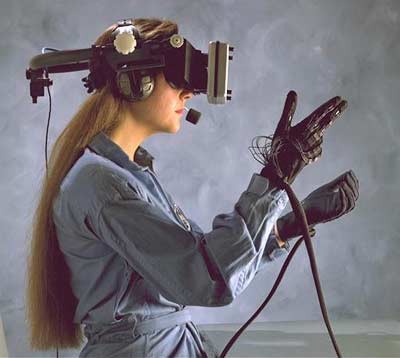 Virtual Reality is going to go mainstream, with pioneers such as the Oculus Rift leading the charge. Players such as Sony have already realized this and have already released their VR HMDs (The Project Morpheus, along with the TMZ HMDs that came before them).
With major industry shapers such as Microsoft and Apple (Along with Samsung) rumored to be developing VR HMDs, the future looks a bright as it could for Virtual Reality.
But then, as we think about VR going mainstream, the questions pop in, asking what exactly will VR be suitable for. There are some obvious uses, but also some not-so-obvious ones.
See the full story here: https://medium.com/adventures-in-consumer-technology/the-amazing-uses-of-virtual-reality-7ea48dfe0748?curator=MediaREDEF
The Tech-Savvy Supreme Court
 [Philip Lelyveld comment: While some say the Aereo decision "stifles innovation," I will argue that is redirects innovation toward activities that will lead to more interesting innovations that are less anchored to a winner/loser dynamic.]
"The majority decision indicates that justices understood Aereo’s unique technical infrastructure. They simply rejected it as a legal gimmick, which is a perfectly valid interpretation."
See the full story here: http://bits.blogs.nytimes.com/2014/06/26/the-tech-savvy-supreme-court/?_php=true&_type=blogs&curator=MediaREDEF&_r=0
Are you ready for 4K TV? Akamai shares which countries are good to go.
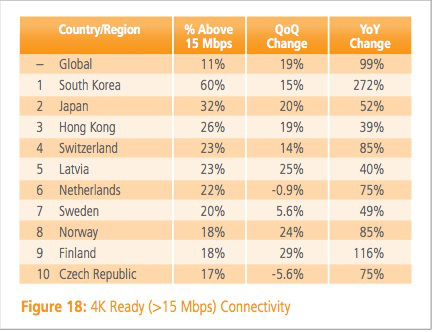 SUMMARY:Every quarter Akamai tracks the trends in broadband — from speeds to IPv6 readiness and security threats. This year the percentage of people who have speeds greater than 10 Mbps hit 20 percent for the first time.
See the full story, with many more tables, here: http://gigaom.com/2014/06/26/are-you-ready-for-4k-tv-akamai-shares-which-countries-are-good-to-go/
The next thing Silicon Valley needs to disrupt big time: its own culture
 The problem is that Silicon Valley has gone completely to the other extreme. We’ve created a make-believe cult of objective meritocracy, a pseudo-scientific mythos to obscure and reinforce the belief that only people who look and talk like us are worth noticing. After making such a show of burning down the bad old rules of business, the new ones we’ve created seem pretty similar.
Because the talent market is tight, that insularity presents a problem. It’s hard to find good people to hire. All the Stanford graduates have offers from multiple companies and there’s no time to develop talent. On the other hand, so many nice-seeming candidates seem to fail the interview process for trivial mistakes that fall under the catch-all category of “culture fit.”
Let’s review the bidding. A capable professional expressed interest in working for a company. Instead of talking with her about that in plain English, she was held at arm’s length for days while The Culture examined her for defects: coffee dates in the afternoon, conversations over dinner. When she gets the invisible nod, her reward is a “spontaneous” invitation to a night of drinking with the team. You have to wonder why intelligent people would devise an interview process so strange and oblique that the candidate doesn’t even know it’s happening.
...Again Max Levchin: “PayPal once rejected a candidate who aced all the engineering tests because for fun, the guy said that he liked to play hoops. That single sentence lost him the job.”
The obscurity and arbitrariness are very much by design, and is why explainer posts are supposed to be so valuable. Having engineered an unfair situation, insiders then offer secret guides to winning it.
Read the full story here; http://qz.com/225782/the-next-thing-silicon-valley-needs-to-disrupt-big-time-its-own-culture/?curator=MediaREDEF#/h/80696,3,80701,2/
BBC Plans the First Live Ultra HD Broadcast Entirely Over IP
[Philip Lelyveld comment: This BBC activity demonstrates how a broadcaster can leverage the strengths of one distribution path (IP / the internet) to innovate without abandoning the benefits and acknowledged weaknesses of another distribution path (broadcast and CE industry's slow, coordinated tech standards processes).]
As several broadcasters get ready to test live Ultra HD broadcasts of the World Cup this week, the BBC has plans to go one step further. Journalist and ETCentric contributor Adrian Pennington tells us that the BBC has chosen next month’s Commonwealth Games for the world’s first live Ultra HD production that will use an entirely Internet-based infrastructure. While broadcasters have used IP to distribute content between the studio and remote locations, all-IP live production is not yet common.
 “IP will enable us to be more flexible with services we already produce, and longer term, to introduce new kinds of services,” said Matthew Postgate, BBC R&D controller. “We wanted to do this in 4K to prove the system is capable of working at the highest resolution and of simultaneously working at all lower resolutions. By the time 4K comes around we won’t have to spend time doing the research all over again.”
“Beginning with the Commonwealth Games’ opening ceremony on July 23 from Glasgow, Scotland, BBC R&D will produce a series of Ultra HD broadcasts using four Sony F55 4K cameras converted into IP and mixed live before being encoded into HEVC, a compression system suitable for home viewing,” writes Pennington for The Hollywood Reporter. “To do this, the BBC will use technology of its own devising, dubbed IP Studio, which is a system that includes specially configured PCs to convert each 4K camera signal into IP and a production gallery featuring a multi-viewer and mixer.”
See the full story here: http://www.etcentric.org/bbc-plans-the-first-live-ultra-hd-broadcast-entirely-over-ip/
What It’s Like To Shoot A Feature Film For Oculus Rift
 But the strangest thing is the surround sound headphones. Because you are in an immersive world, content creators are forced to use sound as a cue that instructs you where to look. The footsteps behind you and the screams from a corner make everything that much scarier--just as much as the monster or serial killer jumping out from behind the pile of trash.
Although distribution details are still sketchy, it’s one of the very first attempts Co.Labs has seen of Hollywood creating straight-to-Oculus Rift content.
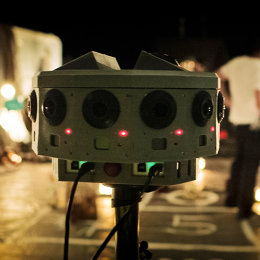
Filming takes place with an array of cameras located in the center of the set in a large rig, with audio recorders hanging down from the ceiling. The big, this-changes-everything complication is that the camera array records everything in a 360 degree space. Or, as Plotkin told me, “If you see the camera, the camera sees you.”
And because footage from all those little cameras is merged, in a server-intensive process, into a single Oculus-compatible video file, every scene has to be done in a single take. Meanwhile, the actors are in front of, behind, and to the sides of the camera. The filming experience itself is akin to the bastard progeny of experimental theater in the round and video game production.
Everyone involved sees that there’s clear potential in making immersive virtual-reality movies, but no one knows what the audience will love, and what will just be too strange (or too corny) for them.
See the full story here: http://www.fastcolabs.com/3031890/what-its-like-to-shoot-a-feature-film-for-oculus-rift
Lego Fusion Sets Combine Physical Blocks and Virtual Worlds
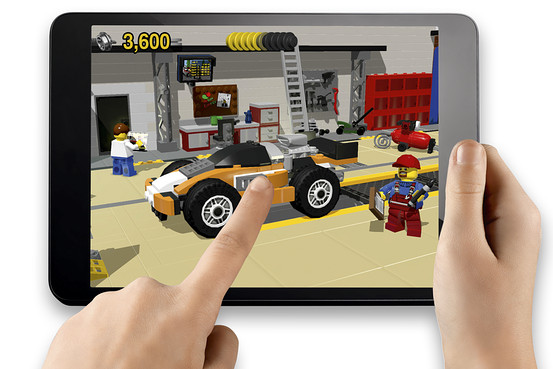 Lego is launching a new line of building block kits this summer that enable 7-to-12-year-old children to build a physical building and then see that building become a part of a virtual world in the corresponding smartphone app. The budding builder would construct a facade out of the 200-piece Lego Fusion set, and then use the app’s camera function to capture the creation and turn it into a building within the app’s game, such as a tycoon game or a racing game.
The new Fusion kits are $35 while the apps are available for free. The apps come with a few demo games, but because each building must be made by real blocks before it will appear in the game, the apps require the corresponding Lego set.
Researchers at Lego developed the concept of the Fusion platform because they found that children do not differentiate physical and virtual play. “For kids, it’s really just one world,” said Ditte Bruun Pedersen, senior design manager at Lego’s Future Lab, as reported in The Wall Street Journal. “It’s all about the play for them.”
See the full story here: http://blogs.wsj.com/personal-technology/2014/06/19/legos-fusion-games-merge-real-bricks-and-touch-screen-play/