Whirling Wi-Fi: Vibrant images reveal how wireless networks sweep and surround us
 Hernan created the photographs using a custom-made instrument designed to reveal them.
It scans continuously for wireless networks, and transforms the signal strength to colour LEDs.
The results are multi-coloured streaks of light which twirl and wrap in spaces, showing how they surround objects and people.
See the full story here: http://www.dailymail.co.uk/sciencetech/article-2662507/Whirling-Wi-Fi-Vibrant-images-reveal-wireless-networks-sweep-surround-us.html
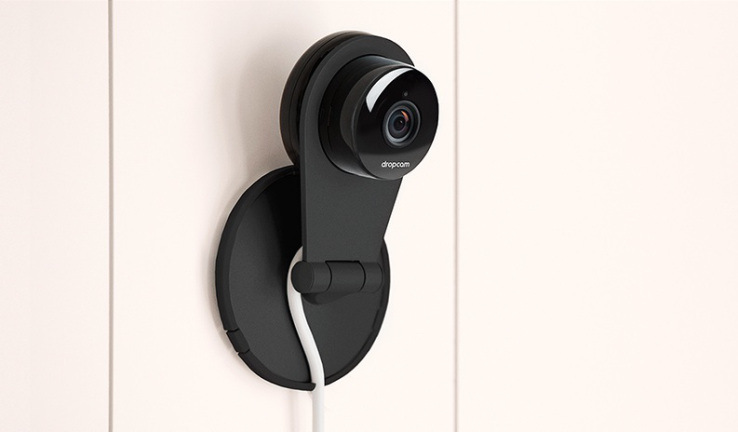
Google and Nest Acquire Dropcam For $555 Million
 [Philip Lelyveld comment: I'm really curious to know why a good implementation of a non-original, undefendable idea is worth a half billion dollars. Given Nest's experience, why wouldn't it be cheaper for them to pound out a competing minimum viable product.]
Just months after being acquired themselves, the now Google-owned Nest has just announced that they’ve acquired Dropcam. We’re digging for more details on the deal now, but have confirmed that the final sale price was $555 million in cash.
Wondering what the heck a Dropcam is? They make a few different things, but their namesake device is a WiFi-enabled security camera ($149 or $199, depending on video quality) that requires little-to-no-effort to maintain. You plug it in, get it up on your WiFi, and you’re set. If you just want to be able to check in on your cameras remotely, that’s free; if you want Dropcam to keep an archive of recorded footage on their servers, that’ll cost you anywhere from $10 to $30 a month (depending on how long you want archives kept).
See the full story here: http://techcrunch.com/2014/06/20/google-and-nest-acquire-dropcam-for-555-million/?ncid=tcdaily
Report Claims PewDiePie Grossed $4 Million In 2013
 The Wall Street Journal has posted a profile of Felix Kjellberg aka PewDiePie, the Swedish gamer who claims more subscribers than any other YouTube channel. According to the article, the 24-year-old grossed $4 million in 2013, making him a real-life YouTube millionaire.
In addition to citing PewDiePie’s mind-boggling revenue, the article also includes a rare interview with the Swede, who usually lets his videos do the talking. While dressed in an adorable floral circlet, Kjellberg opened up about his life on YouTube and lamented the fact that his fame has come with such a polarizing public opinion.
“I’m so central to YouTube now, and that puts me in the spotlight and raises a lot of questions like ‘Why is he so big?’” Kjellberg said. “I’d much rather prefer to have something like 5 million subscribers.”
See the full story here: http://www.tubefilter.com/2014/06/16/pewdiepie-4-million-revenue-2013/
LiveSphere: 360-Degree Immersive Broadcast Video Platform
 “The part that attracts most attention is how the picture stitching is done, but the part that enables us to build a business out of this technology is the efficient means of compressing the entire video sphere and the ability to match it to the best decoding capability of the smartphone or tablet to render the best results,” said Benoit Fouchard, chief strategy officer for ATEME.
“There are no solutions in existence that match the needs of the broadcast market,” he explained. “We don’t intend to offer this as a service model but as an end-to-end solution that puts these tools in the hands of the same production team producing the HD or Ultra HD main feed.”
Interestingly, he also downplayed the virtual reality angle: “We don’t want to give the impression that 360-degree video is just for VR where you have to wear headsets, because this is the issue that proved problematic for the public perception of 3D.”
During the Roland-Garros tests, a rig comprised of seven HD GoPro cameras was used from different positions. The best images were captured closer to the action. A multi-camera approach may not be a permanent solution, but Fouchard noted that, “single camera panoramic video doesn’t work for broadcast.”
While the system stitches multiple streams together with an output of less than HD, the goal is to achieve similar results in 4K and 8K.
See the full story here: http://www.etcentric.org/livesphere-360-degree-immersive-broadcast-video-platform/
and here http://www.tvbeurope.com/360o-video-tested-roland-garros/
A Very Short History of LA Tech
[Philip Lelyveld comment: this is a good anecdotal story.]
The Internet was, in many important ways, developed in Los Angeles as a Defense Department project — a communications network that could survive nuclear war.
 For that job, a lot of government money in the late 1960s went to Southern California universities, to such Internet pioneers as Leonard Kleinrock at the University of California at Los Angeles and Jon Postel at the University of Southern California.
From this foundation of hard-core engineers, many of the Internet’s important commercial players emerged.
That includes Sky Dayton, who built up EarthLink, one of the earliest and largest Internet service providers. And Bill Gross, founder of many tech companies, such as the pioneering paid-search company GoTo.com, which later become Overture. And Chris DeWolfe and Tom Anderson, who built Myspace, the early social network that was once the most-visited site on the Internet. And Richard Rosenblatt, who created Demand Media, the content-creation startup, as well as many other tech companies in the LA area in the sector’s early days.
See the full story here: http://recode.net/2014/06/14/a-very-short-history-of-la-tech/?curator=MediaREDEF
Latest “Transformers” Film Shot with New IMAX 4K 3D Camera
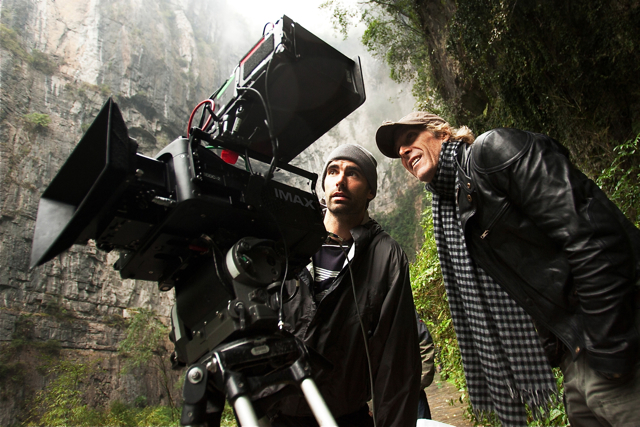 IMAX announced that it has developed the first fully integrated dual 65mm 4K digital large-format 3D camera. Michael Bay’s latest Paramount Pictures project, “Transformers: Age of Extinction” is the first feature film to use the true 4K stereo camera, which captures both left and right eye images at full 4K resolution. According to the company, the new IMAX 3D Digital Camera system is “smaller, lighter and easier to use than other 3D digital camera systems on the market.”
See the full story here: http://www.etcentric.org/latest-transformers-film-shot-with-new-imax-4k-3d-camera/
Your guide to E3 2014, the biggest week in video games

Virtual reality
OCULUS AFTER FACEBOOK
The last big news in virtual reality came during the Game Developers Conference in March. Oculus began taking preorders for the second (and final) version of its development kit, and Sony revealed Project Morpheus, its competing prototype headset for the PlayStation 4. Both companies will be showing off their hardware again at E3, but what exactly we’ll see is a mystery.
This is Oculus’ first big event since being acquired by Facebook, and it’s possible — though hardly certain — that we’ll hear details about a final consumer version of the Oculus Rift, which is currently expected in 2015. Oculus has also branched out from hardware to publishing, and it’s supposedly working with a number of major developers on dedicated VR games, so seeing some new games isn’t out of the question either. With much of the headset tech locked down, the next big hurdle is finding things to do with it.
VR GAMES GO COMMERCIAL
On that front, we’re looking forward to checking out Adr1ft, a virtual reality game developed by former Microsoft creative director Adam Orth — who started work on it after being notoriously fired for inopportune comments about the Xbox One’s always-on connection — and Call of Duty veteran Omar Aziz. A survival game about an astronaut attempting to repair a destroyed space station, it could end up being one of the first major VR titles.
PROJECT MORPHEUS
Sony hasn’t been talking about its headset for nearly as long, and its plans are more nebulous. Any details about pricing, release date, or final design would be welcome revelations. It’s also shown off little more than a few tech demos, so we’ll be watching carefully for any new content. But rumors have been scarce. Last month, inside sources supposedly said that Media Molecule was going to announce a "landmark" world-building game for Morpheus, but the company’s recent announcement shot that down.
Steam Machines
Valve was a big presence at January’s Consumer Electronics Show, but several months later, it’s nowhere to be seen. The company’s ambitious plans to release gaming-focused Linux "Steam Machines" with custom controllers have been pushed back to 2015, though we’re not sure yet how that affects partners like Asus and Alienware. Its prototype VR headset, allegedly superior to that of Sony or Oculus, seems to have appeared at a VR meetup in Boston, but it’s never been clear whether it will ever come to market. Obviously, it wouldn’t be E3 without rumors of a Half-Life 3 appearance, but Valve has called one such report "bogus." The company isn’t even on the exhibitors’ list, let alone ready to show a game that’s more apocrypha at this point than reality.
See the full post here: http://www.theverge.com/2014/6/5/5779712/e3-2014-preview