Maker Studios Buys Blip, and a Home Outside of YouTube
 Maker Studios, one of the biggest YouTube networks, is buying Blip, a video maker and distributor.
Blip officials informed their staff of the deal this morning, and it is expected to close in early September.
The most important takeaway, for now, is that the deal gives Maker a home outside of YouTube for its content.
Meanwhile, Maker, which has raised $44 million to date, including a $36 million round led by Time Warner last year, may get another cash infusion from investors in the coming months.
See the full story here: http://allthingsd.com/20130821/maker-studios-buys-blip-and-a-home-outside-of-youtube/?curator=MediaREDEF
Vidcon 2013: What this year says about what’s happening on YouTube
 "I sat in on one session, “How Much Am I Worth: Understanding YouTube Monetization and Determining Your Channel’s Value,” which was presented by YouTube partner product manager Andy Stack.
And thanks to Stack, I got a thorough education on what YouTube creators need to know about specific advertising terms like CPM and RPM, and what creators should be paying attention to in their interactions with the platform and advertisers."
Territories are emerging
Last year, YouTube talent companies like Fullscreen and Maker Studios were definitely a presence, but in the ensuing twelve months these companies have grown much larger and more established. It’s early to say, but there’s a new air of competition emerging. A year from now, we may see some real fences spring up.
The Personal Television Revolution Is Horrifying — And Brilliant
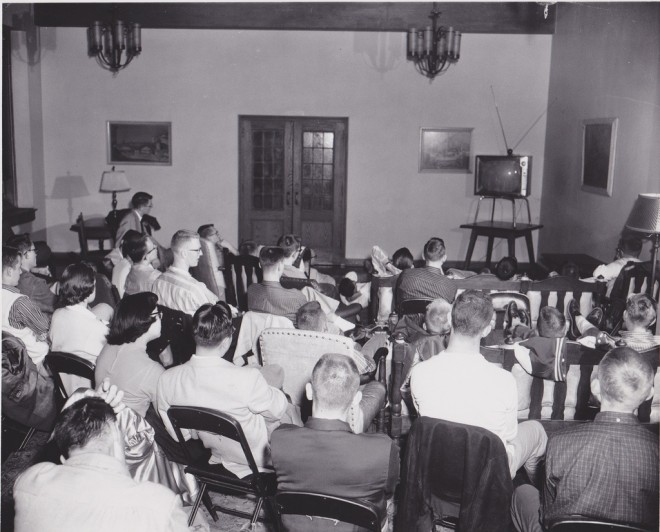 It’s right and healthy that members of a family or other group indulge their own preferences. But the balance between individualism and communalism seems off, particularly in households saturated with mobile devices and digital media (which these days is a huge chunk of them).
I thought — hoped, really — that I was worrying too much about new technology, so I called Patricia Greenfield, Distinguished Professor of Psychology at the University of California, Los Angeles. I asked: Do tech-savvy people in healthy relationships (like, say, me) really need to worry that customized media and mobile devices will undermine our connections with others?
“I think you should worry,” Greenfield told me.
As techniques to distribute and personalize television proliferate, then, expect to see a parallel rise in coping mechanisms. The systems we create to replace the emotional effects of communal television should be at least as interesting as the technology that disrupted family TV in the first place.
Nielsen says it has linked Twitter chatter with TV ratings
 [Philip Lelyveld comment: this must work best when the program demo matches the twitter demo.]
Media measurement firm Nielsen says it has proved for the first time, with statistical rigor, that there is a correlation between a show's ratings and the magnitude of its Twitter buzz.
In the new study, Nielsen researchers analyzed a total of 221 episodes. The volume of tweets caused statistically significant changes to live TV ratings for 29 percent of the episodes, Nielsen said, without quantifying the degree of Twitter's influence on ratings.
Future of Cable Might Not Include TV
 [Philip Lelyveld comment: 10 years ago some of us at the Studios told the cable industry strat planners that, rather than think of the term 'dumb pipe' as pejorative, consider embracing it and turning 'best dumb pipe' into your core competency. Maybe that time has finally arrived.]
Predicting that transmission of TV will move to the Internet eventually, Cablevision Systems Corp. CVC -0.46% Chief Executive James Dolan says "there could come a day" when his company stops offering television service, making broadband its primary offering.
His comments may be the first public acknowledgment by a cable CEO of the possibility of such a shift, long speculated about by analysts. It comes amid growing tensions between cable operators and channel owners over rising programming costs, highlighted Friday night when Time Warner Cable Inc. dropped CBS from its channel lineup TWC -0.40% in major markets such as New York and Los Angeles.
If cable operators drop TV service, charging only for broadband, channel owners would have to sell directly to the public or through Web outlets.
Read the full story here: http://online.wsj.com/article/SB10001424127887323420604578647961424594702.html
Esri Launches New Developer Accounts
 Redlands-based mapping software developer Esri is ramping up its efforts to reach out to third party software developers, saying Friday that it has launched a new, free developer subscription for its web, mobile, and online tools and services.
Read the full story here: http://www.socaltech.com/esri_launches_new_developer_accounts/s-0050681.html