Archaeologists See and Smell the Past With Augmented Reality
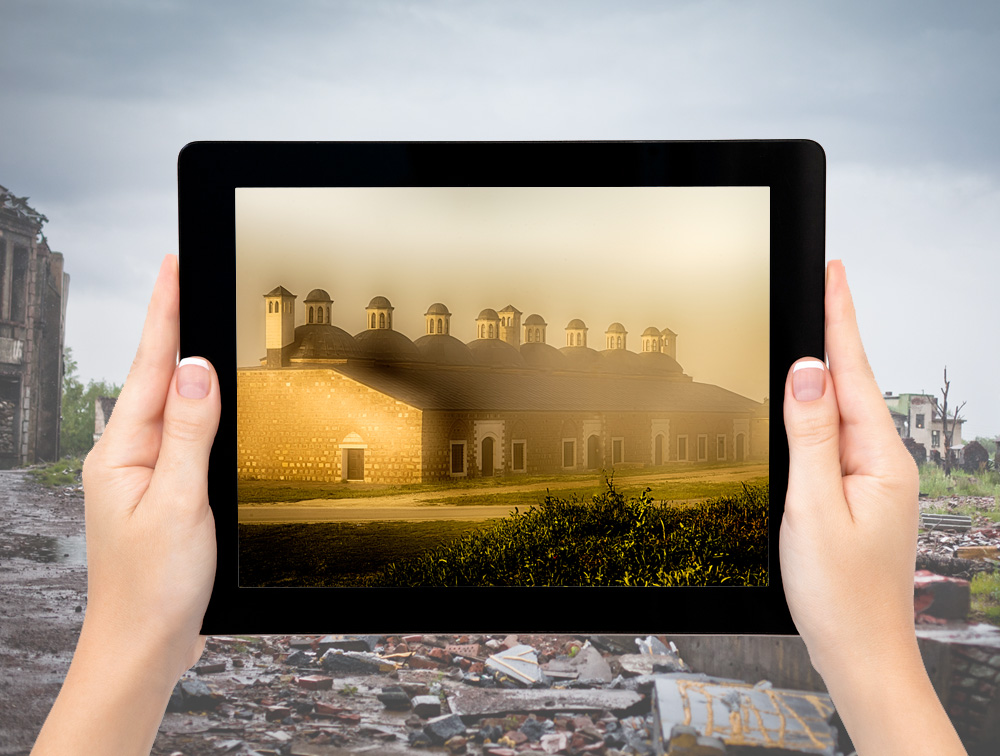 Eve built the augmented reality system with a smartphone, an open-source microcontroller, and a video game development software. He scouted historic sites, filming his path and recording all his observations. Then, he recreated the landscape in a coordinate-based mapping program. Finally, using video-game building software, he created the structures and placed them into their proper locations on the map.
He could not only see the huts from an ancient tin-mining village, he could actually walk inside and see what the view from their front door was.
Seeing is just a part of the experience Eve wants to create. He also developed Dead Man’s Nose, a prototype device that emits odors, like the smell of a campfire and roasting meat, as you pass by specific locations. When you pass a pinpointed smell location, it fires up a small fan that wafts the odors in your direction. The device is a little noisy and clunky (it accompanies you in a camera bag slung around your neck), but some 300 different scent formulas can be loaded into the device, from woodsmoke to farmyard.
Eve has also pinned sounds to specific GIS locations, which play more loudly the closer the user walks toward their source. So when you pass a virtually rendered hut, for example, you might hear the murmurs of its occupants, or the sounds of the sheep in the distance. When all these sensory elements work together, history takes an amazingly tangible form.
See the full story with video here: http://blogs.discovermagazine.com/crux/2015/03/13/archaeologists-augmented-reality/#.VQT-KUJiBrg