3D not as popular as you would think
 3D started to dominate cinemas soon after withToy Story 3 and How to Train Your Dragon while a range of 3D televisions soon followed, most notably by Panasonic, Samsung, Sony and Sharp.
Sony further developed a 3D movie and video game for PlayStation in comparison to Nintendo which came out with a new handheld gaming device the Nintendo 3DS.
3D has also been briefly utilised for cameras and screens (the 3D screens were used at car shows along with 3D glasses)
However recent research suggests that 3D is still far away from being incorporated into everyday life.
While the option to watch films in 3D is still available at the cinema, consumers are less keen to pay more for it and the public still hesitates to switch to 3D smartphones and cameras anytime soon.
See the full story here: http://www.3dtvwatcher.co.uk/3d-not-as-popular-as-you-would-think-3490/
Microsoft Glass: Patent shows computer giant is considering augmented reality specs
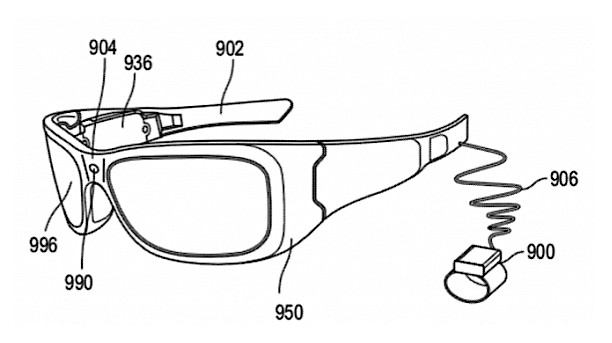 The Redmond-based computer company states in the patent that the specs would incorporate technology enabling a user to view supplemental information while watching a live event.
The patent outlines various ideas for how the specs might be operated, including a wrist-worn computer, voice commands or gestures.
It’s not known if the computer giant has invested any time or money on building a prototype of the high-tech specs, or whether it’s simply a case of laying claim to various features early on to avoid threats of patent-related litigation from rivals should they wish to develop the idea further down the road.
Read the full story here: http://www.digitaltrends.com/cool-tech/microsoft-glass-patent-shows-computer-giant-considering-augmented-reality-specs/
Coolest Family Portraits Ever: 3D-Printed Figurines
 Omote 3D has a 3D printing photo booth that can capture this glory. Here’s how it works:
- First, a 3D scanner captures the whole-body image. The subject must stand very still for as long as 15 minutes.
- Second, a computer scans in the image, and an artist fills in minutiae like hair color, clothes texture, etc. (Eyeglasses are tricky, particularly if there are reflective lenses.)
- Third, the 3D printer creates the figurine in one of three different sizes: small (3.9 inches), medium (5.9 inches), or large (7.8 inches). The process can take up to a month, and small children or pets are not recommended, as it requires staying very still for 15 minutes.
See the full story here: http://www.technobuffalo.com/news/coolest-family-portraits-ever-via-3d-printed-figurines/
To 3D Or Not To 3D: Buy The Right Life Of Pi Ticket
 Philip Lelyveld comment: it scores 34 out of 35. That would be a 'yes' to the 3D ticket.
See the 3D-centric review here: http://www.cinemablend.com/new/3D-Or-3D-Buy-Right-Life-Pi-Ticket-34236-p2.html
Kickstarter, 3D printer maker Formlabs get hit with a patent lawsuit
 [Philip Lelyveld comment: When publicly traded companies with legal rights and obligations and open source companies compete in the same emerging tech space, this type of conflict is bound to surface.]
As reported by Electronista, Formlabs—makers of the Form 1 3D printer—and Kickstarter are the targets of a patent lawsuit filed by 3D Systems, another producer of 3D printers. The lawsuit alleges that Formlabs infringed on a patent held by 3D Systems that relates to the stereolithography 3D-printing process—the process Formlabs uses in the Form 1 printer.
"Although Formlabs has publicly stated that certain patents have expired, 3D Systems believes the Form 1 3D printer infringes at least one of our patents, and we intend to enforce our patent rights," said 3D systems general counsel Andrew Johnson in a release.
...the stereolithography process, as our Kevin Lee put it, "uses a laser to cure liquid resin into microscopic layers." In the case of the Form 1, this allows it to make much more precise creations than a typical extrustion-based 3D printer.
The 10 Best 3D Printed Objects In The World Today
 [Philip Lelyveld comment: this article contains images that illustrate the range of objects that 3D printers can produce - not counting the big ones that print buildings or the odd ones that print food and drugs.]
3D printing technology has been around since the early 80′s, but most of us never even noticed. With the development of cheaper printers and open source software, 3D printing is finding its way into almost evert industry you can think of. Wired put together 10 of the best examples.
See the article and pictures here: http://www.2oceansvibe.com/2012/11/20/the-10-best-3d-printed-objects-in-the-world-today/