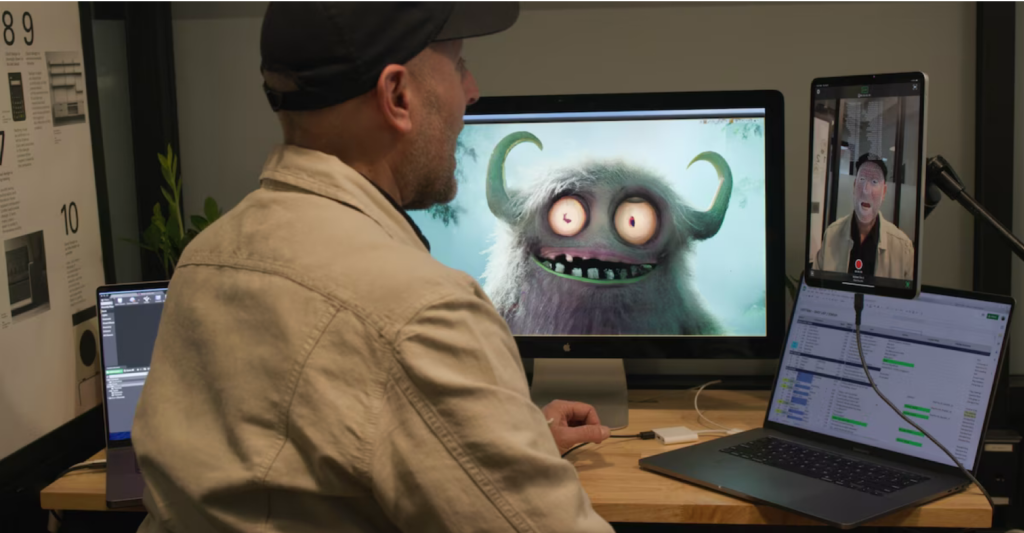
AI can make movies, edit actors, fake voices. Hollywood isn’t ready.
... On Monday, the movie was released to the public, and OpenAI said it’s a template for how AI will democratize moviemaking. “Critterz is a vibrant example of how artists can use AI tools to unlock ideas that were once out of reach because of budget, time or resources,” Natalie Summers, a communications professional at OpenAI, said in a statement. ...
But that democratization does not come without risks to moviemaking and adjacent industries such as video games, according to media insiders and news reports. In China, artificial intelligence is already taking jobs away from video game illustrators in favor of software that can animate images in seconds, a report in Rest of World shows. ...
Nelson said it’s likely that AI will replace some jobs in Hollywood while also potentially creating more. He pointed to the entrance of computer-editing software, and how that replaced more manual movie-editing jobs and processes. ...
See the full story here: https://www.washingtonpost.com/technology/2023/04/14/ai-hollywood-filmmaking-dalle/
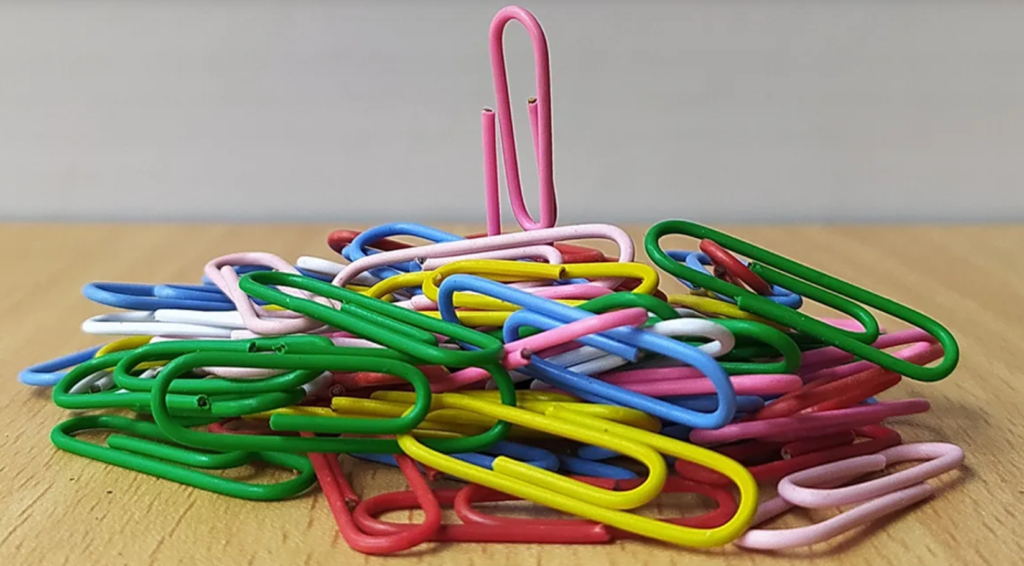
How An AI Asked To Produce Paperclips Could End Up Wiping Out Humanity
...
"The AI will realize quickly that it would be much better if there were no humans because humans might decide to switch it off," he explained to HuffPost in 2014. "Because if humans do so, there would be fewer paper clips. Also, human bodies contain a lot of atoms that could be made into paper clips. The future that the AI would be trying to gear towards would be one in which there were a lot of paper clips but no humans."
The example given is meant to show how a trivial goal could lead to unintended consequences, but Bostrom says it extends to all AI given goals without proper controls on its actions, adding "the point is its actions would pay no heed to human welfare". ...
One prescient thought from Bostrom way back in 2003 was around how AI could go wrong by trying to serve specific groups, say a paperclip manufacturer or any "owner" of the AI, rather than humanity in general. ...
See the full story here: https://www.iflscience.com/how-an-ai-asked-to-produce-paperclips-could-end-up-wiping-out-humanity-68432
Chinese Gov’t drafts new rules for generative AI tech (ETCentric)
By Paula Parisi
April 12, 2023
As China’s tech giants begin releasing ChatGPT-style products, the powerful Cyberspace Administration of China (CAC) has issued a draft of what will become the country’s first set of restrictions for generative AI. Ground rules include limiting content created by AI to that which reflects the core values of socialism and does not subvert state power in text or image, according to the draft rules. Models should also be trained in a way that does not allow them to generate false information, or exhibit bias as to race, ethnicity or gender. The news comes as three Chinese firms releases generative AI platforms.
The draft rules are couched as a warning by Ars Technica, which says the Chinese government is concerned about AI’s “potential for ‘social mobilization.’” The CAC’s draft rules say providers “have to submit their products for security reviews before their public release,” indicating it is establishing a database for the registration of public-facing AI.
“The regulator also said platforms must verify users’ identities, allowing usage to be tracked,” Ars Technicawrites. U.S. chatbots such as Google’s Bard and Microsoft’s Bing have also been archiving user conversations, which they say is for product improvement; and while the companies may use the data for things like ad targeting, a firewall exists between them and the federal government.
China is lagging slightly behind the U.S., where OpenAI’s DALL-E text-to-image generator appeared in 2021, while chatbots — including OpenAI’s ChatGPT and Google Bard — took off with the public beginning in February.
In China, image generators from Tencent (Different Dimension Me) and Baidu (Ernie-ViLG) became available in Q4, while IDEA — the Shenzhen-based International Digital Economy Academy founded by former Microsoft computer scientist Harry Shum — introduced its open-source text-to-image model Taiyi in January.
As for Chinese chatbots, “on Tuesday, Alibaba unveiled Tongyi Qianwen, its generative AI product, that the e-commerce giant plans to integrate across various services,” writes CNBC. One day earlier, SenseTime, which Ars Technica calls the “Chinese AI software leader,” debuted its SenseChat bot. They followed Baidu, which on March 16 met its self-imposed deadline to unveil the highly anticipated Ernie Bot.
China’s AI rules are expected to take effect later this year, and “will work in tandem with China’s various other regulations around data protection and algorithm development,” CNBC says, adding that “China is not the only country concerned with the development of generative AI. In March, Italy banned ChatGPT citing privacy concerns.”
And The Wall Street Journal reports that the Biden administration is considering “possible rules for AI tools like ChatGPT” as “fears grow over the potential use of artificial intelligence to commit crimes and spread falsehoods.”
See the original post here: https://www.etcentric.org/chinese-government-drafts-new-rules-for-generative-ai-tech/