Snap launches augmented reality-powered virtual mall
- The Snap Ramadan Mall will feature brands such as L’Oreal, IKEA, Namshi and Samsung
- Snap’s virtual mall aims to provide retailers with another channel for capturing users’ attention and driving sales
DUBAI: Snap is launching what it claims to be the first-ever augmented reality-led virtual mall in the Middle East and North Africa region, ...
Ramadan is a critical period for retailers, and Snap’s virtual mall aims to provide retailers with another channel for capturing users’ attention and driving sales. Last year, for instance, Ramadan campaigns for retailers running an AR lens on Snapchat delivered a 4.3 times higher average purchase value compared to other formats. ...
See the full story here: https://www.arabnews.com/node/2066556/media

Deconstructing the virtual influencer
PhilNote: this is a good, short breakdown of the success traits for a v-influencer.
... The virtual influencer may be a futuristic being, but, like today's music, it requires old-school techniques to render and manage.
Already there are over 150 virtual influencers in existence, with this figure expected to increase as influencer marketing spending for 2022 grows to a forecasted US$15 billion. From an organisational standpoint, the formula is simple and no different from managing a celebrity or politician: production + social media management = virtual influencer. ...
Virtual influencers should continuously be seen as a production effort, requiring a skilled team of CGI designers, 3D animators, storyboarding artists, copywriters, production and set designers, clothing and wardrobe producers, music producers, photographers, videographers, and—as with every influencer or model in this day and age—a healthy dose of Photoshop. ...
Besides avoiding scandal and controversy, the virtual influencer behaves on an as-needed basis, unlike a physical influencer which has to produce content almost daily. Rather than sharing every meal they eat in a day, the virtual influencer focuses on content that aligns with their point of view and therefore requires a much lower level of storyboarding, copywriting, and content creation compared to traditional influencers. ...
The core feature that will define a good or bad virtual influencer is its own definition of self. ...
The second feature of the so-called ‘golden ratio’ for virtual influencers is self-awareness. ...
Virtual influencers need to be consistently upgraded to uphold their personalities and worldviews. ...
See the full story here: https://www.campaignasia.com/article/deconstructing-the-virtual-influencer/477317

The Turing Trap: The Promise & Peril of Human-Like Artificial Intelligence
Erik Brynjolfsson
Director
Stanford Digital Economy Lab
... The future is not preordained. We control the extent to which AI either expands human opportunity through augmentation or replaces humans through automation. We can work on challenges that are easy for machines and hard for humans, rather than hard for machines and easy for humans. The first option offers the opportunity of growing and sharing the economic pie by augmenting the workforce with tools and platforms. The second option risks dividing the economic pie among an ever-smaller number of people by creating automation that displaces ever-more types of workers. ...
More and more Americans, and indeed workers around the world, believe that while the technology may be creating a new billionaire class, it is not working for them. ...
The solution is not to slow down technology, but rather to eliminate or reverse the excess incentives for automation over augmentation. ...
See the full 20 minute read here: https://digitaleconomy.stanford.edu/news/the-turing-trap-the-promise-peril-of-human-like-artificial-intelligence/?fbclid=IwAR3FnzIYD1E3MWdInpFvJ1dOY0WROVtZ9gDdbvhVCsD5-EnlAaoGcnv4vAI

The Boneyard Principle: Why the Next Big Thing will Emerge from a Failed Idea
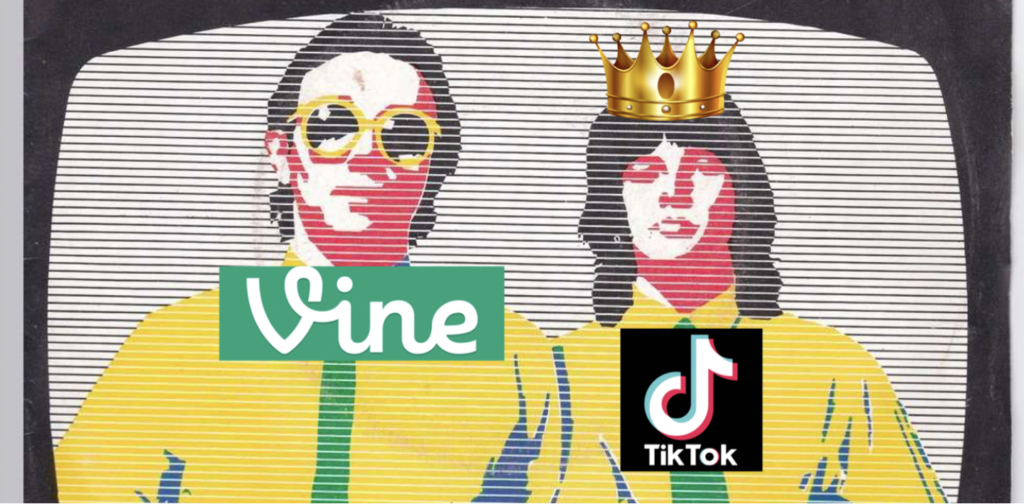
... Why do some consumer social products finally make it big after a series of misses? Part of the magic often hides within UX details — particularly, those that help people make fewer decisions and take fewer risks. The more opinionated an app is about how it should be used, the easier it is for users to act without fear of rejection. Products benefit from giving people the plausible deniability to say: “I’m not seeking attention, I’m just doing what this app tells me to do!” ...
Vine's UX placed an enormous amount of decision-making baggage upon users. TikTok, on the other hand, gave users just one easy option: open the app and watch entertaining videos. ...
Just as importantly, the app helped new creators—even those without followers!—get attention for their videos, lessening their fear of rejection. When a creator posted a video, TikTok showed it to a sample audience and then expanded to bigger targeted audiences if it did well—a form of a recursive publishing feedback loop. ...
See the full story here: https://every.to/p/the-boneyard-principle?fbclid=IwAR2ZNSSz_-jHlLAwaN-5VG5QiDC3OiSNZdQedDW43XnNDjkfjZzknu0hvIg
Bored? Follow the ETH.
On the morning of January 23, 2022, I saw a tweet about purchasing a Bored Ape NFT for 135 ETH that I assumed was completely fake. It turned out to be fake. But the transaction was absolutely real. How do I know? The Ethereum blockchain is a public ledger. Transactions are viewable by anyone (including you and me), so let’s do a little exploring and see who spent $337,500 (1 ETH = $2,500 at the time) to get their Bored Ape. ...
If you feel like you’ve invaded Rob Kapito’s privacy, you haven’t. This Twitter account was a fake and, to my knowledge, Rob Kapito had nothing to do with this. The strength and the weakness of public blockchain transactions is that they are public. If I were slightly more motivated and wanted more information about this wallet’s activity, a company like Chainalysis would be my next stop.
This Is Not the Future, It’s Now
We are used to public records. Deeds to houses, car registrations, driver’s licenses, titles to land, etc. We are less used to public records of our daily transactions. Yet, here we are. Forewarned is forearmed.
See the full article here: https://www.shellypalmer.com/2022/04/bored-follow-the-eth/?ck_subscriber_id=1646162133&utm_source=convertkit&utm_medium=email&utm_campaign=Bored%3F+Follow+the+ETH.%20-%207995063

AI-Generated Characters Are Here, They’re Just Not Evenly Distributed
Sarah Guisto from Aww Inc took the audience through a fast-paced tour of virtual characters that her studio in Tokyo has successfully built and deployed. Perhaps the most famous is Imma, who is now three years old and most well-known for performing at the Tokyo Paralympics closing ceremony. Aww is the leading Asian company in virtual humans combining not just advanced technology but an empathetic approach to design, crafting these beings in a way that not just renders them technical, but also credible and emotional.
As Asia’s number one influential virtual human with over 1 million followers on Instagram and Tik Tok, Imma has ‘worked with’ brands such as Porsche, Dior, and Nike, regularly appearing on the covers of magazines, and one can see the appeal for brands. These characters are flexible, adaptable, and global. They don’t demand repeat fees in media and they probably turn up on the dot and are never late for a shoot. But the foremost reason is that they can become whoever you want them to be. ...
As Jeanne Lim, CEO of Being AI suggested,... Lim wants to build trust between humans and these virtual beings. What are the required elements to achieve that? According to Lim, it’s a combination of an engaging and consistent personality, a sense of morality and empathy to avoid causing harm, a way to perceive a user’s emotions (by detecting when people are sad or happy through facial expressions as well as through conversation), each being having a specific skill set, and an interoperable approach for real-time interactivity so these beings are not trapped in an app only to be used on certain platforms or in certain spaces. ...
Professor Jeremy Bailenson of Stanford University ... in virtual reality (VR), tracking and rendering are used, so the only thing that travels over the network is tracking data rather than any visual information about the world.
The people you see within your VR headset have been redrawn using that tracking information. ...
Finally, one theme that came up more than once was how deep fakes could help us to anonymize ourselves. For example, if we had an app where we could choose a different face and a new tone of voice, before being connected to a counselor in group therapy, we could speak about our emotional situation without giving away our identity. ...
See the full story here: https://www.forbes.com/sites/traceyfollows/2022/04/15/ai-generated-characters-are-here-theyre-just-not-evenly-distributed/?sh=5dd387716b31

DALL-E 2: New AI Technology Generates Astounding Images with Just a Few Words of Text
San Francisco artificial intelligence research laboratory OpenAI announced last week its image generation AI, DALL-E, has received a major upgrade, reported MIT Technology Review.
DALL-E 2, as the upgraded tool is called, converts text prompts into images like its predecessor. However, the new version is reportedly far more advanced, creating images that more accurately match the text prompt and can even be tweaked to incorporate different styles. ...
See the full story here: https://www.artnews.com/art-news/news/new-ai-technology-dall-e-2-1234625354/
