Augmented reality app reveals Seattle protest art in surprising places
Aimed at sustaining the Black Lives Matter movement, the new citywide art show is part of the Seattle Design Festival.
It’s part of a new, citywide augmented reality art show called Amp’Up Seattle. By downloading a free app with the same name, anyone can access eight virtual artworks that appear layered over the existing cityscape — like Pokémon Gofor art.
They’re not alone. Businesses, museums and news mediaare finding ways to physically or digitally preserve the street art that sprouted from the BLM movement as well.
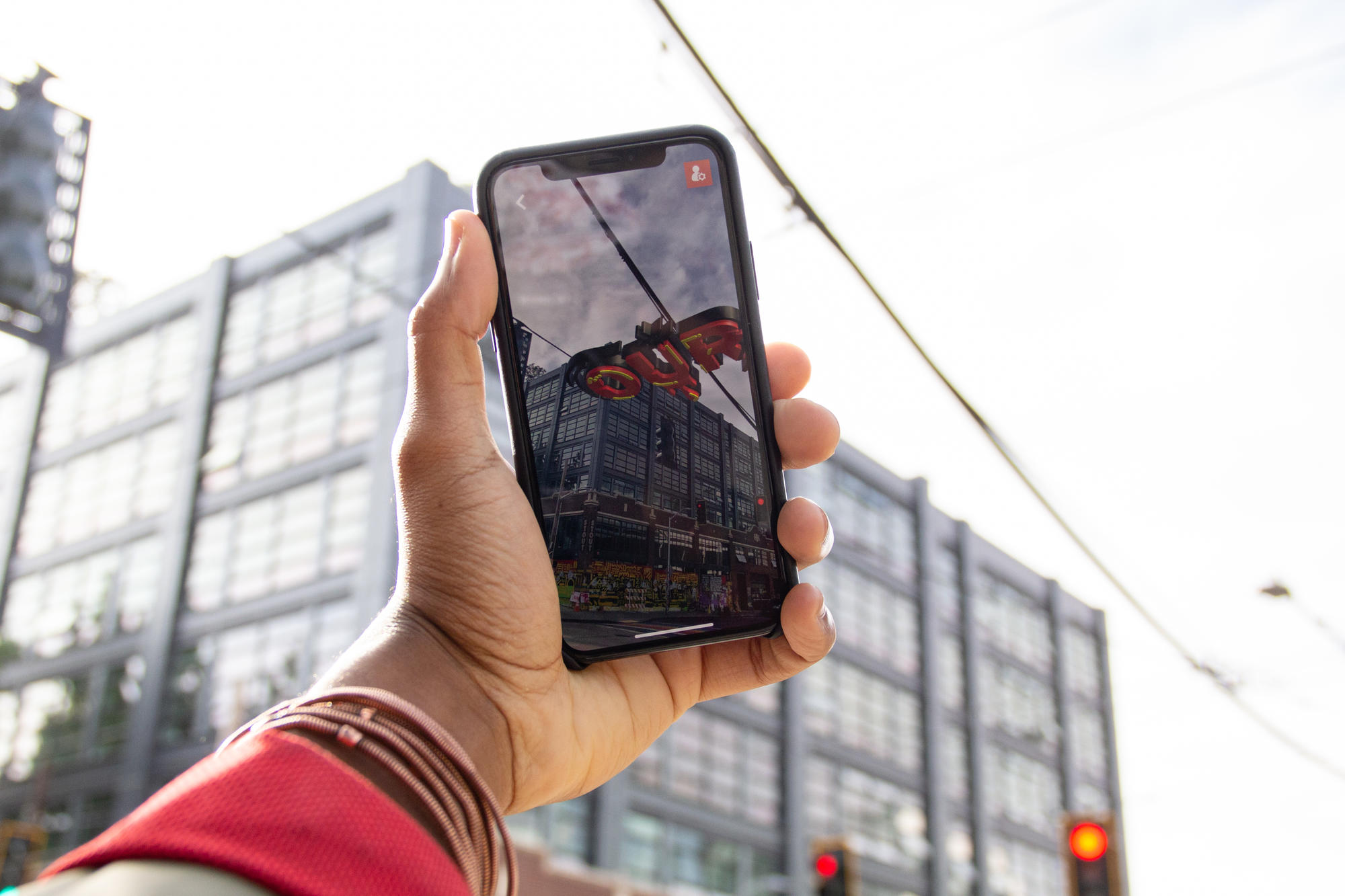 In the Central District, app users will discover three-dimensional graffiti-style lettering that floats above the intersection of 23rd and Union and implores onlookers to say the names of Trayvon Martin, Breonna Taylor and George Floyd. When scanning the Seattle skyline at Kerry Park or the José Rizal bridge, a cloud of pixelated rain drops appears to hover over the skyline, as if the city is weeping. And at Westlake Park, the app frames a digital “Right to Remain Heard” poster by local artist Kreau within the plaza’s 24-foot proscenium arch.
Yes, Kadoo admits, it requires, like so much else these days, a screen. “But you're not sitting on a couch. It exists in a real site and context. You have to go to a real place to see it,” she says. “It bridges the gap between virtual and physical.”
She hopes people will use the app and artworks as an opportunity to “revisit the focus of the BLM movement,” she adds. “Keep that heat and conversation going.”
See the full story here: https://crosscut.com/culture/2020/08/augmented-reality-app-reveals-seattle-protest-art-surprising-places
U.S. Postal Service Counters Trump Attacks On Mail-In Voting With A New Blockchain Patent
Chief among Trumps’s complaints against mail-in voting are doubts about whether or not the person whose name is on the ballot actually cast the vote, and whether or not the ballot was tampered with after it was sent. In both instances blockchain offers tantalizing possible solutions. Blockchain identity services are already being widely developed and by moving the vote to a shared, distributed ledger, the votes would transmit almost instantly, drastically reducing the ballot’s vulnerability to tampering. The Postal Service had no comment at the time of publication.
 Blockchain technology was utilized at the Utah Republican Convention as well as in Arizona to send delegates to the Republican National Convention after each State decided to hold their conventions remotely. The technology was used in the 2018 West Virginia elections for absentee ballots of overseas military; however, a report by MIT showed potential vulnerabilities of the vendor software.
The USPS Office of Inspector General (OIG) encouraged the Post Office to start looking at the benefits of blockchain technology back in 2016. Four key use cases for blockchain outlined in a report (image below) were 1) Financial Management, 2) Device Management, 3) Identity Services, and 4) Supply Chain Management.
Beck Joins Forces With NASA for Hyperspace: A.I. Exploration
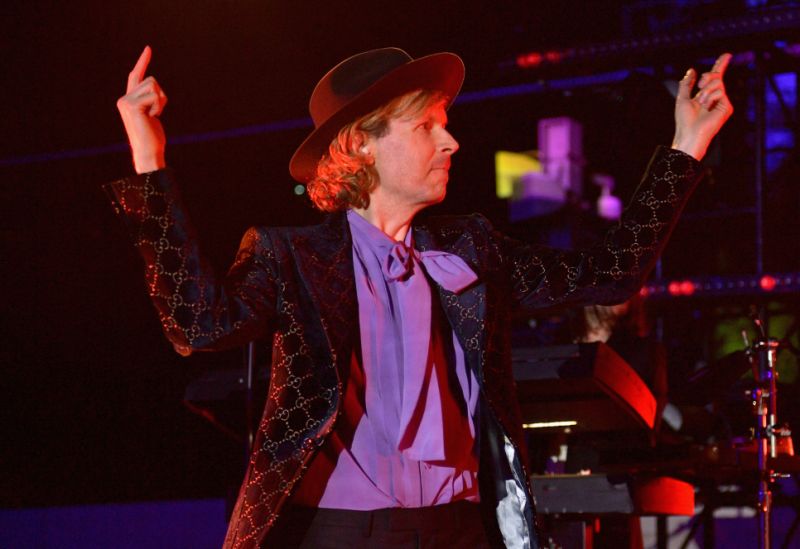 His latest release, Hyperspace: A.I. Exploration, released today (Aug. 12), sees him team up with NASA’s Jet Propulsion Laboratory for a twist on his 2019 effort Hyperspace. In the visual album, Beck’s music is paired with photos from NASA space missions to create a merging of music and art that’s powered by artificial intelligence.
All 11 songs on the record find themselves serving as soundtracks to different missions, with the song “Uneventful Days” being played over images from Apollo 12 and the Lunar Reconnaissance Orbiter (LRO).
See the full story here: https://www.yahoo.com/entertainment/beck-joins-forces-nasa-hyperspace-175028337.html
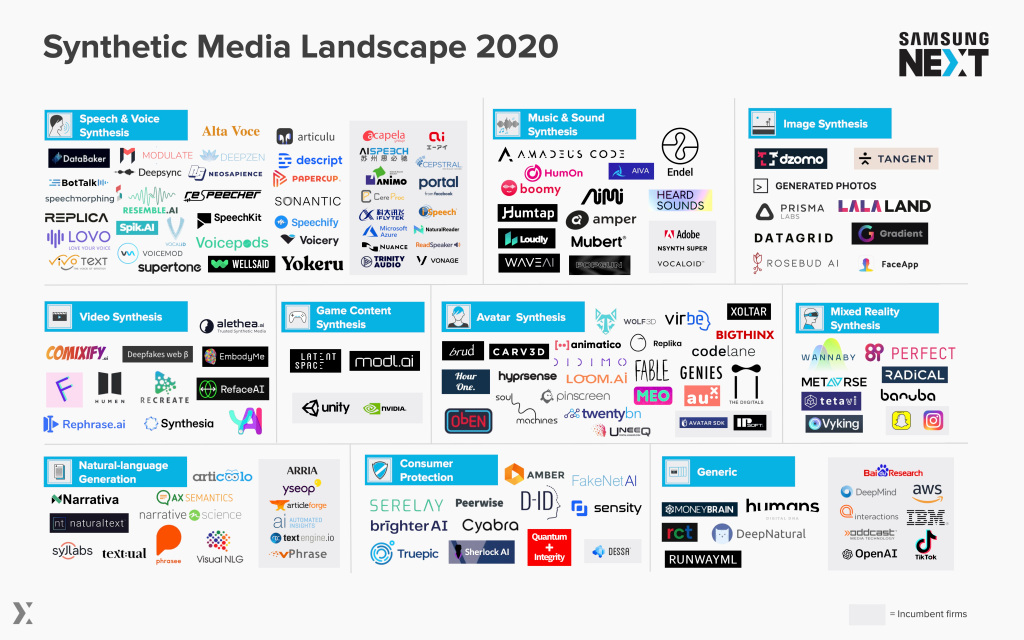
Why it’s time to change the conversation around synthetic media
AI-generated avatars also have some exciting potential use cases beyond the world of celebrity. The recent HBO documentary Welcome to Chechnya, which explores the persecution of LGBTQ people in Russia, used deepfake technology to protect the identity of interviewees by overlaying their faces with those of actors. Digital avatars also hold promise as a means of reducing bias and discrimination, such as in the context of recruitment.
https://venturebeat.com/2020/08/12/why-its-time-to-change-the-conversation-around-synthetic-media/
Logically launches tool to identify and combat fake news ahead of US elections
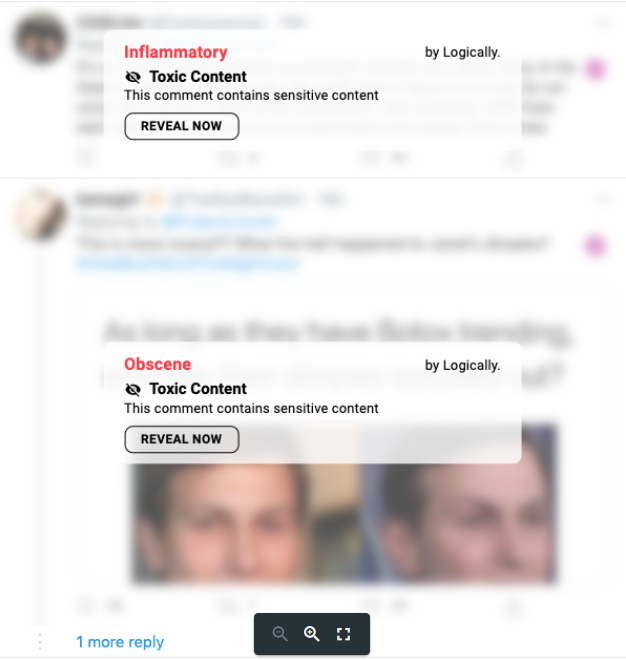 UK-based fact-checking social enterprise Logically has launched its Chrome browser extension, which allows users to analyze and evaluate the credibility of online articles, fact-check dubious claims, and highlight toxic comments on social platforms.
The extension works across over 160,000 news sites and social platforms to identify the credibility of stories and provide fact-checking into news stories.
Users can also set preferences on types of toxic content. If a post is deemed toxic, the post will be labeled and obscured.
The browser extension labels the credibility of any source (low, medium, high) and article (reliable, unreliable) and establishes the sentiment of the story. It also highlights key people, places, topics, and institutions behind the headlines to give a more Immersive understanding of any story.
The extension utilizes multiple AI models, alongside natural language processions (NLP), to process, understand, and analyze text.
The company is accredited by the International Fact-Checking Network (IFCN), which promotes best practices and fact-checking initiatives. ( https://www.poynter.org/ifcn/ - the Poynter Inst. is rated 'least biased' https://mediabiasfactcheck.com/poynter-institute/ )
See the full story here; https://www.zdnet.com/article/logically-launches-tool-to-identify-and-combat-fake-news-ahead-of-us-elections/
Eschaton is a surreal Zoom nightclub — and a theater for the age of social distancing
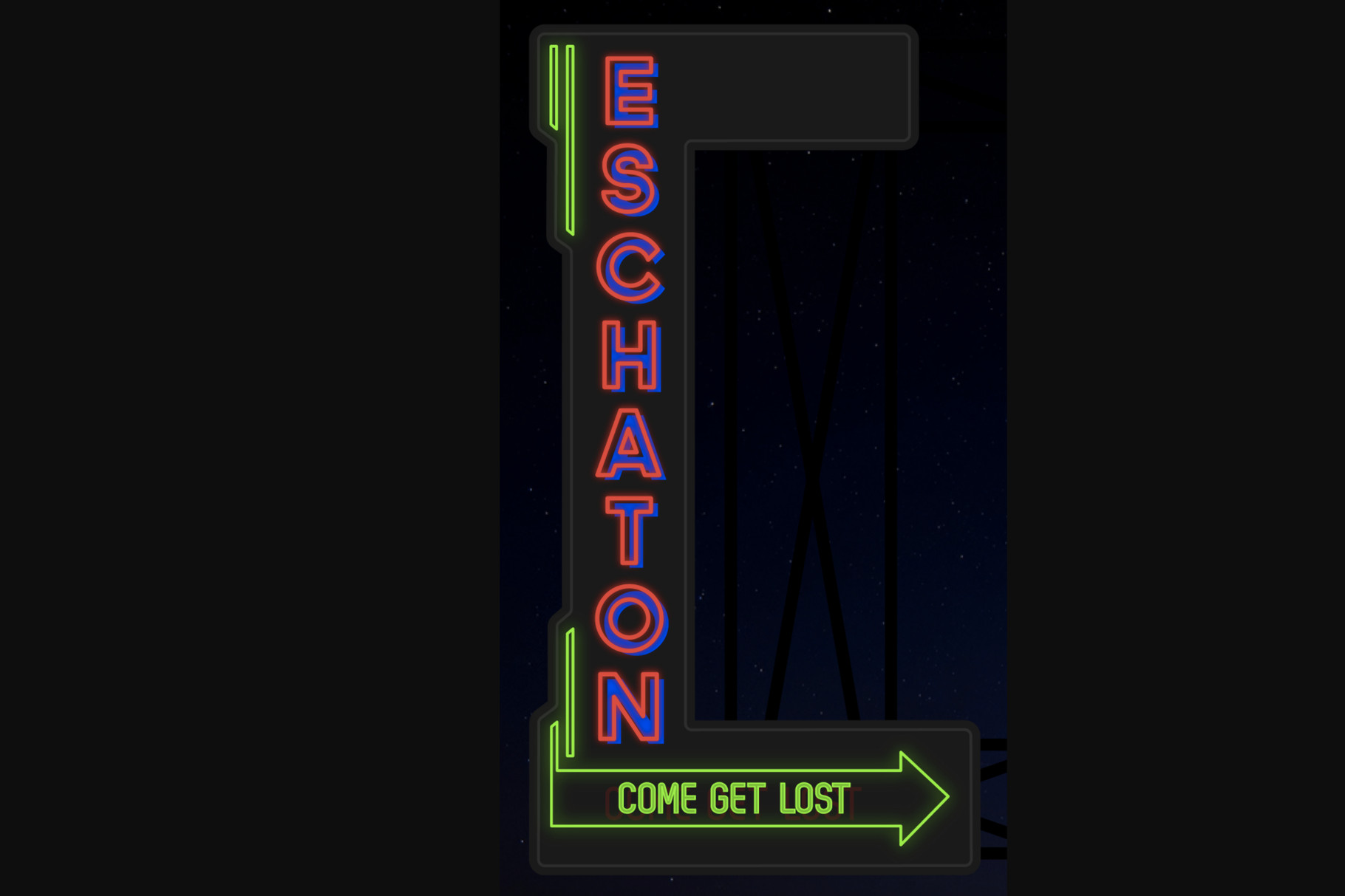 You can now hire a magician for a birthday party over Zoom. Companies have reworked escape room puzzles for players who can’t even escape their apartments. Video games like Fortnite and Minecraft are hosting big events like concerts and graduations. As interactive art site No Proscenium notes, Eschaton’s cast includes several veterans of Sleep No More and other prominent productions, trying their hand at a new kind of show. It’s currently in the preview phase, running every Saturday.
The virtual nightclub in Eschaton follows a similar formula to its offline counterparts. Participants buy a ticket and wander between a series of dramatic vignettes, taking in fragments of a loose, nonlinear story. You’re encouraged to dress up for “a night on the town” and have a drink, either alone or with friends. While most of the performers ignore their voyeurs, there’s always a chance of one-on-one interaction and an expectation that you’ll get an experience not quite like anybody else’s.
The experience also plays off the strange intimacy of group video chats. You can’t feel the body heat of another visitor, but you can see everyone else at the top of your Zoom screen, many with their full names on display and their cameras active, giving you a window into their homes. If you stumble onto a room with just a few people, abandoning it feels a little weird — leaving a performer to an empty live stream is somehow more awkward than an empty physical room.
Eschaton adds a gloss of ‘90s cyberpunk movie, taking place in a new reality where a hazy video chat room nightclub really can replace its real-life counterpart... if only because the real thing no longer exists.
If more people decide they can permanently live and work away from America’s biggest cities, it’s not unthinkable that their cultural products might also become a little more diffuse.
See the full story here: https://www.theverge.com/21266127/eschaton-chorus-productions-immersive-theater-zoom-nightclub-experiment
Xiaomi’s see-through OLED TV is a transparent attempt at attention, and it’s working
 This TV is able to be transparent partly due to the fact that Xiaomi put all of the guts into its circular base instead of behind the display. But the more magical part of how it actually made a see-through OLED screen comes down to utilizing transparent OLED technology (TOLED). As mentioned on the Universal Display Corporation’s site that breaks down all the specs, TOLED screens use transparent components all the way through the stack that makes up the screen, and with no need for backlighting (each diode emits its own light, hence the acronym), images can look like they’re floating. Most other OLED screens use a reflective cathode layer, which prevents you from seeing through it, even if its back was removed.
The result is a 55-inch transparent TV that “looks like a mere glass display” when it’s off. Powered on, it has a 120Hz refresh rate, 1ms response time, 150,000:1 contrast ratio, and it has 93 percent of the DCI-P3 color profile. In display terms, it seems great, but I have a few concerns that Xiaomi’s press release doesn’t really answer.
This TV is only set to release in China for RMB 49,999 (around $7,200), and it will be available to order on August 16th.
See the full story here: https://www.theverge.com/2020/8/11/21363861/xiaomi-oled-tv-transparent-mi-lux-china-specs-price-release