The AI Foundation raises $17 million to create digital AI-powered personas
 The AI Foundation, which ambitiously hopes to develop “ethical” AI agents that can be trained to complete tasks, today closed a $17 million funding round. A spokesperson said the funds will be used to scale the company’s platform, which allows people to create a digital persona that mirrors their own.
Established in 2017, the AI Foundation, which was founded by Rob Meadows and former EA vice president Lars Buttler, is a dual commercial and nonprofit enterprise with the stated mission of bringing “the power and protection of AI to everyone in the world so they can participate fully in the future.” At the center of this mission is the company’s proprietary “human-AI collaboration” platform, which brings together innovations from third-party research partners.
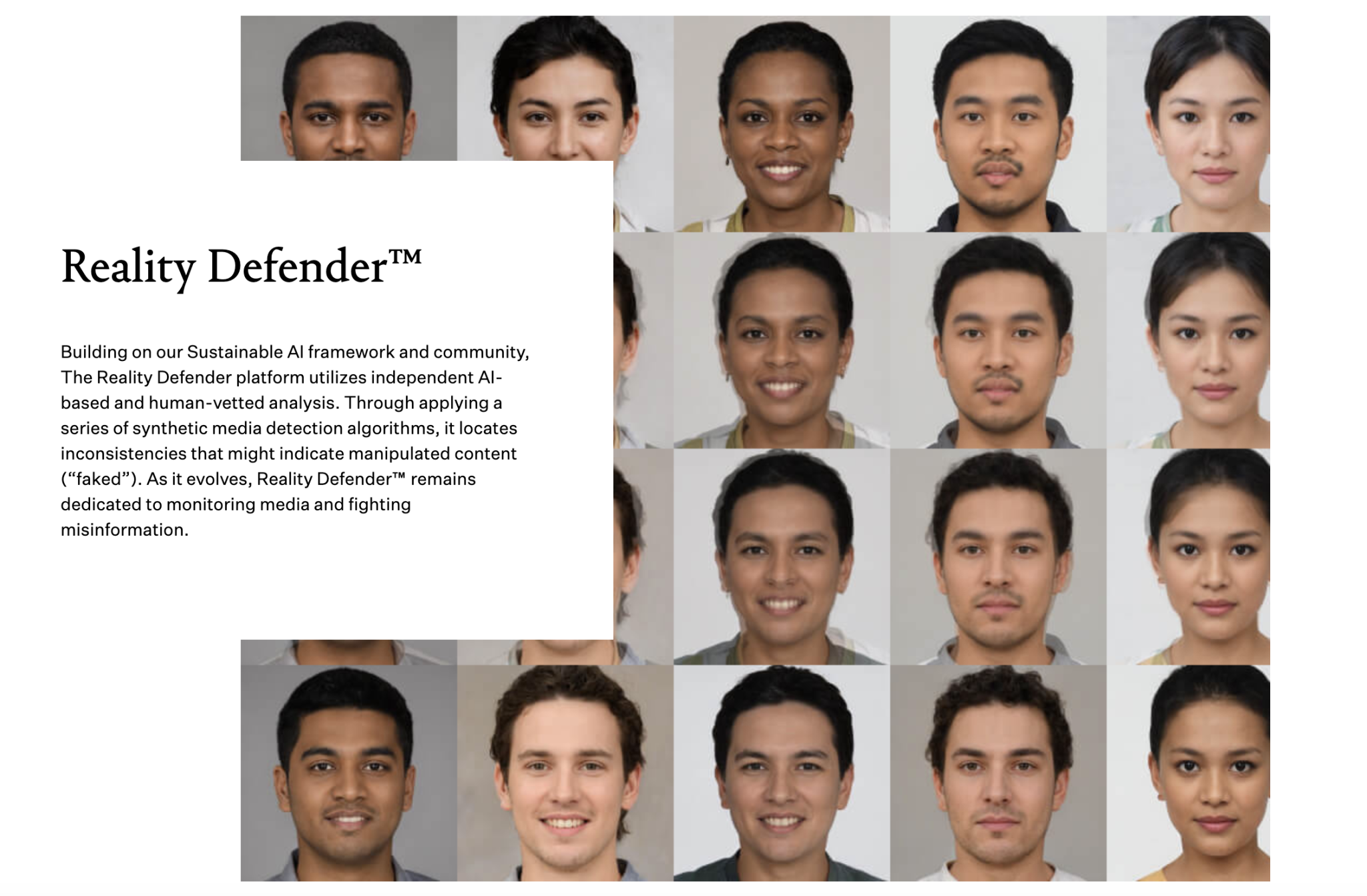
The AI Foundation’s steering committee — the Global AI Council — has a mandate to anticipate the negative effects of AI and figure out how to counteract them. One proposal that reached production is Reality Defender, a free tool that scans images, videos, and other media for known deepfakes and supports the reporting of suspected fakes. Underlining the deepfake threat, Amsterdam-based cybersecurity startup Deeptrace found 14,698 deepfake videos on the internet in June and July, up from 7,964 in December 2019.
It also draws on the AI Foundation’s partnerships with content creators to establish an “honest AI” watermark that clearly identifies AI-generated deepfakes.
To further its research, the AI Foundation recently partnered with a team at the Technical University of Munich’s (TUM) Visual Computing Lab to explore new media forgery detection and flagging techniques,...
See the full story here: https://venturebeat.com/2020/07/30/the-ai-foundation-raises-17-million-to-create-digital-ai-powered-personas/
NexTech AR appoints augmented reality expert Ori Inbar to its board of directors
 NexTech AR Solutions Corp (CSE:NTAR) (OTCQB: NEXCF) said Monday it has appointed augmented reality expert Ori Inbar to its board of directors.
The company said Inbar, who has been involved in the AR industry for over a decade as both a startup entrepreneur and a venture capital investor through SuperVentures, is uniquely positioned to help guide NexTech on its growth trajectory and identify potential acquisition opportunities.
"I’m excited to lend my 14 years experience in the AR industry at the moment it’s exploding to one of the few pure-AR companies that are public,” said Ibar, adding that the company seems “to be doing the right things - and most importantly - growing!"
See the full story here: https://www.proactiveinvestors.com/companies/news/925270/nextech-ar-appoints-augmented-reality-expert-ori-inbar-to-its-board-of-directors-925270.html
The new Star Wars: Tales from the Galaxy’s Edge virtual reality experience introduces new locations and characters in Black Spire Outpost on the Star Wars planet of Batuu, the setting for the 14-acre lands at Disneyland and Disney’s Hollywood Studios.
 The new “Star Wars: Tales from the Galaxy’s Edge” virtual reality experience introduces new locations and characters in Black Spire Outpost on the Star Wars planet of Batuu, the setting for the 14-acre lands at Disneyland and Disney’s Hollywood Studios.
“We’re going to explore and expand on the story of Black Spire Outpost, which you can see at Galaxy’s Edge,” ILMxLAB director Jose Perez III said in a new video for “Tales from the Galaxy’s Edge.”
Disneyland remains closed until further notice amid the COVID-19 pandemic. Disney’s Hollywood Studios in Florida — home to Batuu East — reopened on July 15.
The new “Tales from the Galaxy’s Edge” from Lucasfilm’s ILMxLAB in partnership with Walt Disney Imagineering blurs the line between real-world theme park fantasy and video game hyperreality by bringing Batuu and Black Spire Outpost to the virtual world.
See the full story here: https://www.ocregister.com/2020/07/28/is-another-star-wars-cantina-coming-to-disneylands-galaxys-edge/
Artificial General Intelligence will not resemble human intelligence
 PhilNote: I like to summary quote.
Summary: Airplanes don't flap their wings like birds, and artificial general intelligence (AGI) will never think like the human brain, which is more complex than we imagine
My take
We are not close to "situational awareness." I see no path to an AGI that is a duplicate (and superior one) to human intelligence. Our current efforts are not much more than point solutions. Nor do I see the need. Airplanes don't flap their wings, they fly higher and faster than birds.
What I do see, however, is a third thing — an artificial intelligence that is different and superior to human intelligence. We will have the technology for this in this century. While the relentless push to AGI raises serious ethical questions, they will not moderate progress.
See the full story here: https://diginomica.com/artificial-general-intelligence-not-resemble-human
Augmented Reality and Hearables: Where the Two Technologies Meet
Researchers from Markets and Markets claim that pivotal factors driving this market are:
- the increasing role of smartphones as a source of entertainment;
- the extensive use of wearable and portable devices;
- the growing use of hearing aids and health monitoring solutions.
At the same time, personal voice assistants developed by tech giants — Alexa from Amazon, Siri from Apple, and Google Assistant — are standing at the forefront of the audio augmented reality market.
Top 3 Types of AR-Enabled Hearables
1. In-Ear Devices for Simultaneous Interpretation
2. Headphones With AI-Based Noise Cancellation
3. Smart Hearing Aids
The devices can both enhance the desired sound and cancel background noise in real time. Hearing aid producers can add the capability to track physical activity and provide health data, as well as handle calls, stream music, and control smart home devices. ReSound, Audicus, and Starkey are in the list of top hearing aid brands.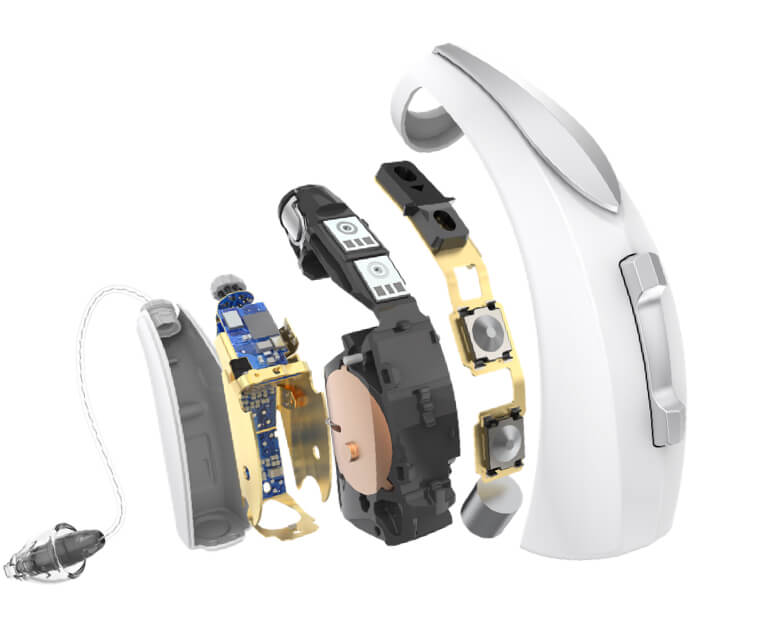
Bottom Line
Juniper Research named two distinct groups of vendors leveraging hearable technology to add value to premium audio products. While Sony, Bose, and Sennheiser are the key players in integrating hearable technology into headphones, Apple, Google, and Samsung are leading producers of earbuds with AI capabilities. It can be challenging for new players to compete with these tech giants, but for those willing to brave the market there could be massive rewards.
See the full story here: https://arpost.co/2020/07/30/augmented-reality-hearables-technologies-meet/