Deepfake used to attack activist couple shows new disinformation frontier
‘A VENTRILOQUIST’S DUMMY’
The Taylor persona is a rare in-the-wild example of a phenomenon that has emerged as a key anxiety of the digital age: The marriage of deepfakes and disinformation.
The threat is drawing increasing concern in Washington and Silicon Valley. Last year House Intelligence Committee chairman Adam Schiff warned that computer-generated video could “turn a world leader into a ventriloquist’s dummy.” Last month Facebook announced the conclusion of its Deepfake Detection Challenge - a competition intended to help researchers automatically identify falsified footage. Last week online publication The Daily Beast revealed a network of deepfake journalists - part of a larger group of bogus personas seeding propaganda online.
Brahmy said investigators chasing the origin of such photos are left “searching for a needle in a haystack – except the needle doesn’t exist.”
See the full story here: https://www.reuters.com/article/us-cyber-deepfake-activist/deepfake-used-to-attack-activist-couple-shows-new-disinformation-frontier-idUSKCN24G15E
Twitch tells US Army to stop sharing fake prize giveaways that sent users to recruitment page 4
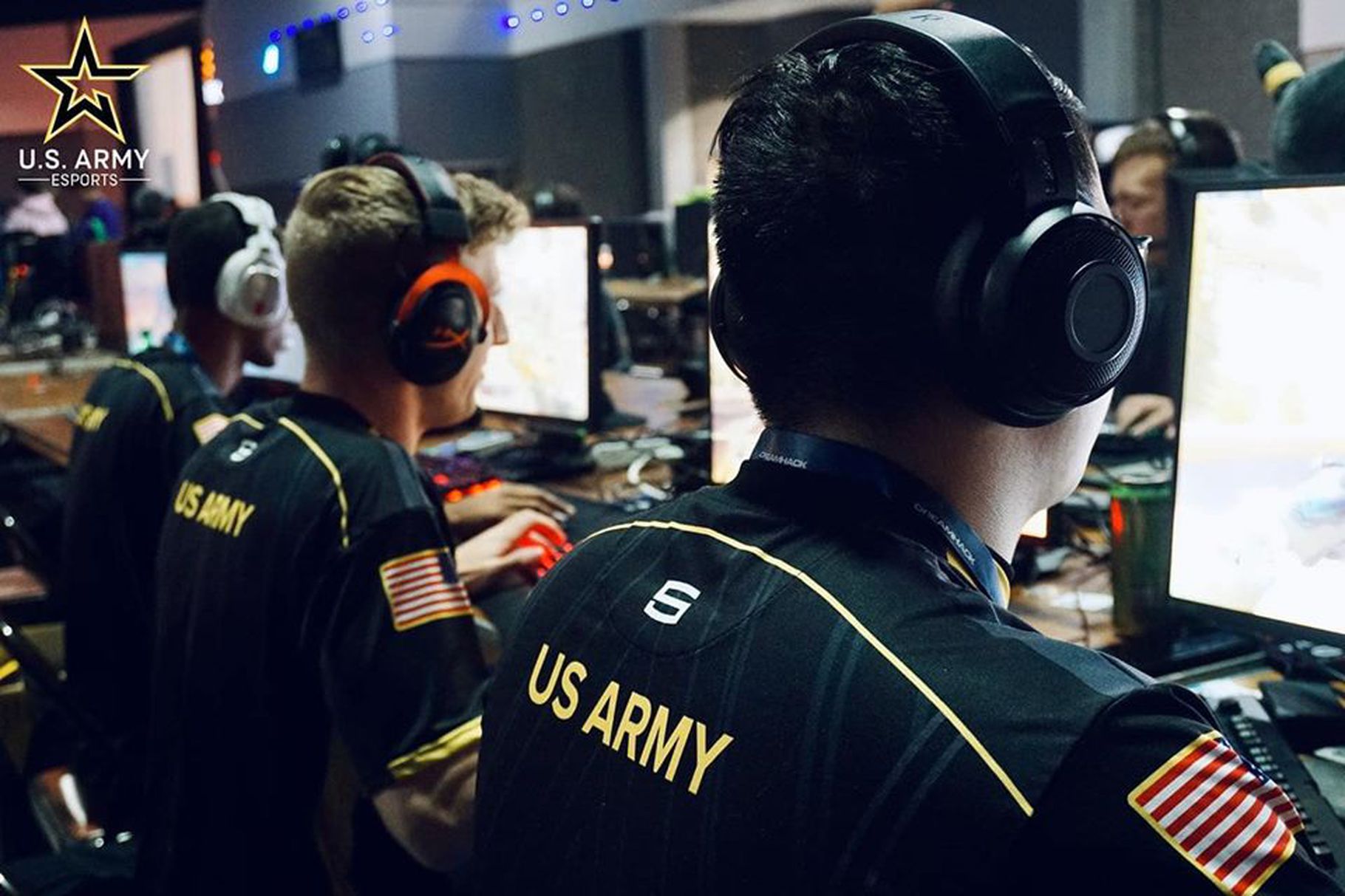 Twitch has intervened to stop the US Army using fake prize giveaways on its esports channel to redirect viewers to army recruitment pages.
The practice was brought to light by a report from The Nation on the use of esports as a recruitment tool by the American military. The US Army, Navy, and Air Force all field esports teams comprised of active and reserve personnel who stream on Twitch and chat with young viewers about life, video games, and the opportunities afforded by military service.
This outreach included automated links dropped into the army’s stream chat that told viewers they could win an Xbox Elite Series 2 controller in a “giveaway.” But when anyone clicked the link, says The Nation, they were directed to “a recruiting form with no additional mention of a contest, odds, total number of winners, or when a drawing will occur.”
See the full story here: https://www.theverge.com/2020/7/17/21328130/us-army-twitch-esports-gaming-recruitment-fake-prize-giveaway
OpenAI’s fiction-spewing AI is learning to generate images
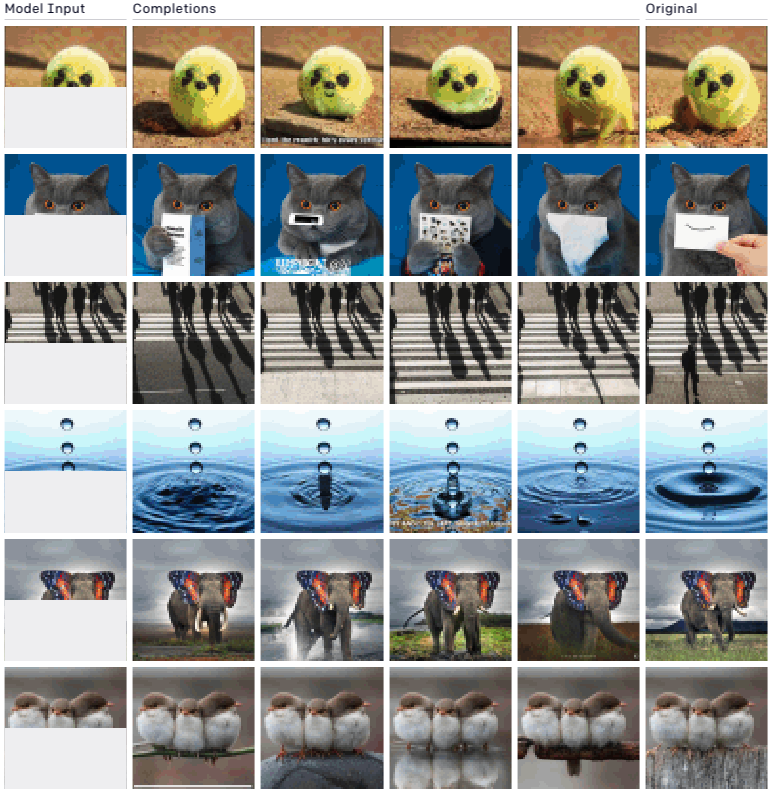 At its core, GPT-2 is a powerful prediction engine. It learned to grasp the structure of the English language by looking at billions of examples of words, sentences, and paragraphs, scraped from the corners of the internet. With that structure, it could then manipulate words into new sentences by statistically predicting the order in which they should appear.
So researchers at OpenAI decided to swap the words for pixels and train the same algorithm on images in ImageNet, the most popular image bank for deep learning. Because the algorithm was designed to work with one-dimensional data (i.e., strings of text), they unfurled the images into a single sequence of pixels. They found that the new model, named iGPT, was still able to grasp the two-dimensional structures of the visual world. Given the sequence of pixels for the first half of an image, it could predict the second half in ways that a human would deem sensible.
The results are startlingly impressive and demonstrate a new path for using unsupervised learning, which trains on unlabeled data, in the development of computer vision systems.
At the same time, the method presents a concerning new way to create deepfake images.
Shakespeare’s ‘The Tempest’ Provides Charming Live Theater From The Under Presents
The Under Presents is an experience of two halves…You enter The Under, an otherworldly club that can only be described as Lynchian in nature. It is a strange and wonderful place; you’ll discover a stylish cabaret room with a rotating variety show that suddenly sprawls out into an expansive, mystic dune, the horizon populated with misplaced landmarks. Crabs spring up from beneath the sand to pinch items away from you and the stage itself is housed neatly inside the remains of an enormous behemoth of a ship, left upturned and dried out. If you weren’t already getting Lost island vibes, wait until you discover the hatch in the sand.
This is The Under Presents’ multiplayer and live segment and where it’s at its most fascinating, clearly influenced by the silent social discovery of games like Journey. When you boot up the game, you’ll be loaded into this area with other players (you can go offline, too). There’s no mic support; every player is totally mute save for the ability to click your fingers to help draw attention. From there you’re free to watch shows, which include elaborate dance numbers and comedy routines, or you can venture out into the wastes to explore.
This new production is not available in the Steam version of The Under Presents and its launch accompanies a shift to pricing for the overall project, at least on Rift and Quest. Now the introduction to the software is free — providing roughly 45 minutes of gameplay, according to Tender Claws — with an in-app purchase of $11.99 buying The Timeboat single player experience and granting “ongoing access to The Under multiplayer space.”
See the full story here: https://uploadvr.com/the-tempest-the-under-presents
Is Artificial General Intelligence (AGI) On The Horizon? Interview With Dr. Ben Goertzel, CEO & Founder, SingularityNET Foundation
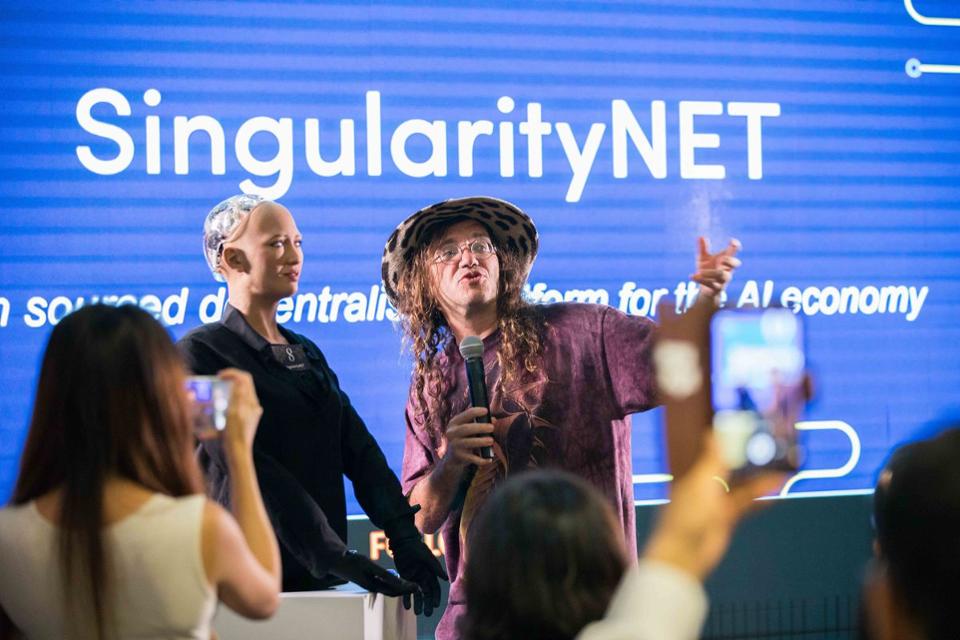
Dr. Ben Goertzel CEO & Founder of the SingularityNET Foundation is particularly visible and vocal on his thoughts on Artificial Intelligence, AGI, and where research and industry are in regards to AGI. Speaking at the (Virtual) OpenCogCon event this week,...
Dr. Goertzel is founder of SingularityNET, a decentralized AI platform which lets multiple AI agents cooperate to solve problems in a participatory way without any central controller. “It’s an infrastructure for what AI pioneer Marvin Minsky called the ‘Society of Minds’ — an approach to AGI in which the general intelligence emerges from the interactions of multiple relatively simple AI agents,” says Dr. Goertzel.
 In addition to AGI, Dr. Goertzel is looking forward to the emergence of graph-processing and ideally hypergraph-processing chips. He thinks that putting graph transformations on the chip will do for both AGI and functional programming the same thing that GPUs did for deep neural nets. It has the potential to make complex scalable work far less costly and more tractable.
The future of fashion? Virtual reality artists and designers collaborate for an immersive show
London Fashion Week saw its first digital showcase in June, quickly followed by Couture Fashion Week in July. The latter saw many high-end labels, including Chanel, Valentino, Dolce & Gabbana and Dior, introduce a new era of virtual fashion shows and short films.
Verizon Media’s The Fabric of Reality
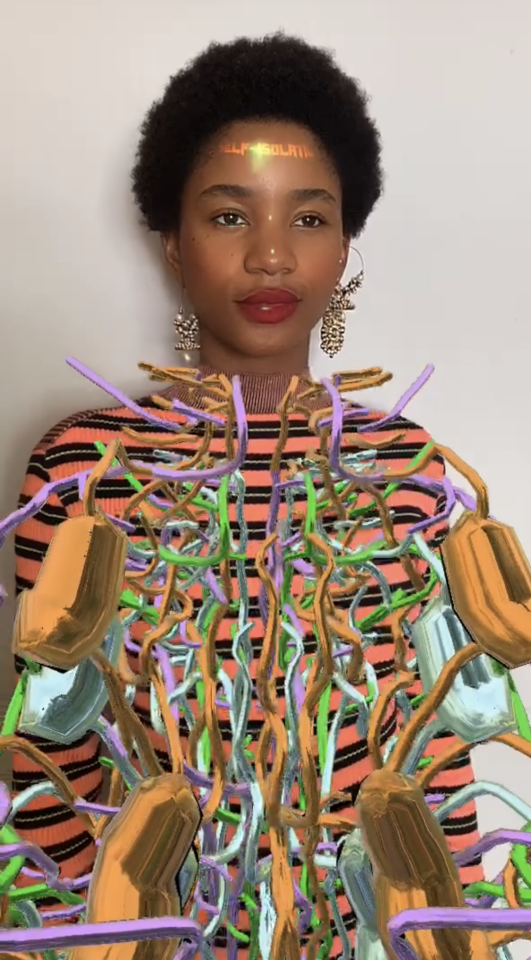
To help reinvent fashion shows for the future, RYOT, Verizon Media’s in-house creative studio has created The Fabric Of Reality, an immersive fashion experience that pairs three up-and-coming designers with virtual reality artists to create a unique collaboration.
See the full story here: https://sports.yahoo.com/the-fabric-of-reality-immersive-show-120503665.html

Serving virtual reality Raspberry Pi to flies
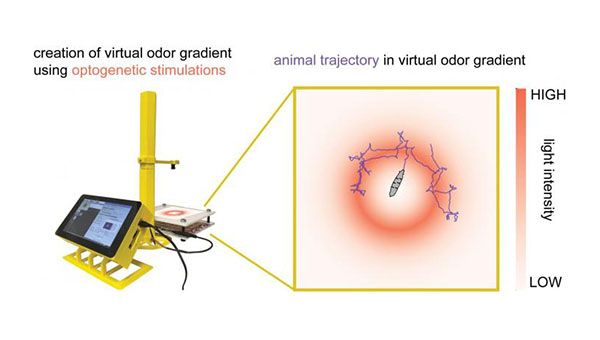 The Raspberry Pi Virtual Reality system (PiVR) is a versatile tool for presenting virtual reality environments to small, freely moving animals (such as flies and fish larvae), according to a study published in the open-access journal PLOS Biology by David Tadres and Matthieu Louis of the University of California, Santa Barbara. The use of PiVR, together with techniques like optogenetics, will facilitate the mapping and characterization of neural circuits involved in behaviour.
In the new study, Tadres and Louis used their PiVR system to present virtual realities to small, freely moving animals during optogenetic experiments. Optogenetics is a technique that enables researchers to use light to control the activity of neurons in living animals, allowing them to examine causal relationships between the activity of genetically-labelled neurons and specific behaviours.
As a proof-of-concept, Tadres and Louis used PiVR to study sensory navigation in response to gradients of chemicals and light in a range of animals. They showed how fruit fly larvae change their movements in response to real and virtual odour gradients. They then demonstrated how adult flies adapt their speed of movement to avoid locations associated with bitter tastes evoked by optogenetic activation of their bitter-sensing neurons. In addition, they showed that zebrafish larvae modify their turning manoeuvres in response to changes in the intensity of light mimicking spatial gradients. According to the authors, PiVR represents a low-barrier technology that should empower many labs to characterize animal behaviour and study the functions of neural circuits.
See the full story here: https://www.labnews.co.uk/article/2030709/serving-virtual-reality-raspberry-pi-to-flies