Accidents, including deadly ones, caused by software or industrial robots, can be traced to the early days of such technology but they are not a direct consequence of the particulars of the intelligence available in such systems. AI failures, on the other hand, are directly related to the mistakes produced by the intelligence that such systems are designed to exhibit.
We can broadly classify such failures into mistakes during the learning phase and mistakes during performance phase. The system can fail to learn what its human designers want it to learn and instead learn a different, but correlated function. A frequently cited example is a computer vision system which was supposed to classify pictures of tanks but instead learned to distinguish backgrounds of such images [3].
-Vuzix waveguides with holographic optics, laser and micro LED display integration cornerstone to producing fashion forward wearable computer smart glasses
-Company's patent portfolio has grown from 90 patents and patents pending to 166 over the last 36 months
There are very few public art galleries more unique than that of The Neon Museum in Las Vegas, Nevada. Established in 1996, the non-profit organizations primary goals involve the collection and preservation of classic Las Vegas signage for exhibition and cultural enrichment.
In 2019, museum curators handed over control of the campus to celebrated filmmaker, artist, and animator Tim Burton (The Nightmare Before Christmas, Edward Scissorhands, Sleepy Hollow), marking the first time a single artist had been given full reign of the space.
To create his portal in time, Rizzotto wore Snap Spectacles—Snapchat glasses that record high-resolution stereoscopic 3D video—for a full year, while traveling the globe. Along with recording a year’s worth of video, a task that required a small mountain of hard drives, Rizzotto also developed the software that would allow him to navigate it. Which, for about three months, seemed like it was going to be an impossible task thanks to an apparent loss of metadata.
“It’s really hard to describe the feeling you get, reliving your own past,” Rizzotto says in the video as he navigates his memories. He adds that “You don’t just see the memory portal, you see everything around it, like the rush of memories you get when you smell food you used to eat as a child.”
“Our limited conception of what understanding actually involves makes it hard to answer basic questions: How do we know if a system is ‘actually understanding’? What metrics can we use? Could machines be said to ‘understand’ differently from humans?” Mitchell writes in her paper.
What made this specific study interesting was the broad range of perspectives brought together to tackle this complicated topic. Participants in the workshop came from various disciplines, including AI, robotics, cognitive and developmental psychology, animal behavior, information theory, and philosophy, among others.
“When I first got into AI, there was a real interdisciplinary feel to it. AI people attended cognitive science conferences, and vice versa. Then statistics took over AI, and the field got less diverse,” Mitchell said. “But I see a trend now in the field returning to its interdisciplinary roots, which I think is a very positive development.”
The paper includes many examples from studies in fields other than computer science and robotics, which help appreciate the depth of meaning in living beings.
The new acting director of the Joint Artificial Intelligence Center (JAIC), Nand Mulchandani, gave his first-ever Pentagon press conference on July 8, where he laid out what is ahead for the JAIC and how current projects are unfolding.
The press conference comes two years after Google pulled out of Project Maven, also known as the Algorithmic Warfare Cross-Functional Team.
“We have had overwhelming support and interest from tech industry in working with the JAIC and the DoD,” Mulchandani said. “[we] have commercial contracts and work going on with all of the major tech and AI companies – including Google – and many others.”
Termed JAIC 2.0, the new plan includes six mission initiatives that are all underway, including joint warfighting operations, warfighter health, business process transformation, threat reduction and protection, joint logistics, and the newest one, joint information warfare. The latest addition includes cyber operations.
Here is how he responded:
“I don’t want to start straying into issues around autonomy and lethality versus lethal — or lethality itself. So yes, it is true that many of the products we work will go into weapon systems.”
“None of them right now are going to be autonomous weapon systems. We’re still governed by 3000.09, that principle still stays intact. None of the work or anything that General Shanahan may have mentioned crosses that line period.”
Coronavirus and the era of stay-at-home binge-watching is accelerating the entertainment industry’s reliance on analytics and data to target its productions to the increasingly fractured tastes of a nation
[PhilNote: this is state-sponsored marketing, but still interesting.]
The riverside region reflects the city’s early industrial heritage, once encompassing a coal wharf, a cement factory, several giant fuel tanks and an aircraft hangar. Today, it has ambitions to become the “Artificial Intelligence Valley” of Shanghai.
The Shanghai AI Tower, comprising two newly built landmark buildings on the waterfront, has launched its global promotion campaign.
Twenty leading companies in the sector from home and abroad — including Microsoft Research Asia, Huawei and Alibaba, and startups like United Imaging and Yitu — have offices in one of the buildings. The idea is to create a “vertical AI industrial chain” of production, study, research and application.
...
In Putuo District, near the riverside of the Suzhou Creek, the China-Israel Innovation Hub aims to become a testing site for a smarter urban-management system empowered by artificial intelligence.
The innovation park was renovated from Shanghai’s Hero pen factory, a company established in 1931. Such industrial heritage is being incorporated into an AI park jointly operated by the Putuo District government and the Lingang Group.
During the renovation, Internet of Things technology has linked up the park’s lighting, energy, elevator controls and environmental monitoring.
Based on core Welink technology from Tencent, a smart building network platform featuring AI and cloud computing operates and manages the office buildings automatically.
Everything about the upcoming series SF8 -- a sci-fi anthology series which will be streamed via streaming platform Wavve and TV channel MBC -- is new.
Under the collaboration of major TV channel network MBC and the Directors Guild of Korea, eight filmmakers from the association teamed up with production company Soo Film to helm each episode of the eight-part sci-fi anthology. After a year and half long haul of production, SF8 will be released through local over-the-top platform Wavve on Friday.
In response to the set’s comparison to the mega-hit British sci-fi series Black Mirror, Min said, “While Black Mirror takes place inside a single universe created by the same screenwriter, we have different directors for each episode revolving around different subjects and audiences will be able to choose which episode to watch according to their preferences.”
Archive, releasing by video-on-demand on July 10 from freshman director and veteran concept artist Gavin Rothery, is a breath of fresh air for indie science fiction. Gorgeously designed and imagined, Archive is a long-distance love story that ponders the authenticity of a soul, and — without giving too much away — questions whether we have any right to disrupt the natural order of life and death. It is a deceptive movie, too. One that warms the heart before dousing it in ice water.
 -Vuzix waveguides with holographic optics, laser and micro LED display integration cornerstone to producing fashion forward wearable computer smart glasses
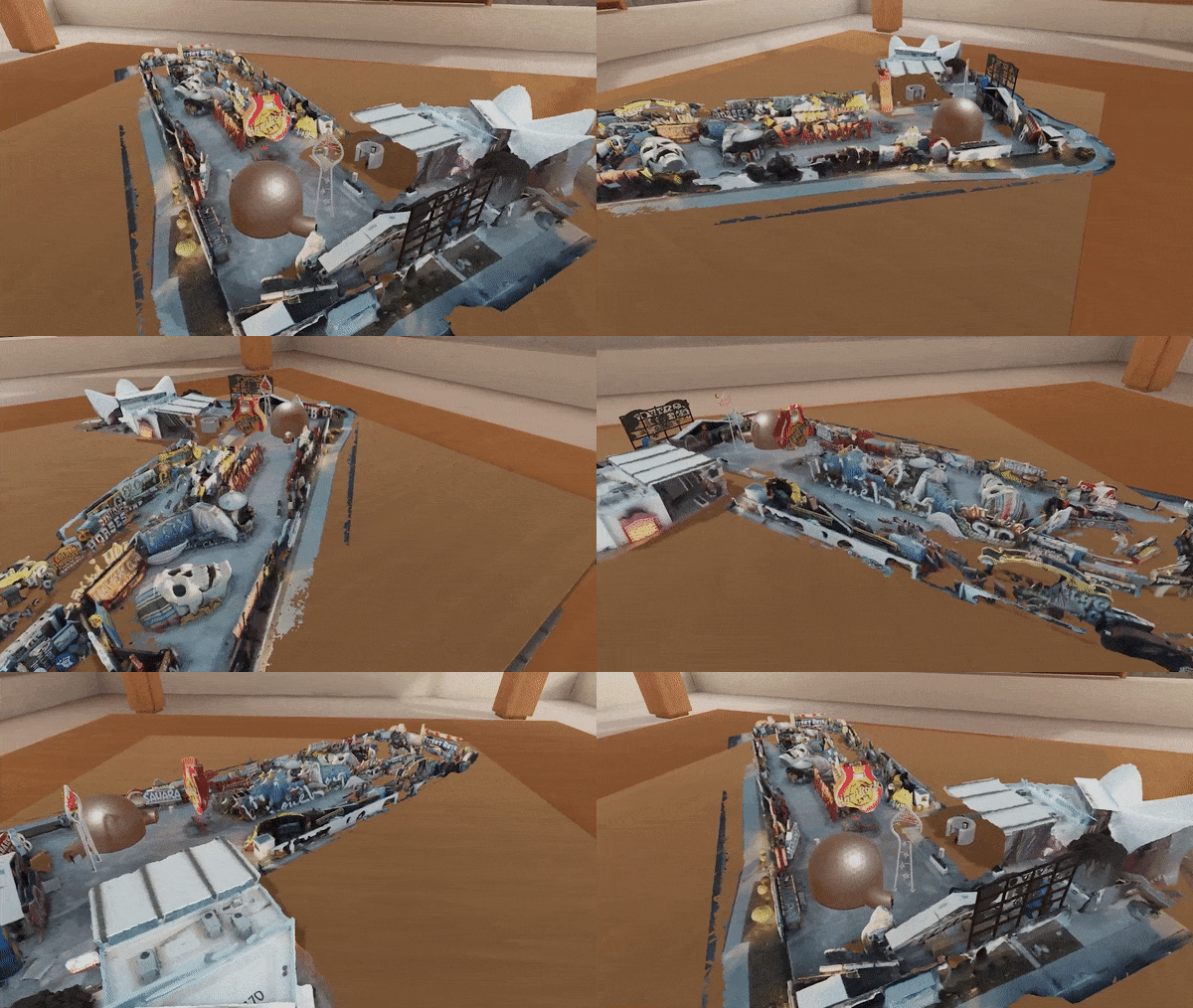 There are very few public art galleries more unique than that of The Neon Museum in Las Vegas, Nevada. Established in 1996, the non-profit organizations primary goals involve the collection and preservation of classic Las Vegas signage for exhibition and cultural enrichment.
 The new acting director of the Joint Artificial Intelligence Center (JAIC), Nand Mulchandani, gave his first-ever Pentagon press conference on July 8, where he laid out what is ahead for the JAIC and how current projects are unfolding.
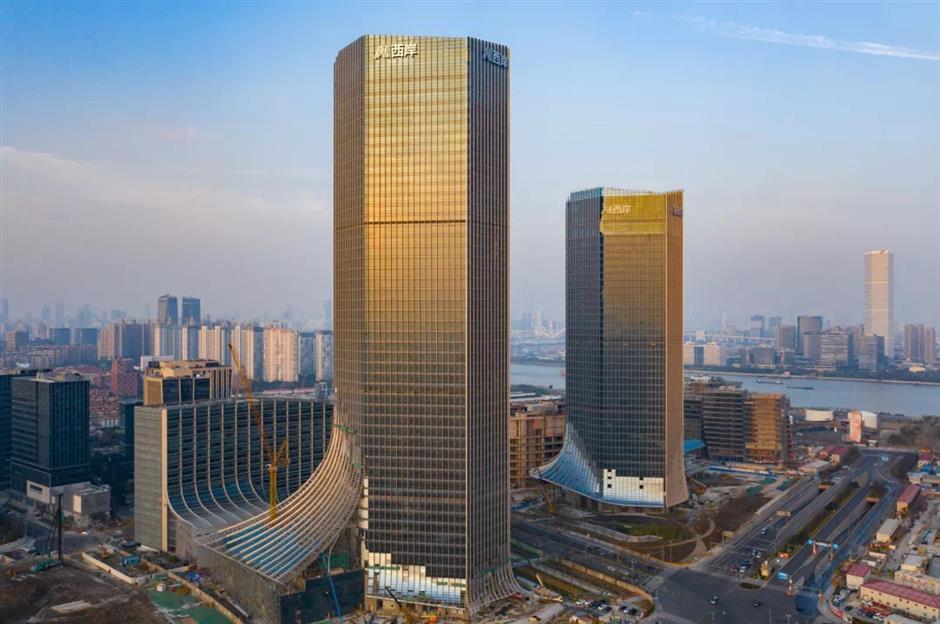 The Shanghai AI Tower, comprising two newly built landmark buildings on the waterfront, has launched its global promotion campaign.