ImmersiveTouch Partners with HP on Virtual Reality and 3D Printing for Personalized Health Care Solutions
 ImmersiveTouch is revolutionizing personalized care by designing technology that more accurately simulates each patient's specific anatomy in 360º VR. Surgeons can feed traditional CT and MRI scans into ImmersiveTouch software, strap on virtual reality headsets, and then virtually fly through simulations of muscles, bones and blood vessels, exploring the specific dimensions of the disease they must attack from every angle.
See the full story here: https://finance.yahoo.com/news/immersivetouch-partners-hp-virtual-reality-133100760.html
This bathroom cleaning robot is trained in VR to clean up after you
 “When I grew up, I did a bunch of jobs. He said, if you want to get to the register, you have start in the bathroom,” he explains. “The reason bathrooms are such a good application, because everything is bolted down to the floor. Things move in a predictable way. All commercial bathrooms built after 1994 are ADA compliant. What’s good for robotics is that lays a specific design.”
The robot will clean a restroom, then go to recharge and refill chemicals as needed. It should get around eight hours of cleaning done in a day and can even open doors and ride the elevator to get around buildings, according to Levy.
Prime targets include airports, casinos, office spaces and other spots with large commercial restrooms. The robot will be leased out for around $1,000 a month, after a trial phase. Somatic already has a handful of customers, including a FAANG company, whose offices are already being cleaned by the robot.
See the full story here: https://techcrunch.com/2020/03/04/this-bathroom-cleaning-robot-is-trained-in-vr-to-clean-up-after-you/
At the Sackler Gallery, take a virtual-reality tour of cities ravaged by ISIS and war
 “Age Old Cities” at the Arthur M. Sackler Gallery examines three ancient Middle Eastern cities that have recently been ravaged by war: Mosul, Iraq, and Palmyra in Syria were nearly destroyed by the Islamic State between 2014 and 2017, while large portions of Aleppo suffered heavily during the Syrian civil war.
The Sackler’s first primarily virtual exhibition, “Age Old Cities” was organized by the Arab World Institute in Paris, where it opened in 2018, in partnership with UNESCO. It features four large-scale 3-D digital projections, each lasting several minutes, revealing the extent of these cities’ devastation. Almost entirely devoid of people, the animations digitally stitch together tens of thousands of photographs taken from 2017 to 2018 — both by drone and from the ground — along with archival images of some of the sites before their destruction.
The projections were created by the French start-up Iconem, which specializes in digitizing endangered sites, both to record them for posterity and to promote their conservation...
In the Mosul projection, the camera swirls almost vertiginously, gliding over the flattened buildings, burned-out cars and piles of debris that made up much of the cityscape after it was reclaimed from the Islamic State. The 12th-century Great Mosque of al-Nuri — once famous for its leaning minaret — is shown in almost complete ruin after the Islamic State dynamited it in 2017. The projection then morphs into a ghostly 3-D re-creation of the mosque before its destruction, the architectural rendering rising from the rubble around it.
Virtual Reality And Blockchain: Match Made In Heaven
 One of the cooler pairings of virtual reality and blockchain is with respect to the entertainment industry. “CEEK” is a VR headset manufacturer which has advertised their content as the “Future of Digital Content”. CEEK allows you to purchase tickets to live events, and enjoy the experience of a live concert, or a gaming event, from the comfort of your home. CEEK’s offering relates to worldly problems, and solves a purpose.
“VibeHub” is another similar project which allows you to buy or sell virtual reality experiences with the help of their VIBE token. The experience you are buying or selling could range from attending an event, to learning an instrument – the options are endless.
The pairing of virtual reality and blockchain could probably take it a step further, if a provision is made to allow students who have missed a class, or those who would look like to attend a class from home, experience the exact setting of a class, with the help of a virtual reality experience.
See the full story here: https://cryptodaily.co.uk/2020/03/virtual-blockchain-match-heaven
In the music industry’s latest hologram play, Jadu is making interactive digital video with artists to promote songs
Those who dream of dancing alongside popular musicians may finally get the chance — sort of — thanks to the latest byproduct of the music industry’s ongoing love affair with holograms.
 Jadu, a Los Angeles startup that launched on Wednesday morning, is just the most recent in a music industry craze that began with the Tupac hologram at Coachella in 2012 and still isn’t stopping.
Introducing Jadu, A Social App That Lets You Perform With Holograms
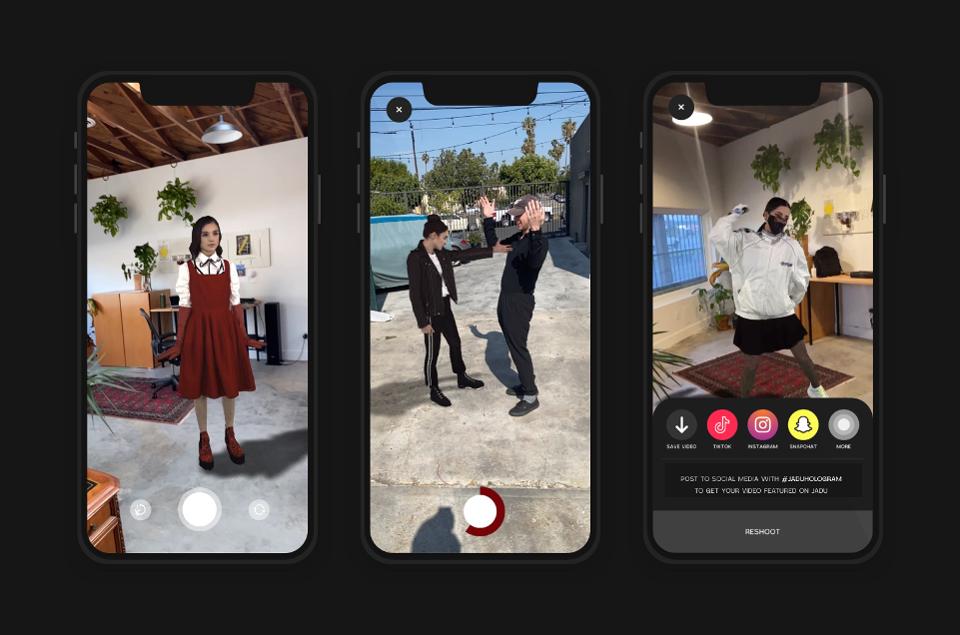
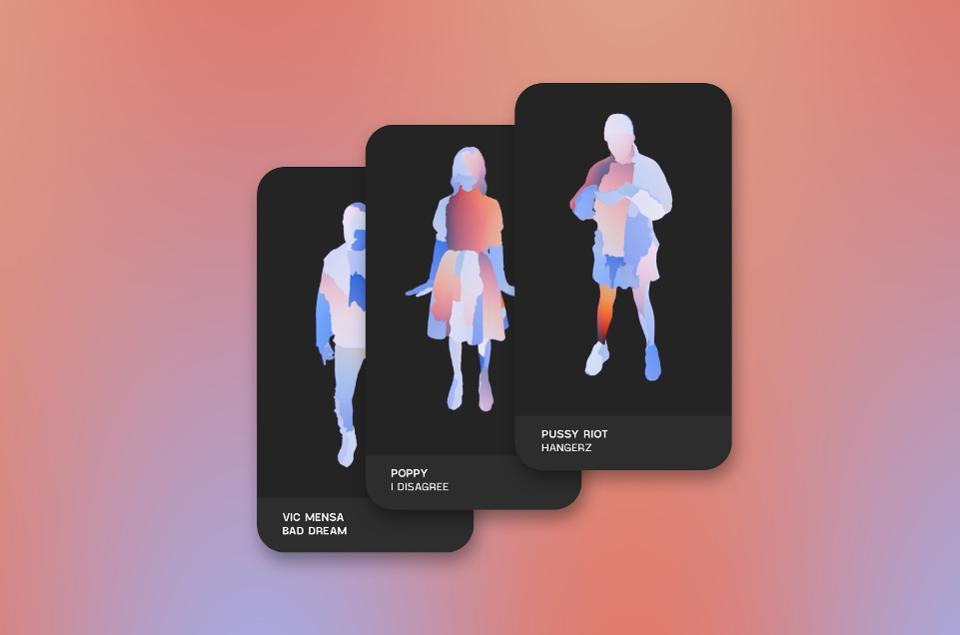 The latest project from Asad J. Malik’s 1RIC (Terminal 3, A Jester’s Tale) comes after the announcement last year that the volumetric studio was scaling in Los Angeles, CA. The app allows users to access pre-recorded 3D “holographic” performances from a curated slate of artists and record photo and video content “with” them using augmented reality.
With TikTok gaining major traction with younger demographics over the past two years, the duet has become a staple in the social media diet of “digital natives” worldwide. 1RIC CEO and Jadu Founder Asad J. Malik explained that Jadu is meant to evolve this language of creative interaction.
“We want Jadu to enable a new sense of presence,” Malik said in a statement. “There is something special about allowing artists to share this new sense of presence with young audiences that care so deeply about them.”
Each hologram consists of a 15-second snippet, which users can place in their own world and react to in their own individual way. Once the app has been opened and the hologram selected, users scan their surroundings to place the hologram in their space. The resulting video can be saved to their device to be shared across other social media platforms.
Los Angeles-based Talespin nabs $15 million for its extended reality-based workforce training tools
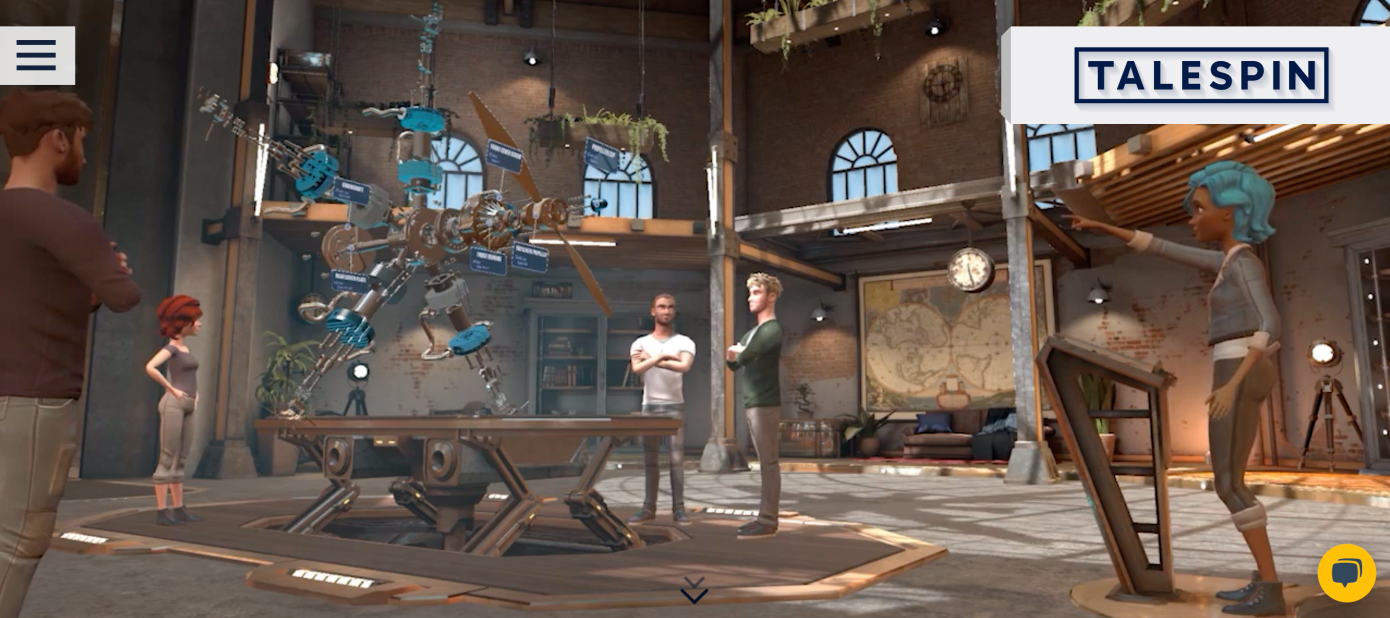 It turns out the virtual and augmented reality companies aren’t dead — as long as they focus on the enterprise. That’s what the Los Angeles-based extended reality technology developer Talespin did, and it just raised $15 million to grow its business.
“Talespin‘s immersive platform has transformed employee learning and proven to be an impactful addition to our training programs. We’re honored to continue to support the Talespin team through this next phase of growth and development,” said Scott Lindquist, Chief Financial Officer at Farmers Insurance, in a statement.
Farmers is an investor in Talespin, as is the corporate training and talent management software provider Cornerstone OnDemand, and the hardware manufacturer HTC.
See the full story here: https://techcrunch.com/2020/03/03/los-angeles-based-talespin-nabs-15-million-for-its-extended-reality-based-workforce-training-tools/
Former Head Of Tencent X Lab Jia Jiaya Establishes New AI Startup
 Jia Jiaya, the former head of X Lab under Tencent Cloud and Smart Industry Group and a tenured professor of the Computer Science and Engineering Department of the Chinese University of Hong Kong, founded an AI company whose main direction is industrial inspection and high-definition video.
The reason to found the company is that "the sinking of AI will definitely bring new breakthrough points." Jia Jiaya said that after seeing so many industries, there is nowhere to use a suitable and simple AI system. For example, in all electric power industries today, reducing energy consumption is a huge ultimate goal, but in the core part of this generator, very few experts in the AI direction can understand the specific needs of this industry, so it is difficult to customize it.
At the same time, he led the team to win championships in international computer vision field competitions such as instance segmentation, semantic segmentation and object detection. He has trained more than 40 doctoral and master students, including Xu Li, co-founder and CEO of Chinese AI startup unicorn, SenseTime.
See the full story here: https://www.chinamoneynetwork.com/2020/02/28/former-head-of-tencent-x-lab-jia-jiaya-establishes-new-ai-startup
106 VR Titles Generated More than $1 Million in Revenues in 2019
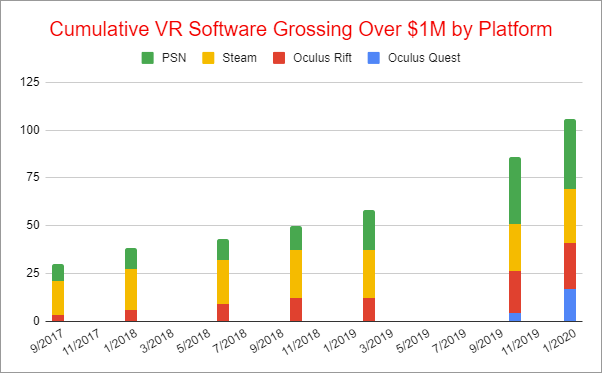 The top seven titles in the analysis generated more than $10 million in revenues. The leading VR title grossed $60 million. Chennavasin expects a VR title to hit the $100 million milestone by this time next year.
See the full story here: https://virtualrealitytimes.com/2020/02/29/106-vr-titles-generated-more-than-1-million-in-revenues-in-2019/