Virtual reality deployed to boost NZ’s biosecurity threat defences
 [philnote: training, not inspection]
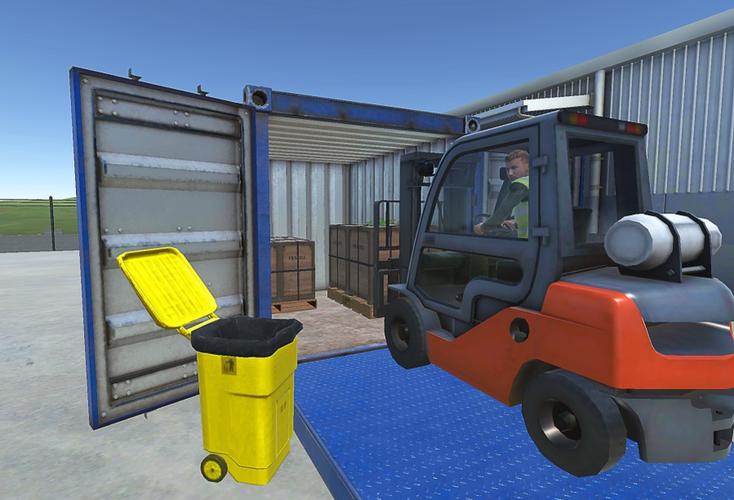
A collaboration between two Hamilton companies is using virtual reality to improve New Zealand's biosecurity defences by boosting the quality of shipping container inspection.
Independent Verification Services (IVS) in Hamilton has launched a new virtual reality (VR) container inspection simulation which tests and trains inspectors with a series of randomised threats.
The Ministry of Primary Industries has approved the technology, built by Hamilton-based Company-X, to be used in biosecurity refresher training for "accredited persons" (APs), the people employed to carry out inspections.
See the full story here: https://www.reseller.co.nz/article/671635/virtual-reality-deployed-boost-nz-biosecurity-threat-defences/
Does the Future have a Past? New-Old and Old-New Virtual Realities
 Facebook's purchase of Oculus-VR in 2014 is the latest in a series of events (enabled by the ménage à trois of technological innovation, entrepreneurial CEO, and hopeful consumer) that were each thought at the time to open a new era in VR, which would leave the past behind. In this seminar, Professor Peter Otto argues that the roles we have in shaping our digital futures can only be understood in relation to a cultural field that includes histories of our non-digital virtual realities.
Importantly, in the case of VR the 'new' has a very long history, which means that digital VR struggles to find its place within a world already cluttered with (arguably more sophisticated) digital and non-digital virtual realities.
In this Seminar, Professor Peter Otto will focus on three immersive/interactive environments:
- Thomas Hornor's Colosseum (1829), centred on his 'Panorama of London', which was designed to enable immersants to live, for extended periods of time, in an alternative reality
- the Hiroshima Peace Memorial Museum, designed by Kenzo Tange (opened 1955), centred on a deeply-disturbing panorama of Hiroshima in ruins
- 'Teamlab Planets', a sequence of linked, digitally-generated panoramic environments, which opened in Tokyo in 2019
See the full story here: https://arts.unimelb.edu.au/research/digital-studio/news-and-events/does-the-future-have-a-past-new-old-and-old-new-virtual-realities
Serious Labs Unveils Universal Motion Base for Virtual Reality Heavy Equipment Simulators
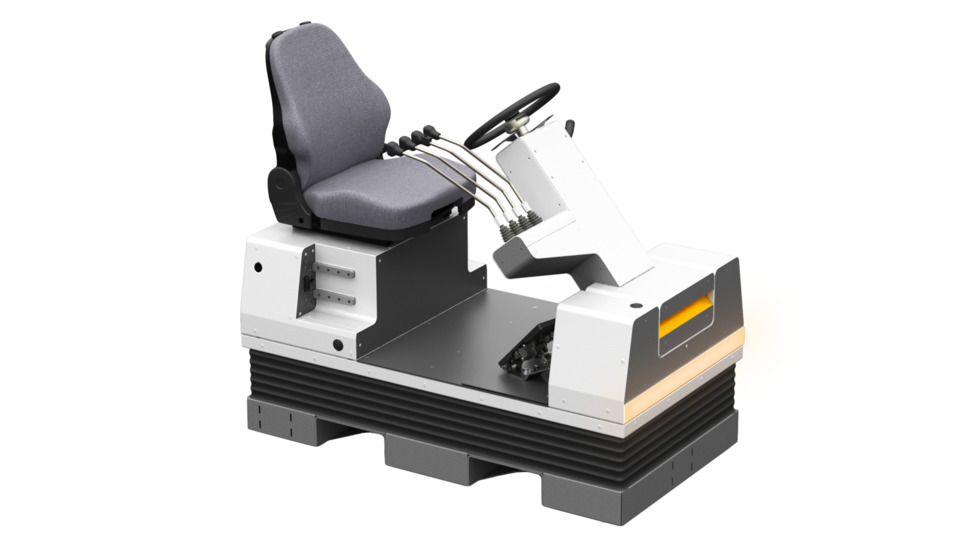 The versatile prototype can be used for safety training across seated machines and vehicles.
Serious Labs, a supplier and creator of virtual reality (VR) solutions for training and operation of heavy equipment, unveiled its Universal Motion Base (UMB) for seated VR Heavy Equipment Simulators at CONEXPO-CON/AGG 2020. The UMB has been designed as the common foundation for the development of additional VR equipment simulators such as skid steers, dozers, excavators, backhoes, as well as for vehicles such as buses and trucks.
The world’s first augmented reality surgical operation
 “We had a real patient both under our hands and under our eyes, the entire experience was heightened. Suddenly I had instant and seamless access to a wide range of data about the patient, which proved to be a vital aid in the operation.”
The procedure itself involved the resecting and repositioning of the upper jaw bone, in order to restore the patient’s biting functionality. For an operation such as this, normally an external monitor would be used to analyse vital information about the patient’s condition.
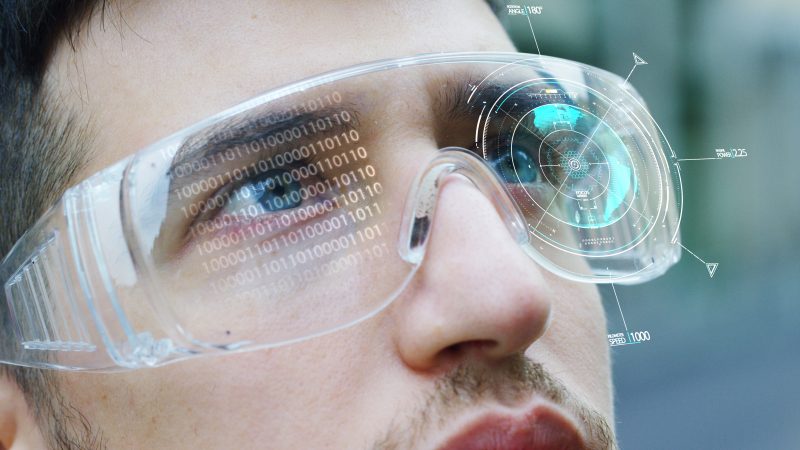
This time around, with the use of a headset developed as part of the EU-funded VOSTARS (Video-Optical See Through AR surgical System) project, that very same data appears in the lens of a visor worn by the lead surgeon.
The data visible through the visor includes the patient’s heart rate, body temperature, blood pressure, and breathing rates, alongside pre-operative information retrieved from imaging technologies used beforehand, including CT, MRI, or 3DUS scans.
The data visible through the visor includes the patient’s heart rate, body temperature, blood pressure, and breathing rates, alongside pre-operative information retrieved from imaging technologies used beforehand, including CT, MRI, or 3DUS scans.
See the full story here: https://www.euractiv.com/section/digital/news/the-worlds-first-augmented-reality-surgical-operation/
Nreal AR Glasses to Get Hand and Finger Tracking
 Nreal is busy improving the capabilities of its Nreal Light AR glasses as it moves closer to the launch of the consumer version of the glasses. The mixed reality company is bolstering the glasses with sets of features that are likely to appeal to end users. The company has now announced that it is adding high-fidelity optical hand tracking solution to the glasses. Nreal is also expanding the platform’s apps and carrier support.
The hand tracking solution is from Clay AIR and will enable a camera-based system that will allow for the tracking of gestures such as grabbing, pinching, pointing and swiping. At the same time, it will display dynamic real-time hand skeleton overlays on top of the user’s real hands. This is similar to the optical hand tracking that was recently introduced in Oculus Quest. If the connected smartphone will be using a Qualcomm Snapdragon 855 or 865 processor, then users can look forward to smooth hand-rendering that will even include the option of displaying full hands, the individual hands or various kinds of custom skins instead of skeletons.
See the full story here: http://virtualrealitytimes.com/2020/03/08/nreal-ar-glasses-to-get-hand-and-finger-tracking/
Lucid Motors plans to offer virtual-reality test drives to sell its electric vehicles
 The electric vehicle startup Lucid Motors has a strategy for drumming up interest in its upcoming Lucid Air luxury vehicle that begins production late this year: ultra-designed retail spaces that offer virtual reality test drives.
Why it matters: The luxury EV market is getting more crowded. Startups like Silicon Valley-based Lucid — a largely unknown brand in what's still a very small market — need a way to differentiate themselves and gain cachet.
The company announced Thursday a "direct-to-consumer" model with planned retail spaces that will "enable customers to experience the brand and its products in locations that underscore its unique design aesthetic."
- Lucid is also one of several EV players eschewing the traditional dealership model of sales.
- The company — which is staked with $1 billion from Saudi Arabia's sovereign wealth fund — plans to unveil the production version of the car and pricing next month in New York.
See the full story here: https://www.axios.com/lucid-motors-virtual-reality-test-drives-electric-vehicles-daa901b9-5134-4db7-9ff3-13305bfc8fa6.html
The Politics of Code & Virtual Reality: Academic Best Sellers in Computer Science
 A thoughtful look at the morality and politics of code; an introduction to computational thinking; and a comprehensive overview of developments in virtual reality top the list of best-selling computer science books, as compiled by GOBI Library Solutions from EBSCO.
1. Coders: The Making of a New Tribe and the Remaking of the World
Thompson, Clive
Penguin Books. 2019. ISBN 9780735220560. $28.
2. Computational Thinking
Denning, Peter J.
MIT Press. 2019. ISBN 9780262536561. $15.95.
3. Virtual Reality
Greengard, Samuel
MIT Press. 2019. ISBN 9780262537520. $15.95.
4. The History of the Future: Oculus, Facebook, and the Revolution That Swept Virtual Reality Harris, Blake J.
William Morrow. 2019. ISBN 9780062455963. $28.99.
5. Talk to Me: How Voice Computing Will Transform the Way We Live, Work, and Think Vlahos, James
Houghton Mifflin Harcourt. 2019. ISBN 9781328799302. $28.
See the full story here: https://www.libraryjournal.com/?detailStory=top-20-computer-science-titles-academic-best-sellers