SNAPCHAT COMMITS $750,000 TO AR INFLUENCERS
 At its annual Lens Fest, Snapchat displays the future of creating augmented reality for the platform
Opinion: AI For Good Is Often Bad
 I was handed a printout with my blurry image next to a picture of an elephant, along with text explaining that the TrailGuard AI camera alerts rangers to capture poachers before one of the 35,000 elephants each year are killed. Despite these good intentions, I couldn’t help but wonder: What if this happened to me in the wild? Would local authorities come to arrest me now that I had been labeled a criminal? How would I prove my innocence against the AI? Was the false positive a result of a tool like facial recognition, notoriously bad with darker skin tones, or was it something else about me? Is everyone a poacher in the eyes of Intel’s computer vision?
Intel isn’t alone. Within the last few years, a number of tech companies, from Google to Huawei, have launched their own programs under the AI for Good banner. They deploy technologies like machine-learning algorithms to address critical issues like crime, poverty, hunger, and disease. In May, French president Emmanuel Macron invited about 60 leaders of AI-driven companies, like Facebook’s Mark Zuckerberg, to a Tech for Good Summit in Paris. The same month, the United Nations in Geneva hosted its third annual AI for Global Good Summit sponsored by XPrize. (Disclosure: I have spoken at it twice.) A recent McKinsey report on AI for Social Good provides an analysis of 160 current cases claiming to use AI to address the world’s most pressing and intractable problems.
While AI for good programs often warrant genuine excitement, they should also invite increased scrutiny. Good intentions are not enough when it comes to deploying AI for those in greatest need. In fact, the fanfare around these projects smacks of tech solutionism, which can mask root causes and the risks of experimenting with AI on vulnerable people without appropriate safeguards.
The deeper issue is that no massive social problem can be reduced to the solution offered by the smartest corporate technologists partnering with the most venerable international organizations. When I reached out to the head of Intel’s AI for Good program for comment, I was told that the "poacher" label I received at the TrailGuard installation was in error—the public demonstration didn’t match the reality. The real AI system, Intel assured me, only detects humans or vehicles in the vicinity of endangered elephants and leaves it to the park rangers to identify them as poachers. Despite this nuance, the AI camera still won’t detect the likely causes of poaching: corruption, disregarding the rule of law, poverty, smuggling, and the recalcitrant demand for ivory.
See the full story here: https://www.wired.com/story/opinion-ai-for-good-is-often-bad/
Snapchat fact-checks political ads, unlike Facebook, says CEO Evan Spiegel

- Snapchat has a team dedicated to fact-checking all political advertising on the platform.
- Snap’s policy represents a middle ground in a debate that has been largely defined by extremes as Facebook pushes for no regulation and Twitter grapples with removing political ads altogether.
“We subject all advertising to review, including political advertising,” he said Monday. “And I think what we try to do is create a place for political ads on our platform, especially because we reach so many young people and first-time voters we want them to be able to engage with the political conversation, but we don’t allow things like misinformation to appear in that advertising.”
He compared Snap’s policy on political ads to cable TV. “That might be more similar to cable rather than broadcast,” he said.
Under Federal Communications Commission rules, broadcast television stations cannot censor certain political advertisements based on accuracy concerns. Cable television networks are not bound by the same federal policies.
See the full story here: https://www.cnbc.com/2019/11/18/snapchat-fact-checks-political-ads-unlike-facebook-ceo-evan-spiegel.html
The Extensive Practices Of Augmented Reality Today
 Yale University is also one of twenty universities which are participating in the HP/Educause Campus of the Future project investigating the use of AR and VR technology in higher education. Yale’s Blended Reality team has endeavored to “capture” digitally the Peabody museum dioramas which will essentially become digital replicas of plastic arts. Yale’s projects also include the use of motion capture and AR to generate dance choreography in addition to the replication of visual artworks.
Additionally, the University Libraries at the University has recently hosted a VR|AR Meet-Up featuring the Reno Street Art Project and Walking With Reality, two projects that have fully taken on the challenge to merge the arts an new technology. And Street Art Museum Amsterdam (SAMA) is also using VR to preserve street art collections which will be destroyed by the year’s end. It is clear that VR, AR and XR are promising new arenas in the art world and their inclusion in the cultural landscape of art is hardly experimental today.
See the full story here: https://www.forbes.com/sites/julianvigo/2019/11/15/the-extensive-practices-of-augmented-reality-today/#6db51aae4eac
Prosthetic reality: living art. How augmented reality is breaking down the walls between viewer and art.
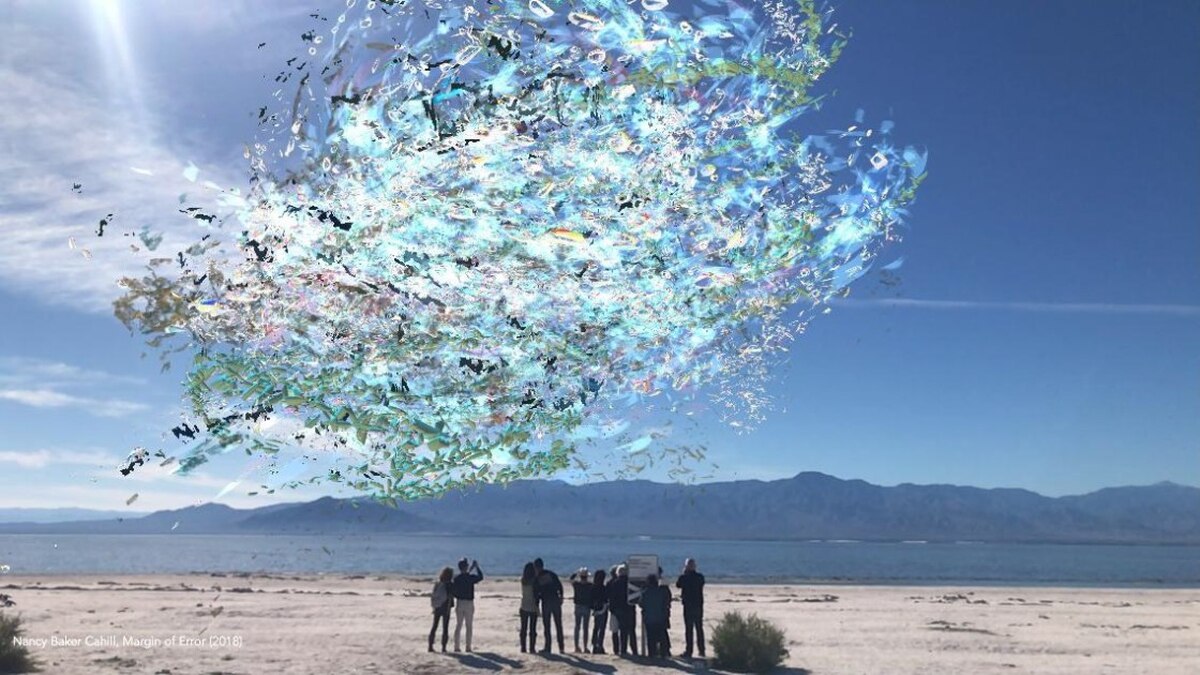 At the Ayzenberg sp[a]ce gallery in Pasadena, the art on the walls are coming to life. A still illustration of a rural house is suddenly engulfed in a dust storm, a Japanese village is destroyed by a wave and a fish swims off of its dinner plate. Each artwork in the Prosthetic Reality exhibit is animated through augmented reality (or AR) technology and sound elements, which can only be experienced through your phone on an app called EyeJack.
Prosthetic Reality, curated by AR and virtual reality (VR) artist Sutu (Stuart Campbell), peeks into the emerging world of art and technology. The free exhibit, which is open until December 8, showcases work from over 40 artists and sound designers from around the globe. The sp[a]ce gallery, which identifies as a non-profit project, has featured several mixed reality (AR and VR) art exhibits in the past, making it a mainstay in the emergence of interactive museums.
...
One of the pieces on the app called “Unprotected” is Cahill’s own. Located in front of the U.S. Supreme Court, the drawing depicts an abstraction of a mangled body in the midst of struggle. The piece was enacted on the app after the Kavanaugh hearings and before the swearing-in of the new Supreme Court Justice. The name, “Unprotected,” signifies how female bodies are still not guaranteed equal protection because the Equal Rights Act was never ratified into the Constitution.
“These conversations may not always be productive, but they are conversations nonetheless,” she said.
With creations like Prosthetic Reality and 4th Wall, the possibilities of AR look promising, whether it’s making art more fun and immersive, or deepening the meaning of a piece.
See the full story here: http://www.uscannenbergmedia.com/2019/11/15/prosthetic-reality-living-art/
Cinephil Acquires AI-Themed Political Thriller Documentary ‘iHuman’ (EXCLUSIVE)
Tel Aviv-based Cinephil has acquired worldwide rights to Tonje Hessen Schei’s (“Drone”) “iHuman,” a political thriller documentary about artificial intelligence, power and social control.
“’iHuman’ presents the AI landscape through the eyes of the world’s top minds in the field, laying out how the new generation of AI technology will powerfully outpace human intelligence in our lifetime,” said Annie Roney, founder and managing director of ro*co films. Roney said the film asks whether AI “serves or undermines democratic principles.”
New federal bill would restrict police use of facial recognition
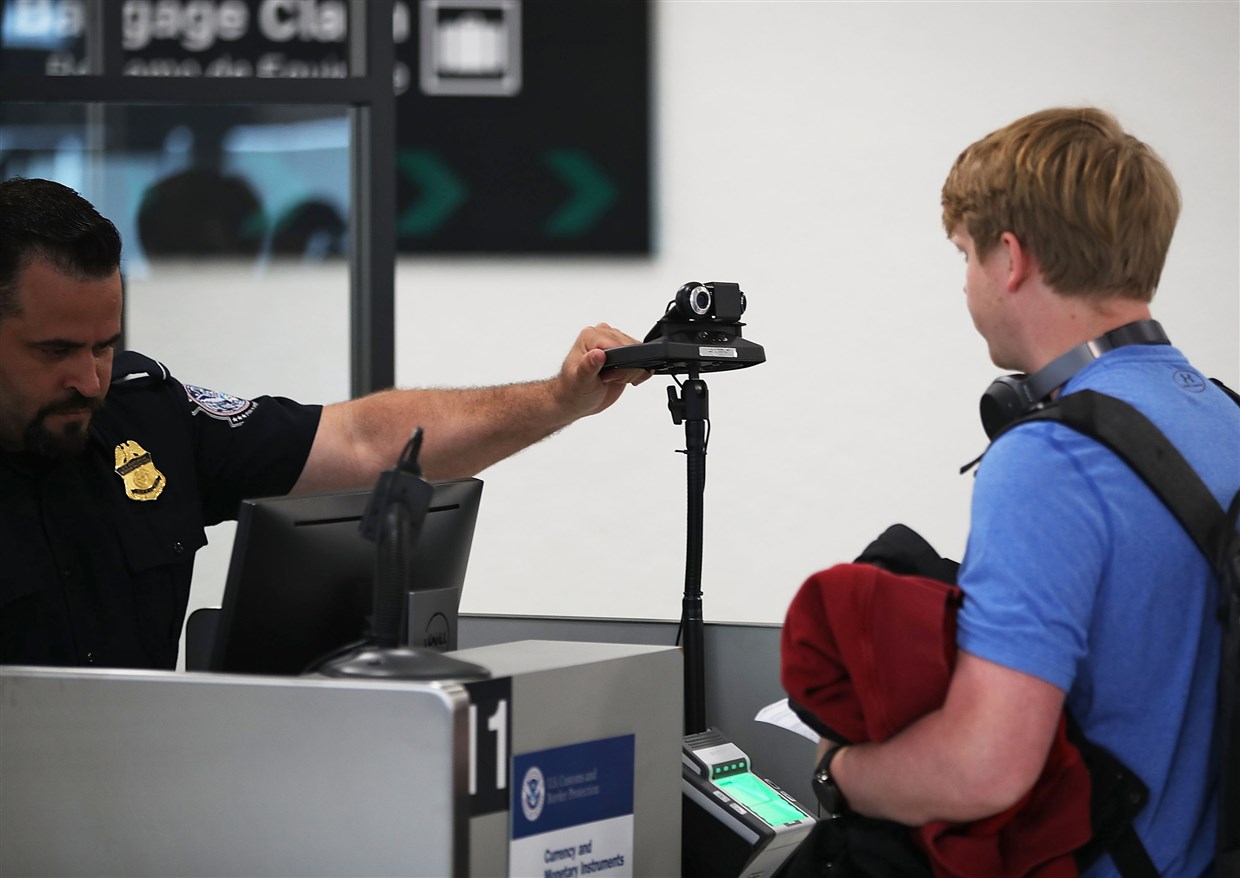 The bill, known as the Facial Recognition Technology Warrant Act, would require federal law enforcement to explain to a judge why they want to use facial recognition to track someone in real time for longer than three days, and would limit that surveillance to 30 days. It also would require the judge to report the request to U.S. court administrators for tracking. And it would require law enforcement to work with government researchers to make sure the facial recognition systems they're using are accurate.
The bill only applies to federal law enforcement, not state and local police.
"It's an OK step," said Andrew Ferguson, a law professor at the University of the District of Columbia who has pressed lawmakers to regulate police use of facial recognition. "It addresses a problem that is not a problem yet, but it omits the problem that is currently in practice right now."
See the full story here: https://www.nbcnews.com/news/us-news/new-federal-bill-would-restrict-police-use-facial-recognition-n1082406