Exclusive: Behind the scenes with Childish Gambino as he creates his psychedelic new AR app
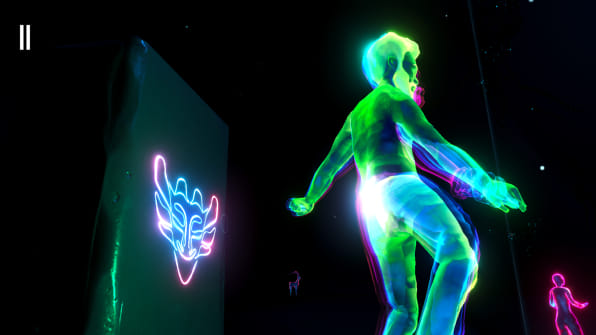 The Pharos AR app actually doesn’t enable a lot of interaction between the digital content and the real world content. It does contain some interactive features—you can tap on the glyphs in the cave to activate them, for example. But the slow blending of the real world around you (as seen through the phone camera) into the world of the cave is compelling. It feels more like the gradual onset of a hallucinatory drug as opposed to the immediate occlusion and immersion you get when entering a VR experience.
Pharos AR was designed by the creative agency MediaMonks with direction from Childish Gambino and his creative management team using Unity’s 3D engine. The movements of the human dancers in the cave derive from the movements of humans wearing motion capture (mo-cap) suites. The data collected from the sensors on the suits are then fed into the Unity engine where they’re used to animate the avatars. The people at Unity pitched in with technical assistance.
See the full story here: https://www.fastcompany.com/90363068/how-and-why-childish-gambino-made-an-augmented-reality-app
The Mona Lisa Will Emerge From Behind Its Bullet-Proof Glass in the Louvre’s First-Ever Virtual Reality Experience
 Visitors to the Leonardo exhibition will don a VR headset and enter a virtual space where they can step behind the famous painting’s protective glass and interact with it. The experience, which is the result of a partnership with the company HTC VIVE Arts, promises to shed light on details of the famous masterwork that are hidden from the naked eye, and to offer more information about the mysterious sitter, whose identity has been the subject of debate among historians for centuries.
The exhibition, which is organized by the Louvre’s Vincent Delieuvin and Louis Frank, is one of the most high-profile events marking the 500th anniversary of the artist and scientist’s death in France.
Can’t make it to the Louvre in Paris? You will be able to experience the VR element of the much-anticipated exhibition at home if you own a headset. It will be available through HTC’s digital subscription service, VIVEPORT, as well as other VR platforms.
“Leonardo da Vinci” runs October 24, 2019 through February 24, 2020 at the Musée du Louvre, Paris.
See the full story here: https://news.artnet.com/art-world/louvre-leonardo-da-vinci-virtual-reality-1575859
The Labor Movement Comes to Virtual Reality: Unionizing Digital Media
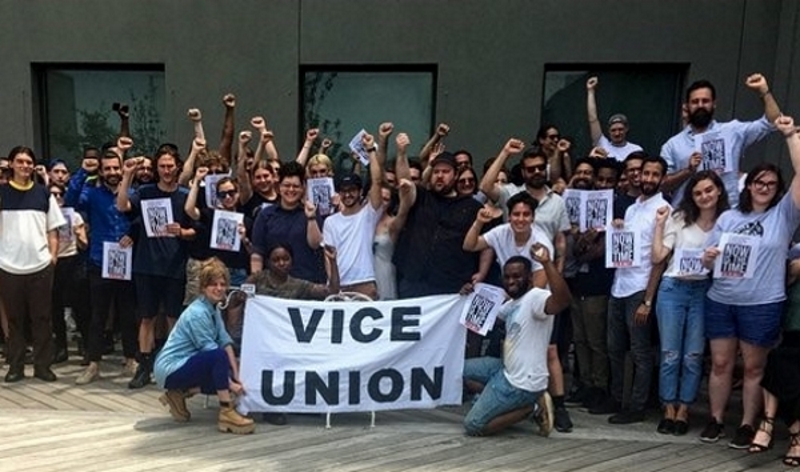 The union, as Kelly says above, is a place where the workers can build a community that is for their own benefit, not for their bosses’ exploitation. In media, McRobert says, that has meant a real sense of ownership over the union. They show up, they put in the work, they are willing to challenge the old ways of doing business that do not make sense to them, and at the end of it, they come out with something strong and valuable.
To Kelly and Jones, both, the most important thing has been to watch their coworkers under- stand that their work has value and that value is being captured by someone else who benefits from their time on Twitter and their weekends on the clock. Asked for final words, Jones simply says, “Journalists are workers and workers need a union.”
See the full story here: https://truthout.org/articles/the-labor-movement-comes-to-virtual-reality-unionizing-digital-media/
Fortnite – Battle Royale weaponises a virtual world
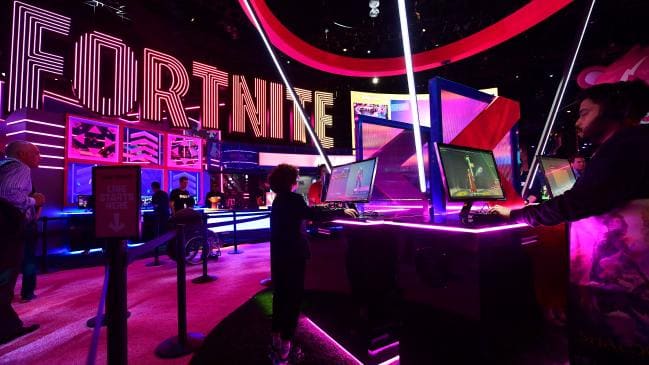 With its cartoon-like graphics, silly outfits and dance moves Fortnite’s visual elements deliberately eschew gritty reality to sanitise the gaming environment. There’s no blood, no gore, just cute avatars shooting at each other.
Besides the disarming visuals, Fortnite is also immensely shareable. The Battle Royale is almost as much about players interacting with each other inside the game as it is about staying alive.
The diverse battle arenas in Fortnite have quickly become digital playgrounds, where users congregate, create and share collective experiences.
This is Fortnite’s secret sauce: the cartoonish combat may be the objective of the game but inhabiting a consequence-free virtual world is the real drawcard.
See the full story here: https://www.theaustralian.com.au/inquirer/battle-royale-weaponises-a-virtual-world/news-story/54cb24ede763195afbebb2d40650aa8b
VIRTUAL REALITY FESTIVAL LAUNCHES IN PARIS
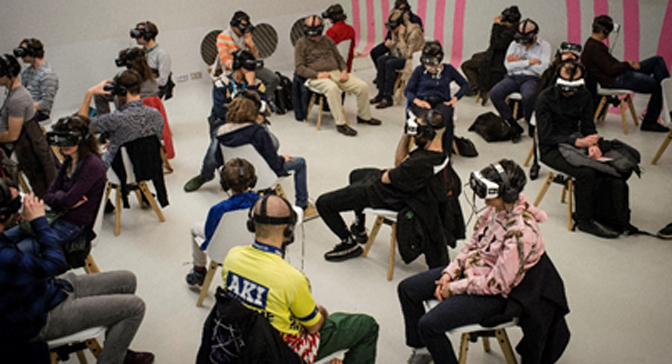 This year NewImages Festival has shortlisted 12 immersive or interactive works, this selection will take you on a tour of the latest in VR creation around the world. From the US (Wolves in the Wall by Pete Billington) to Paraguay (Opus VR), Romania (RocketMan 360), Moldavia (Aripi) and four French works. Open to all genres – fiction, animation, video game, experimental –, it provides an overview of the best in VR production.
The works in the competition will be evaluated by a distinguished jury, presided by US filmmaker Colin Trevorrow, who re-launched the Jurassic franchise with the smash hit Jurassic World (he is currently producing the third chapter in the Jurassic World trilogy)
He will be assisted by talented choreographer and director Bianca Li, who is developing a work of VR; Legendary Entertainment’s Katie Calhoon, executive producer of Alejandro Gonzáles Iñárritu’s installation Carne y Arena; and Taiwanese new media artist Hsin-Chien Huang, whose collaborations with Laurie Anderson were recently screened at the Directors Fortnight in Cannes.
The Festival will also feature a unique focus on Taiwanese VR creation, a selection of multiplayer interactive experiences (including escape games and virtual table football), large-scale immersive installations, concerts mixing the digital with the traditional, and an AR exhibition.
See the full story here: https://www.gameindustry.com/news-industry-happenings/virtual-reality-festival-launches-in-paris/
Facebook Open-sources AI Habitat To Help Robots Navigate Realistic Environments
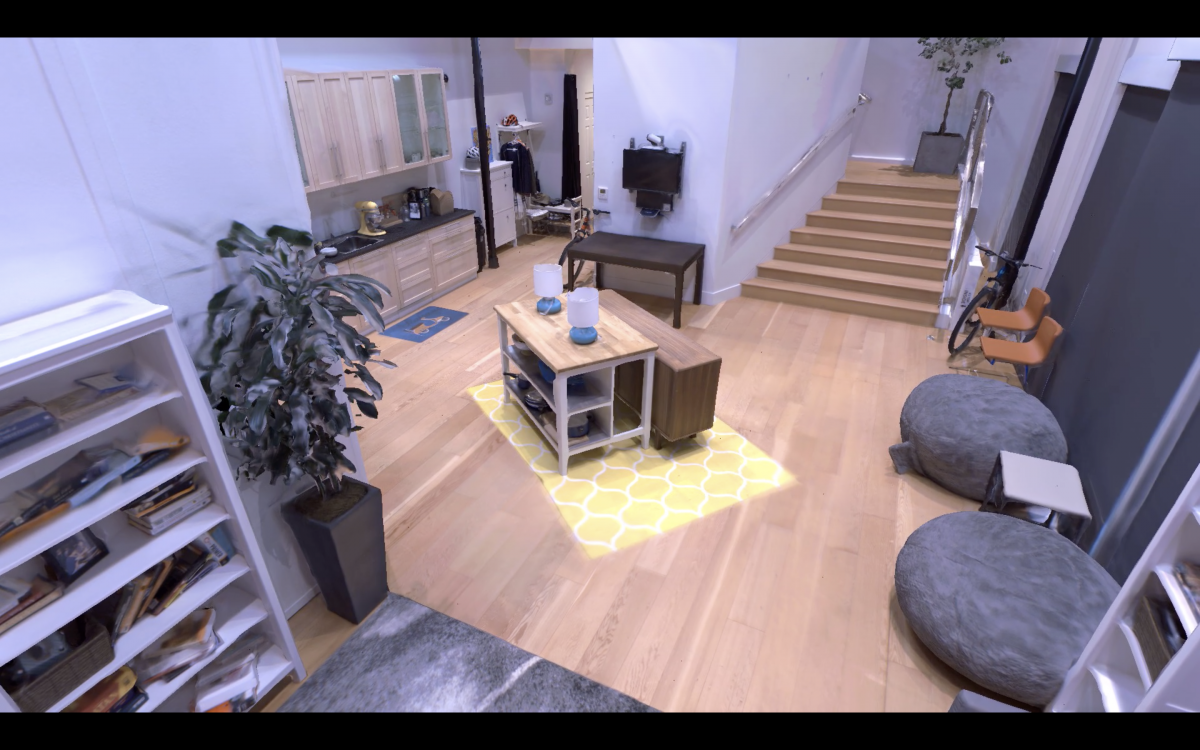 “Habitat-Sim achieves several thousand frames per second (fps) running single-threaded, and can reach over 10,000 fps multi-process on a single GPU, which is orders of magnitude faster than the closest simulator,” a dozen AI researchers said in a paper about Habitat. “Once a promising approach has been developed and tested in simulation, it can be transferred to physical platforms that operate in the real world.”
Facebook Reality Labs, formerly named Oculus Research, is also open-sourcing Replica, a data set of photorealistic 3D environments like a retail store, apartment, and other indoor environments that resemble the real world. AI Habitat can work with Replica but also works with other embodied AI research data sets like Matterport3D for indoor environments.
Facebook VP and chief AI scientist Yann LeCun told VentureBeat the company is interested in robotics because the opportunity to tackle complex tasks attracts the top AI talent.
How AI Habitat works was detailed in an arXiv paper written by a team that includes Facebook AI Research, Facebook Reality Labs, Intel AI Labs, Georgia Institute of Technology, Simon Fraser University, and University of California, Berkeley.
See the full story here: https://uploadvr.com/facebook-open-sources-ai-habitat-to-help-robots-navigate-realistic-environments/
Transmedia Storytelling Initiative launches with $1.1 million gift
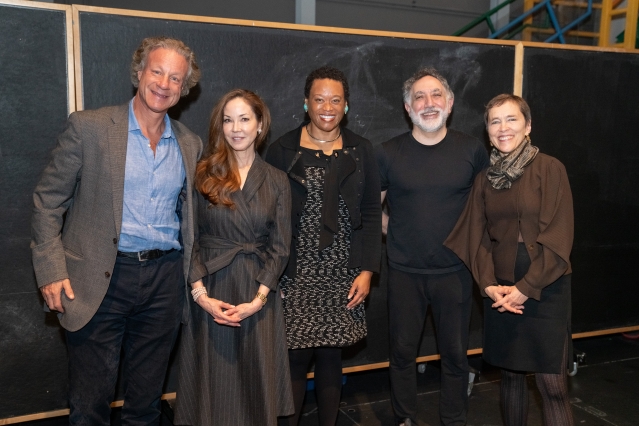 MIT’s School of Architecture and Planning (SA+P), working closely with faculty in the MIT School of Humanities, Arts, and Social Sciences (SHASS) and others across the Institute, has launched the Transmedia Storytelling Initiative under the direction of Professor Caroline Jones, an art historian, critic, and curator in the History, Theory, Criticism section of SA+P’s Department of Architecture. The initiative will build on MIT’s bold tradition of art education, research, production, and innovation in media-based storytelling, from film through augmented reality. Supported by a foundational gift from David and Nina Fialkow, this initiative will create an influential hub for pedagogy and research in time-based media.
The goal of the program is to create new partnerships among faculty across schools, offer pioneering pedagogy to students at the graduate and undergraduate levels, convene conversations among makers and theorists of time-based media, and encourage shared debate and public knowledge about pressing social issues, aesthetic theories, and technologies of the moving image.
Vision for the initiative
Understandings of narrative, the making of time-based media, and modes of alternative storytelling go well beyond “film.” CMS in particular ranges across popular culture entities such as music video, computer games, and graphic novels, as well as more academically focused practices from computational poetry to net art.
See the full story here: http://news.mit.edu/2019/transmedia-storytelling-initiative-launches-0612?fbclid=IwAR0BaxxrZxZ6MslkfATuOiKwEfTiR4AQpGV7gDiPO5h9bqi4R3ghoSFqtMs