From Brueghel to Warhol: AI enters the attribution fray
 The computer, says Honig, can pick up “so many more details, so much more easily”. Take windmills: hundreds of pictures featuring them fill her Brueghel database. The algorithm has picked up identical images of the structures in multiple paintings. It can even show when a replica has been flipped. And it has helped to pinpoint exact copies of lions, dogs and other figures. The workshops of many Renaissance artists were co-working spaces, so the computer technique helps Honig to piece together how different artists, in the family or not, might collaborate. “Rubens comes in and does some figures, and then Jan Breughel comes in and does the horses, the dog and the lion, because he’s ‘Mister Animal’,” Honig says. “And so they fit the things together.”
Elsewhere, AI is being harnessed to address a perennial problem of material legacy that underpins art history: deterioration. For instance, the Verus Art system from start-up Arius Technology in Vancouver, Canada, is deploying a 3D scan–print system — initially devised to study damage to Leonardo da Vinci’s Mona Lisa — to replicate artworks precisely, down to textured brushstrokes and pigment hues. Intended for education, outreach and archives, the ‘backed-up’ paintings might have another use: foiling thieves more discerning than those fooled by Castelnuovo Magra’s cheap copy.
Stanford Team Aims at Alexa and Siri With a Privacy-Minded Alternative
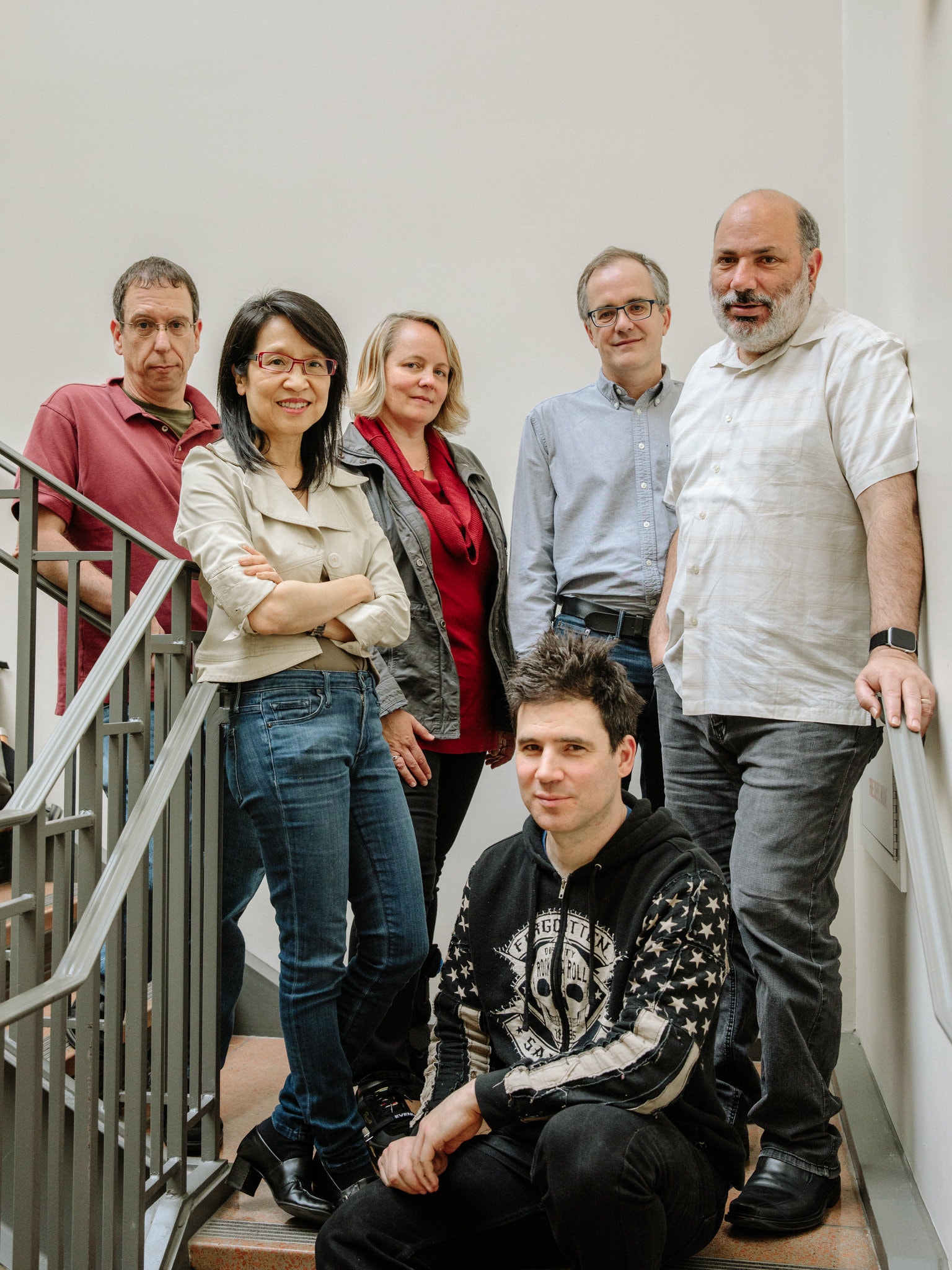
The group at Stanford, led by Monica Lam, a computer systems designer, last month received a $3 million grant from the National Science Foundation. The grant is for an internet service they hope will serve as a Switzerland of sorts for systems that use human language to control computers, smartphones and internet devices in homes and offices.
The researchers’ biggest concern is that virtual assistants, as they are designed today, could have a far greater impact on consumer information than today’s websites and apps. Putting that information in the hands of one big company or a tiny clique, they say, could erase what is left of online privacy.
The system from Dr. Lam’s group is called Almond. In a recent paper, they argued for an approach in which virtual assistant software is decentralized and connected by programming standards that will make it possible for consumers to choose where their information is stored and how it is shared.
A first version of the service was released last year, and the Stanford researchers are now trying to build an alliance with larger technology and consumer companies.
 They also hope Almond can leapfrog existing virtual assistant systems in its ability to understand complex language.
Dr. Lam said the threat to privacy cannot be overstated. For example, she noted that Wynn Resorts in Las Vegas last year installed Amazon Echo devices in rooms.
“Once they said that what happens in Las Vegas stays there,” she said. “Now that’s no longer necessarily true. Now it might end up in Seattle.”
See the full story here; https://www.nytimes.com/2019/06/14/technology/virtual-assistants-privacy.html?
Linklaters launches new ‘virtual reality’ legal internship
 In offering exposure to virtual colleagues and clients, the ‘Linklaters Virtual Programme’ hopes to equip participants with practical legal skills and commercial awareness as they contemplate a career in law.
During the online internship, which starts at the end of this month, students will undergo a series of tasks similar to that completed by Links’ vac schemers and trainees on a day-to-day basis.
The seven-step virtual training programme begins by requiring participants to “pitch to a consortium of banks” that need legal advice ahead of a fintech acquisition. It then rounds off by asking participants to leave a voicemail for a client, before listening to a recording from one of the firm’s partners offering tips on communicating with clients.
Although, according to the website, the programme is meant to take five to six hours to complete, there is no time restriction on completing the tasks — meaning online interns can fit the modules around their studies. The e-learning style tasks are also not assessed, but instead provide model answers allowing students to mark their own work.
See the full story here: https://www.legalcheek.com/2019/06/linklaters-launches-new-virtual-reality-legal-internship/
Automakers eye VR to banish boredom in autonomous cars
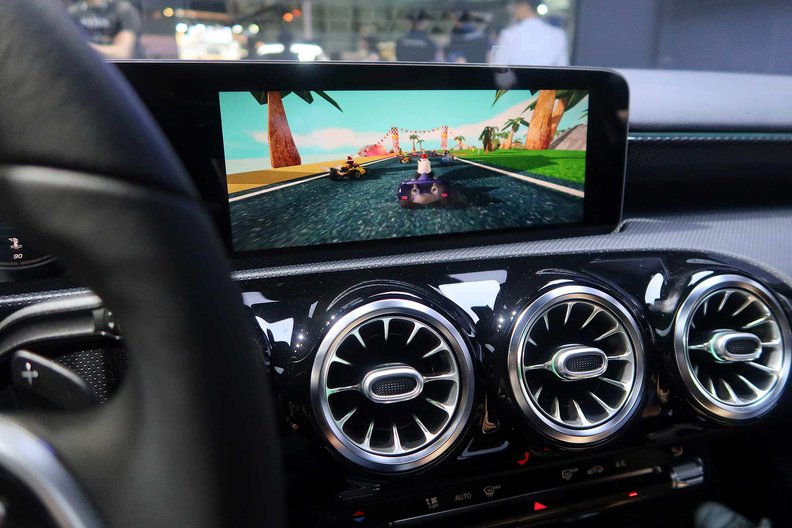 Startup holoride, co-founded by an Audi subsidiary, for example, demonstrated at the show how it wants to turn road trips into virtual reality experiences, allowing passengers to swim with whales or through sunken ships in the deep sea while on a drive.
How Microsoft hopes to preserve privacy while gathering AR map data
In the first of the two papers (“Revealing Scenes by Inverting Structure from Motion Reconstructions”), scientists from Microsoft Research and the University of Florida show that the aforementioned AR point clouds, reconstructed using structure from motion or simultaneous localization and mapping (SLAM), retain enough information to rebuild detailed scene images even after the source pictures have been discarded. Their novel AI system reconstructs color images in the scene given 2D projections of sparse 3D points and their features, even in the absence of attributes like visibility and in cases where the points are irregularly distributed.
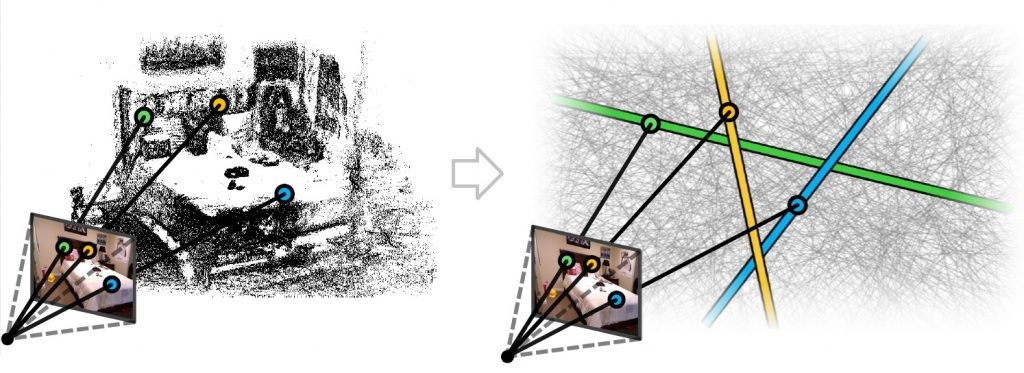 The second paper (“Privacy Preserving Images-Based Localization”) — the work of ETH Zurich and Microsoft’s Mixed Reality & AI lab — posits a privacy-preserving approach to AR localization that lifts 3D points in maps to randomly oriented 3D lines that pass through the original points. The new representations bear little resemblance to the original scenes on their face, but still allow for precise positioning because of the close correlation among the 2D image points and the 3D lines.
See the full story here: https://venturebeat.com/2019/06/13/how-microsoft-hopes-to-preserve-privacy-while-gathering-ar-map-data/
Laurie Anderson: ‘It’s a great time to be creating new realities’
 The moon is the focus of the latest work from avant-garde pioneer Laurie Anderson, which is fitting, given that she’s a former Nasa artist in residence. To the Moon, her new collaboration with Taiwanese artist Hsin-Chien Huang, has allowed Anderson to create a typically definition-defying journey. She says of the exhibition, which reaches Manchester international festival on 12 July: “I’m happiest when I can’t really define the work. To the Moon is an experiment in hybrids, seeing how these various media can come together and share images, stories and music.”
E3 2019: Will Microsoft’s ‘Minecraft Earth’ take augmented reality beyond ‘Pokémon Go’?

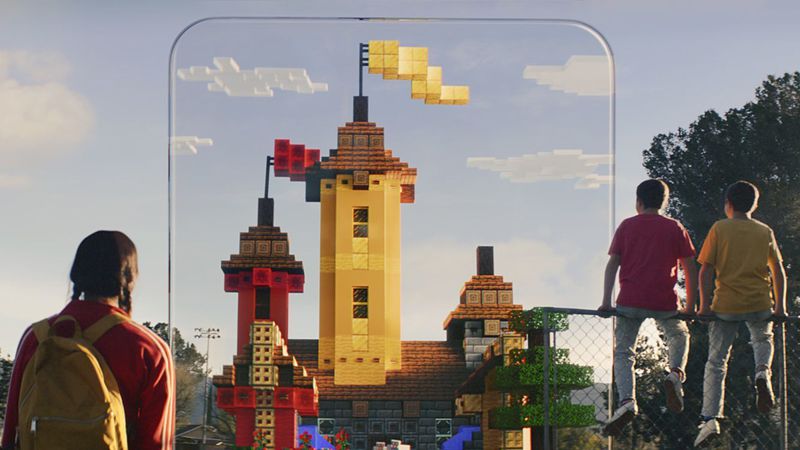 All eyes will be on “Minecraft Earth,” an augmented reality game coming to Android and iOS devices, which will begin beta testing in the coming weeks. Microsoft hopes the title will show that there’s far more to the experimental gaming space than “Pokémon Go.”
East London’s OTHERWORLD Virtual Reality Arcade
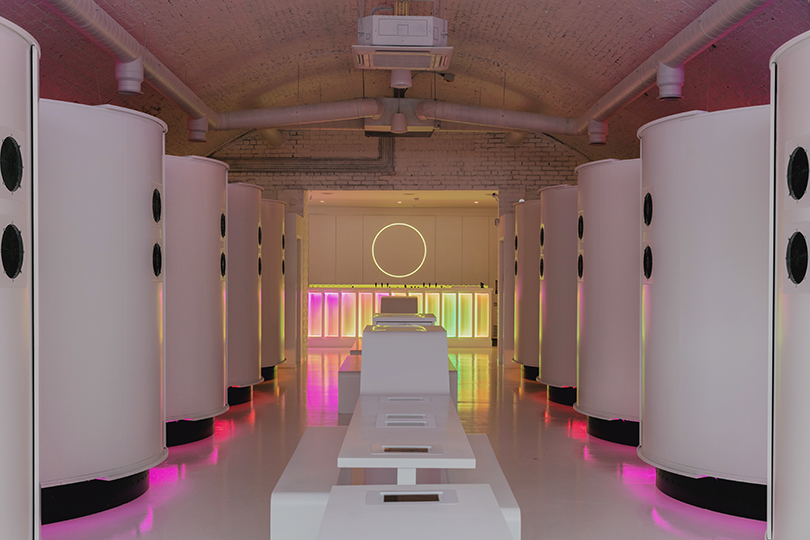 If you’ve been in London recently you may have heard talk of OTHERWORLD, a unique virtual reality arcade located within a converted railway arch. The multi-sensory immersive concept from The Dream Corporation was designed by leading London-based architectural firm Red Deer and hosts 14 virtual reality rooms as well as a craft beer and cocktail bar and pan-pacific inspired poké kitchen.
Red Deer approached the design of this space as if it were an art gallery, reaching for inspiration from lighting artists Dan Flavin and James Turrell to break down reality.
Each immersion room is a parallel universe of possibility, featuring custom-built booths (the only in the world) that are integrated with extra-sensory effects that stimulate through heat, wind, rumble, and scent for the VR experience. From there choose from 16 experiences – from climbing Mount Everest to fighting in a zombie apocalypse and so much more.
See the full story here: https://design-milk.com/east-londons-otherworld-virtual-reality-arcade/