NAB 2018: Immersive Leisure With AR, Gamification, and VR
 During a Destination NXT presentation at NAB Show, Media Sherpa managing director John Canning moderated a panel on “redesigning the consumer experience” with “AR Adventures, Gamified Gatherings and VR Vacations.” Canning asked the panelists what drew them to creating immersive media. Fulldome.pro chief operating officer Stephen Powers sees this “new media as having the unique power” to “lift the human spirit.” For Vari Parks chief executive Louisa Spring, it’s her love of VR and desire to bring the experience to more people.
In the U.K., Spring’s company is building a 3,000-seat eSports arena that will feature VR and AR “orbiting around it.” “VR was the first time I saw gaming and storytelling working together,” she said. “It’s also important to take it out of the home, because a lot of families can’t afford the gaming equipment.”
Adobe creative resident and experiential designer Craig Winslow said he fell for the combination of projection mapping and AR. He just launched “Brilliant” at the Neon Museum, which brings old neon signs back to life. “You can see physical relics and then see them change, without a headset,” he said. “For me, it’s a search to create that kind of magic.”
Canning noted that, “we can get hung up with the limitations of the technology.” “But if we don’t do the first iteration, we’ll never get where we want to go,” he said.
See the full story here: http://www.etcentric.org/nab-2018-immersive-leisure-with-ar-gamification-and-vr/
China 3D VR Virtual Reality Glasses Advanced Technology
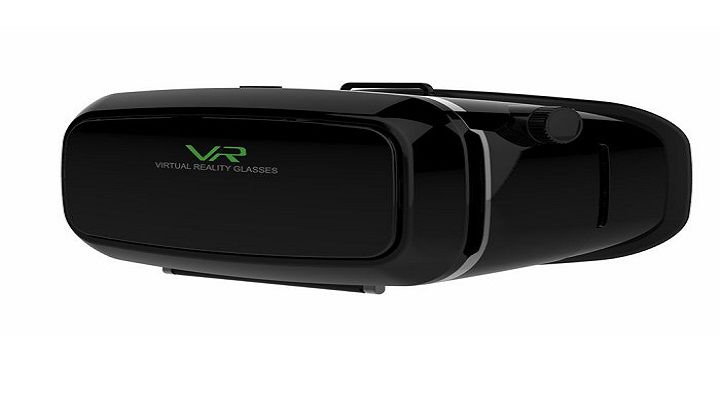 The major leading players in China’s 3D VR virtual reality glasses industry are Samsung, Carl Zeiss, Baofeng, Sony, Razer, HTC, Epson, Daqri, AMD, Atheer, Meta, CastAR, Skully, HP, Antvr, Lumus, Fove, Sulon, Jinweidu,Virglass and Emaxv. China’s 3D VR virtual reality glasses are utilized in home use as well as in commercial use. The various types of 3D VR virtual reality glasses available in China are PC/Home Console, Headset AR and other types.
See the full story here: http://www.centraljersey.com/china-d-vr-virtual-reality-glasses-advanced-technology/article_31b1e6b4-3dff-11e8-9b8c-5cb9017b7710.html
China’s Built a Road So Smart It Will Be Able to Charge Your Car
 The government says 10 percent of all cars should be fully self-driving by 2030, and Qilu considers that an opportunity to deliver better traffic updates, more accurate mapping and on-the-go recharging of electric-vehicle batteries—all from the ground up.
“The highways we have been using can only carry vehicles passing by, and they are like the 1.0-generation product,” said Zhou Yong, the company’s general manager. “We’re working on the 2.0 and 3.0 generations by transplanting brains and a nervous system.”
The road has three vertical layers, with the shell of see-through material allowing sunlight to reach the solar cells underneath. The top layer also has space inside to thread recharging wires and sensors that monitor temperature, traffic flow and weight load.
The solar panels spread across two lanes, which feel no different to a driver than the regular road, and are thinner than a 1-yuan coin standing on its edge. The test road is too short to deliver wireless recharging at the moment, Zhou said.
China will have 30 million vehicles with different levels of autonomous features by 2025, said Yu Kai, founder of Horizon Robotics Inc., a Beijing-based startup developingsemiconductors for those types of cars.
Construction took 55 days on an existing part of the highway, and the road opened to traffic in December. Solar-powered heating elements keep the section snow- and ice-free.
See the full story here: https://www.bloomberg.com/news/features/2018-04-11/the-solar-highway-that-can-recharge-electric-cars-on-the-move
Following Capitol Hearings, Facebook Drops Opposition to California Privacy Legislation

Fake new inquiry. File photo dated 03/11/15 of a woman using her phone under a Facebook logo, as the social network has told the Government's fake news inquiry it will expand its investigation into whether Russian agents attempted to influence the Brexit vote. Issue date: Wednesday January 17, 2018. In a letter to Damian Collins, chair of the Digital, Culture, Media and Sport (DCMS) Committee, Facebook's head of policy in the UK, Simon Milner, said the social media giant would now search for "clusters engaged in coordinated activity around the Brexit referendum" which appear to have originated in Russia. See PA story POLITICS Russia. Photo credit should read: Niall Carson/PA Wire URN:34504208
If approved, the ballot measure would enact a new law called the California Consumer Privacy Act, which aims to enforce more transparency over data stored by companies, and give consumers a way to opt out of companies selling their data. The measure, which is sponsored by local real estate developer Alastair Mactaggart, is on the November ballot in California.
It is being opposed by the California Chamber of Commerce. A campaign against the bill has gotten financial support from Facebook, Google, Comcast, AT&T and Verizon, with Facebook donating an initial $200,000. But on Wednesday afternoon, Facebook said that it was no longer going to back the opposition to the ballot measure.
See the full story here: http://variety.com/2018/digital/news/facebook-california-privacy-legislation-1202751054/
Group Behind JPEG Unveils New ‘visually lossless’ Compression Standard for VR/AR and More
 This week at NAB Show in Las Vegas, the Joint Photographic Experts Group (JPEG), the international committee behind the titular image compression standard, unveiled JPEG XS, a new format that is touted as a lower energy compression solution that provides higher quality images at low latency over broadband networks such as 5G.
Considering the current state of livestreaming VR video, including 360 & 180-degree video and the burgeoning field of light field-based captures, a new compression standard could mean higher resolutions and frame rates, making better quality streaming VR video a real possibility. 5G networks, which in recent tests have provided users 442 Mbps download speeds, are poised to address some of the underlying issues of streaming VR video quality, but compression, the JPEG XS creators say, is key.
Fraunhofer IIS, one of the co-developers behind JPEX XS, says the new ISO mezzanine codec standard offers “visually lossless quality.” The new standard supports to 8K and features a frame rate from 24 to 120fps. Compression ratios range up to 6:1.
“For the first time in the history of image coding, we are compressing less in order to better preserve quality, and we are making the process faster while using less energy,” says working group head Professor Touradj Ebrahimi in a prepared statement. “We want to be smarter in how we do things. The idea is to use less resources, and use them more wisely. This is a real paradigm shift.”
While JPEX XS looks to supplant JPEG, it isn’t going to do so overnight...
MIT’s newest headset – Intelligence Augmentation
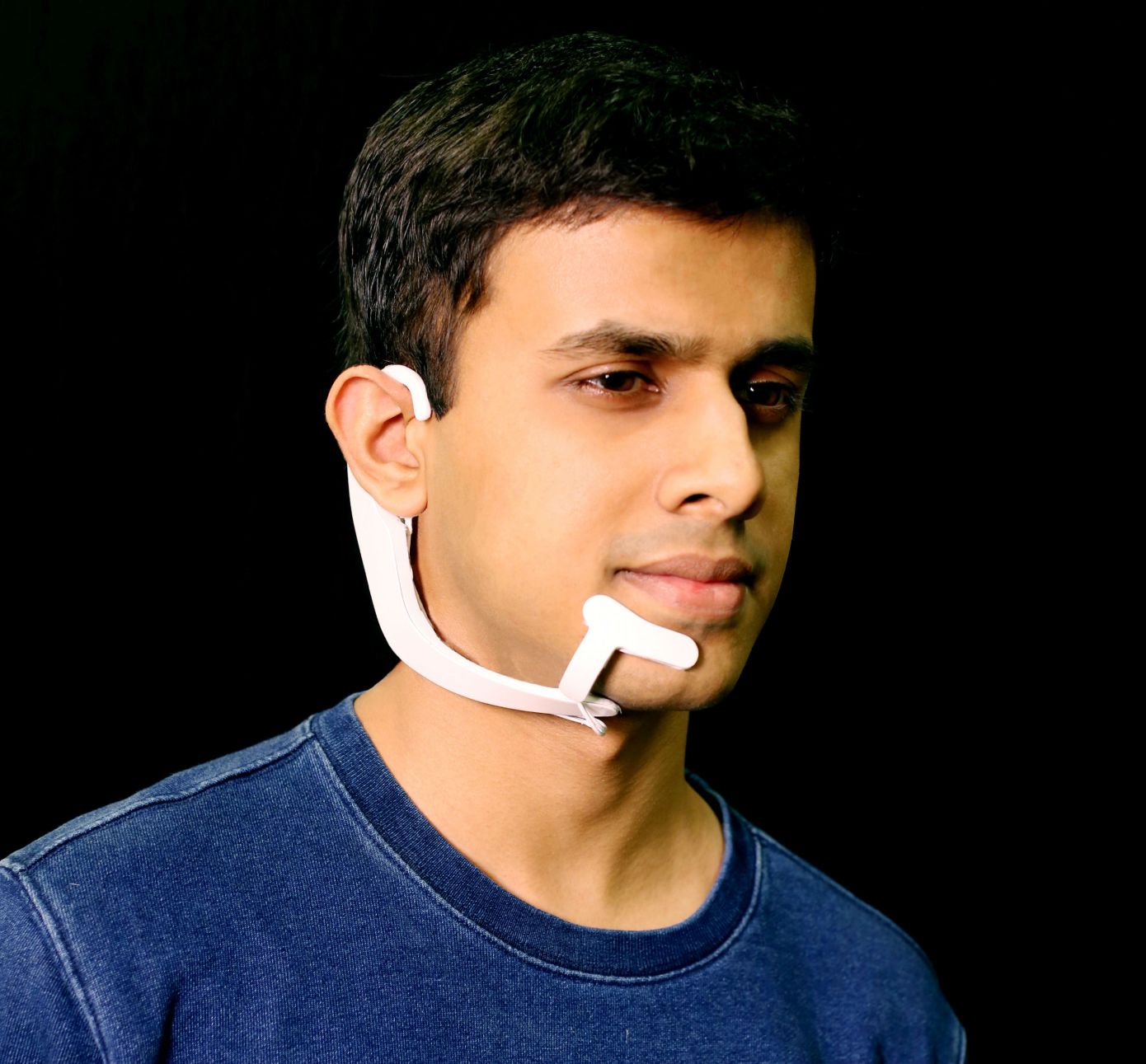 AlterEgo is a headmounted — or, more properly, jaw-mounted — device that’s capable of reading neuromuscular signals through built-in electrodes. The hardware, as MIT puts it, is capable of reading “words in your head.”
“The motivation for this was to build an IA device — an intelligence-augmentation device,” grad student Arnav Kapur said in a release tied to the news. “Our idea was: Could we have a computing platform that’s more internal, that melds human and machine in some ways and that feels like an internal extension of our own cognition?”
The school tested the device on 10 subjects, who essentially trained the product to read their own neurophysiology. Once calibrated, the research team says it was able to get around 92 percent accuracy for commands — which, honestly, doesn’t seem too far off from the accuracy of voice commands for the assistants I’ve used.
NBCUniversal’s VR strategy focuses on attractions, not headsets
“It isn’t a business yet,” said Heatherly. “There’s a lot of negativity around VR. I happen to be bullish about the platform, but I think the technology was far from prime time for most users. So the hype bubble got out of control.”
While home VR isn’t a business yet, Heatherly noted that one aspect of virtual reality has the attention of NBCUniversal, and that’s location-based VR. He pointed to The Void, ...
“We’re really focused on location-based VR right now,” said Heatherly. “If you look at how The Void has done with Star Wars or what Dreamscape has done with Alien Zoon — all of the location VR things that have opened have completely sold out.”
FoxNext Games studio president Aaron Loeb added to that during the GamesBeat panel.
See the full story here: https://venturebeat.com/2018/04/09/nbcuniversals-vr-strategy-focuses-on-attractions-not-headsets/
NAB 2018: Potential Impact of AI on Storytelling, Moviemaking
 “There’s an enormous amount of complexity in the stories we should be telling,” he said. “And a lot of these stories don’t get out because there’s a misunderstanding of what audiences want. You need to be able to better understand the risk.”
Chang asked if AI-powered machines will take over storytelling. “Not in the short term for two reasons,” said Bergquist. “First, it’s extremely hard to do. Second, you won’t be able to build machine brands that resonate with humans. It has to be human in nature. Long term? You’ll see lots of mass-produced level content that’s extremely automated; higher level content will be less automated.”
Kulczar notes that, for now at least, “AI is a tool like any other tool and is only good as the people who wield it.”
See the full story here: http://www.etcentric.org/nab-2018-potential-impact-of-ai-on-storytelling-moviemaking/