Annual BBC report says the service is struggling to keep up with Netflix and Amazon
 BBC director general Tony Hall says the BBC is going to have to reinvent itself, and that this year, they’ll be working to increase efforts in online video and its iPlayer application, focusing on personalization, UX improvements, and more content. The companion radio application will also receive some upgrades, which will include a “growing range of podcasts.” The report notes that iPlayer will need to be more than just a place for people to catch up on something they missed live: it needs to be a destination for viewers and listeners.
The report concludes with a stark plea: there is only so much that the BBC can achieve with cutting costs, and if it wants to remain competitive in a marketplace dominated by US streaming companies, it will need new revenue to survive.
See the full story here: https://www.theverge.com/2018/3/28/17173218/bbc-annual-report-budget-amazon-netflix
Disney’s ultra-realistic Millennium Falcon flight simulator will need 8 GPUs to run
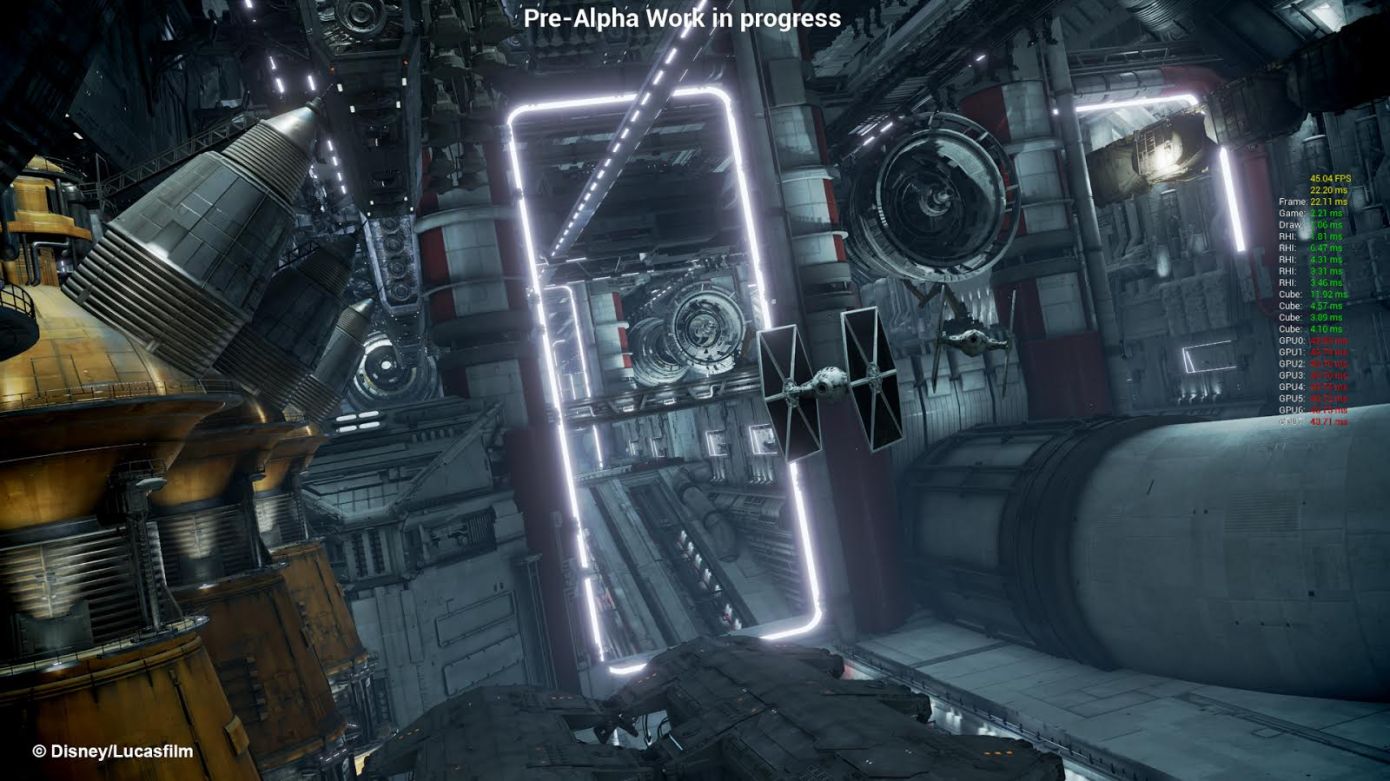 Disney is building a real-time, ultra-high-res flight simulator for the Millennium Falcon and they’re powering it with eight daisy-chained high-end Nvidia GPUs.
Each and every implementation of the sim will be powered by a Boxx workstation running eight Nvidia Quadro P6000 GPUs connected via Quadro SLI, so this definitely won’t be something available to consumers. Disney had to build multi-GPU workflows, which they helped Epic Games integrate into the company’s Unreal Engine which will continue to use that code moving forward.
This whole experience will be just one part of Star Wars: Galaxy’s Edge, a new section of Disneyland Park at the Disneyland Resort in California and Disney’s Hollywood Studios at Walt Disney World in Florida, which will encapsulate a lot of the nerd canon of the Star Wars universe into awesome experiences that take Disney’s theme parks and resorts to new technical ends.
See the full story here: https://techcrunch.com/2018/03/29/disneys-ultra-realistic-millennium-falcon-flight-simulator-will-need-8-gpus-to-run/
The immersive audio you’ve never heard that could revolutionize virtual reality
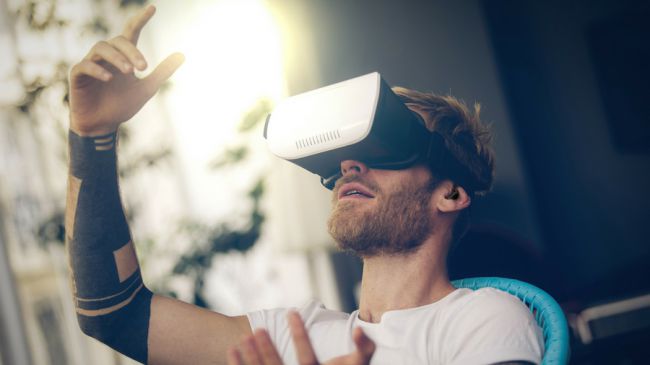 Built around a 360-degree sphere, so-called immersive or spatial audio tech is being designed by the likes of Dirac, DTS, Dolby and THX primarily for virtual reality (VR) headsets, but who can ignore the world’s 2.5 billion smartphones? The race is on to produce the definitive format for 3D audio.
Designed primarily for VR, but also for mobile devices, immersive audio has three parts to it.
The first is channels...
The second part of immersive audio is ambisonics.
“Ambisonics are spherical sounds that are captured using specific microphones that capture sound pressures coming from every direction,”...
The third part of immersive audio is audio objects.
An audio object is a mono track accompanied by metadata that specifies the exact position of that sound....
See the full story here: https://www.techradar.com/news/the-immersive-audio-youve-never-heard-that-could-revolutionize-virtual-reality
How an L.A. Hospital Is Using Virtual Reality to Prep Staff for High-Stress Scenarios
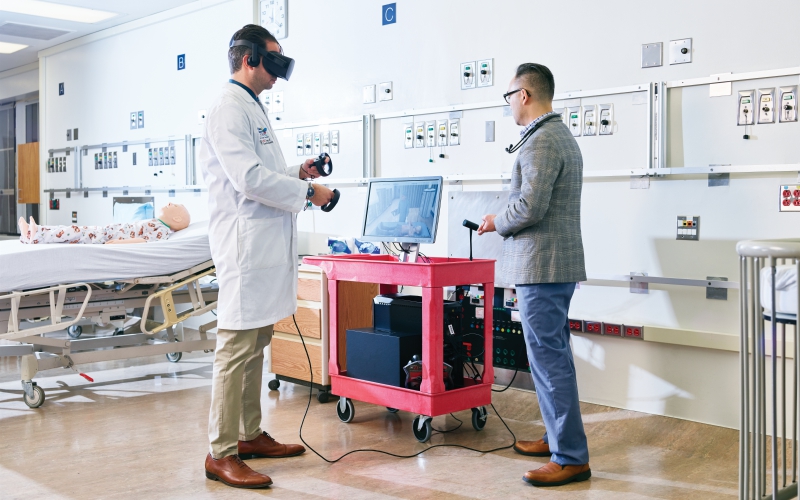 I’m in the Culver City offices of BioflightVR, testing a virtual reality simulation that Children’s Hospital Los Angeles relies on to help train doctors.
In my case, the effect is the opposite: The ordeal has made my heart race and my palms sweat, but that’s sort of the point, says company president and CEO Randy Osborn, who’s talking me through the simulation (“You win,” he laughs after guiding me to the right meds to save our patient). Unlike medical training with mannequins—the method of choice to practice for pediatric emergencies of this sort—the immersive nature of VR intensifies the experience. Even if the animation isn’t always Pixar-worthy, you’re pulled into the scene, owing to what designers call “psychological fidelity.” They want medical residents to feel stress, but not so much that it’s incapacitating.
See the full story here: http://www.lamag.com/mag-features/childrens-hospital-los-angeles-vr/
Researchers Exploit, Saccadic Suppression, Natural Quirk of Human Vision for Hidden Redirected Walking in VR
There’s a number of ways to implement redirected walking, but the strengths of this saccade-driven method is that it’s hidden from the user, widely applicable to VR content, and dynamic, allowing the system to direct users away from objects newly introduced into the environment, and even moving objects, the researchers say.
The basic principle behind their work is an exploitation of a natural quirk of human vision—saccadic suppression—to hide small rotations to the virtual scene. Saccades are quick eye movements which happen when we move our gaze from one part of a scene to another. Instead of moving in a slow continuous motion from one gaze point to the next, our eyes quickly dart about, when not tracking a moving object or focused on a singular point, a process which takes tens of milliseconds.
Saccadic suppression occurs during these movements, essentially rendering us blind for a brief moment until the eye reaches its new point of fixation. With precise eye-tracking technology from SMI and an HTC Vive headset, the researchers are able to detect and exploit that temporary blindness to hide a slight rotation of the scene from the user. As the user walks forward and looks around the scene, it is slowly rotated, just a few degrees per saccade, such that the user reflexively alters their walking direction in response to the new visual cues.
See the full story here: https://www.roadtovr.com/researchers-exploit-natural-quirk-of-human-vision-saccade-hidden-redirected-walking-vr-gtc-2018/