Apple applies for patent that lets riders virtually fight zombies or hang glide in self-driving cars
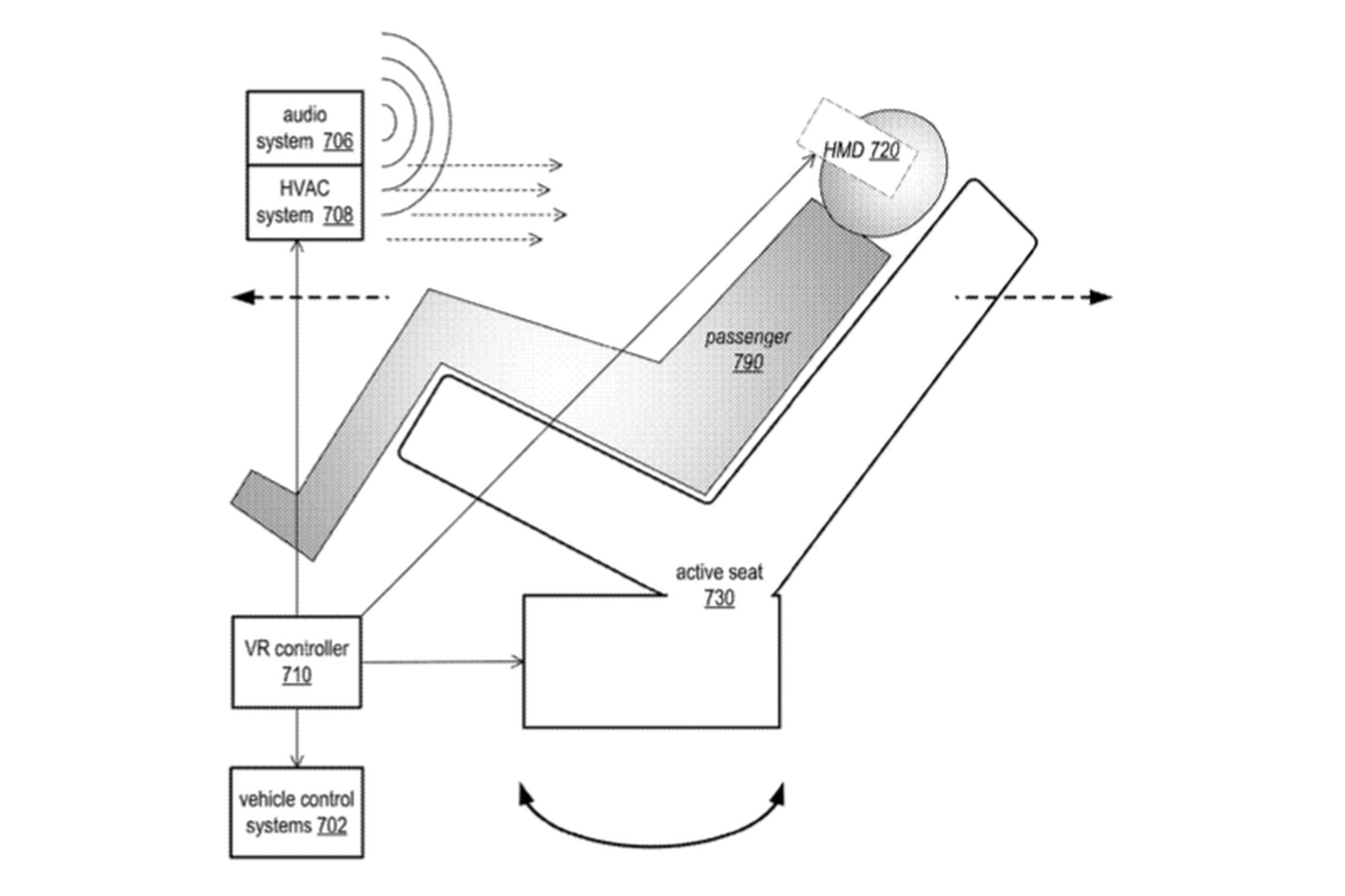 The patent, applied for in September 2017 and published last week, is framed as a way to “address problems with vehicles in motion that may result in motion sickness for passengers” by replacing views of the real world with virtual environments. On top of that, the patent proposes at least one VR controller that generates virtual content for projection and a mechanism for projecting onto windows of the vehicle. The visuals could then sync with an “active seat” and motion sensors, integrating the physical effects of driving (like turning around corners or stopping at a red light) into these virtual environments. Augmented reality is also mentioned, where content is displayed in a view of the real world in the front of the vehicle.
Passengers may choose to have relaxing virtual experiences … such as floating down a river or soaring over the landscape in a hang glider, or exciting virtual experiences such as a car chase or driving through a post-apocalyptic wasteland with zombies attacking … if the vehicle stops at a red light or for some other reason when fleeing zombies … the virtual experience may cause the vehicle to appear to stall and not allow the car to be restarted until the light turns green to build suspense.
See the full story here: https://www.theverge.com/2018/4/2/17188782/apple-virtual-augmented-reality-patent-self-driving-cars
Better story here: http://www.etcentric.org/apple-submits-vr-patents-for-next-gen-autonomous-vehicles/
Apple Submits VR Patents for Next-Gen Autonomous Vehicles
Myra Mirrors Wants to Outfit Every Bathroom With An AR-Enabled Mirror
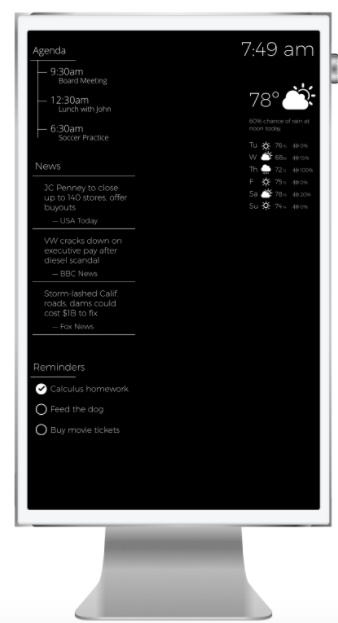 In the summer of 2015, Bertolet founded Mississippi-based Myra Mirrors with his co-founder Pontus Andersson to build their own line of smart mirrors along with customizable smart glass surface software, ReflektOS.
“What we’re doing with our software is providing developers with a clean, transparent canvas, if you will, when they’re creating the application,” says Bertolet. “We want them to create solid augmented reality applications. We will license this to developers to get into our facet store and it will be free of charge.”
Their first products are all-in-one reflective mirrors with a 10-inch makeup mirror and a 27-inch wall mirror options. They come equipped with an operating system kit, augmented reality capabilities, and an in-device app store. While customers can add cameras if they prefer to do so, the hardware doesn’t come with one embedded to protect the customers’ privacy.
“Our RGBW light bar helps you control the lighting on your face, if you want to simulate different environments with makeup,” says Bertolet. “It functions as a premium Bluetooth stereo speaker as well.”
The Myra Mirrors team is in the process of raising a funding round after forming strategic partnerships at Consumer Electronics Show expo earlier this year. The funds will help the Mississippi-born startup kickstart production and scale its product after perfecting the prototypes.
See the full story here: https://hypepotamus.com/companies/myra-mirrors/
I watched the national championship in virtual reality and it was sports purgatory
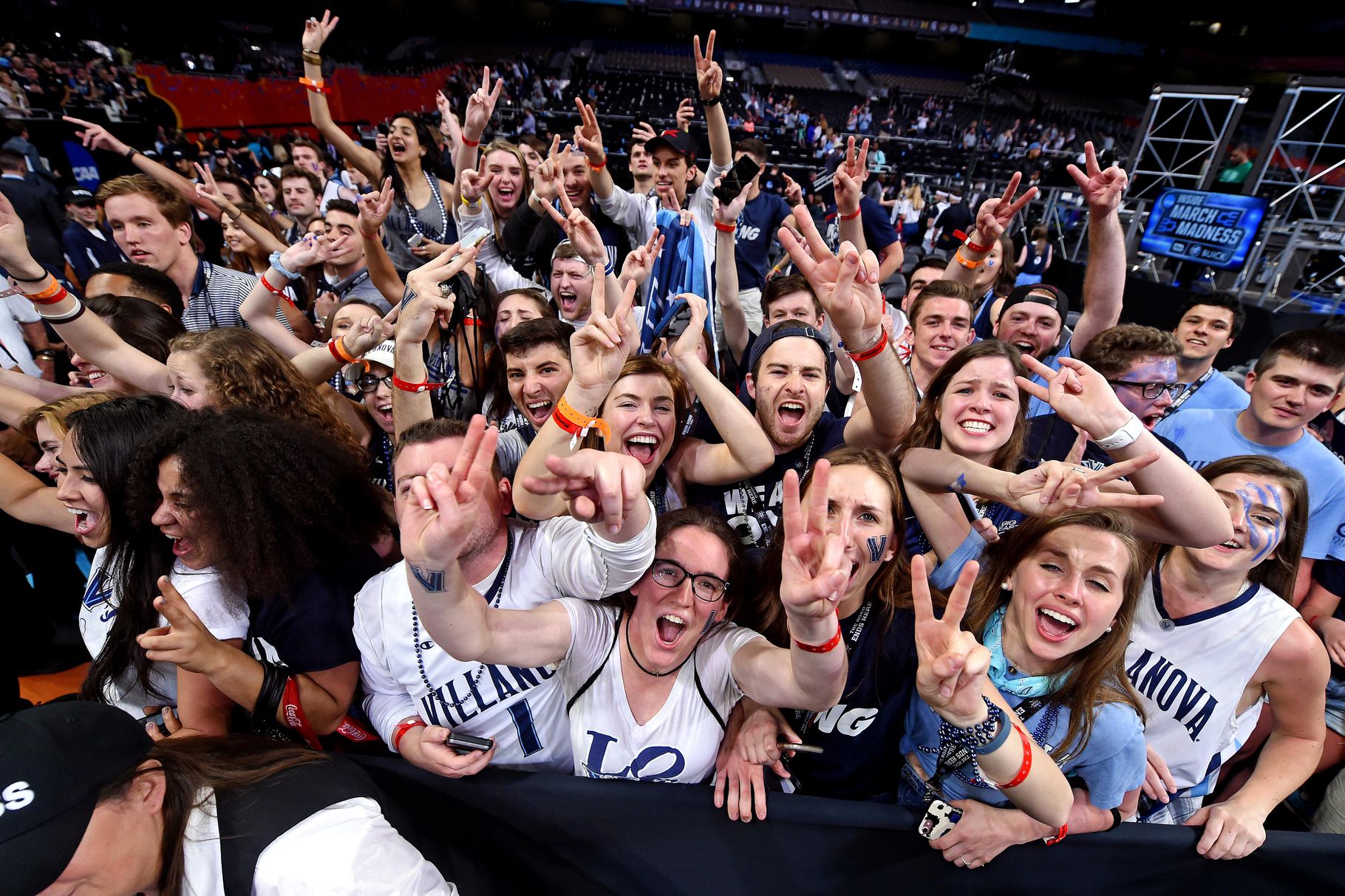 You can’t be in two places at once, but I’m currently sitting on the Michigan bench of the men’s NCAA basketball national championship game in San Antonio. I’m also in an overly-air conditioned private room of Jay-Z’s 40/40 club in New York City. The downside is that in order to bend space and time, I must keep a bulky virtual reality set strapped to my head. I look like a total dweeb and I feel slightly nauseous.
This event is a publicity thing for Intel’s VR experience. They partnered with Turner Sports to broadcast 21 of the March Madness games in virtual reality this year. A bunch of tech bloggers, many marketing people, and one Steve Lavin — the former head coach of UCLA and St. John’s who now calls games for the VR broadcasts — mill about, drinking beers, eating wings, and strapping these plastic boxes to their heads.
...
“It’s like a VCR,” Lavin says. “When they came out, everyone was like, ooh, a VCR! We didn’t know it could be better. Same with a microwave. Now the standards are so high, we’re always waiting for technology to improve.”
Perhaps Lavin is right — maybe the VR experience will change and become the default as it gets better. Maybe with a smaller headset and great WiFi, watching a game like this with your friends could foster a sense of community and engagement.
But as it stands now, this type of viewing experience doesn’t feel very human — and humanity is sports’ saving grace.
See the full story here: https://www.sbnation.com/2018/4/3/17192218/villanova-michigan-ncaa-national-championship-game-virtual-reality-40-40-club-jay-z
To protect artificial intelligence from attacks, show it fake data
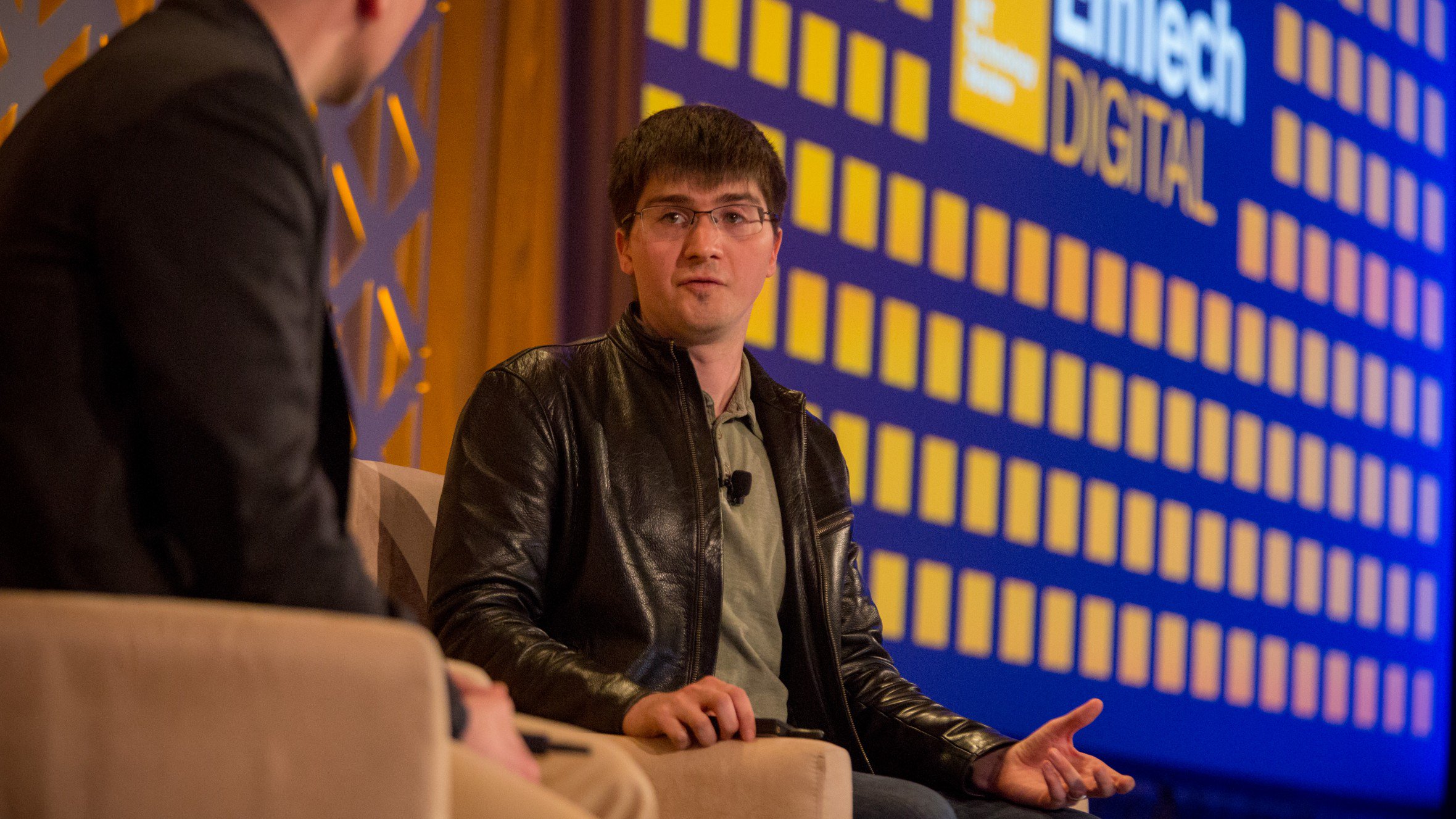 At MIT Technology Review’s annual EmTech Digital conference in San Francisco this week, Google Brain researcher Ian Goodfellow explained how researchers can protect their systems.
Goodfellow is best known as the creator of generative adversarial networks (GANs), a type of artificial intelligence that makes use of two networks trained on the same data.
...he focused on his current main research interest, defending machine-learning systems from being fooled in the first place. He says for earlier technologies, like operating systems, defense of the technology was added afterwards, a mistake he doesn’t want made with machine learning.
“I want it to be as secure as possible before we rely on it too much,” he says.
...bots or spammers are trying to use similar methods to look like more legitimate traffic and accomplish their goals.
Luckily, Goodfellow says, there is still time to prepare our systems to defend themselves from AI-enabled attacks.
See the full story here: https://www.technologyreview.com/s/610656/to-protect-artificial-intelligence-from-attacks-show-it-fake-data/
Fake news 2.0: personalized, optimized, and even harder to stop
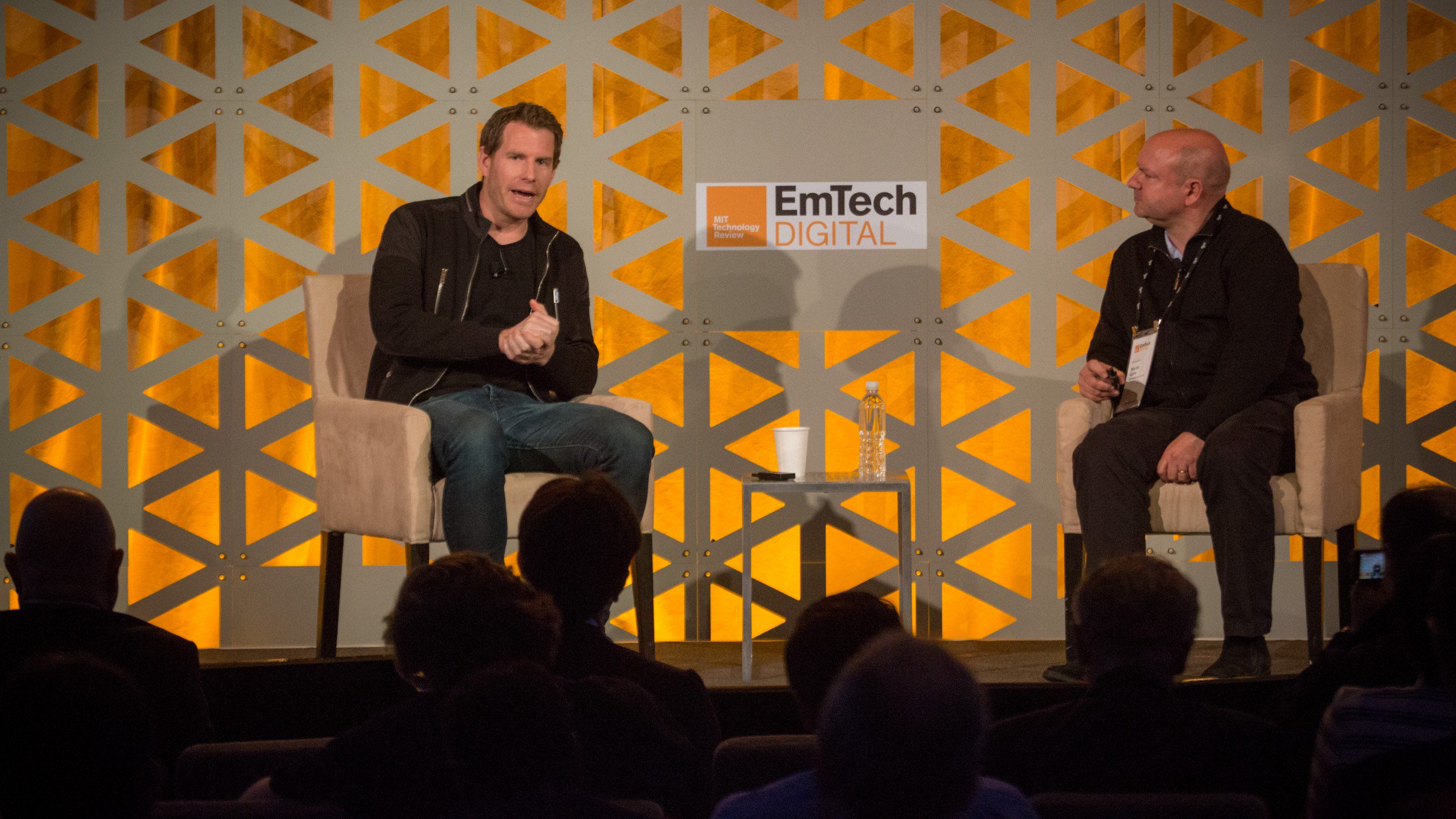 Sean Gourley, founder and CEO of Primer, a company that uses software to mine data sources and automatically generate reports for US intelligence agencies via In-Q-Tel, the intelligence community’s investment fund, told a conference in San Francisco that the next generation of fake news would be far more sophisticated thanks to AI.
“The automation of the generation of fake news is going to make it very effective,” Gourley told the audience at EmTech Digital, organized by MIT Technology Review.
Technology such as Primer’s could easily be used to generate convincing fake stories automatically, he said, and that could mean fake reports tailored to an individual’s interests and sympathies and carefully tested before being released, to maximize their impact. “I can generate a million stories, see which ones get the most traction, double down on those,” Gourley said.
Gourley added that fake news has so far been fed into social-media platforms like Facebook essentially at random. A more sophisticated understanding of network dynamics, as well as the mechanisms used to judge the popularity of content, could amplify a post’s effect.
See the full story here: https://www.technologyreview.com/s/610635/fake-news-20-personalized-optimized-and-even-harder-to-stop/
This guppy is more than an AR Tamagotchi — it eats your feelings, too
 TendAR. The augmented reality mobile game is the latest from indie studio Tender Claws, and it stars an adorable guppy that eats your feelings and craves information from the real world. But it’s much more than just a new take on a Tamagotchi. TendAR will be available in July for Android devices.
TendAR actually starts out as an “emotion fortune-telling app” that you can take to parties and play with other people. You hold your phone up and scan a friend’s face, and the app will detect the emotions in their expression. You then capture these feelings — which appear as colorful blobs — and get a comedic little readout for your trouble.
“As the narrative of the game evolves, you learn that it’s the character, the guppy, that’s an AI algorithm that’s deciphering these emotions behind the scenes,” said Tender Claws cofounder Samantha Gorman in an interview with GamesBeat. “He wants to start coming into your world. He starts to subtly appear in different parts of the game, and then becomes more and more present as the game goes on.”
I got a taste of what it’s like to interact with an AR creature when I tried the demo at the Game Developers Conference in San Francisco last week.
The entire experience wasn’t just me making faces, though. Eventually, the guppy asked me to find interesting objects in the environment to show it. And it was social, as well — I played with another person, and the guppy asked us to sync up our facial expressions as best as we could. It was a very charming demo, especially since it felt like its mechanics were cleverly AR-native rather than just plopping a virtual game world in a real-world space.
Gorman says that TendAR can be an “AR Tamagotchi indefinitely,” but the guppy does have his own narrative arc that evolves over several sessions. At first, he’s not a sentient being, then as you interact more with him, he becomes increasingly curious about the world.
Gorman is the game’s interactive narrative designer, and she works with a writer’s room of six to eight writers including a playwright.
See the full story here: https://venturebeat.com/2018/03/31/this-guppy-is-more-than-an-ar-tamagotchi-it-eats-your-feelings-too/
Magic Leap ships its much anticipated augmented reality device under tight security
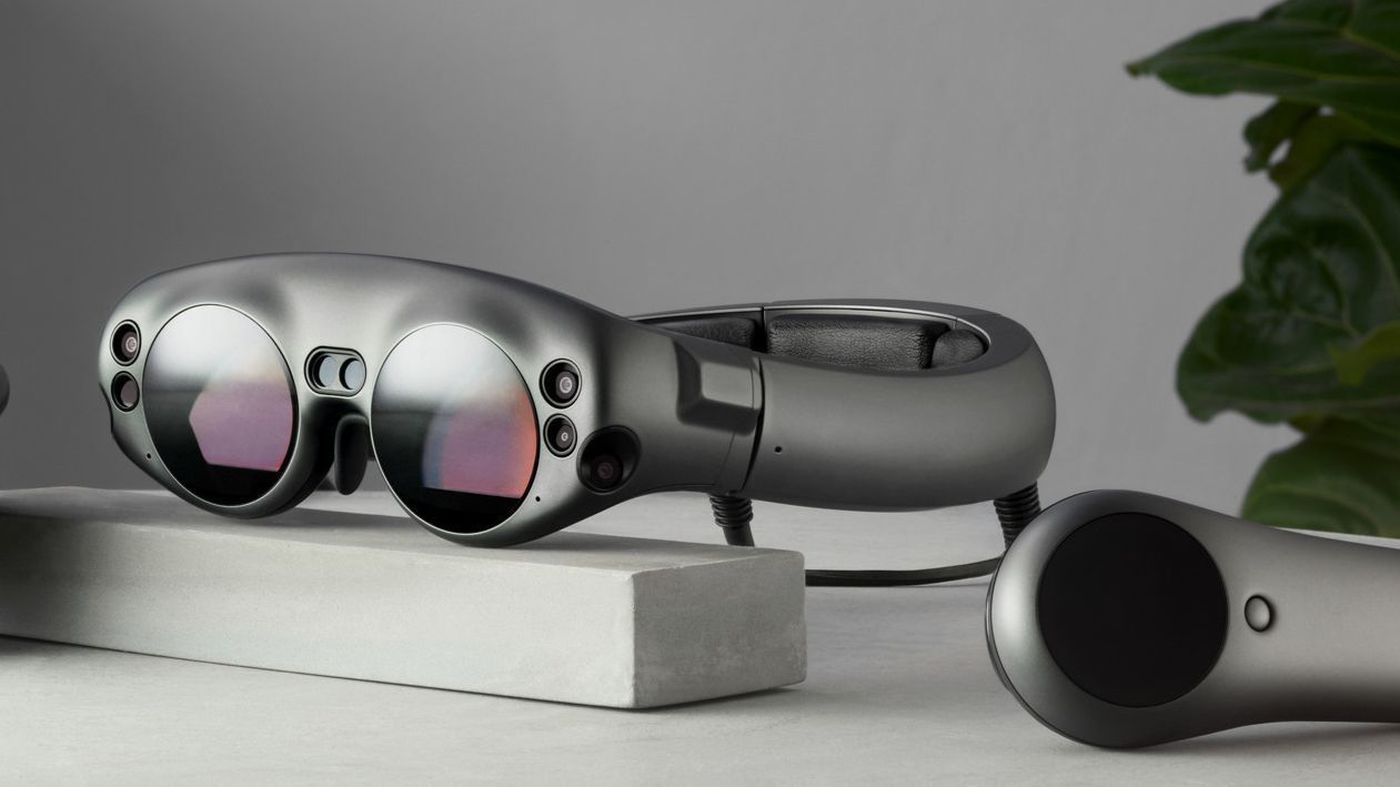
 A small group of software developers recently received devices at their offices, according to people familiar with the matter. But access to the gadget comes with an unusual caveat: They must commit to keeping them in locked safes.
The security requirements associated with being an early user were deemed too burdensome by some developers. At least one company decided it wasn't worth the hassle and declined a test device, said a person familiar with the matter, who asked not to be identified due to Magic Leap's tight information rules.
The biggest difference between Magic Leap's and Microsoft's headsets is the way they create the illusion of depth. Previous iterations of augmented- and virtual-reality headsets do this by showing slightly different versions of an image to each eye.
The Magic Leap One, the name of its initial product, goes an extra step by slightly blurring objects depending on their distance from a user's gaze. This mimics a function of the human eye. If developers take full advantage of this capability, the difference can be as significant as a TV in standard or high-definition, one of the people said.
See the full story here: http://www.latimes.com/business/la-fi-tn-magic-leap-augmented-reality-20180331-story.html
Experiencing Burning Man in Virtual Reality
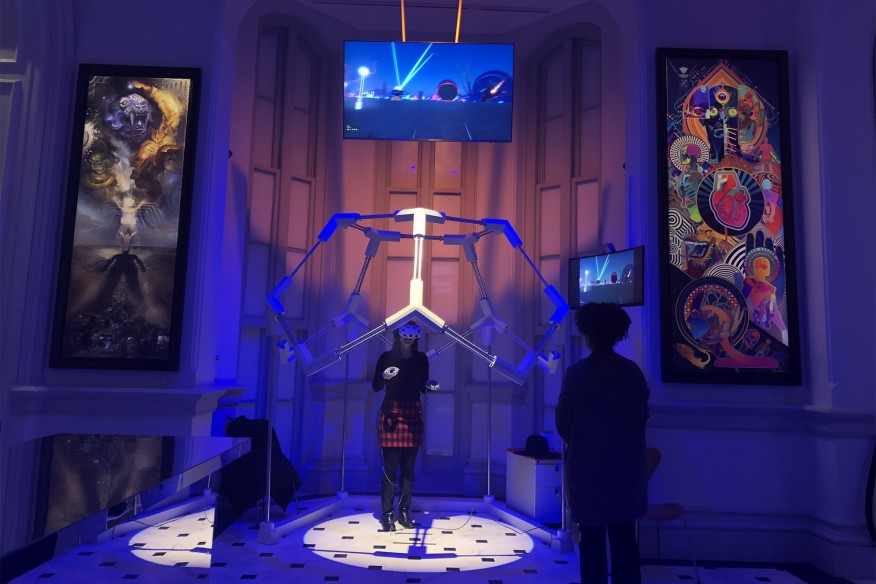 The Smithsonian American Art Museum's Renwick Gallery's latest exhibition, "No Spectators: The Art of Burning Man", is a facility-wide show featuring sculptures, art, photographs, videos, costumes, and jewelry created for the infamous Burning Man festival, which takes place every year in the Black Rock Desert of northwest Nevada. Museum visitors and festival fans wanting a first-hand experience of the gathering need not travel to the Silver State: The virtual reality (VR) Android Jones Deep Playa Experience, by artist Android Jones and his immersive media company, Vision Agency, allows users to "walk" straight onto the desert and "see" what the hype is all about.
Situated on the first floor of the gallery, the two open honeycomb chambers made of aluminum and wood measure approximately 8 feet in height, and provide a defined space for visitors to turn and walk in while interacting with the digital experience.
How did the project come about?
I’ve been going to Burning Man every year since 2003, and the last three or four years we’ve brought 60-foot dome art galleries. The last two years we had a 24-minute, 360-degree show in the dome.
What components of the temporary Burning Man city did you include in the virtual architecture?
Out of respect for the intellectual property of different artists, only a few pieces are direct one-to-one Burning Man pieces, most of which I’ve worked on, such as the Space Whale. I was also part of the team that made Abraxas, the golden dragon art car. A lot of the pieces are homages to things I’ve seen.
What happens after "No Spectators: The Art of Burning Man?" Will the experience be available on other platforms for more people to see?
We are having conversations right now. This is the first time Burning Man organizers have given permission for anyone to make a Burning Man VR experience, so it will be based on [the organizers'] reactions and how people feel about it.
"No Spectators: The Art of Burning Man" is on view at the Smithsonian American Art Museum's Renwick Gallery until Jan. 21, 2019.
See the full story here; http://www.architectmagazine.com/technology/experiencing-burning-man-in-virtual-reality_o
VR Installation of Crossing U.S.-Mexico Border Comes to Nation’s Capital
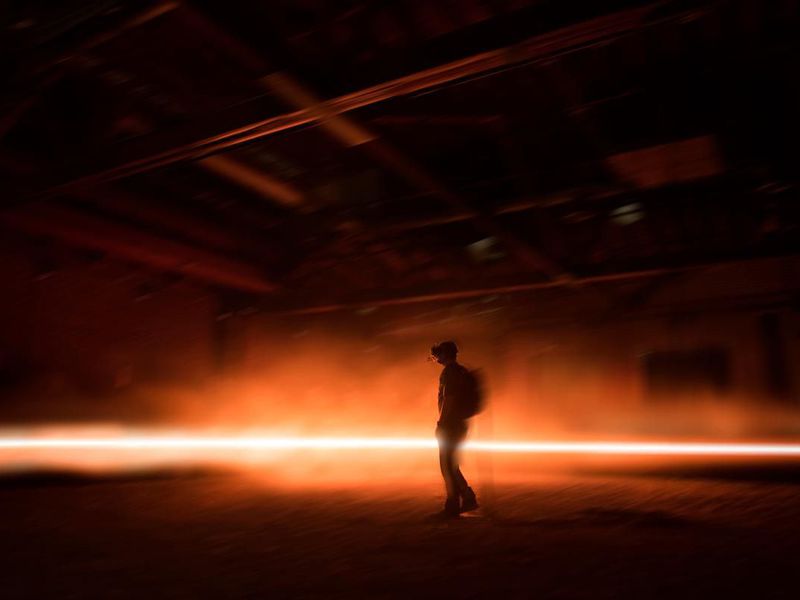 “Carne y Arena,” by Academy Award-winning Mexican filmmaker Alejandro G. Iñárritu, will run in D.C. through August.
The installation is temporarily housed in a Baptist church wrapped in panels reclaimed from a border wall.
The installation is free and open to the public, but registration is required through the project’s website.
See the full story here: https://www.smithsonianmag.com/smart-news/virtual-reality-experience-crossing-us-mexico-border-opens-washington-dc-180968610/