The Department of Defense is issuing AI ethics guidelines for tech contractors
The controversy over Project Maven shows the department has a serious trust problem. This is an attempt to fix that.
In a bid to promote transparency, the Defense Innovation Unit, which awards DoD contracts to companies, has released what it calls “responsible artificial intelligence” guidelines that it will require third-party developers to use when building AI for the military, whether that AI is for an HR system or target recognition.
The guidelines provide a step-by-step process for companies to follow during planning, development, and deployment. They include procedures for identifying who might use the technology, who might be harmed by it, what those harms might be, and how they might be avoided—both before the system is built and once it is up and running.
...The purpose of the guidelines is to make sure that tech contractors stick to the DoD's existing ethical principles for AI, says Goodman. The DoD announced these principles last year, following a two-year study commissioned by the Defense Innovation Board, an advisory panel of leading technology researchers and businesspeople set up in 2016 to bring the spark of Silicon Valley to the US military. The board was chaired by former Google CEO Eric Schmidt until September 2020, and its current members include Daniela Rus, the director of MIT’s Computer Science and Artificial Intelligence Lab.
See the full story here: https://www.technologyreview.com/2021/11/16/1040190/department-of-defense-government-ai-ethics-military-project-maven/
Responsible AI Guidelines are here: https://www.diu.mil/responsible-ai-guidelines
The DOD Ethical Principles of AI are here: https://www.defense.gov/News/Releases/Release/Article/2091996/dod-adopts-ethical-principles-for-artificial-intelligence/
These principles will apply to both combat and non-combat functions and assist the U.S. military in upholding legal, ethical and policy commitments in the field of AI. The department’s AI ethical principles encompass five major areas:
- Responsible. DoD personnel will exercise appropriate levels of judgment and care, while remaining responsible for the development, deployment, and use of AI capabilities.
- Equitable. The Department will take deliberate steps to minimize unintended bias in AI capabilities.
- Traceable. The Department’s AI capabilities will be developed and deployed such that relevant personnel possess an appropriate understanding of the technology, development processes, and operational methods applicable to AI capabilities, including with transparent and auditable methodologies, data sources, and design procedure and documentation.
- Reliable. The Department’s AI capabilities will have explicit, well-defined uses, and the safety, security, and effectiveness of such capabilities will be subject to testing and assurance within those defined uses across their entire life-cycles.
- Governable. The Department will design and engineer AI capabilities to fulfill their intended functions while possessing the ability to detect and avoid unintended consequences, and the ability to disengage or deactivate deployed systems that demonstrate unintended behavior.
Augmented reality: Puratos launches digital support tool for bakers, patissiers and chocolatiers
The app is user-friendly for artisan, industrial and in-store bakeries who need expert advice about recipes and technical challenges.
Ramping up digitalization
Digital AdvisAR forms part of the digitalization strategy of Puratos, which has 600 technical experts in 71 countries.
...The app has universal symbols that can easily be interpreted by users across the world and experts can speak to customers live during the interaction which was an important feature in its development, says Surdiacourt.
Digital AdvisAR was tested in several countries during the pandemic and will be launched first in Austria, Brazil, France, Italy, Turkey and the US. The app is available in the user’s language. ...
Digital AdvisAR can be downloaded from a regular app store. In-person visits from technical advisors will continue when issues cannot be resolved virtually.
See the full story here: https://www.foodingredientsfirst.com/news/augmented-reality-puratos-launches-digital-support-tool-for-bakers-patissiers-and-chocolatiers.html

What Does the Future of the Adult Entertainment Industry Look Like
Every industry in the world is subject to the changes that development and technology bring, so the adult industry is no exception to this rule. Sometimes there will be bigger changes and bounces, but sometimes they will be slow, which we will not even notice at first.
When it comes to technology, we can expect literally everything, from virtual reality experience to holograms and simulations in which we will feel like we are part of them. These are big steps, but in the meantime, smaller ones are happening. For example, some porn productions are already doing socially useful work, helping critical groups of people, or caring for the environment. Their earnings are high, so it is really noble that they do, although such a thing is rarely expected (at least if we believe what the conservative people say).
CONCLUSION
The adult industry as we know it today will not stay that way. There will be many changes, many innovations, but also adjustments to the old ones, as well as their improvement. ...
It is up to us to fight prejudice and, of course, to respect that choice which is diametrically different from ours – because differences make the world beautiful.
See the full story here: https://thevideoink.com/future-of-adult-entertainment-industry/

A Perspective of Americans’ Attitudes Toward Artificial Intelligence (Market Research by the Stevens Institute of Technology
PhilNote: this research covers a good spectrum of issues and beliefs, with lots of graphs.
KEY FINDINGS
- Although adults have concerns about the potential negative consequences of greater AI adoption, nearly half (48%) believe the perceived positives of greater AI adoption in everyday life outweigh the perceived negatives.
- Adults believe AI should play a greater role in a number of tested industries in the future, including technology (66%), manufacturing (61%), logistics (58%), and retail (52%).
- Despite a general openness to AI playing a larger role in different industries, adults believe that among the specific tasks tested, most are still best accomplished by humans alone or with some degree of assistance from AI.
- Concern about AI’s potential negative consequences is high, with adults most concerned about a loss of personal privacy (74%), AI being used irresponsibly (72%), reduced employment opportunities (71%) and reduced human connectedness (71%), among the tested options.
• Half of adults (52%) believe it is likely that AI will become smarter than humans, and nearly two thirds (63%) believe AI will control too much of everyday life.
3. Majorities of adults believe AI has played a role in loss of trust in elections (57%) and institutions (56%), as well as the spread of misinformation (58%), political polarization (53%), and threats to democracy (52%).
• Democrats are more likely than Republicans to believe that AI has played a role in the spread of misinformation (64% vs. 56%) and in loss of trust in institutions (62% vs. 54%).
4. Adults view facial recognition as a responsible use of AI technology, and are comfortable with using it for tasks such as finding missing persons (70%) and pets (68%), for law enforcement use such as identifying and monitoring criminals (65%), and for identifying fraudulent behavior when making purchases (64%).
• Deepfakes, which are highly convincing digitally altered sound and images that are made to appear real, prove to be more divisive. Adults are nearly evenly split on whether using AI to create deepfakes is a responsible (38%) or irresponsible (36%) use of the technology.
See the full report here: https://www.stevens.edu/sites/stevens_edu/files/files/AI-survey/AI-Summery-Deck.pdf

WHY AI CAN’T REALLY FILTER OUT “HATE NEWS”
Michael Egnor: What terrifies me about artificial intelligence — and I don’t think one can overstate this danger — is that artificial intelligence has two properties that make it particularly deadly in human civilization. One is concealment. Even though every single purpose in artificial intelligence is human, it’s concealed. We don’t really understand it. We don’t understand Google’s algorithms.
There may even be a situation where Google doesn’t understand Google’s algorithms. But all of it comes from the people who run Google. So the concealment is very dangerous. We don’t know what these programs are doing to our culture. And it may be that no one knows, but they are doing things.
Michael Egnor: And the second problem, which René Girard (1923–2015) , a French philosopher, wrote about extensively, is the concept of mimetic contagion… we are imitating animals, and no other animal imitates anywhere near the way we do. And we imitate particularly other humans desires’. Advertisers notice that if they show a popular quarterback drinking a certain brand of soda, other people will want to go out and buy that same soda. But that’s kind of an odd thing. Why would we imitate what that guy wants? ...
I can imitate a guy in China, at exactly the same moment that everybody else in the world imitates the same guy. And it takes zero seconds to do it. And that’s never happened before. Humanity has never had that kind of interconnectedness. And that mimetic contagion, according to Gerard is lethal to mankind.
...Michael Egnor: And it can happen like kerosene with a match. It can happen at incredible velocity and incredible ferocity. And these are incredibly dangerous things that we’re dealing with it. Frankly, I think that some of our political crisis in this country right now is because of that. It’s because of the bias inherent in our information and the enormous potential for imitation for mimetic contagion.
...Note: Billionaire investor Peter Thiel is not buying into this widespread belief. He told COSM 2021 last week, Artificial General Intelligence isn’t happening. What is happening is a huge increase in surveillance — control by AI companies who continually monitor us, not by “thinking machines.”
See the full story here: https://mindmatters.ai/2021/11/why-ai-cant-really-filter-out-hate-news/

I Spent 24 Hours in the Metaverse. I Made Friends, Did Work and Panicked About the Future.
Avatar meetings are great.
Look, it’s hard to take your editor seriously when his voice is coming from a legless Milhouse from “The Simpsons.” Still, after a few minutes sitting around a virtual conference table, we both realized it was better than a boring ol’ Zoom. It felt like he was really sitting across from me, making direct eye contact.
Avatar meetups aren’t great.
Meetings in the metaverse are nice, in part because you have control over whom you invite. It’s like the next evolution of a private Facebook Group or video call. What happens, though, with public groups any avatar can join? I found out when joining Microsoft-owned AltspaceVR.
Solo stuff is fun.
There are loads of stuff to do on your own, including games and my new favorite: working out.
See the full story here: https://www.wsj.com/articles/metaverse-experience-facebook-microsoft-11636671113

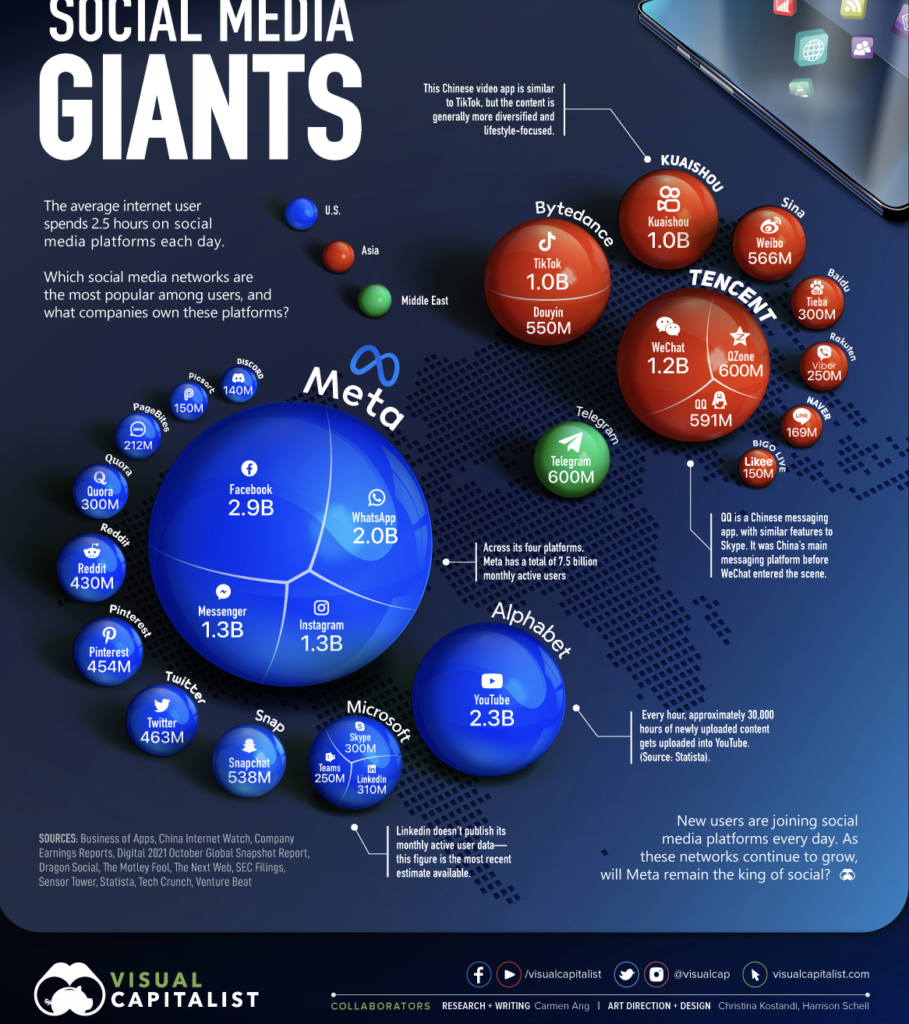
Meta Plans Physical Stores to Showcase Its Virtual- and Augmented-Reality Devices
Meta, Mark Zuckerberg’s company formerly known as Facebook, plans to introduce physical stores that will showcase its virtual- and augmented-reality devices — the potential first step towards building the metaverse, The New York Times reports.
Documents also reveal that the physical stores will be designed with a modern, minimalist aesthetic in mind and incorporate subtle branding placement, aiming to evoke “curiousity” and “closeness” as visitors embark on their “judgement-free” virtual-reality journeys.
See the full story here: https://timesnewsexpress.com/news/business/enterprenuers/meta-plans-physical-stores-to-showcase-its-virtual-and-augmented-reality-devices/
Facebook’s Ridiculous New Ad Reveals Its Vision of the Metaverse. It’s Everything Wrong with the Company
...Except, that's everything that's wrong with the way people connect online. And, Facebook is largely the reason. Over the last decade, Facebook has worked hard to make us think that scrolling through a feed of images and posts from people we are loosely connected to is a substitute for actually engaging with real people.
...
You'd think someone might have asked whether it actually portrayed the type of image the company wants to be associated with. I have no doubt that it's an accurate picture of what Facebook is building--it's entirely consistent with everything the company has built so far.
By the way, it's not that I'm necessarily pessimistic about the metaverse, I'm just pessimistic about the idea of Facebook building it. If this ad is any indication, we all should be.
See the full story here: https://www.inc.com/jason-aten/facebooks-ridiculous-new-ad-reveals-its-vision-of-metaverse-its-everything-wrong-with-company.html
Researchers Develop New Approach for Robotic Exosuit Assistance
The new approach relies on robotic exosuit assistance being calibrated to an individual, and it adapts to various different real-world walking tasks in just seconds. The bio-inspired system uses ultrasound measurements of muscle dynamics, which enables it to be personalized and activity-specific for users.
...“We used ultrasound to look under the skin and directly measured what the user’s muscles were doing during several walking tasks,” said Nuckols. “Our muscles and tendons have compliance which means there is not necessarily a direct mapping between the movement of the limbs and that of the underlying muscles driving their motion.”
...“From these pre-recorded images, we estimated the assistive force to be applied in parallel with the calf muscles to offset the additional work they need to perform during the push off phase of the walking cycle,” said Swaminathan.
See the full story here: https://www.unite.ai/researchers-develop-new-approach-for-robotic-exosuit-assistance/

Pres. Putin – Tech development must be human-centric: takeaways from the main discussion at Sber’s AI Journey
President Putin then answered questions from the students. The students were interested in topics such as the development of a mentoring system in Russia, the possibilities of utilising AI technologies in public administration, automation, and the pace of mass implementation of AI in all spheres of domestic life. In answering the questions, President Putin stressed that when implementing AI, it is necessary to ensure the interests of people and respect for their rights. This should be facilitated by a code of ethics in the fields of AI development and application, developed with the participation of the Artificial Intelligence Alliance member companies.
See the full story here: https://www.prnewswire.co.uk/news-releases/tech-development-must-be-human-centric-takeaways-from-the-main-discussion-at-sber-s-ai-journey-870460455.html
Pages
- About Philip Lelyveld
- Mark and Addie Lelyveld Biographies
- Presentations and articles
- Trustworthy AI – A Market-Driven approach
- Tufts Alumni Bio