Linklaters launches new ‘virtual reality’ legal internship
 In offering exposure to virtual colleagues and clients, the ‘Linklaters Virtual Programme’ hopes to equip participants with practical legal skills and commercial awareness as they contemplate a career in law.
During the online internship, which starts at the end of this month, students will undergo a series of tasks similar to that completed by Links’ vac schemers and trainees on a day-to-day basis.
The seven-step virtual training programme begins by requiring participants to “pitch to a consortium of banks” that need legal advice ahead of a fintech acquisition. It then rounds off by asking participants to leave a voicemail for a client, before listening to a recording from one of the firm’s partners offering tips on communicating with clients.
Although, according to the website, the programme is meant to take five to six hours to complete, there is no time restriction on completing the tasks — meaning online interns can fit the modules around their studies. The e-learning style tasks are also not assessed, but instead provide model answers allowing students to mark their own work.
See the full story here: https://www.legalcheek.com/2019/06/linklaters-launches-new-virtual-reality-legal-internship/
Automakers eye VR to banish boredom in autonomous cars
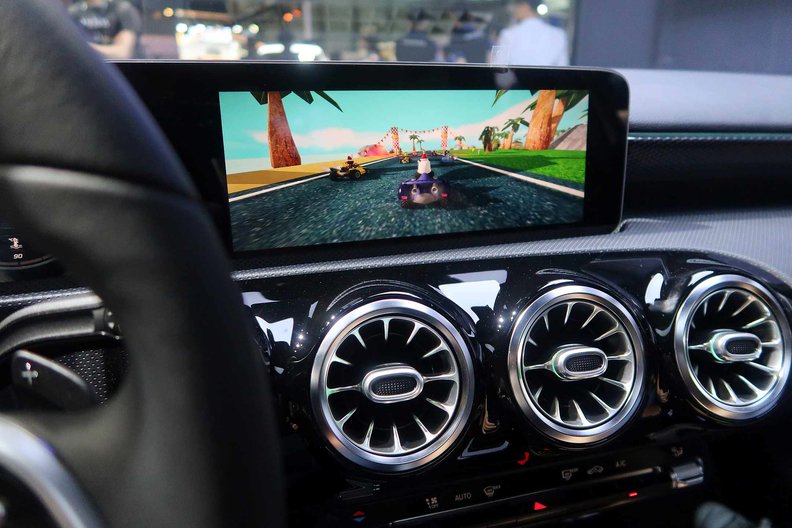 Startup holoride, co-founded by an Audi subsidiary, for example, demonstrated at the show how it wants to turn road trips into virtual reality experiences, allowing passengers to swim with whales or through sunken ships in the deep sea while on a drive.
How Microsoft hopes to preserve privacy while gathering AR map data
In the first of the two papers (“Revealing Scenes by Inverting Structure from Motion Reconstructions”), scientists from Microsoft Research and the University of Florida show that the aforementioned AR point clouds, reconstructed using structure from motion or simultaneous localization and mapping (SLAM), retain enough information to rebuild detailed scene images even after the source pictures have been discarded. Their novel AI system reconstructs color images in the scene given 2D projections of sparse 3D points and their features, even in the absence of attributes like visibility and in cases where the points are irregularly distributed.
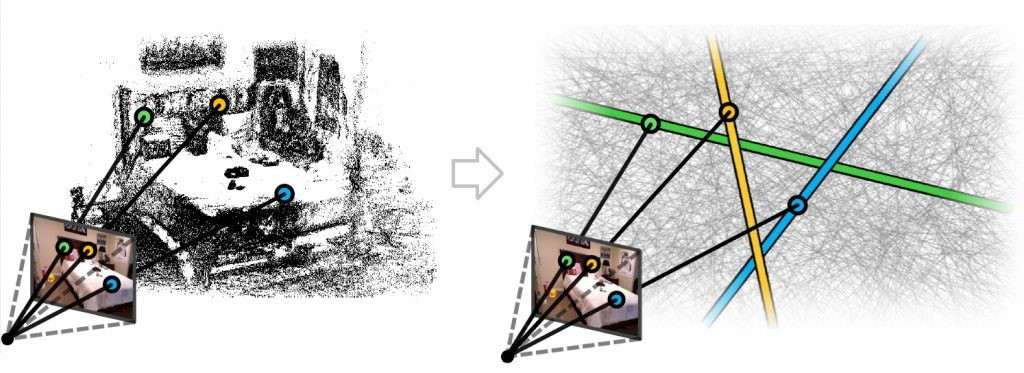 The second paper (“Privacy Preserving Images-Based Localization”) — the work of ETH Zurich and Microsoft’s Mixed Reality & AI lab — posits a privacy-preserving approach to AR localization that lifts 3D points in maps to randomly oriented 3D lines that pass through the original points. The new representations bear little resemblance to the original scenes on their face, but still allow for precise positioning because of the close correlation among the 2D image points and the 3D lines.
See the full story here: https://venturebeat.com/2019/06/13/how-microsoft-hopes-to-preserve-privacy-while-gathering-ar-map-data/
Laurie Anderson: ‘It’s a great time to be creating new realities’
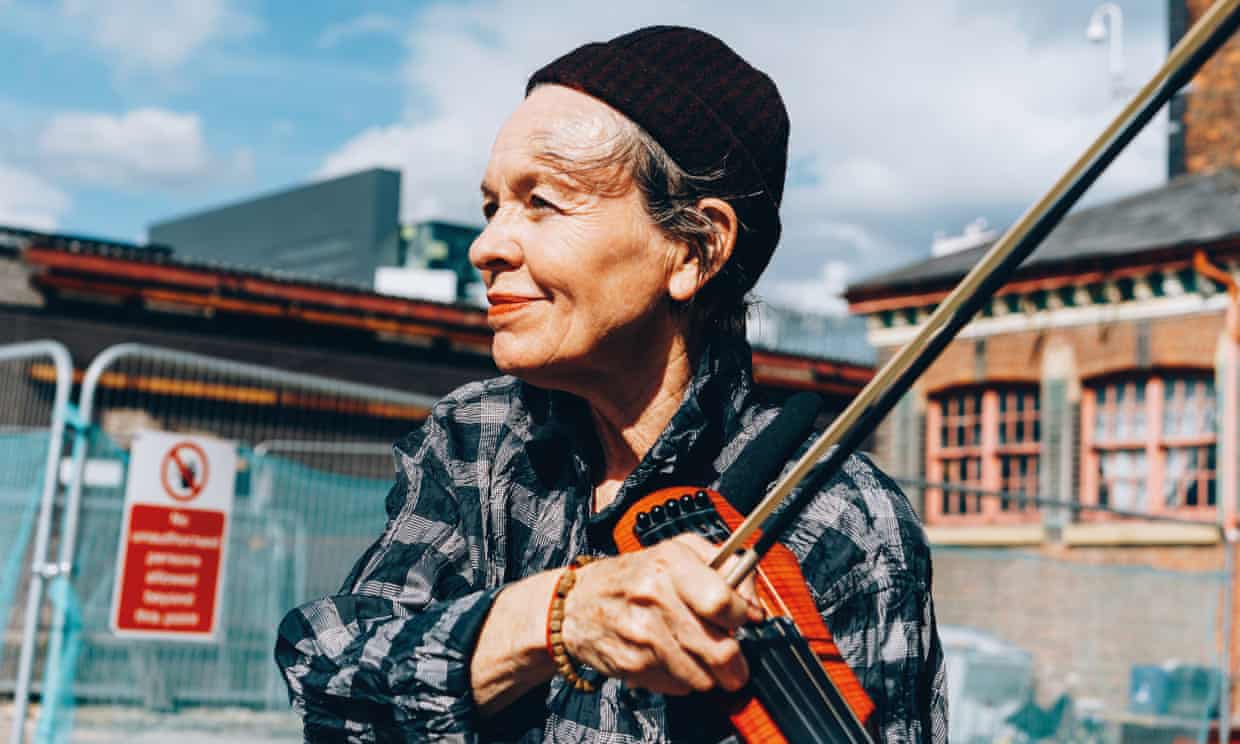 The moon is the focus of the latest work from avant-garde pioneer Laurie Anderson, which is fitting, given that she’s a former Nasa artist in residence. To the Moon, her new collaboration with Taiwanese artist Hsin-Chien Huang, has allowed Anderson to create a typically definition-defying journey. She says of the exhibition, which reaches Manchester international festival on 12 July: “I’m happiest when I can’t really define the work. To the Moon is an experiment in hybrids, seeing how these various media can come together and share images, stories and music.”
E3 2019: Will Microsoft’s ‘Minecraft Earth’ take augmented reality beyond ‘Pokémon Go’?

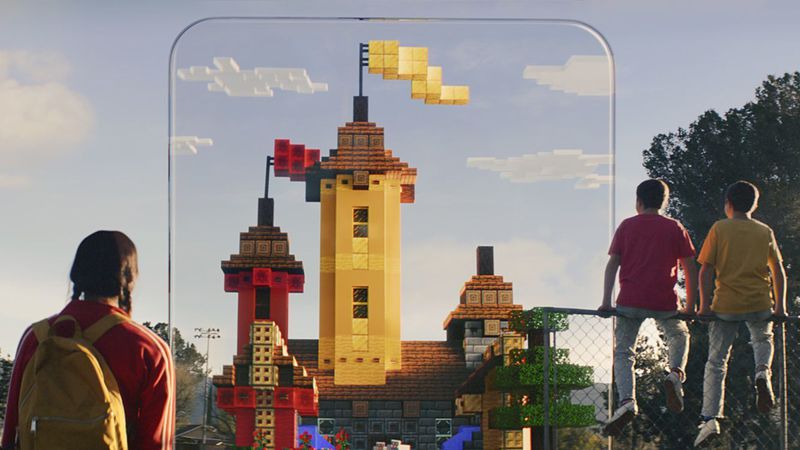 All eyes will be on “Minecraft Earth,” an augmented reality game coming to Android and iOS devices, which will begin beta testing in the coming weeks. Microsoft hopes the title will show that there’s far more to the experimental gaming space than “Pokémon Go.”
East London’s OTHERWORLD Virtual Reality Arcade
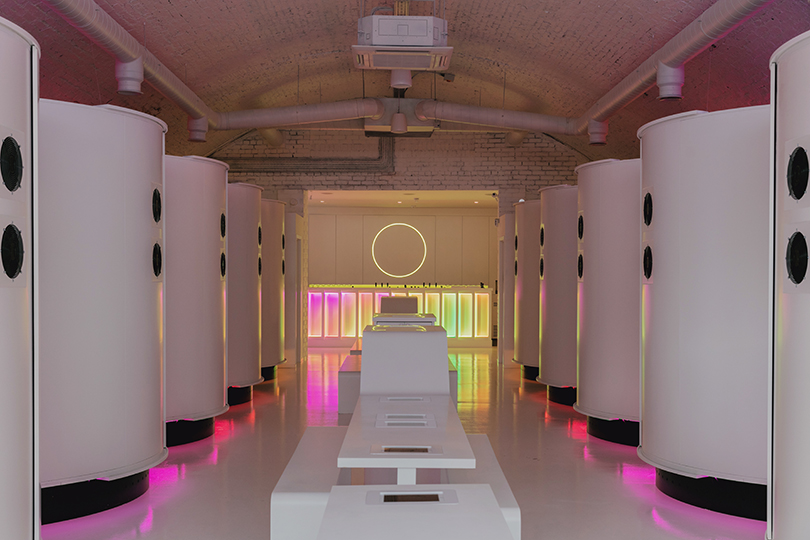 If you’ve been in London recently you may have heard talk of OTHERWORLD, a unique virtual reality arcade located within a converted railway arch. The multi-sensory immersive concept from The Dream Corporation was designed by leading London-based architectural firm Red Deer and hosts 14 virtual reality rooms as well as a craft beer and cocktail bar and pan-pacific inspired poké kitchen.
Red Deer approached the design of this space as if it were an art gallery, reaching for inspiration from lighting artists Dan Flavin and James Turrell to break down reality.
Each immersion room is a parallel universe of possibility, featuring custom-built booths (the only in the world) that are integrated with extra-sensory effects that stimulate through heat, wind, rumble, and scent for the VR experience. From there choose from 16 experiences – from climbing Mount Everest to fighting in a zombie apocalypse and so much more.
See the full story here: https://design-milk.com/east-londons-otherworld-virtual-reality-arcade/
Toyota Partners with Conill and 8th Wall to Develop Augmented Reality That Brings the Car Showroom to Customers Through Mobile Web AR Experience
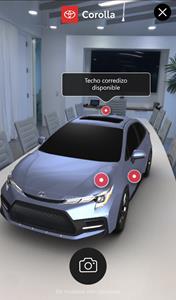 Before customers even step foot in a dealership, Toyota has partnered with Conill and 8th Wall to develop an interactive augmented reality (AR) mobile ad unit for the launch of the greater than ever 2020 Toyota Corolla sedan. The immersive web-based experience allows potential customers the ability to bring the car into their own environment, where they can explore the car’s features from the convenience of a mobile device.
How to Give Virtual Reality All the Feels
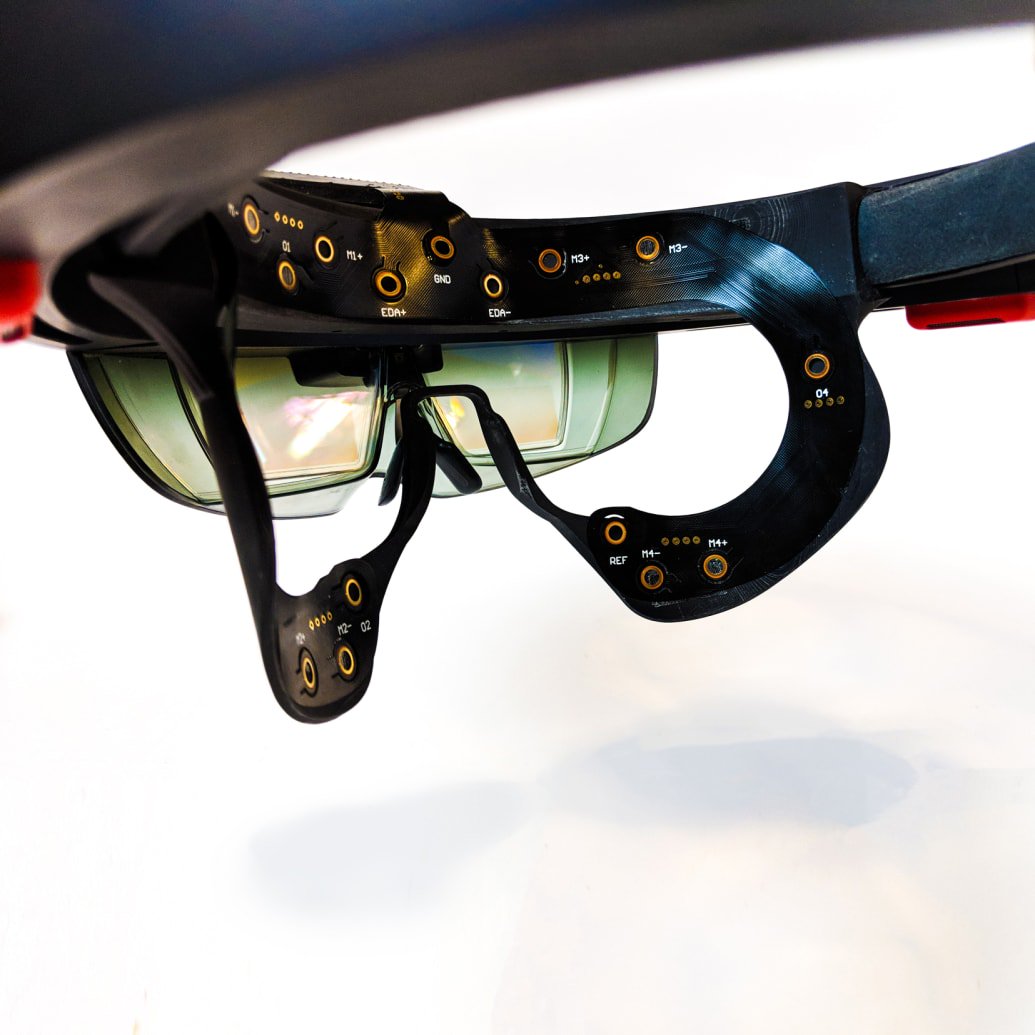 Guillermo Bernal, a Ph.D. student at the Massachusetts Institute of Technology, might have just figured out a solution. In 2017, Bernal launched Emotional Beasts, an effort to adapt off-the-shelf virtual reality hardware with an open-source game engine to create emotive VR avatars.
For his work, MIT awarded Bernal the 2019 Harold and Arlene Schnitzer Prize in the Visual Arts.
For an avatar to express simmering rage or embarrassed arousal or cautious curiosity, the computer running the avatar must be able to sense the same emotions in the live human subject.
Then there are the potential secondary effects. If you teach a computer to read emotions for the purposes of say, setting up a virtual classroom for refugees or facilitating remote mental-health diagnoses, what’s to stop some retailer from using the same tech to figure out which images and ads excite you?
Dry electrodes measure skin tension on the forehead, an indicator of how much the wearer is sweating, which in turn indicates how agitated they are. Bernal also added a heart-rate sensor on the user’s temple and tweaked the microphone to register different tones of voice.
By 2018 he had a working prototype. But modifying the hardware and writing the software is just part of the solution. Bernal also needs data. Specifically, a library of how diverse groups of people all over the world express different emotions.
The way a young, upper-middle-class white guy in America shows anger on his face isn’t necessarily the way a middle-age, working-class Chinese woman might do so.
“Emotions are more complex and socially determined than the simple positive-negative, strong-weak arousal model suggests,” a team led by New York University’s Meredith Whittaker warned in a 2018 research paper.
There could be ethical and legal obstacles. Some jurisdictions already give consumers veto power over commercial use of their physiological data, and that could limit the scope of Bernal’s data set, to say nothing of complicating any wider roll-out of empathetic VR.
“The California Consumer Privacy Act for instance covers biometric information and does not allow an exception based on the idea one’s face or other biometric information is publicly available,” Mark MacCarthy, a Georgetown University professor and privacy expert, told The Daily Beast. “The Illinois Biometric Information Privacy Act prohibits companies from gathering, using, or sharing biometric information without informed opt-in consent. So, figuring out your emotions from the way you look or walk or your heartbeat needs your permission.”
See the full story here: https://www.thedailybeast.com/how-to-give-virtual-reality-all-the-feels?ref=scroll
Gov’t Tech – Gaming’s Biggest Week Gives Clues to Serious Technology’s Future
Right now, official efforts in this area seem to be centered on simulations and training, though even there, much of the effort is taking place at the state and local level.
VR
Since humans get about eighty percent of their sensory input from their vision, its surprisingly easy to trick your brain into thinking that what you are seeing is, in fact, reality.
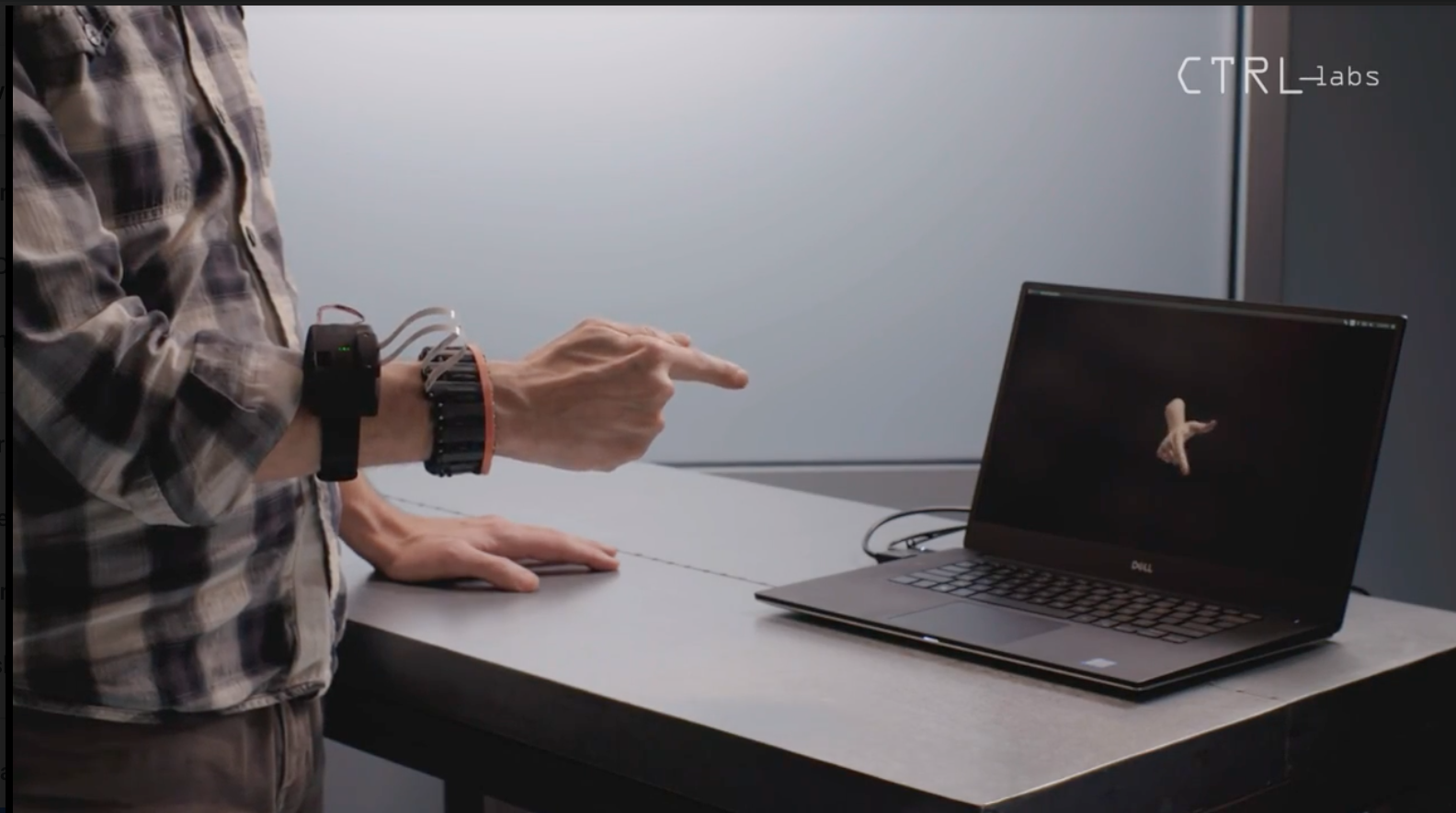 That could change with a new invention from CTRL-labs that will let users put their real hands into a VR. The prototype device works by strapping around your wrist. As you move your hand, your muscles contract in a certain way, and the device knows how that translates into the position of your hand. It’s completely non-invasive, and feels like a large wristwatch. Yet it allows for real interaction with objects inside a VR with no camera, joystick or other buttons required.
Examples of AR are on display at E3 this year, including the huge, 6,000-square-foot Unreal Garden exhibit. The idea there is that developer Onedome has built a pretty fantastic setting, and then users can get really tripped out by having even more crazy things pop into their reality through a set of goggles.
Government should seriously rejuvenate its gamification efforts. The payoff with things like AR and VR could be almost as amazing at the technology itself.
See the full story here: https://www.nextgov.com/ideas/2019/06/gamings-biggest-week-gives-clues-serious-technologys-future/157615/