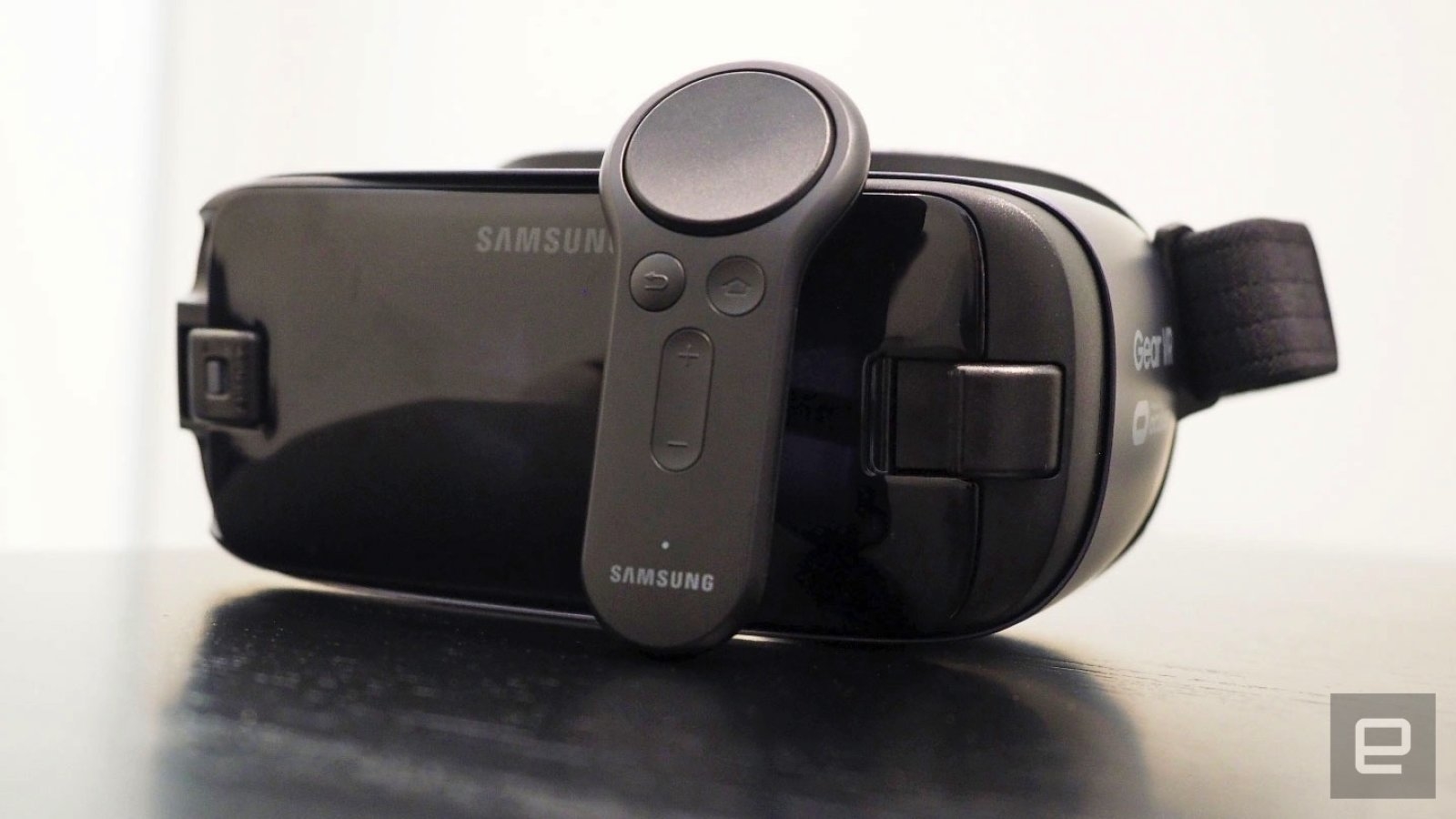
 YouTube VR is already available for PlayStation VR, Daydream and HTC Vive. Now Google is making the app available for Gear VR users this week. The company is also introducing a new feature to let you and your friends watch videos together in a communal, virtual space.
27Jul/18Off
GOOGLE CHROME NOW LABELS HTTP SITES AS ‘NOT SECURE’
 NEARLY TWO YEARS ago, Google made a pledge: It would name and shame websites with unencrypted connections, a strategy designed to spur web developers to embrace HTTPS encryption. On Tuesday, it finally is following through.
With the launch of Chrome 68, Google now will call out sites with unencrypted connections as “Not Secure” in the URL bar. The move flips the convention of how Chrome displays the security of sites on its head. Previously, pages that deployed HTTPS-enabled encrypted connections featured a green lock icon and the word “Secure” in the URL bar.
It’s a warning worth heeding. Under an unencrypted HTTP connection, any information that you send across the web can be intercepted by a hacker or other bad actor.
“It’s not just ads. Malware is served this way, a lot. It’s not just about making sure that user information is private; it really ensures the integrity of the website.”
For what it’s worth, Chrome is not alone in posting warnings next to HTTP sites; Firefox has explored it also. Between the two, they hold 73 percent of browser market share. In addition, Google notes that the vast majority of Chrome traffic—76 percent on Android, and 85 percent on ChromeOS—already travels across an HTTPS connection.
See the full story here: https://www.wired.com/story/google-chrome-https-not-secure-label/
26Jul/18Off
Tech Companies Like Facebook and Twitter Are Drawing Lines. It’ll Be Messy.
 Ms. Bickert said she has set up regular meetings with a range of experts to hash out how Facebook should draw the lines on a host of specific kinds of speech. In general, the company removes content that is illegal, dangerous, fraudulent or otherwise spammy and inauthentic. But for areas that are less black-and-white, like misinformation, it takes a different approach.
“We reduce the distribution of information that is inaccurate, and we inform people with more context and perspective,” said Tessa Lyons, a product manager who heads Facebook’s effort to curb misinformation in the News Feed.
To do this, Facebook has partnered with dozens of fact-checking organizations around the world. It limits the spread of news that has been deemed false by showing those posts lower in users’ News Feeds, and it also displays more truthful articles as an alternative to ones that aren’t accurate.
25Jul/18Off
Philip K. Dick Story Adapted for Virtual Reality by Secret Location
 Toronto- and Los Angeles-based virtual reality (VR) studio Secret Location has adapted a Philip K. Dick short story for VR, and is set to debut the resulting experience at the Venice Film Festival next month. It’s the first-ever adaptation of one of the author’s works for VR.
Philip K. Dick’s “The Great C” was first published in 1953. The story is about a post-apocalyptic world ruled by a computer that requires yearly sacrifices from a nearby tribe. Secret Location’s adaptation focuses on a woman who has to decide whether she should rebel against those cruel traditions.
Following it premiere at the Venice Film Festival, “The Great C” will debut as a timed exclusive at select location-based VR venues in September. After that, it will be released on Oculus Rift, HTC Vive and Playstation VR as well.
See the full story here: https://variety.com/2018/digital/news/philip-k-dick-secret-location-1202883361/
25Jul/18Off
The blockchain begins finding its way in the enterprise

Blue chip manager selecting the most recent record block in a blockchain. Business concept and technology metaphor for records management, data provenance documentation, peer to peer networking.
...
Richie Etwaru, founder and CEO at Hu-manity and author of the book, Blockchain Trust Companies sees it as a matter of trust. Companies aren’t used to dealing from a position of trust. In fact, his book argues that the entire contract system exists because of a total lack of it.
“The hurdle [to widespread blockchain adoption in the enterprise] is that those who have traditionally designed or transformed business models in large enterprise settings have systematically and habitually treated trust and transparency as second, sometimes third level characteristics of a business model. The raw material needed are the willingness and executive level alignment and harmonization around the notion that trust and transparency are the next differentiators,” Etwaru explained.
...
Rob May, who is CEO at Talla and whose company helped launch a blockchain called BotChain to track the authenticity of bots, says finding good use cases could help ultimately determine the technology’s success or failure. “Blockchain has a bunch of different use cases, and they are usually either all lumped together or poorly understood separately,” May said.
...
Charles Francis, a senior analyst at Accenture says for now blockchains will remain private for the most part, but authentication will become increasingly important as we eventually have blockchain-to-blockchain communications.
...
In fact, SAP has a total of 65 companies working on various projects at different stages of progress at the moment. Perez says the next level of adoption will require a way to involve multiple parties, not just a single company, as with a supply chain example, which involves moving goods and paperwork across multiple countries involving many individuals.
...
See the full story here: https://techcrunch.com/2018/07/22/the-blockchain-begins-finding-its-way-in-the-enterprise/
25Jul/18Off
How laser projection is taking IMAX even further over the top
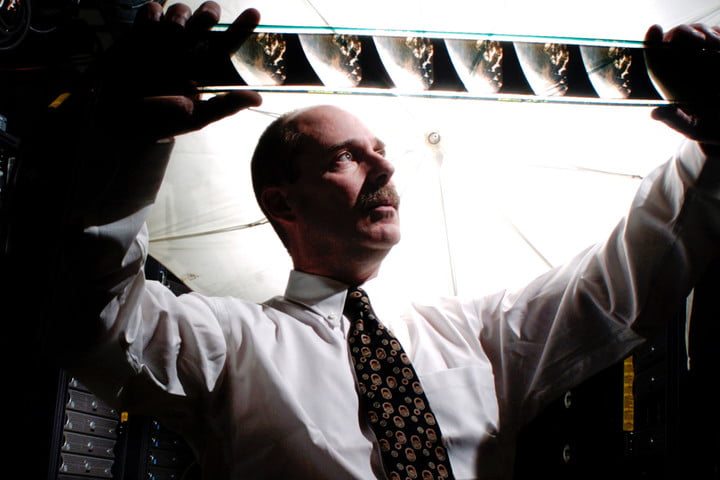
 Yet, to hear IMAX’s exuberant Chief Technology Officer Brian Bonnick tell it, when it comes to competitors, IMAX has no fear.
“We live the niche.” Bonnick says. “They don’t.”
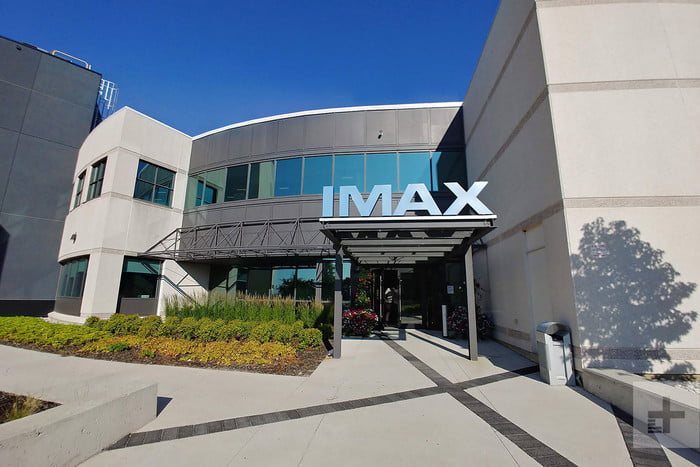
He has a point. While not all of IMAX’s theaters boast mega screens like the one in its headquarters, even in its smaller theaters, IMAX’s curated sound and projection systems, its wrap around screens, and its stringent regulations and 24/7 support make it among the most sought-after theater experiences in existence.
But this latest creation is the first to use a single projector that provides the full “IMAX with Laser” experience on smaller IMAX screens (where an 80-foot tall screen still counts as “smaller”), making it less expensive and easier to implement in more theaters.
For its new projectors, IMAX has essentially miniaturized its laser tech to cut costs for smaller theaters, where IMAX uses wrap-around screens placed closer to the audience to keep its all-important peripheral immersion. The system offers a 1.9:1 aspect ratio (as opposed to the GT’s 1.43:1) and requires less maintenance than dual-projector systems, which must be calibrated and digitally enhanced to meet IMAX’s rigorous specifications for a perfectly synced image.
Instead of forcing laser light through glass prisms like traditional xenon projectors (and even Dolby’s laser projection system), IMAX’s laser projectors send red, green, and blue lasers directly to each of three modulation chips (called Digital Micromirror Device chips) mounted on an Invar frame, which reduces the amount of optical glass the image must pass through.
Bonnick says when it comes to “interframe contrast” where multiple shades of whites and blacks are shown on screen at once, IMAX’s system has the advantage because it’s actually creating a black image. “When Dolby goes black, they are actually turning off two of the chips,” Bonnick says. He claims this makes IMAX’s laser system better at showing realism, whereas Dolby Cinema, he admits, wins with some sci-fi content.
Unlike the object-based, 3D sound delivered by Atmos, which allows for as many as 64 individual speakers in a theater to deliver singular placement of “sound objects,” IMAX’s system is a more old-school.
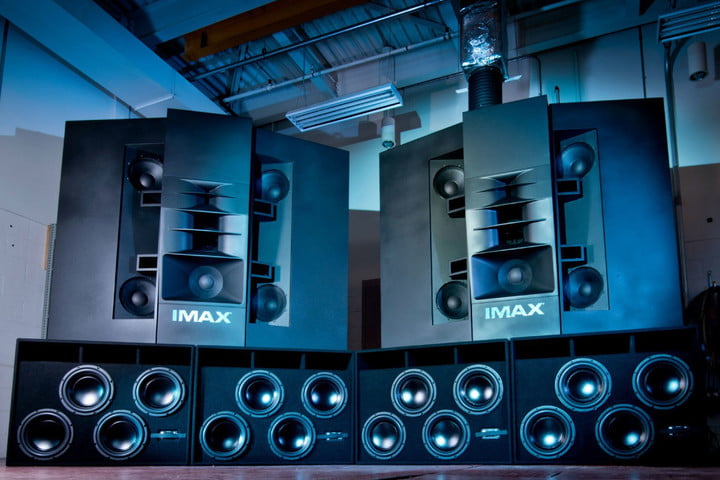
The company uses massive, horn-loaded speakers developed in-house to create a 12-channel sound system, and unlike every other surround system in existence, it also allows for full-range audio signal delivery to the bass channel. Frankly, when it comes to ultimate surround immersion, we’ll still take Atmos, as it simply has more speakers to work with, and therefore, more options.
“Our biggest group is fanboys,” Bonnick told us, and they’ve been ready and willing to pay up for IMAX’s grander theaters. This is the “experience first” generation, after all, where 20-somethings are much more apt to go out for a good meal or hit a club than spend money on possessions or clothing. When younger audiences do get off their phones to go to a theater, Bonnick said, they want a premium experience. That fits IMAX to a T...
Bonnick sees a future where the 24-theater multiplex is slowly replaced by 10 or 12-theater venues, with an IMAX screen at one end, and a feature-tied VR parlor (or something similar) in the lobby.
See the full story here: https://www.digitaltrends.com/home-theater/imax-with-laser-tour/