Google Inches Every Browser Toward Universal Augmented Reality
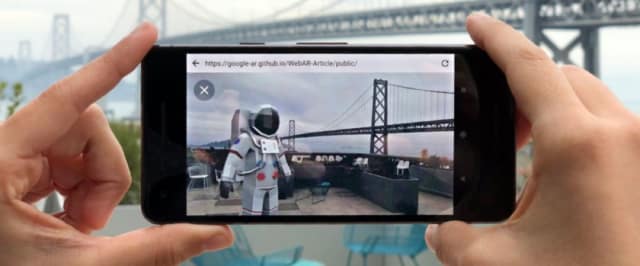 In a Jan. 22 blog post, Google developers were privy to the first look at Article, the 3D model viewer for all browsers. What they do not include is that SketchFab, the 3D model hosting community website, announced an AR viewer for iOS devices in September 2017 and followed up with a version for Android users two months later. This highlights a distinct advantage that small startups have over tech giants like Apple and Google: they can be agnostic and universal.
How Article Works
First you load Article on an AR-capable device and browser. Then, looking down and to the right, you’ll see an AR button. When you tap it, it turns on the devices camera and renders a little reticle. Then if you tap the screen, the reticle grows from the ground into a 3D model. You can then move around it and get a sense of its scale as though it were a physical object.
The AR interface, or diagetic UI, is programmed to give users cues. For example,when a user waits for Article to find a real surface represented by the camera, a little circle appears on whichever surface it picks. The circle then tilts and moves with the movement of the device.
See the full story here: https://www.engineering.com/ARVR/ArticleID/16372/Google-Inches-Every-Browser-Toward-Universal-Augmented-Reality.aspx
Facebook built an AI that enables full-body augmented reality experiences
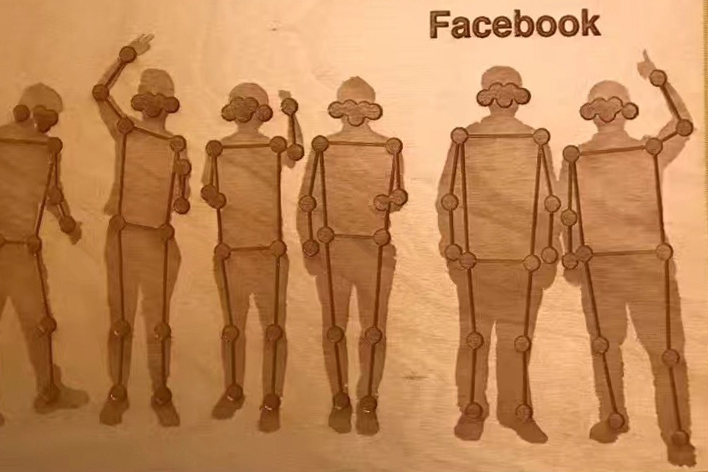 The Facebook AI Camera Team wrote on the company’s research blog today that bodies are much more difficult to track than faces.
Facebook solved this problem by retraining its own computer vision technology, which it already uses to fight revenge porn and to recommend friends to tag in uploaded pictures. The company taught a neural network to recognize different body poses and to distinguish between a person and the background behind them, allowing AR animations to be anchored to the proper body parts much like an animation rig in 3D animation.
The company’s AI research team boasted that the program takes up “only a few megabytes” of storage space and can run in real time on modern smartphones. This is good news for AR developers who don’t want to limit their apps to high-powered devices with external computing devices, such as the recently unveiled Magic Leap.
See the full story here: https://siliconangle.com/blog/2018/01/25/facebook-built-ai-enables-full-body-augmented-reality-experiences/
Augmented Reality Reference Designs at CES Show New Promise for Smart Glasses and HMDs
 OmniVision's ASTRI
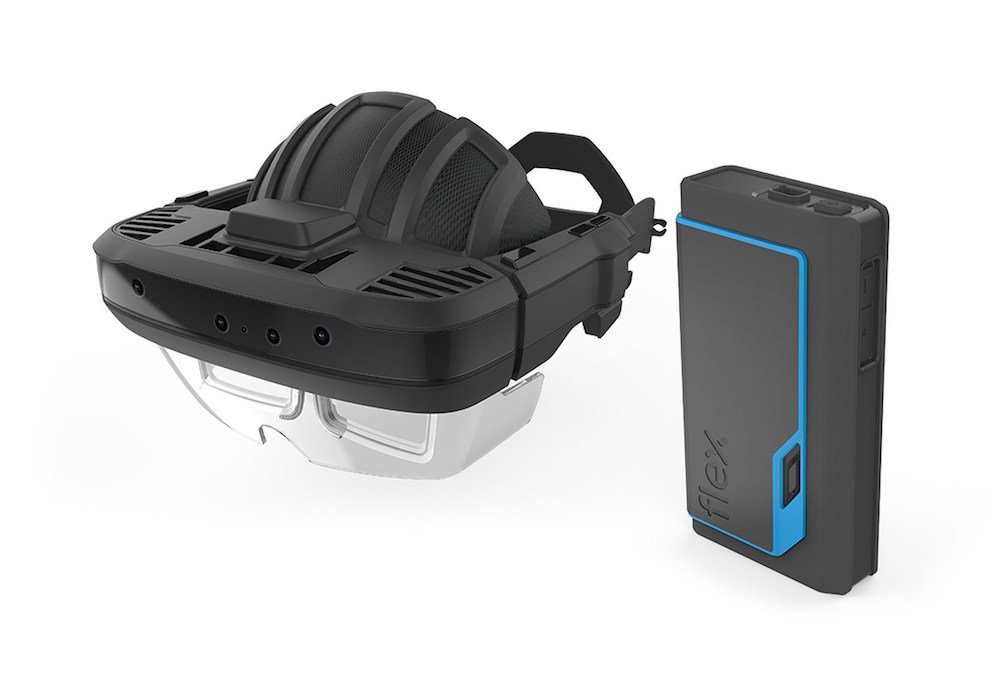
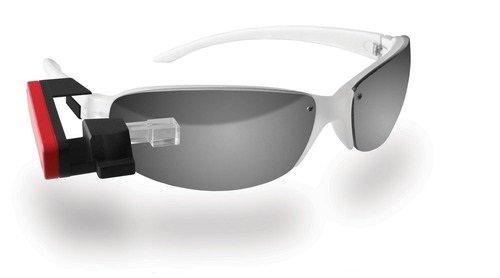
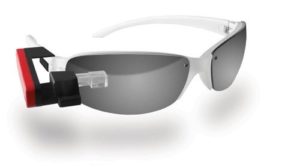
First, OmniVision has joined hands with Hong Kong Applied Science and Technology Research Institute (ASTRI) to create a complete turnkey design solution for AR glasses with Wi-Fi connectivity to any mobile device or personal computer.
The reference design employs ASTRI’s expertise in optics and sensing technologies to facilitate a 60-degree-wide field of view (FOV) immersive solution. While the immersive AR designs have the potential for a 110° FOV, the current designs have been able to accomplish the FOV of 60°.
On the imaging front, OmniVision brings to table a single-chip, 1080-pixel high definition (HD) liquid crystal on silicon (LCOS) display that features integrated driver and memory buffer. OmniVision claims that its OP02220 LCOS display simplifies design, shrinks form factor, and lowers power consumption by up to 40 percent as compared to display systems that use two or three separate driver and memory-buffer chips.
The AR design, which emulates reality with a greater level of visual details, requires a display that nears the resolution of the human eye. Here, OmniVision contributes the OV9282 image sensor that can capture 1280x800-pixel images at 120 frames per second with low latency.
These two devices from OmniVision enable inside-out tracking tasks like simultaneous localization and mapping (SLAM), 3D room scanning, and hand-and-tool tracking. ASTRI’s reference design has also integrated the 802.11ac Wi-Fi link to connect AR glasses to other devices like a smartphone.
Flex's HMD Reference Design
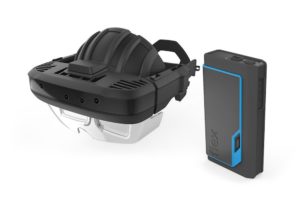
Another notable effort to reduce development costs and accelerate time-to-market for AR glasses comes from Flex, which calls itself the sketch-to-scale solutions provider. At the CES 2018, the company unveiled an AR reference design that encompasses an HMD, an external processing unit (EPU), and a gesture-based software platform to manage interaction.
The AR design is powered by Qualcomm's Snapdragon 835 processor that's built on 10nm process and facilitates full-color, 1080-pixel augmented reality experiences. And it's complemented by AR interaction module and enterprise software from Atheer.
See the full story here: https://www.allaboutcircuits.com/news/CES-2018-augmented-reality-reference-designs-smart-glasses-HMD/
VR Series ‘Spheres’ Sells for Seven Figures at Sundance Fest

A still image from SPHERES: Songs of Spacetime by Eliza McNitt, an official selection of the New Frontier VR Experiences program at the 2018 Sundance Film Festival. All photos are copyrighted and may be used by press only for the purpose of news or editorial coverage of Sundance Institute programs. Photos must be accompanied by a credit to the photographer and/or 'Courtesy of Sundance Institute.' Unauthorized use, alteration, reproduction or sale of logos and/or photos is strictly prohibited.
At this year’s Sundance Film Festival’s New Frontier, VR financing/distribution company CityLights purchased “Spheres: Songs of Spacetime,” a three-part virtual reality series that explores the depth of space. The exact purchase price was not revealed, but it is reportedly in the seven figures, and is being hailed as the first VR film to be acquired for such an amount. The series, presented by Oculus Studios and Protozoa Pictures, and directed by Eliza McNitt, is slated for release on the Oculus Rift sometime this year.
“This is a historic moment for the VR industry; it signifies that a viable storytelling medium has emerged,” said Jess Engel, who produced the series with Arnaud Colinart and Dylan Golden. “Deals like this establish VR as its own marketplace for independent creators, producers, and investors.”
The project “was executive produced by Protozoa Pictures’ Darren Aronofsky and Ari Handel, and supported by Oculus and Intel,” notes Wired.
See the full story here: http://www.etcentric.org/vr-series-spheres-sells-for-seven-figures-at-sundance-fest/
PRÉSIDENT CHEESE INTROUDCES NEW VIRTUAL REALITY EXPERIENCE AND 2018 PRODUCT INNOVATIONS AT THE 2018 WINTER FANCY FOOD SHOW
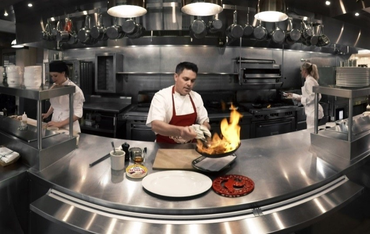
During the virtual reality simulation, partakers will see the recipes come together and receive live samples of the Président cheese products that correspond to each unique recipe. The four featured recipes are:
- Président Brie Stuffed Pork Chop topped with caramelized apples and toasted walnuts
- Président Brie layered with truffles and drizzled with honey
- Président rondelé beautifully displayed with nectarines and hazelnuts
- Président Cheese & Butter Board with arrangement and pairings tips
VIRTUAL REALITY UNIT UNVEILS THE ‘FLICK’
 A Flick, which is exactly one seven hundred and five million six hundred thousandth of a second (1/ 705,600,000), allowing it to easily divide into frame rates, such as 24hz, 25hz, 30hz, 48 hz, and so on. This allows video and audio producers—as well as video game designers and other types of programmers—to use round numbers rather than awkward fractions.
See the full story here: http://www.newsweek.com/why-did-facebook-just-invent-new-unit-time-virtual-reality-unit-unveils-flick-787780
Inside Intel’s Plans To Capture The Olympics In Virtual Reality
 In what will be the the largest-scale virtual reality event to date and the first live virtual reality broadcast of the Olympic Winter Games, Intel will rotate roughly two dozen 180-degree cameras that it built in-house across 18 live events over the two-and-a-half week event. It’ll shoot 30 events in total — another 12 with 360-degree cameras — to create a mix of VR live streams and video-on-demand content.
For the live events, three to six cameras will be dedicated to each, offering multiple camera views that viewers can switch between at will. During downhill skiing, one at the gate might show an athlete preparing to start, while a few others might be placed at key turns on the course and the finish line.
Intel’s in-house production team will also provide a fully-produced version of the VR experience known as the VR Cast. By switching back and forth between the 180-degree panoramic, stereoscopic camera views, a director’s cut will stitch together an automated story for the end user, similar to the one viewers have come to expect from the traditional TV broadcast.
Data overlays from the traditional broadcast, such as the athlete’s name and nationality, real-time statistics, a leaderboard, medal counter and post-event results, will be provided by the Olympic Broadcast Service and available to users in VR as well.
The live feeds will then be sent to the cloud where they’ll be distributed across Google Daydream, Samsung Gear VR, Windows Mixed Reality, and the rights holders’ apps and web browsers, such as the new NBC Sports VR app and non-U.S. broadcasters, such as CBC in Canada and Discovery in Europe.
See the full story here: https://www.sporttechie.com/inside-intel-plans-capture-2018-pyeongchang-olympics-virtual-reality/
Douglas Coupland says Virtual Reality could replace ‘overrated’ books in post-millennial age
 Coupland, who made the forecast while speaking at the Verbier Art Summit in Switzerland over the weekend, added: “The post-millennial generation, around one and a half generations from now, is going to have people who have no connection to the real world”.
Describing VR as “probably the hottest medium, because it is completely immersive”, the Generation X author went on to controversially suggest: “Maybe books are overrated. Maybe they are an interim technology on the way to VR and we can now get rid of our books.”
Art in the Digital Age was the theme of the conference, which loosely attempted to address the question of what technology means for the traditionally conservative and technophobic art world, which trails behind the gaming, movie and pornography industries when it comes to VR.
“The Duchamp of the VR world is yet to emerge,” he said.
See the full story here: https://www.theartnewspaper.com/news/douglas-coupland-says-rise-of-virtual-reality-might-mean-we-can-now-get-rid-of-our-books