Why Virtual Reality Design Needs Empathetic Storytelling
The idea of technology bringing about a dehumanizing dystopia is not all that unfamiliar and pervades major artefacts of culture (books, films, and general discourse) of the past century. The reaction to Zuckerberg’s “journey” to Puerto Rico shows that virtual proximity does not always bring us emotionally closer, and that people can clearly feel the emotional void in virtual spaces. While technology designers could compensate by introducing emojis and facial expressions to fill the emotional gap of the technological experience, marketers can battle the dehumanizing image of technology by telling the story of VR as a true emotional enabler.
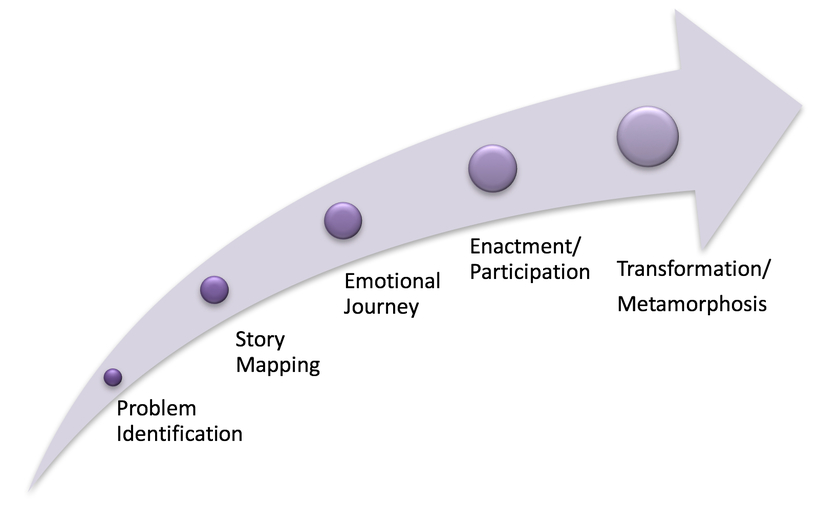 Problem Identification: Which fundamental issues does the VR-experience seek to address?
Zayden’s Journey: How do we bring a child with a serious heart condition into outer-space?
Story Mapping: Designing a cohesive and compelling story arc to address the protaganist’s objectives
Zayden’s Journey: Zayden’s vision of outer space combined with expert consultation brought his wish to life
Emotional Journey: Eliciting emotional responses throughout the story arc, building up to a new perspective
Zayden’s Journey: From adversity to accomplishment; Travelling through space, Interacting with aliens, Landing on Saturn.
Enactment/Participation: Designing the tools (technological & narrative) that enable the user to participate
Zayden’s Journey: Underwent training; Interactions with spaceship and aliens, Spacesuit and Equipment.
Transformation/Metamorphosis: Inspiring a transformational change whereby the hero returns from his journey a new person.
Zayden’s Journey: Zayden returned from his journey a triumphant astronaut; he had travelled the cosmos and lived out his dreams.
See the full story here: https://www.huffingtonpost.com/entry/why-virtual-reality-design-needs-empathetic-storytelling_us_5a1dcbcbe4b0218d7252daf1
Samsung Begins Installation of ‘Cinema LED’ Movie Screens
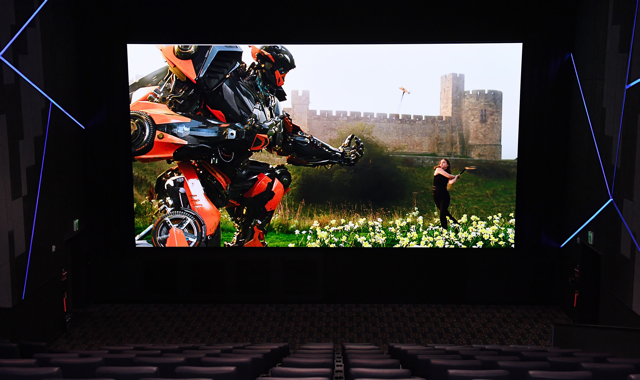 The screen displays 33.6 x 17.8 feet and supports 4K resolution and high-dynamic range images.
“Based on elimination of the projector beam and the high luminosity of Samsung Cinema LED screen, there are a host of new possibilities for interior design,” said Arena Cinemas owner Edi Stöckli. “We are entirely removing the existing furnishings and implementing an innovative seating concept to provide audiences with a totally new kind of cinematic experience.”
Samsung reveals that its Cinema LED screen “illuminates its vast display area through use of around 8.8 million LEDs, as well as immerses audiences in true-to-life audio utilizing technology developed in partnership between HARMAN Professional Solutions and Samsung Audio Lab.”
See the full story here: http://www.etcentric.org/samsung-begins-installation-of-cinema-led-movie-screens/
Intel, Warner Bros. Unveil AV Entertainment Experience Plans
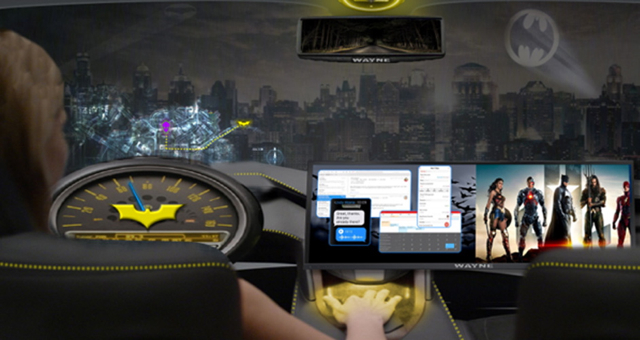 During this week’s LA Auto Show, Intel and Warner Bros. announced a partnership to develop in-cabin, immersive experiences for autonomous vehicles. The companies are creating the AV Entertainment Experience, which Intel chief Brian Krzanich describes as “a first-of-its-kind proof-of-concept car to demonstrate what entertainment in the vehicle could look like in the future.”
Krzanich emphasizes the importance of perception and adoption in addition to safety and the need for standards. Riders will need to be comfortable and trusting of the technology behind autonomous systems and related safety features, which Krzanich sees as “the logical extension of seat belts, air bags and anti-lock braking systems.”
See the full story here: http://www.etcentric.org/intel-warner-bros-unveil-av-entertainment-experience-plans/
The new FDA-cleared Apple Watch band adds real-time EKG
 The Apple Watch already has a heart rate sensor, and it can even help flag potentially dangerous cardiac conditions. Apple is working on having the heart rate sensor check for heart rhythm abnormalities (atrial fibrillation), and has just launched a heart rate study with Stanford that anyone can opt into and test. But there is a new strap for the Apple Watch that does have FDA clearance right now.
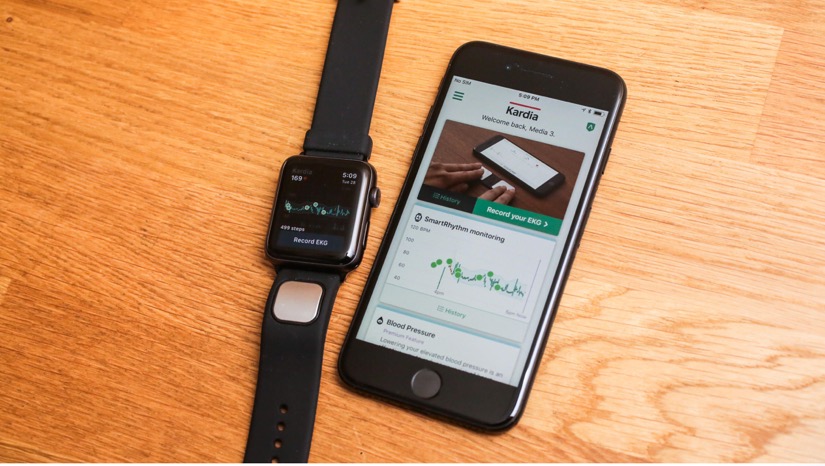
AliveCor's KardiaBand is an FDA-cleared device that checks on-the-spot EKG readings in a Bluetooth-connected strap. Unlike the Apple Watch's optical heart rate technology, the KardiaBand uses your finger or thumb to complete an electrical circuit via two metal contacts: one for your finger, one that rests against your wrist. It works with Apple Watch Series 1, 2 and 3 models -- that is, every version except the original "Series Zero" model.
AliveCor's Kardia app tracks heart rate continuously with the Apple Watch's sensors and then pings you to take an extra EKG reading when your heart rate seems out of place with where your activity and previous history would indicate, using what AliveCor says is AI that learns over time.
SmartRhythm monitoring involves a deep neural network that runs directly on the Apple Watch, constantly acquiring data from the Watch’s heart rate sensor and accelerometer. It compares your heart rate and changes in your heart rate over time to what it expects from your minute-by-minute level of activity, and gives you a graphical display of where your heart rate falls within the boundaries predicted by the neural network. When the network sees a pattern of heart rate and activity that it does not expect, it notifies you to take an ECG.
Beyond detection of arrhythmias, AliveCor is working on other technologies that utilize the power of machine learning and wearable ECG devices like KardiaBand to expand the clinical and diagnostic significance of the ECG even further. For example, in partnership with the Mayo Clinic, we’re working towards reliable detection of life-threatening electrolyte abnormalities, like hyperkalemia, directly from an ECG, and screening tools that may one day enable detection of genetic abnormalities, like congenital long QT syndrome. The ECG has been around for more than 100 years.
What type of security do you use?
Our adherence to HIPAA means that all data on our servers is encrypted when it is at rest or in transit. AliveCor uses industry best practices such as AES 256-bit server side encryption for customer EKG recordings, and transport layer security (TLS 1.2) to establish a secure link with cloud servers and to encrypt data in transit.
See the full story with video here: https://www.cnet.com/news/the-apple-watch-now-has-an-fda-cleared-heart-rate-band/
Hands-on: HaptX Glove Delivers Impressively Detailed Micro-pneumatic Haptics, Force Feedback
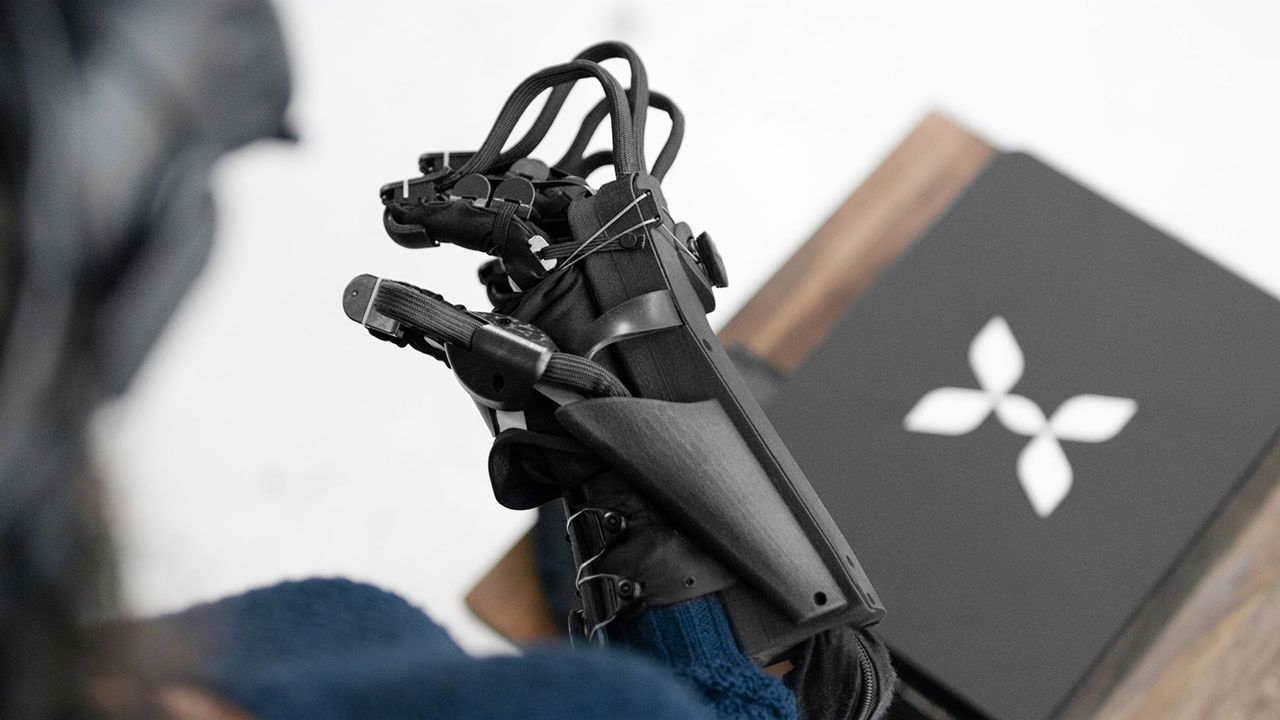
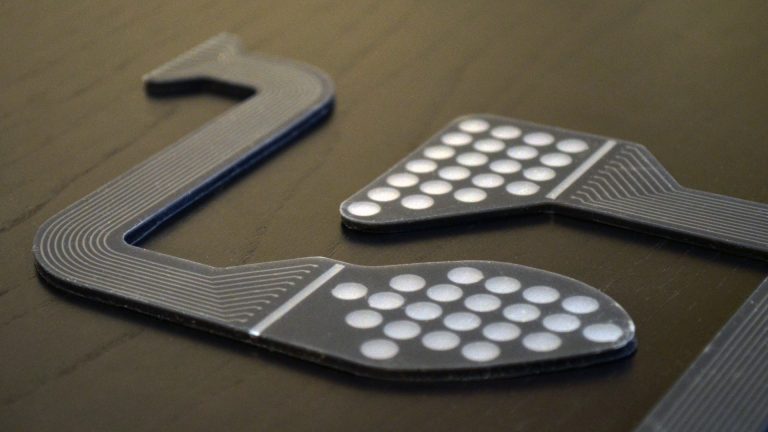 The company formerly known as AxonVR, which has raised more than $5 million in venture capital, is rebranding to HaptX, and revealing a feature prototype of a VR glove which uses micro-pneumatics for detailed haptics and force feedback to the fingers. After trying the prototype for myself, I came away impressed with the tech. The company’s next challenge is to turn the prototype into something sleeker, smaller, and far more practical.
The HaptX gloves is based on innovative micro-pneumatic technology. The company has developed a method for essentially producing thin, bendable fabrics which are manufactured with a series of tiny air pipes along their length which eventually terminate in small inflatable circles which act as “haptic pixels,” according to Jake Rubin, one of the company’s two co-founders and its CEO. The inflatable circles, just a few millimeters across, are aligned into grids; by precisely controlling when and which haptic pixels to inflate, a convincing sensation can be created, simulating the feeling of an insect crawling along your finger or a marble rolling around in the palm of your hand.
The glove also features force feedback: the ability to restrict the movement of your fingers to simulate holding objects
Each of the glove’s fingers is tracked by a proprietary magnetic tracking system which Rubin claims is capable of sub-millimeter precision. Indeed it worked well.
Eventually a baseball-sized tractor came rolling out of the barn. When I went to pick it up like a little toy, my fingers stuck in place—seemingly right against the virtual tractors surface—and wouldn’t budge. It was a convincing effect,...
Pixvana Raises $14 Million For Cloud-based Storytelling Platform Spin Studio
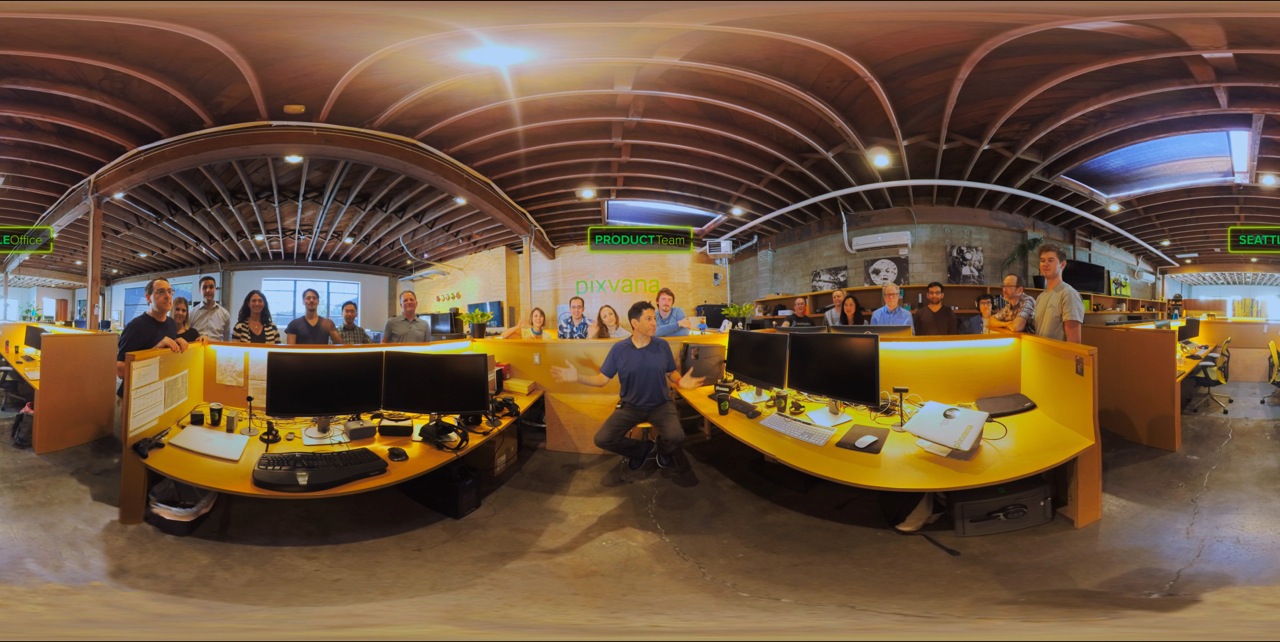 Pixvana, maker of the Spin Studio cloud-based mixed-reality storytelling platform, has raised $14 million in a new round of funding.
Seattle-based Pixvana’s mission is to enable anyone to create and distribute next-generation video experiences. Spin Studio accelerates the production and delivery of interactive mixed reality content (virtual reality, augmented reality, or cross reality — also known as XR) at up to 8K resolution.
Spin Studio supports a variety of AR and VR headsets, and it handles everything from stitching to editing, publishing, and playback in one seamless workflow. Spin Studio offers creative tools for XR storytelling, including customized templates and interactive hyperports.
Pixvana has 24 employees, and it has raised $20 million to date.
“If XR storytelling is the disruptive, inevitable, mass communication medium that we believe it to be, why not demonstrate its potential for our own business? All of the more than 50 investors that saw the Sofia experience noted that this was the first time anyone had seen an XR pitch. Several investors commented that they felt like this was a glimpse of the future of fundraising.”
See the full story here: https://uploadvr.com/pixvana-raises-14-million-cloud-based-storytelling-platform-spin-studio/