Mozilla Lays Out Plans for Web-Based Social Virtual Reality
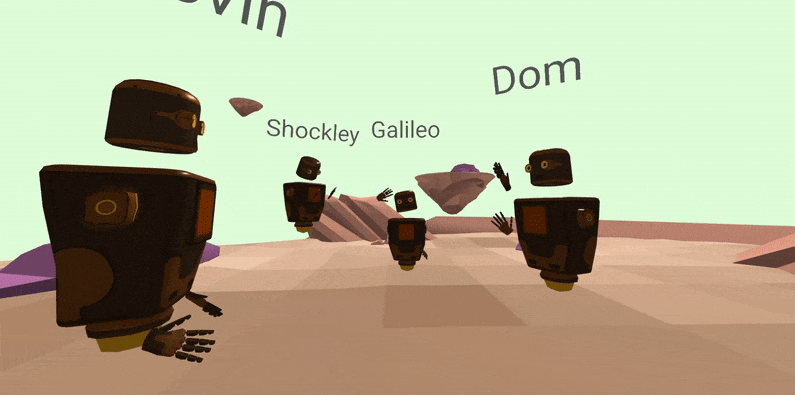 Browser maker Mozilla is making a push to bring social virtual reality (VR) to the web: The non-profit has formed a dedicated team working on technologies to power web-based social VR and mixed reality experiences, it announced in a blog post Monday.
“Unlike traditional online communication tools like text, voice, and video, the promise of Mixed Reality is that you can be present with other people, much like real life, and engage with them in a more interactive way,” wrote Greg Fodor, Mozilla’s social mixed reality engineering manager. “You can make eye contact, nod your head, high five, dance, and even play catch with anyone around the world, regardless of where you are!”
Fodor joined Mozilla in September. He previously co-founded the social VR startup AltspaceVR, which recently sold itself to Microsoft after running out of funding earlier this summer.
Much of the team’s work will be dedicated to making sure that social VR tech can run across headsets and other devices, even if they’re made by competing manufacturers.
See the full story here: http://variety.com/2017/digital/news/mozilla-social-vr-1202619373/
Apple wins one of their First Augmented Reality Patents related to Compositing an AR Scene
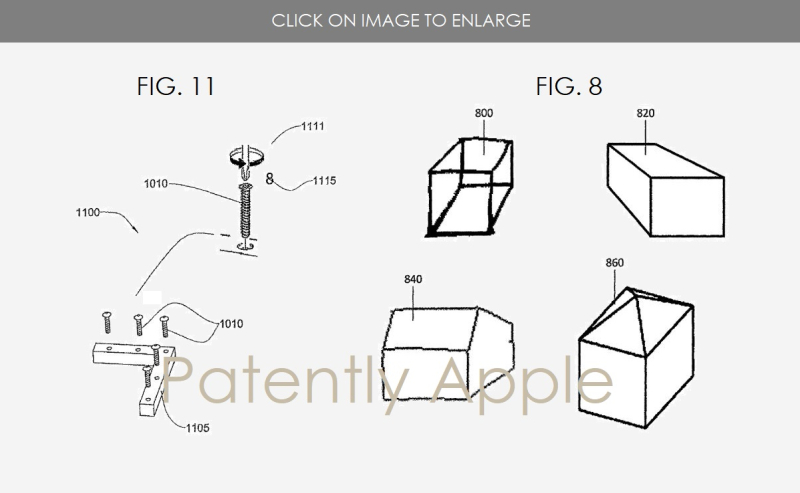 The U.S. Patent and Trademark Office officially published a series of 44 newly granted patents for Apple Inc. today.
The invention was part of Apple's acquisition of Flyby Media. One of the inventors is noted as Oriel Bergig who earned his Ph.D. in Computer Vision and Augmented Reality at Ben-Gurion University of the Negev.
Apple's granted patent 9,824,495 was filed in Q1 2010 and published today by the US Patent and Trademark Office. Some of the work dates back to 2008. You could explore more of this fascinating invention here.
See the full story here: http://www.patentlyapple.com/patently-apple/2017/11/apple-wins-one-of-their-first-augmented-reality-patents-related-to-compositing-an-ar-scene.html
Augmented Reality Headed to Porsche Dealer Service Bays in 2018
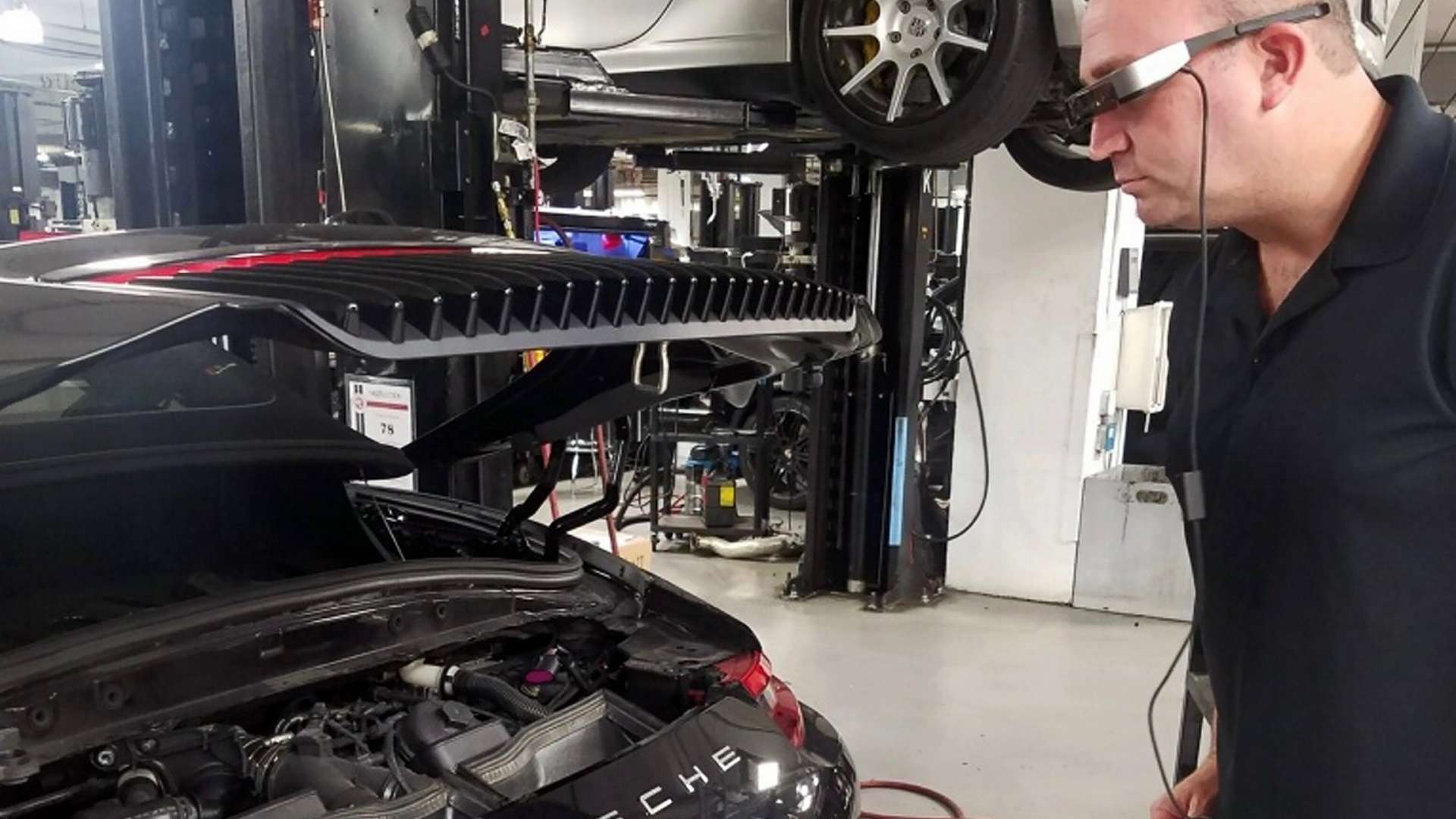 The high-tech glasses come equipped with a high-resolution autofocus camera powerful enough to see the threading on screws. The glasses use the latest projection technology and also include a light to illuminate dark spaces in the engine bay or under the car.
The way it works is a service tech wears the glasses, which connect through the software to a support team based in Atlanta. Back in Atlanta, the team of remote experts helps to identify and resolve the potential problems.
Porsche hopes to decrease its service resolution time by up to 40 percent based on the findings of the pilot program rolled out in July 2017. Eight dealerships in California, Florida, Indiana, New Jersey, Washington and Canada were chosen to try the software.
See the full story here: http://www.thedrive.com/flat-six-society/16277/augmented-reality-headed-to-porsche-dealers-in-2018
Venture Reality Fund Reports on Current VR/AR Landscape
November 21, 2017
The Venture Reality Fund has released its H2 2017 VR Industry Landscape map and report. The organization has generously posted the map, along with maps of the 1H 2017 European Landscape and Q2 2017 AR Industry Landscape. The VR Fund’s latest report highlights more than 450 companies developing infrastructure, tools, platforms, and applications for the VR/AR ecosystem. An interactive table, which VR Fund co-founder Tipatat Chennavasin began building in 2014, provides details of the companies.
The VR Fund evaluated more than 3,000 companies and identified the 450 that met a certain criteria of funding, revenue, mainstream coverage, and/or major partnerships that qualified them for inclusion in the map, interactive table, and report.

“Global investment in VR and AR is tracking higher than any previous period, and at a more accelerated pace,” said Chennavasin “The VR industry is healthy and growing steadily, and we are seeing increased investor interest from traditional venture funds and new VR and AR-focused funds alike.”
As would be expected, the report notes that Hollywood and game players are driving growth in the consumer VR market. On the enterprise VR side, while global companies like Cisco, HP and Accenture entered space during this period, a majority of the category’s growth was driven by startups building revenue-generating businesses for specific industry sectors.
“The number of investments in VR/AR entertainment was up 79 percent in the second half of 2017 (granted, it’s not quite over yet) compared to the second half of 2016,” reports VentureBeat. “Enterprise investments are up 69 percent. Tools and platforms for next-generation reality capture are up 56 percent, and investments in infrastructure for tethered head-mounted displays are up 47 percent.”
The VR Fund also noticed a recent shift in investments away from 360-degree video and to more interactive and immersive experiences, which bodes well for the industry in 2018.
See the original post of the story here: http://www.etcentric.org/venture-reality-fund-reports-on-current-vrar-landscape/
HTC Officially Announces Vive Focus, Its Standalone VR Headset
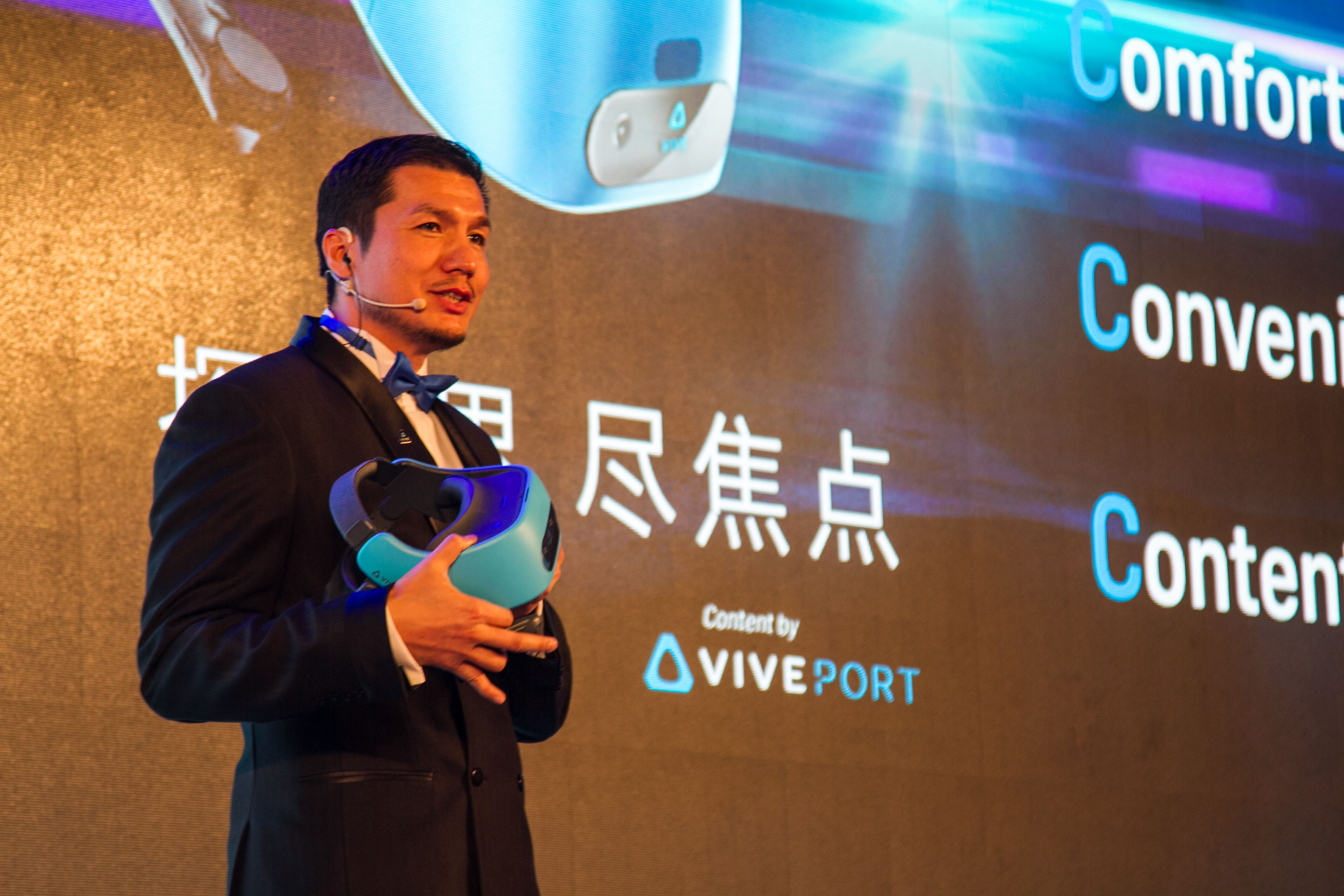
Today at Vive Developer Conference in Beijing, HTC announced its long-awaited standalone headset, called Vive Focus. Since we first started hearing about the prospect of a Vive standalone a few months ago, the VR community has been eagerly awaiting its public release.
Now it’s here. And it’s 6DoF.
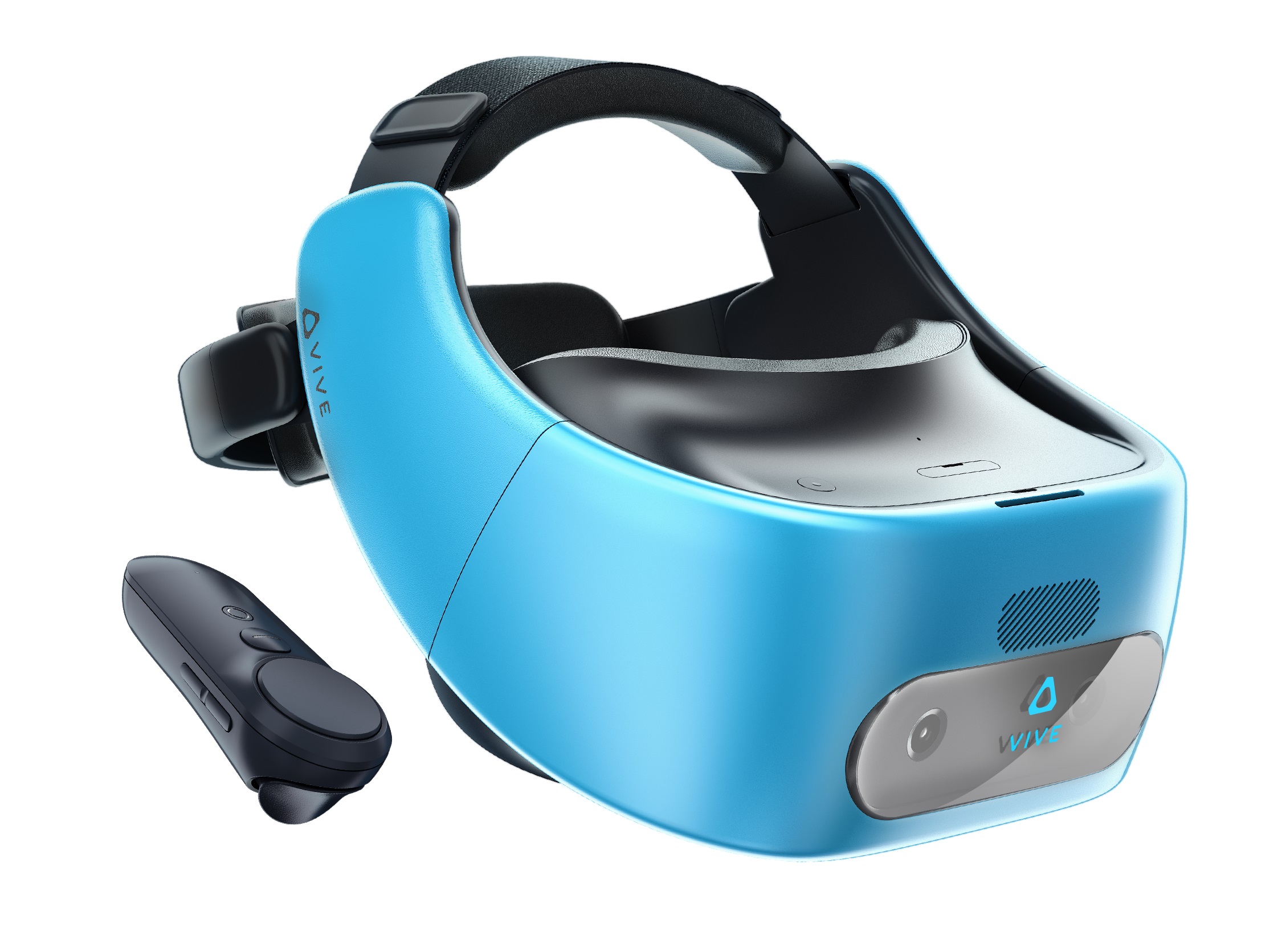
Vive Wave marks a push by HTC to expand the scope of the Vive platform and unite its community.
According to the official website, Vive Wave “an open platform and toolset that will enable easy Mobile VR content development and high-performance device optimization for third party partners. The VIVE Wave VR SDK offers an open interface enabling interoperability between numerous mobile VR headsets and accessories, supporting mainstream game engines. This allows players with different VR devices an easy access to your extraordinary content.”
See the full story here: https://vrscout.com/news/htc-vive-focus-standalone/
Virtual Reality Venture Capital Alliance
 The purpose of the Virtual Reality Venture Capital Alliance (“VRVCA”) is to foster long-term growth in the VR industry through identifying, sharing and investing in the world's most innovative & impactful VR technology and content companies.
Formed in 2016, the VRVCA is a close-knit membership comprised of 47 of the top Virtual Reality Investors in the world. We believe that VR is a transformative technology that will revolutionize entire industries, one that will leave a lasting impact for many future generations to come. In order to achieve that dream, we are working tirelessly to ensure that the VR startups today get the resources they need, so that they can grow into the industry titans of tomorrow.
We invest in Virtual Reality, Augmented Reality and Mixed reality startups of any size from anywhere around the world.
We meet six times a year with our base of operations out of Beijing and San Francisco.
Our network spans the entire globe, so it doesn't matter where you are, as long as you are doing something game-changing, we want to help you realize your dream.
We are not searching for the next technology revolution because it is already here. We are searching for the next entrepreneur to lead it.
See more info at http://www.vrvca.com
CXOs: Get ready for augmented and virtual reality technology
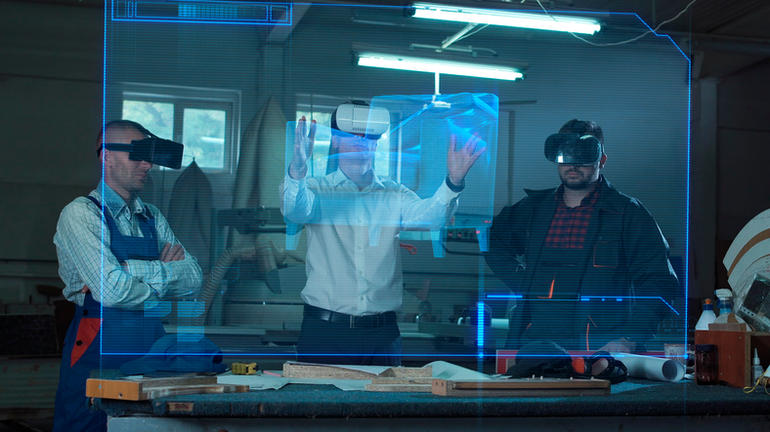
Workers and foreman using virtual reality headsets in carpentry workshop.
1. See what's available in ready-to-go AR/VR technology
2. Evaluate the business processes in your company to see where AR/VR works best
3. Educate your staff
4. Prepare to adapt
5. Don't procrastinate
See the full story here: https://www.techrepublic.com/article/cxos-get-ready-for-augmented-and-virtual-reality-technology/
The VR Fund: Entertainment VR investments jump 79% in second half of 2017
“Global investment in VR and AR is tracking higher than any previous period, and at a more accelerated pace,” said Tipatat Chennavasin, cofounder and general partner at The VR Fund, in a statement. “The VR industry is healthy and growing steadily, and we are seeing increased investor interest from traditional venture funds and new VR and AR-focused funds alike.”
The number of investments in VR/AR entertainment was up 79 percent in the second half of 2017 (granted, it’s not quite over yet) compared to the second half of 2016. Enterprise investments are up 69 percent. Tools and platforms for next-generation reality capture are up 56 percent, and investments in infrastructure for tethered head-mounted displays are up 47 percent.
Among the insights: Major Hollywood players, including AMC, Disney, DreamWorks Animation, HBO, Netflix, Sony Pictures, and Viacom, drove growth in the entertainment category. New experiences for AAA properties, like Star Wars, will help drive consumer interest in VR over the coming quarters.
The report also showed that the games category grew by 40 percent during this period, consistent with the success reported by Oculus, Steam VR, and PlayStation VR combined. The VR Fund estimates more than 35 VR game titles have generated $1 million or more in revenues, signaling a healthy early-stage ecosystem for VR game studios. These numbers are positioned for continued growth as headset prices drop.
Major investments in the next-generation reality capture space indicate that the broader market is shifting away from 360-degree video to true VR. Advancements in display technology are largely responsible for the 47 percent growth seen in the tethered head-mounted display category. The report also noted the announcement of new all-in-one, standalone devices, such as the Oculus Go and HTC Vive Focus. That bodes well for VR in 2018.
See the full story here: https://venturebeat.com/2017/11/19/the-vr-fund-entertainment-vr-investments-jump-79-in-second-half/
See the full diagram at the VR Fund website - http://www.thevrfund.com 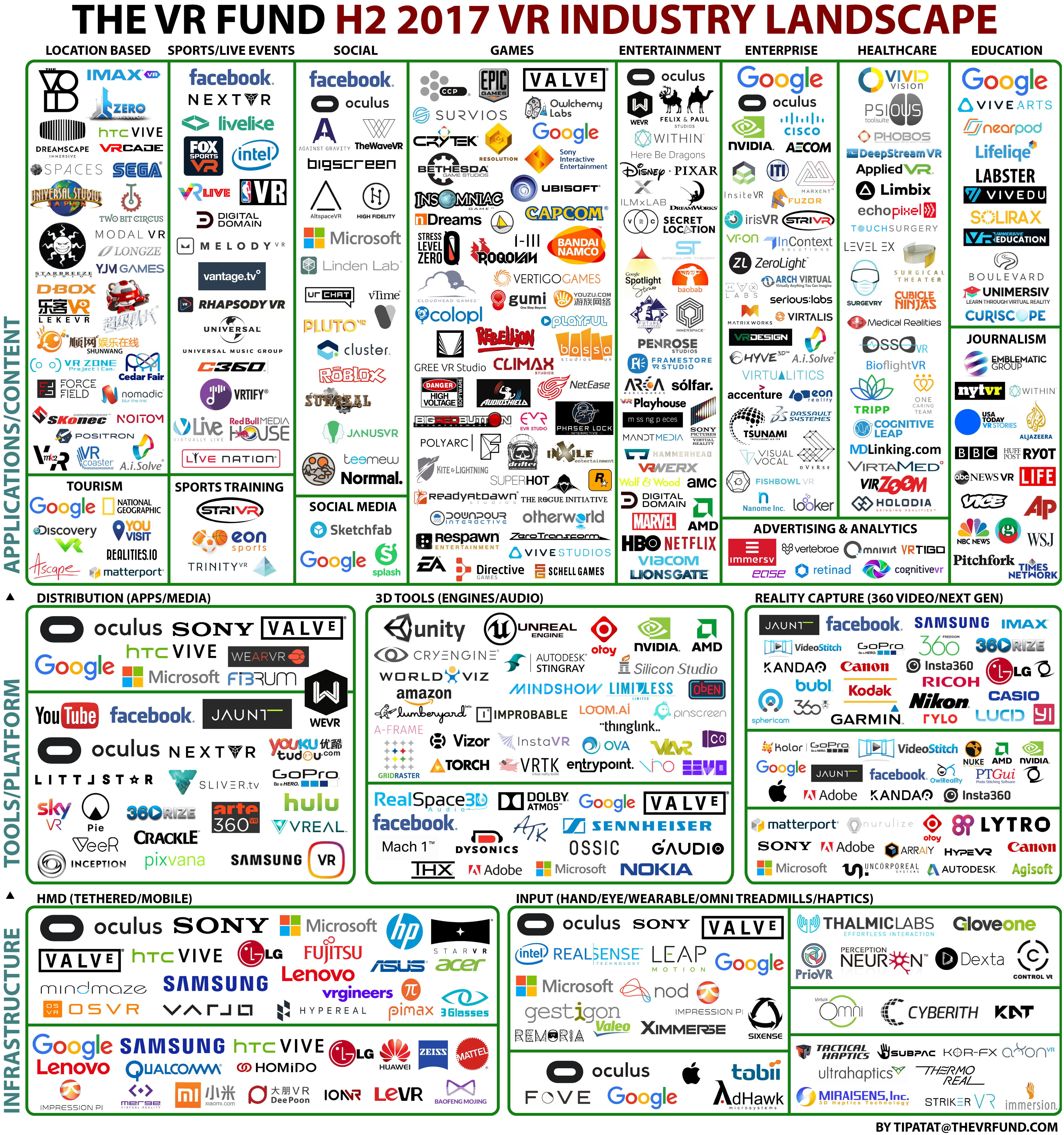
How Hollywood techniques and VR are changing the field of neuroscience
 At the 2017 Society for Neuroscience annual meeting in Washington D.C., a team of researchers showed off two projects that highlight what this technology can do when applied to the realm of neuroscience.
Tyler Ard, a researcher at the University of Southern California in Los Angeles, showed how computer rending techniques can be applied to the results of MRI scans to produce images from large amounts of data. Ard and his team have developed software that will make it easy to import this data. He also said they plan on making it freely available to other scientists.
The team isn’t content to solely make use of CGI for MRI scans, however. They are also combining it with virtual reality to create 3D images of the human brain, allowing researchers to more easily study the brain and perform virtual dissections. Ard believes that this will be a more effective means of learning neuroanatomy than traditional means.
...a team of researchers at the University of Utah in Salt Lake City have developed a program that will allow scientists to use VR to more easily trace neurons.
The team from the University of Utah has found a way to create 3D VR images of neuron pathways, allowing scientists to walk around their images and use handheld controllers to rotate them.
In order to show off the program, the team had four professional neuroscientists map a series of neuron images using the new VR technology and standard desktop computer. The VR proved just as accurate as the desktop method, but was 1.7 times faster.
See the full story here: https://www.digitaltrends.com/virtual-reality/cgi-and-vr-change-neuroscience/