CONFRONTING THE “SHOCKING” VIRTUAL-REALITY ARTWORK AT THE WHITNEY BIENNIAL
 [Phil Lelyveld comment: Serious misuse of 'the empathy engine' for pointless shock value. "If you don't let us watch violence, how can we become desensitized to it?" Bart Simpson]
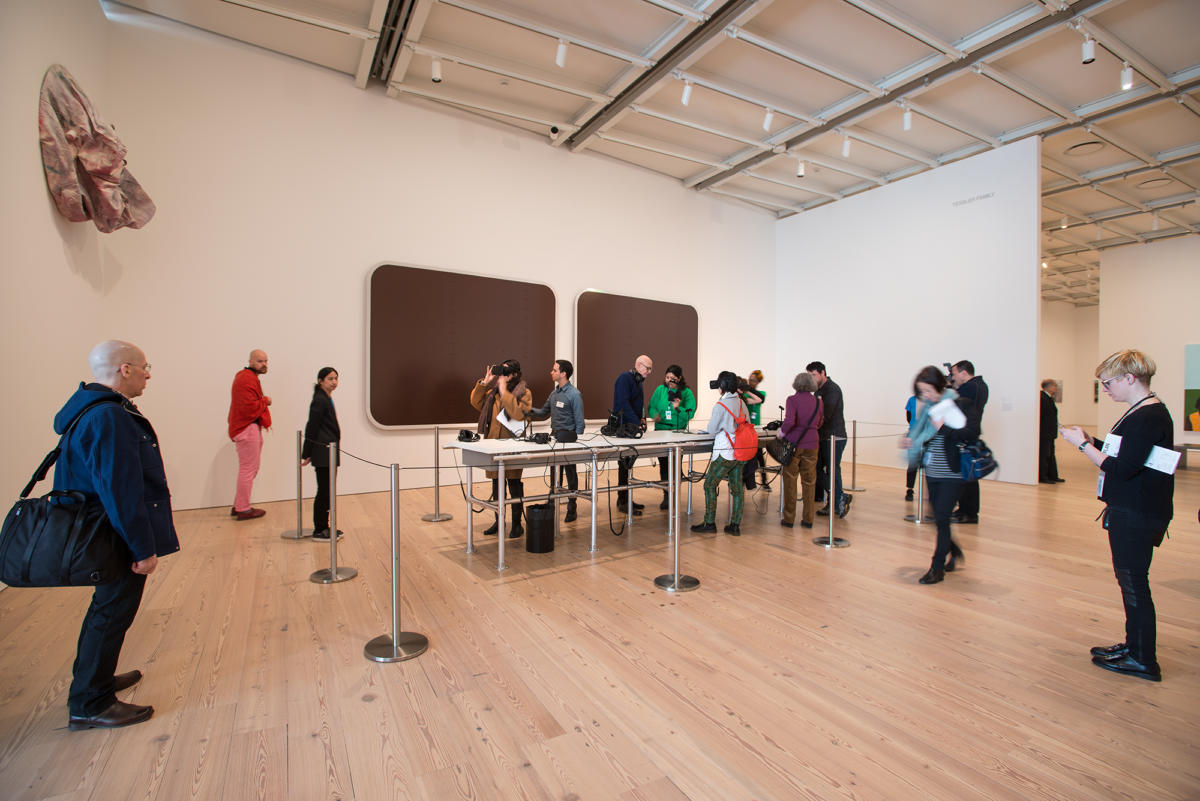
Viewers are directed to a counter, handed noise-cancelling headphones and virtual-reality goggles, and instructed to grip the railing below them. The video begins with a view of clear sky glimpsed between buildings on a wide Manhattan street, as if you’re lying supine on the ground. You can almost smell spring. Then a cut, and there, kneeling on a stretch of sidewalk, is a young man in jeans and a red hoodie, an obscure, plaintive expression on his face as he holds your gaze. A man in a gray T-shirt stands over him: the artist. He takes a baseball bat and whacks his victim in the skull, then drops the bat, drags the man by his legs to the center of the sidewalk, and proceeds to bash his face in with a series of stomps and kicks. Blood gushes. The victim grunts and is silent. In the street, indifferent traffic is lined up bumper to bumper. Pedestrians mill around in the far background. The bat has rolled into the gutter; the batterer retrieves it and carries on. The camera cuts to a dizzying view from above; it feels like hovering upside down in a dream. Throughout, a man’s voice sings the two Hebrew blessings that Jews recite over the candles during Hanukkah. Abruptly, the sound cuts, then the image.
The violence in “Real Violence” is not real, insofar as it is carried out on an animatronic doll enhanced in post-production. But the troubling veneer of realness is its aim.
See the full story here: http://www.newyorker.com/culture/cultural-comment/confronting-the-shocking-virtual-reality-artwork-at-the-whitney-biennial
Disney – Catching a real ball in VR
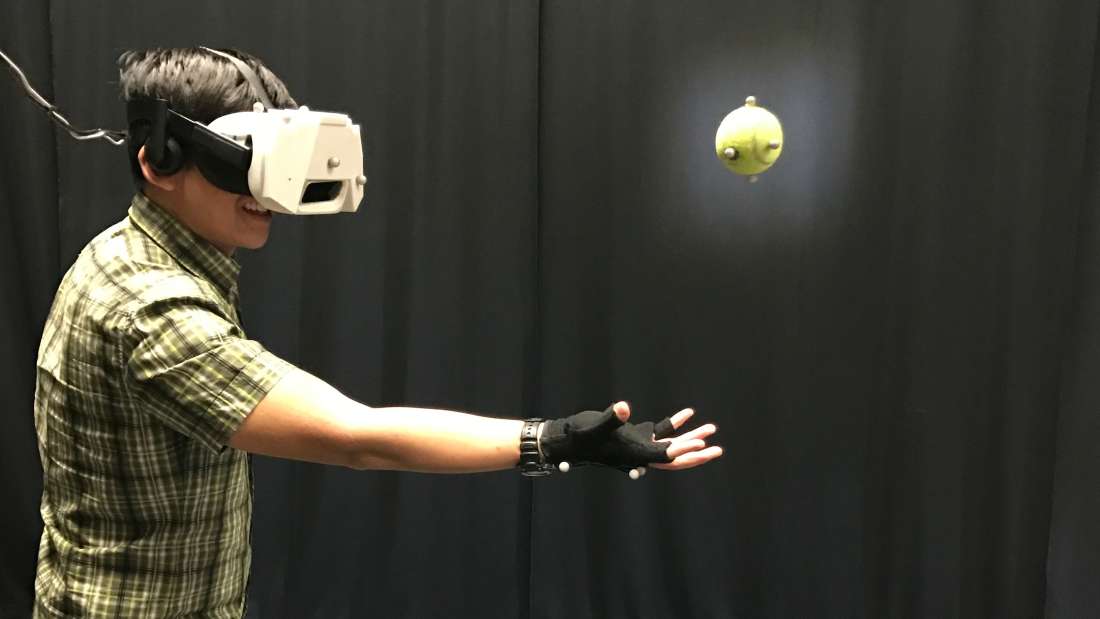 Disney Research lab has developed a particularly cool extension of this that allows users to catch a real ball while they're wearing a VR headset and fully immersed in a computer-generated world. The user, therefore, can’t actually see the real ball at all and is instead reacting to its projection as a virtual ball. Neat stuff.
"Catching and feeling the real ball in your hand makes VR much richer, more believable, more exciting, more interactive, more dynamic, more real," Günter Niemeyer, senior research scientist, said in a statement.
"With VR, we can show you the future by pre-rendering where the ball is going to be," Niemeyer added. "For some types of interactions, game designers might choose to take advantage of VR to make certain tasks easier, just as using a net to catch balls might make some games more enjoyable."
See the original post with video here: http://www.iflscience.com/technology/catching-a-real-ball-in-virtual-reality-is-suprisingly-cool/
Dolby Uses Biosensors to Research Media’s Impact on Viewers
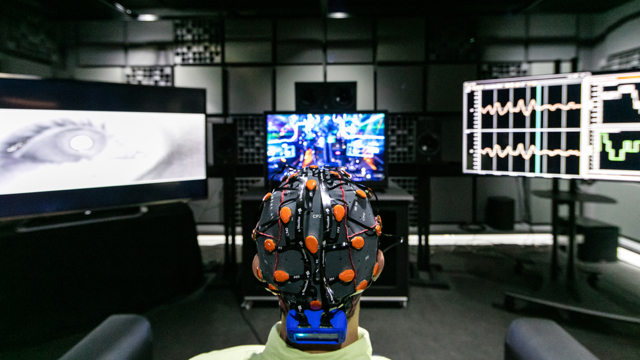 Dolby Laboratories, known for its proprietary high-dynamic range technology, is conducting research on how media impacts human beings. The biophysical lab, run by chief scientist Poppy Crum, was established in 2015, growing out of research begun in 2012 to better understand human reactions to audio and video. In addition to aiming thermal cameras at them, the subjects wear a 64-channel EEG cap measuring electrical activity in the brain, heart rate and galvanic skin response trackers and a pulse oximeter.
See the full story here: http://www.etcentric.org/dolby-uses-biosensors-to-research-medias-impact-on-viewers/
Biometric Data Streams and the Unknown Ethical Threshold of Predicting & Controlling Behavior
Voices of VR Podcast – Episode #517
 I also talked to John Burkhardt about some of the ethical implications of integrating these biometric data streams within an entertainment and consumer VR context. He says that the fields of advertising and brainwashing often borrow from each other’s research, and he is specifically concerned about whether or not it’ll be possible to hack our fixed action patterns, which are essentially stimulus response behaviors that could be operating below our conscious awareness.
Most of the work that iMotions does is within the context of controlled research and explicit consent of participants, but what happens when entire virtual environments can be controlled and manipulated by companies who know more about your unconscious behaviors than you do?
Burkhardt also says that these types of issues tend to be resolved by implicit collective consensus in the sense that we’re already tolerating a lot of the cost/benefit tradeoffs of using modern technology. He says that it’s just a matter of time before someone creates a way to formulate a unique biometric fingerprint based upon aggregating these different data streams, and it’s an open question as to who should own and control that key.
As I covered in my previous podcast with Jim Preston, it’s easy to jump to utopian or dystopian outcomes regarding privacy in VR, but it’s more likely to fall somewhere in between, as it is complicated and complex.
See the full post here: http://www.roadtovr.com/biometric-data-streams-unknown-ethical-threshold-predicting-controlling-behavior/
Facebook’s secretive and ambitious hardware group is preparing for its debut next month
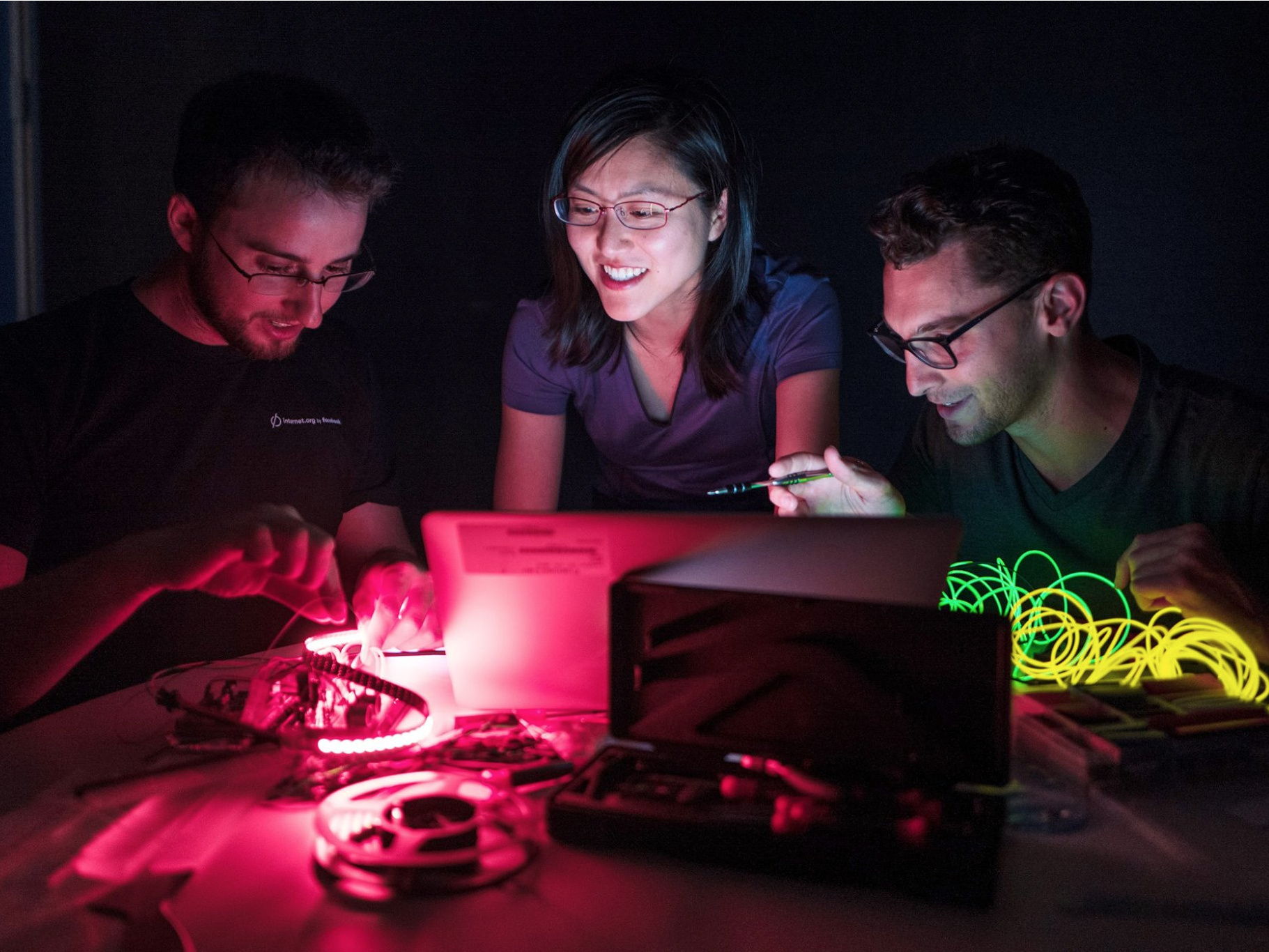 The group, known as Building 8, currently has four simultaneous projects underway, spanning everything from cameras and augmented reality to science fiction-like brain scanning technology, Business Insider has learned.
Facebook’s early efforts with Building 8 are an indication that the company wants to be a serious player in augmented reality, which is considered to be the next frontier of technology, according to Loup Ventures partner Gene Munster.
See the full, lengthy story here: http://www.businessinsider.com/facebooks-building-8-working-on-camera-augmented-reality-mind-reading-projects-2017-3
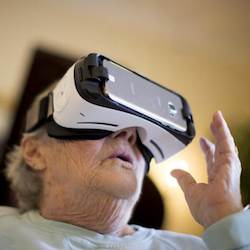
Virtual reality system for assisted living, memory care wins prize
 [Philip Lelyveld note: I am an advisor to this company.]
The Rendever system includes multiple virtual reality headsets, custom software and a tablet computer. The software syncs headsets together so users can experience a virtual world together that could include a childhood home, an exotic locale, a sporting event or a relative's wedding. The headsets can be controlled simultaneously by caregivers, using the tablet. All content is custom-made by Rendever, based on 20 million gigabytes of content from the internet.
In addition to serving as a tool for socializing, the system can be used for reminiscence therapy, according to MIT. Rendever also hopes to leverage virtual reality data to aid in diagnosing dementia.
The company said it tested the system at a Brookdale community in Massachusetts and found that overall resident happiness increased by 40%. The MIT AgeLab is helping to validate the study findings.
See the full story here: http://www.mcknightsseniorliving.com/news/virtual-reality-system-for-assisted-living-memory-care-wins-prize/article/645134/
EVR Holdings lands deal to show Universal music gigs in virtual reality
 EVR Holdings, which is preparing to launch its MelodyVR app, will create virtual reality content for artists signed by Universal, allowing headset users to view gigs and other performances.
EVR and Universal will share the revenues generated on the MelodyVR app. Universal will also subscribe for 43 million shares in EVR, giving it a small stake. It follows a similar deal with Warner at the end of last year.
See the full story here: http://www.standard.co.uk/business/evr-holdings-lands-deal-to-show-universal-music-gigs-in-virtual-reality-a3494201.html
[Boston] Exploring new worlds inside a 2,000-square-foot arena
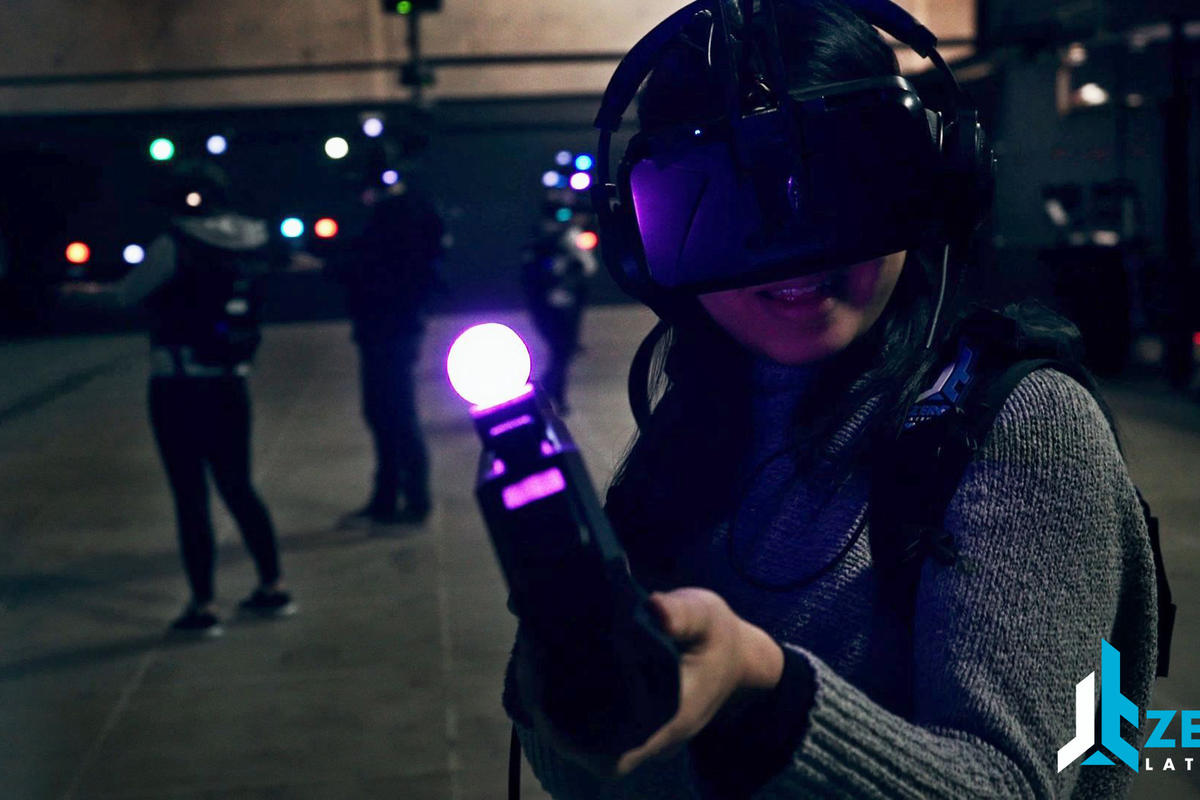
Zero Latency Survival 4 - AmericaÕs Largest Multiplayer Free-Roam Virtual Reality Game Arenas Coming to Greater Boston and Philadelphia in 2017
Courtesy photo
The cutting-edge experience will be available later this year at a pair of virtual reality arenas that are preparing to open in the Boston area. Participants donning virtual reality headsets will be free to roam around a 2,000-square-foot space while exploring new worlds, solving puzzles and, yes, hunting down bloodthirsty zombies.
The high-tech arena, which is basically an empty room outfitted with sensors on the ceiling to track players’ location, is powered by ZeroLatency, an Australian company.
Right now MindTrekVR has announced two games, the zombie apocalypse and another, less panic-inducing experience in which players have to walk around to solve a puzzle in an alien world where whales fly and down becomes up.
See the full story here: http://www.bostonherald.com/business/business_markets/2017/03/exploring_new_worlds_inside_a_2000_square_foot_arena
SVRF may have the answer to VR’s search problem
 I sat down with Sophia Dominguez, co-founder and chief executive of SVRF, a search engine for VR content, which just launched in open beta.
Sophia discussed why consumers are scared of VR and how she’s planning to knock down the barriers, why the nausea factor is critical in search rankings, how Snapchat will help bridge to the gap to AR, and why Facebook’s VR privacy policy is pretty alarming. Sophia also revealed the challenges of being a woman in the industry, why building a company in New York is a better reality check than building in the Silicon Valley bubble, why VR zombies are a great alternative to coffee, and why trippy VR art is so amazing.
One thing we didn’t realize when we first started was how much bad content there was. There’s all these weird things you have to think about. If you look at content that’s on the web and are like oh this is interesting, but you put it in a headset, it could make someone sick. The way that our ranking works is, would somebody feel comfortable in a headset —
See the full story here: https://techcrunch.com/2017/03/18/svrf-may-have-the-answer-to-vrs-search-problem/
Law, virtual reality, and augmented reality
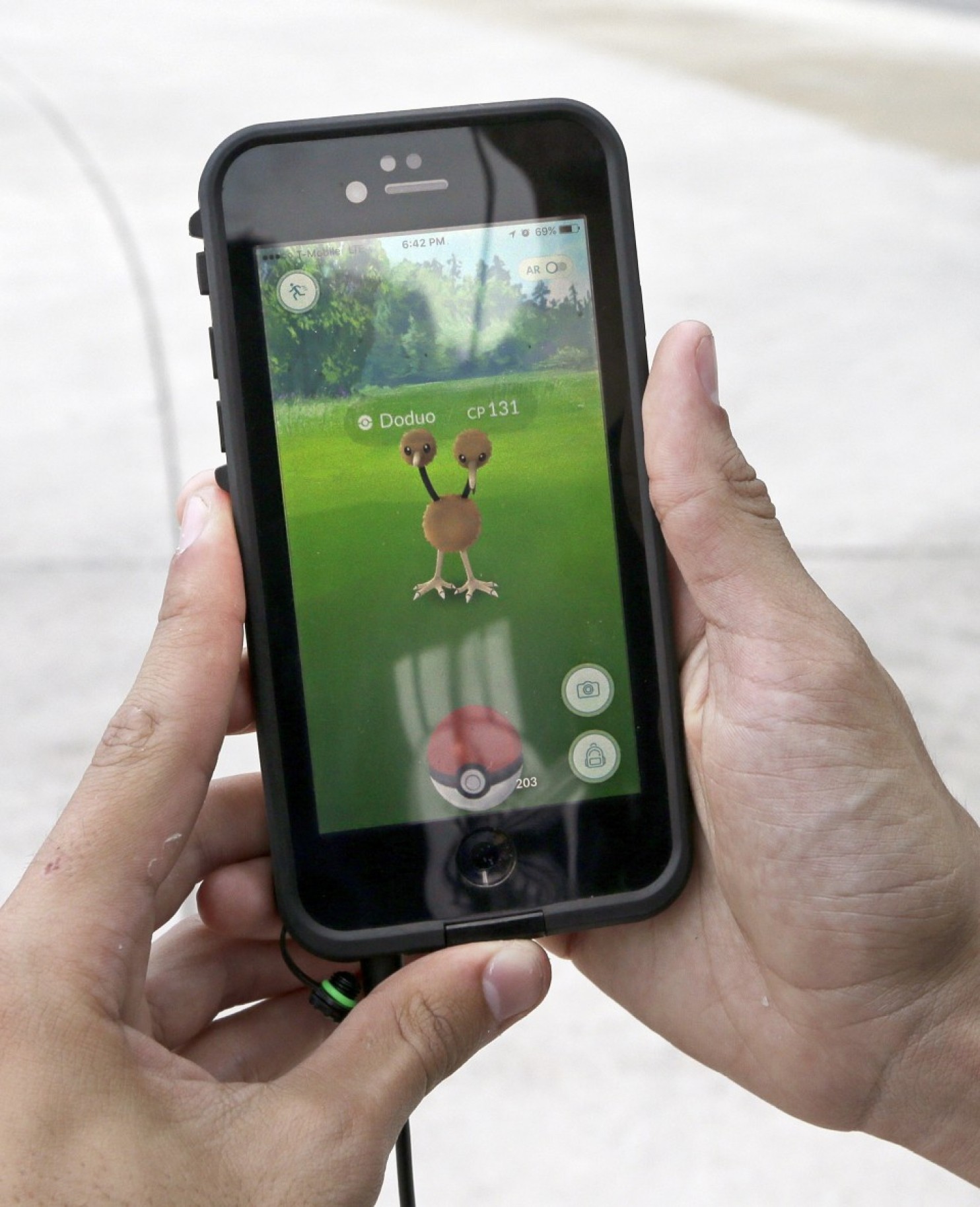 Stanford law professor Mark A. Lemley and I have just finished a draft of a new article, “Law, Virtual Reality, and Augmented Reality.” It’s still early days in the development of commercial VR and AR, and even more so in the law of each. But we think that the shape of the technology is clear enough to speculate about the legal issues that are likely to arise.
You can read the current 64 page draft of their 6-part article here: https://papers.ssrn.com/sol3/papers.cfm?abstract_id=2933867
A word about my coauthor: Mark is probably the most-cited scholar of his generation, and certainly one of the two or three top intellectual property scholars and law-and-technology scholars in the country.
Our article primarily aims to identify the interesting coming questions, and outline some possible answers. We will sometimes suggest which answers are best, but that’s not the main value that we seek to add. Rather, we simply hope that, by thinking ahead about such matters, all of us can better decide how to better develop both VR and AR law and VR and AR technology, and perhaps also learn something about the role of law in the physical world as well.
See the full news story here: https://www.washingtonpost.com/news/volokh-conspiracy/wp/2017/03/17/law-virtual-reality-and-augmented-reality/?utm_term=.66ef1c34a414