Dirac Research Raises $4.8 Million to Build Superior VR Audio
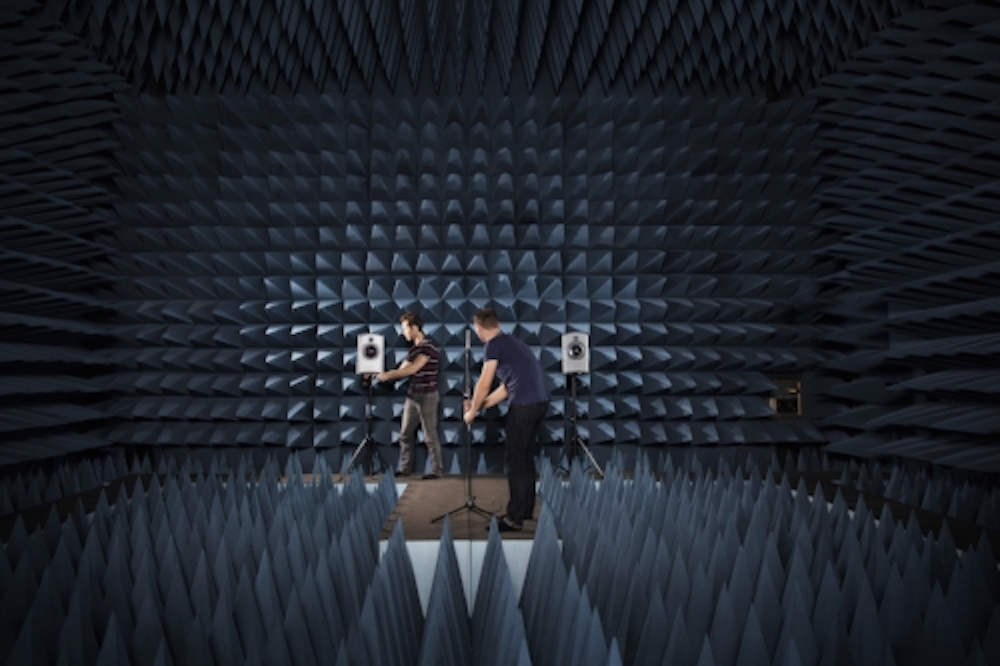 Dirac VR — an audio optimization solution that Dirac claims will create such realistic sounds that “you’ll no longer notice you’re wearing a headset.”
VR and AR will be a cornerstone focus for the company following the new round of investment. According to Dirac:
The capital investment will be used to accelerate Dirac’s expansion into new markets such as virtual and augment reality, strengthen their position as the global leader in mobile audio optimization technology, and to further develop their management and engineering teams.
Dirac’s software has already won praise for increasing the fidelity of smartphone audio and now time will tell if a new focus, and almost 5 million extra dollars, can let the company similarly improve the way we hear in VR.
See the full story here: https://uploadvr.com/swedish-company-will-use-5-million-investment-build-superior-vr-audio/
Buzz Aldrin: ‘You don’t just go to Mars for a day and come back’
 At the South by Southwest conference in Austin, Texas, the 87-year old former astronaut and engineer debuted his new VR experience, created by virtual reality company 8i, called "Cycling Pathways to Mars." The 10-minute immersive experience is being billed as "the first legacy virtual reality project," which guides users on a trip to the moon and the red planet.
Still, the technology is ubiquitous at South by Southwest this year, with more than 40 official VR events, including a VR competition, and panels on topics like funding VR content, VR in Hollywood and "love in a virtual/augmented age."
See the full story here: http://www.cnbc.com/2017/03/15/buzz-aldrin-talks-virtual-reality-space-travel.html
Arrival – Oscar Hit Gets Remade In Virtual Reality
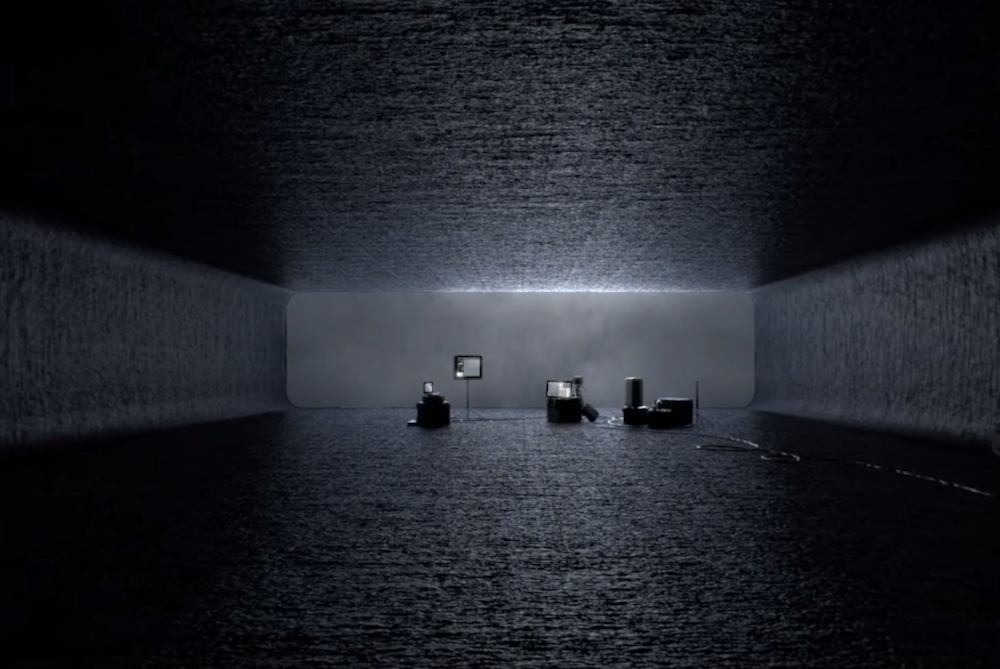
“Our challenge was to seamlessly weave disparate visual and audio moments of the film into a single experimental journey”, said McGreal. One of the main goals according to McGreal was to “recreate and preserve the elegant design and tone that made the film unique.” This is following a trend of films combining forces with the VR industry as a new way of promoting a film project while also giving viewers a new experience, so that, though the Oscars might have taken place a few weeks ago, and Arrival released in November of last year, filmgoers can still stumble upon the picture as might not have been the case even a year ago.
See the full story here https://www.psfk.com/2017/03/oscar-arrival-virtual-reality.html
Avegant Light Field Puts Augmented Reality in the Palm of Your Hand
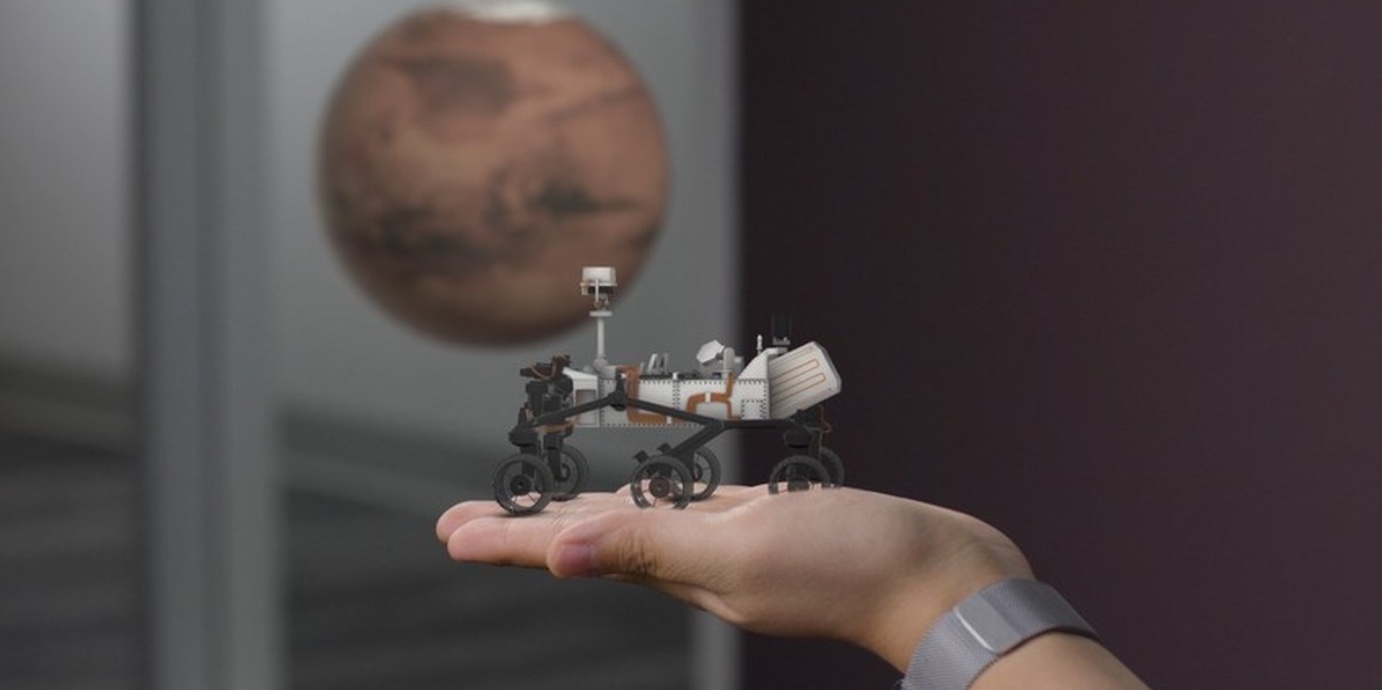 The imaging technology startup Avegant says its light field prototype provides a truly immersive experience that is critical for the future success of the entire mixed reality industry.Jeremy Bailenson, founding director of the Stanford University Virtual Human Interaction Lab, was deeply impressed by his test of the Avegant Light Field prototype.
"One of [Magic Leap's] first signature images was of an elephant being cupped by a hand. That's what I experienced in the Avegant demo, to be able to hold a planet in my hands," Rubin told Seeker. "It's the difference between seeing animated objects out of your reach and being able to actually walk up to things, put your hands around them and navigate within the mixed reality space."
Avegant's light field headset works by mimicking the way that real-world objects emit light. In the real world, light enters the eye as a collection of rays, which are focused for the brain. Objects that are different distances from the eye emit different "light fields," requiring the eye to constantly adjust like the autofocus setting on a camera. In humans, our combination of binocular vision and the ability to switch between different focal planes gives real-world objects their depth and distance.
"It's not often you witness a technology that could disrupt an entire industry," Bailenson was quoted as saying in an Avegant press release. "Avegant Light Field is that kind of a breakthrough. I had long heard about the possibility of seeing close fields and far fields in the same scene, but experiencing it firsthand was believing. This is how the visual system was designed to work."
See the full story here: http://www.seeker.com/avegant-light-field-puts-augmented-reality-in-the-palm-of-your-hand-2316599059.html
New VR productions coming to SXSW include sci-fi series ‘Trinity’ and short film ‘Wonder Buffalo.’
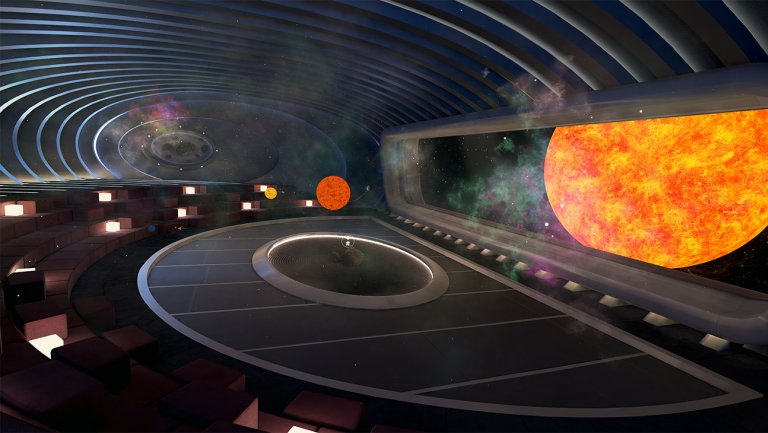 Also at SXSW is a short film/alternative reality/virtual reality project titled Wonder Buffalo, a "coming-of-age story of a Thai-American teen finding acceptance and empowerment by taking on the role of her favorite superhero." The production was made possible through the Entertainment Technology Center at the University of Southern California’s 2016 Innovative Technology Award granted to filmmaker Christine Berg and writing partner Simon Shterenberg. The award provided funding and technical support for the project.
In related VR news, Sony Pictures VR released its first virtual reality project, Passengers VR, on Tuesday, timed with the digital and Blu-Ray release of the motion picture.
Based on the sci-fi drama starring Jennifer Lawrence and Chris Pratt and priced at $9.99, the 20-minute experience begins as the viewer "awakens" on the Starship Avalon and realizes that there are critical malfunctions onboard. The viewer must solve a series of puzzles while navigating the many rooms of the spaceship.
Passengers VR was programmed and designed by Technicolor-owned visual effects company MPC with spatial sound design by Q Department. The ship’s look is based on the Oscar-nominated production design seen in the film.
See the full story here: http://www.hollywoodreporter.com/behind-screen/skydance-sony-pictures-debut-first-virtual-reality-titles-985919
Endor emerges from MIT research with unique predictive analytics tech
 The company has developed a predictive analytics cloud service based on a concept called ‘Social Physics‘, which purports to simplify big data analysis. The thinking is that people tend to behave in predictable ways, and if you analyze the data through this social prism using formulas based on Social Physics theory, you can generate more accurate results.
Social Physics was a term originally coined by MIT professor Alex “Sandy” Pentland and Endor CTO and co-founder Dr. Yaniv Altshuler (who did his post-doc work at MIT). They found through their research that “…human behavior is determined as much by the patterns of our culture as by rational, individual thinking. These patterns can be described mathematically, and used to make accurate predictions,” Pentland explained in a statement.
While there are clearly privacy implications when using data in this way, the company says it’s aware of these ethical issues and their mentor, Professor Pentland, has written extensively on the issues of data privacy and ethical behavior around dealing with big data, which they intend to respect.
See the full story here: https://techcrunch.com/2017/03/08/endor-emerges-from-mit-research-with-unique-predictive-analytics-tech/
Watch a Dazzling Screen Made of Thousands of Flying Beads
 Edwards, a Harvard University biomedical engineer and serial inventor, believes his Atom Screen will change how people look at screens—literally and figuratively. He designed the low-resolution display to elicit an emotion, not achieve precision.
The Atom Screen is one of a handful of concepts advancing screen technology. The Ariana by Razer immerses gamers in a virtual world by projecting the scene onto walls. Tanvas and Bosche developed monitors that feature haptic feedback to simulate texture. Edwards’ screen seems almost low-tech in comparison, yet the underlying technology remains delightfully nerdy. The screen uses two panes of translucent plastic about an inch apart and filled with about five quarts of polystyrene beads suspended in air like the balls in a lotto machine. The beads act like pixels—when light hits them, they reflect it with an almost holographic dimensionality.
The beads move in swarms, “almost like a ballet,” says Laurent Milon, a designer with Millimeter. He directs them using an app that controls 70 small fans that line the perimeter of the screen. Each blows a precise stream of ionized air, and the beads either float through the air or stick to the electrostatic panels.
See the full story here: https://www.wired.com/2017/03/atom-screen/
What is AR.js?
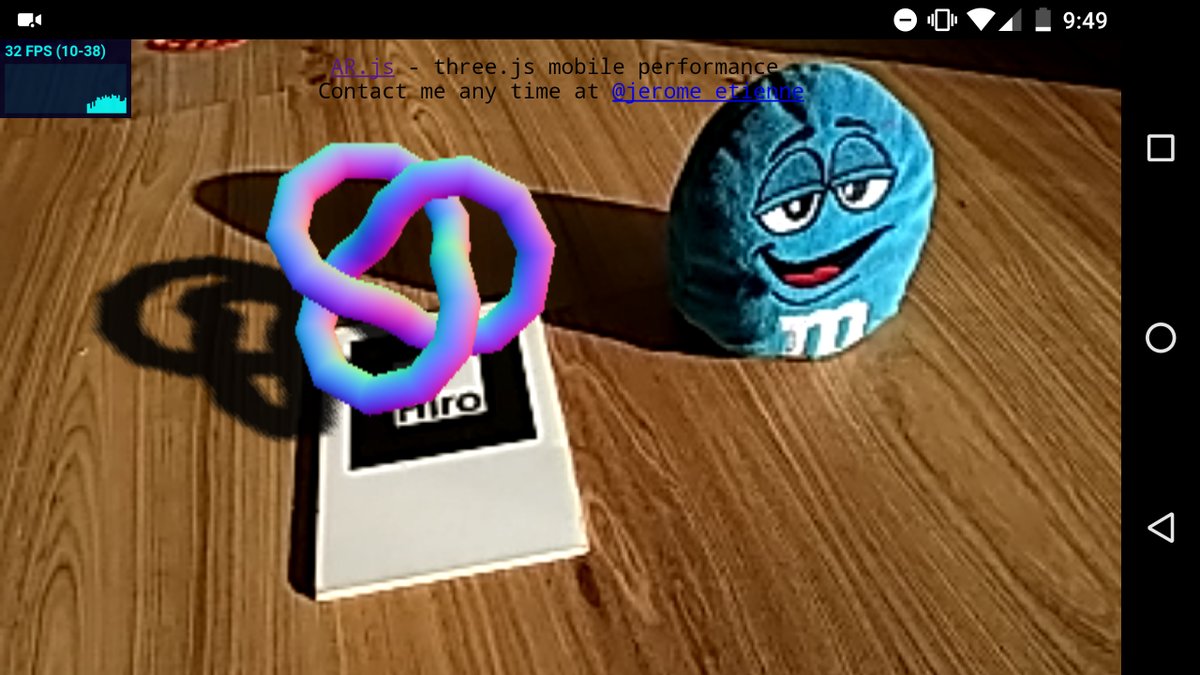 AR.js is a solution for efficiently doing augmented reality on the web, available on github. Let’s take a detailed look at what it is:
- Very Fast: It runs efficiently even on mobile phones, 60 fps on my 2 year-old phone
- Web-based: It is a pure web solution, so no installation required. Full javascript based on three.js + jsartoolkit5
- Open Source: It is completely open source and free of charge
- Standards: It works on any phone with webgl and webrtc
See the full story here: https://uploadvr.com/ar-js-efficient-augmented-reality-for-the-web/
Intelligent Machines The War on the Disturbingly Real Trolls in Virtual Reality
 When you feel like you really are inside a virtual body, protecting your personal space is important.
...
Experiences like that were one reason that Kelly and coworkers at AltSpaceVR formed an all-female team last year to design a feature called the “personal space bubble.” It causes other people’s avatars to disappear and become inaudible if they get closer than about an arm’s length of your own virtual body, and makes you invisible and inaudible to them. The bubble is active by default, but you can turn it off if you do want to get closer to someone (Kelly says that air kissing is an important greeting between friends in AltSpace).
AltSpace also lets you mute specific avatars to prevent you from hearing each other, or to block them, making you and them mutually invisible.
[Philip Rosedale] and Kelly both say that VR trolls are in the vast minority, and argue that they will become less of a problem as more people become used to the technology and the culture of virtual-reality spaces becomes more established.
Raph Koster, a high-profile video-game designer whose hits include the multiplayer online game Star Wars Galaxies, thinks VR trolling is in fact likely to get worse. ... He says companies will have to start more actively curating, investigating, and punishing bad user behavior, for example by hiring dedicated staff. ...when more people start visiting a virtual space, trolling becomes more of a problem because they feel more anonymous.
See the full story here: https://www.technologyreview.com/s/603746/the-war-on-the-disturbingly-real-trolls-in-virtual-reality/