AR pioneer Kari Pulli joins San Mateo startup as CTO
 The San Mateo-based startup makes an augmented reality headset that costs $950. It differs from other AR headsets like Google Glass in that people can interact with, and virtually pick up, holographic objects in the field of view.
Eventually, proponents of augmented reality say, this tech will be small enough to fit discreetly in conventional-looking glasses — or even eventually inside contact lenses. Today, though, the Meta 2 headset still looks like a somewhat clunky, futuristic pair of ski goggles.
Pulli’s research has been nearly exclusively in cameras, imaging and augmented reality technology. Prior to joining Intel, he worked as a vice president at Palo Alto-based Light, helping develop software that combined multiple images from multiple cameras into a single high-resolution image.
Meta launched in 2012 and was accepted into Y Combinator’s summer 2013 class. It’s raised an estimated $73 million to date, and is led by CEO Meron Gribetz.
See the full story here; http://www.bizjournals.com/sanjose/news/2017/02/13/meta-augmented-reality-kari-pulli-nokia-nvidia.html
Stanford researchers personalize virtual reality displays to match a user’s eyesight
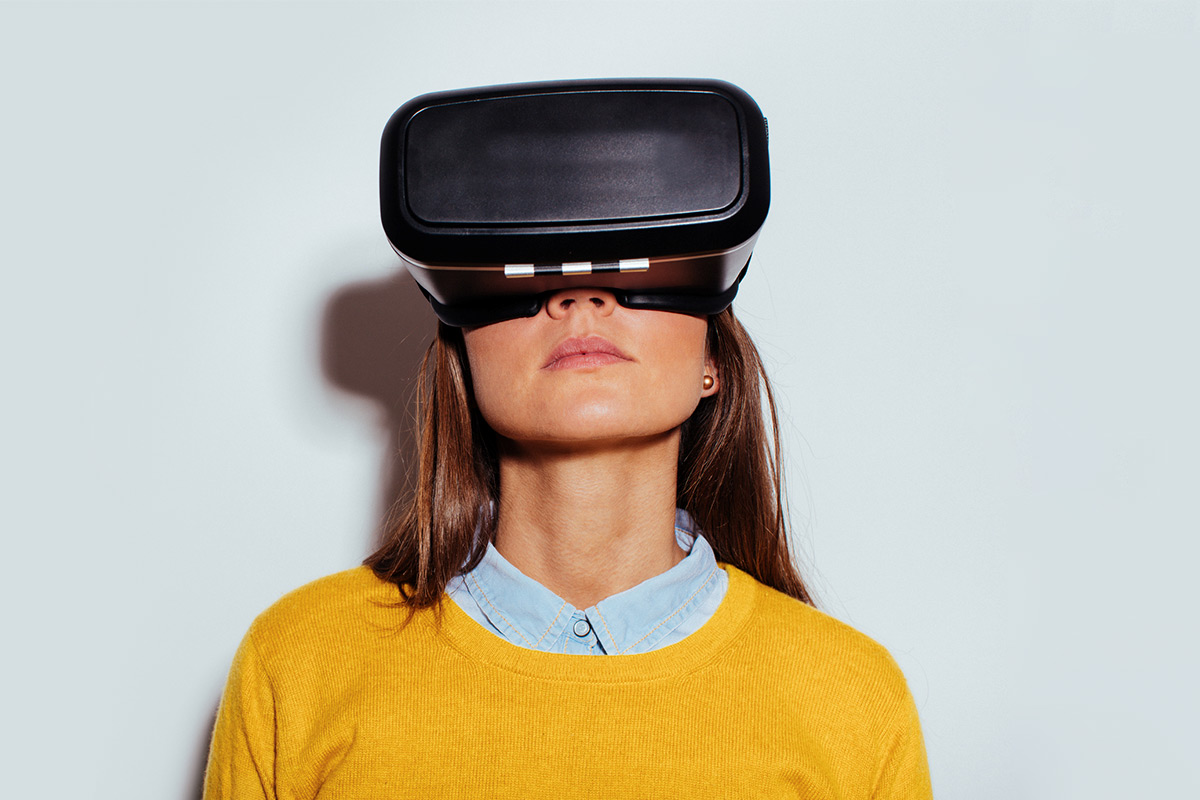 Now researchers at Stanford’s Computational Imaging Lab, working with a Dartmouth College scientist, are developing VR headsets that can adapt how they display images to account for factors like eyesight and age that affect how we actually see.
“Every person needs a different optical mode to get the best possible experience in VR,” said Gordon Wetzstein, assistant professor of electrical engineering and senior author of research published in Proceedings of the National Academy of Sciences.
The problem that the researchers set out to solve is that the display screens on VR headsets don’t let our eyes focus naturally.
The researchers are testing hardware and software fixes designed to change the focal plane of a VR display. They call this technology adaptive focus display.
The group tested two different hardware options. One relies on focus-tunable liquid lenses. Twisting a dial squeezes the liquid lenses inside the headset to change the screen display even though the lens itself remains in place. The other option involves mechanically moving the display screen back or forth, like adjusting a pair of binoculars. The system also incorporates eye-tracking technology to determine where on the screen the user is looking.
The software can account for whether a person is nearsighted or farsighted but cannot yet correct for another vision issue called astigmatism.
“It’s important because people who are nearsighted, farsighted or presbyopic – these three groups alone – they account for more than 50 percent of the U.S. population,” said Robert Konrad
The researchers tested prototypes of these personalized VR displays at last year’s SIGGRAPH conference. Tal Stramer, a Stanford graduate student in computer science, was involved in this phase. The team tested their adaptive focus display on 173 participants aged 21 to 64 and found that the technology provided improved viewing experiences across a wide range of vision characteristics.
See the full story here: http://news.stanford.edu/2017/02/13/personalized-virtual-reality-displays-match-eyesight/
Using Virtual Reality To Get Inside An Ailing Person’s World
 More than 42 million Americans caring for a loved one over age 50 are also living on the margins — as an overwhelmed, overlooked part of our society. Family caregivers and their charges often feel all alone. Many believe that those who are not sick or have not provided care for an ailing or frail parent, spouse or other loved one, really cannot relate to the emotional roller coaster that has become their life.
A Virtual Reality App About Aging
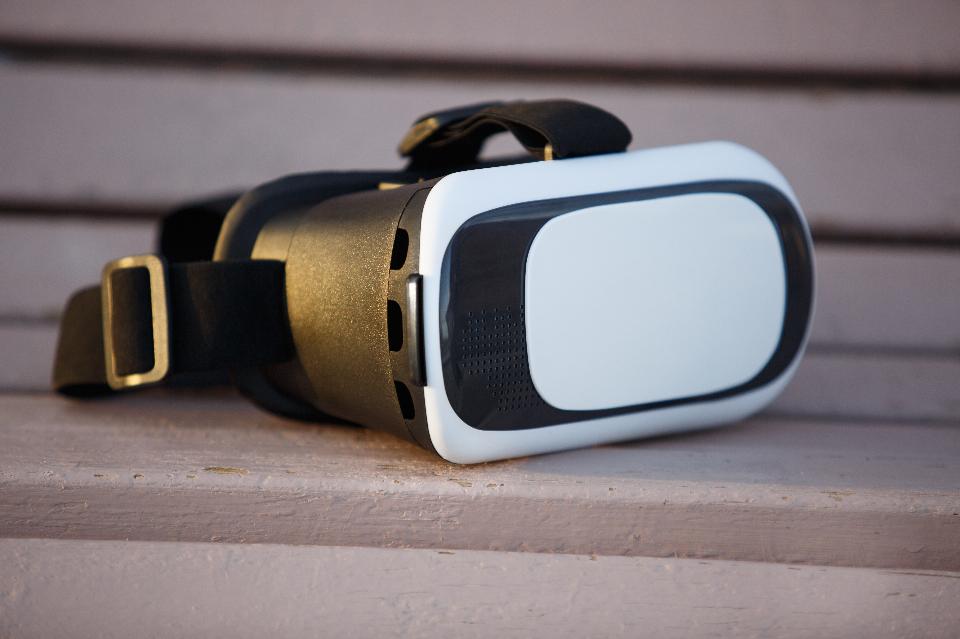
Imagine becoming a 74-year-old African American man with high frequency hearing loss and age-related macular degeneration (AMD), common health issues as we age. This is exactly what Embodied Labs, a Chicago-based start-up created by four Millennials, did with their Alfred Lab app.
The app won the top prize last year in the University of Southern California’s Center for Body Computing (CBC) annual VR hackathon competition. Judges were impressed with the app’s thoroughly informative look at a day in the life of “Alfred,” including interaction with his doctor, his family and others. (Disclosure: Sherri Snelling works for Keck Medicine of USC where the center is located.)
For instance, as a viewer wears the virtual reality goggles, his or her eyesight is blighted by a dark spot in the middle of the visual field simulating AMD. The visual impairment makes eye contact, communication and simple tasks difficult.
Educating Health Care Workers for an Aging America
The goal of Embodied Labs was to create the Alfred Lab Project not as a consumer VR app but to train and educate health care professionals and medical students about aging issues.
What is essential to the success of Embodied Labs is not just delivering on the technology and what the disease or disorder is about. It’s delivering the best storytelling elements that engage the viewer. To do that, Ryan Lebar, a former filmmaker and theater director, helps craft the narrative for maximum empathetic impact.
See the full story here: http://www.forbes.com/sites/nextavenue/2017/02/14/using-virtual-reality-to-get-inside-an-ailing-persons-world/#140cc8ae3703
Imagining the Future of VR at Google
 [Film] can show a world previously unknown to you. But it’s Vertov’s perspective on the world.
With VR it’s about you being convinced that you’re physically in another space. VR is an embodied medium: creators are taking that detached eye and reattaching it to someone’s face.
From a cinematics standpoint, Felix & Paul are technically excellent. But if anyone is going to be remembered, it’s a kid from the Czech Republic named Tomáš Mariančík who created an experience called Sightline: The Chair. The idea is: the world evolves as you spin. So I’m looking at a candle. If I look away and then look back, the candle will be a cube. And I’ll look back at the cube and it will be a building, and then a tree. Everything changes, everything evolves. The only way you can stop it is by not moving. But you can only do that for so long before you move a little bit, and on it goes. It’s kind of drug-like, where suddenly you get beyond your anxieties and you feel euphoric.
I look to gaming for a lot of clues. Most games won’t immediately throw you into the worst possible fit. No, they’ll say, “Here are some mushrooms and if you step on them they’ll die, and if you eat them you’ll grow.” And you progressively gain strength and get to the boss levels. I believe you have to create similar cadences in VR.
VR is its own medium. It’s not going to hurt any other medium. You’re going to see a lot of traditional-media folks trying to get it to work in their domain, and they may succeed. I don’t know. But something really special is happening.
See the full story here: https://www.technologyreview.com/s/603468/imagining-the-future-of-vr-at-google/?set=603642
VR device shipments will hit 110m by 2021
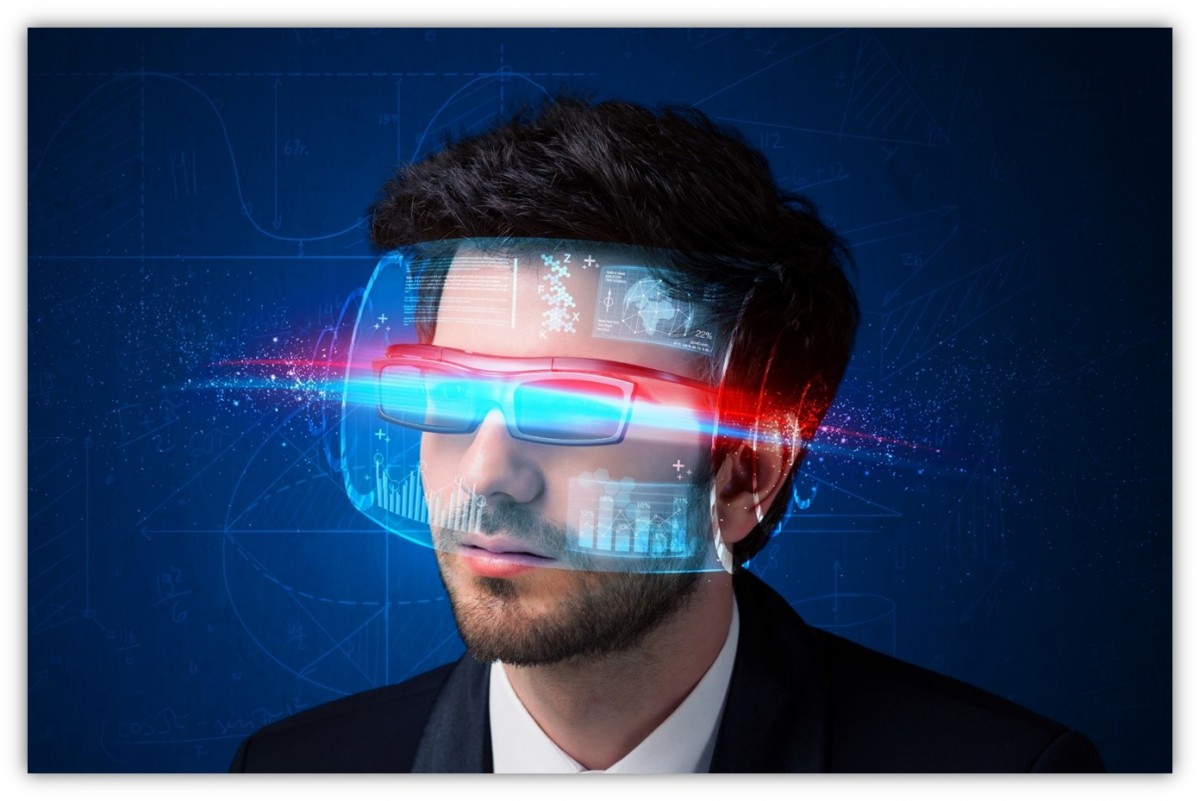 While mobile device-reliant VR shipments—such as Samsung Gear VR and Google Daydream—dwarf today’s other VR device types, standalone devices will see a 405% CAGR through 2021, compared to a 42% CAGR for mobile VR. New device players, including Royole and Pico, already entered the global market, with many other Chinese manufacturers poised to expand.
“Mobile VR built a solid foundation for the overall market over the past few years, but standalone VR devices will eventually drive it,” says Eric Abbruzzese, senior analyst at ABI Research.
...a trend toward standalone devices is surfacing, and will continue over the next five years until mobile and standalone VR devices see parity in terms of shipments.”
“The three primary VR device types—mobile, standalone, and tethered—are entering the market with unique value propositions, target audiences, and use case support,” says Sam Rosen, managing director and VP at ABI Research.
“However, there is the less understood market of mixed reality on the horizon. MR incorporates elements of augmented reality to VR devices, as evident in Intel’s Alloy reference design. Associated machine vision technology like RealSense or Google’s Tango opens a compelling AR/VR hybrid opportunity on the mobile platform. Taking the best of both AR and VR will open up the enterprise market further, and will enable entirely new use cases and applications not yet conceived.”
See the full post here: http://www.broadbandtvnews.com/2017/02/13/vr-device-shipments-will-hit-110mi-by-2021/
A Rare Trip Inside Disney’s Secret Animation Vault
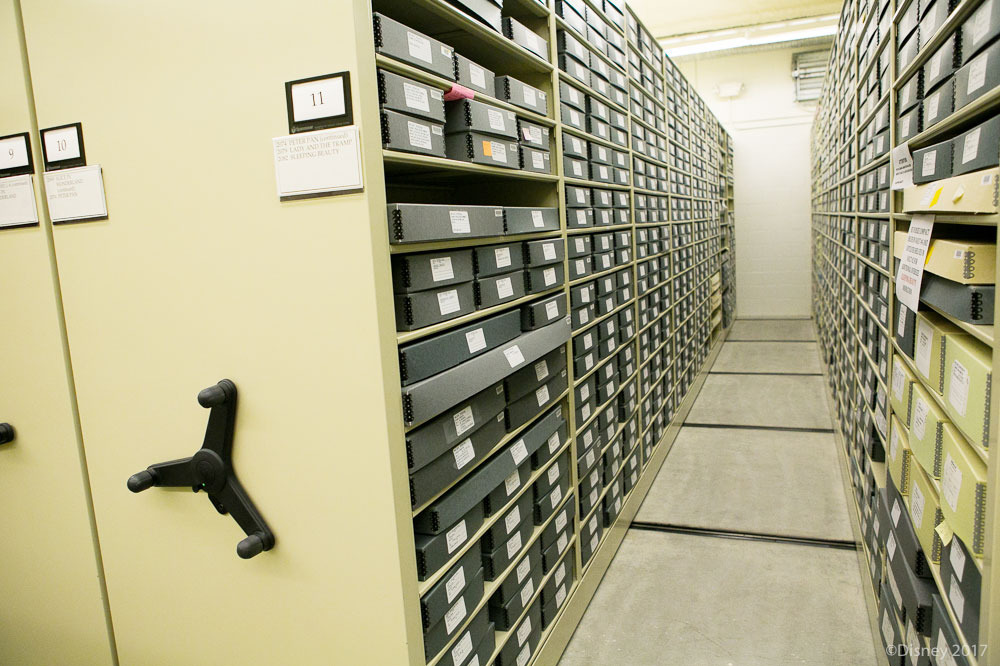 In an anonymous block of Glendale, California, sits a nondescript beige building free of signage or distinction. The only thing that would even alert you to the fact that this is the Disney equivalent of Fort Knox is the abundance of insane security procedures stationed around the building. Even for employees of the company, the building remains elusive and hard to gain entry to. (Full disclosure: I worked for the company for almost two years and never once got to go.) Unlike the main studio archives down the street, which are housed in an inviting glass building with ample signage — it’s this location that appears on-camera whenever the company makes documentaries about the Disney Vault — this place feels like a mirage.
See the full story here: http://www.vulture.com/2017/02/the-disney-vault-is-real-heres-what-its-like-inside.html?curator=MediaREDEF
Sony London Studio Head Forms New VR Studio ‘Dream Reality Interactive’
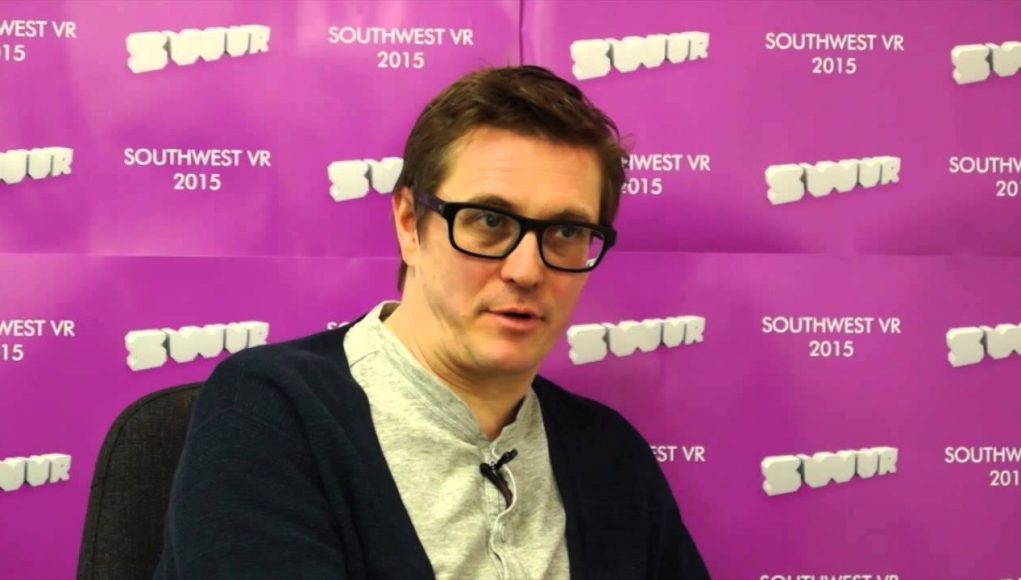 Dave Ranyard, who headed up Sony’s London Studio throughout PlayStation VR’s development, has announced the formation of a new VR-focused game Dream Reality Interactive.
Ranyard said of the move “With the availability of a range of VR headsets the question is no longer IF virtual reality will be successful, it is WHEN and most importantly, HOW? None of us really knows the answer but after a fantastic 17 years at Sony, now feels like the right time to explore the possibilities. Going independent allows me to work across all platforms and that’s very liberating.”
Dreamscape Immersive Wants to Bring Virtual Reality Multiplex to Los Angeles
 Dreamscape Immersive , a new Los Angeles-based startup for location-based virtual reality , wants to open a VR Multiplex in Los Angeles this coming September. The facility will use untehered VR headsets to allow consumers to move freely through a space and interact with real and virtual objects as well as with each other.
"Today, audiences can see movies in theaters in three formats: 2D, 3D, and IMAX. Dreamscape establishes the Fourth Platform - VR," said Dreamscape co-chairman Kevin Wall in a statement. "Now, audiences will have the ability to purchase a ticket, step inside of the story and experience it personally in a way never before imagined."
The company's CEO is Bruce Vaughn, who until last year was Chief Cretive Executive at Walt Disney Imagineering. Financial backers include Bold Capital as well as Warner Bros. 21st Century Fox, Metro-Goldwyn-Mayer ( MGM ), IMAX Corporation, Westfield Corporation, and Steven Spielberg. Advisors include star designer Yves Behar and legendary film music composer Hans Zimmer.
The first location for a Dreamscape Multiplex will be the Westfield's Century City Mall, which is scheduled to reopen later this summer.
Dreamscape Immeersive isn't the only company looking to cash in on location-based virtual reality entertainment, charging consumers for tickets instead of having them buy an expensive headset to use at home. Others include Imax, which recently opened its own VR center in Los Angeles , as well as The VOID, whose new CEO Cliff Plumer told Variety last week that he wants to open multiple new locations across the U.S. this year as well.
Dreamscape said Monday that Artanim co-founders CaeciliaCharbonnier and Sylvain Chagué will serve as co-CTOs of the company.
See the full story here: http://www.nasdaq.com/article/dreamscape-immersive-wants-to-bring-virtual-reality-multiplex-to-los-angeles-cm747216
6 ways augmented reality can help governments see more clearly
 1. E-governance: citizen engagement and e-services
2. Asset management and maintenance
3. Public safety and emergency services
4. Public health, wellness and sustainability
5. Transportation and urban mobility
6. Culture, heritage and tourism
See the full story here: https://www.weforum.org/agenda/2017/02/augmented-reality-smart-government