Virtual Reality Has Arrived in the Art World. Now What?
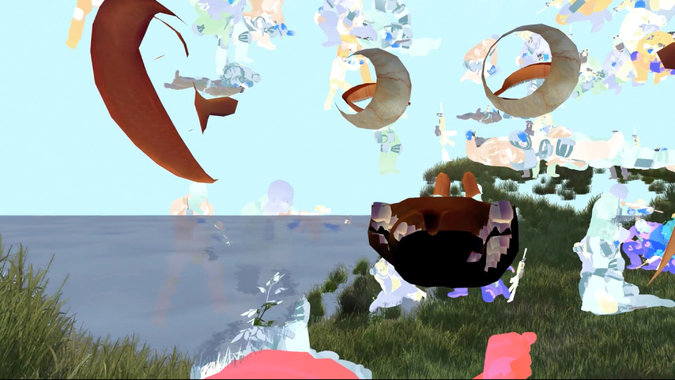 Now virtual reality art is pouring out of the museum and onto your phone. Last month, the New Museum, in partnership with its new media arm, Rhizome, opened an exhibition of six newly commissioned digital artworks, to be viewed wherever you like, on an Android or iOS device, at no cost. The works in this exhibition, “First Look: Artists’ VR,” all make use of animation — far cheaper than filmed virtual reality, which requires 360-degree camera rigs — and all employ a more or less surreal vocabulary: Objects float in space, spaces collapse into one another. Unlike video games, these artworks are not responsive to users; many of them are tentative explorations of the medium’s potential rather than full-fledged achievements. Some are frankly slight, though they’re still memory hogs; you’ll have to delete lots of photos to make space on your phone’s hard drive.
See the full story here: https://www.nytimes.com/2017/02/03/arts/design/virtual-reality-has-arrived-in-the-art-world-now-what.html?_r=0
This Robot Will Carry Your Stuff and Follow You Around
 “There are places where human-robot interaction makes sense.”
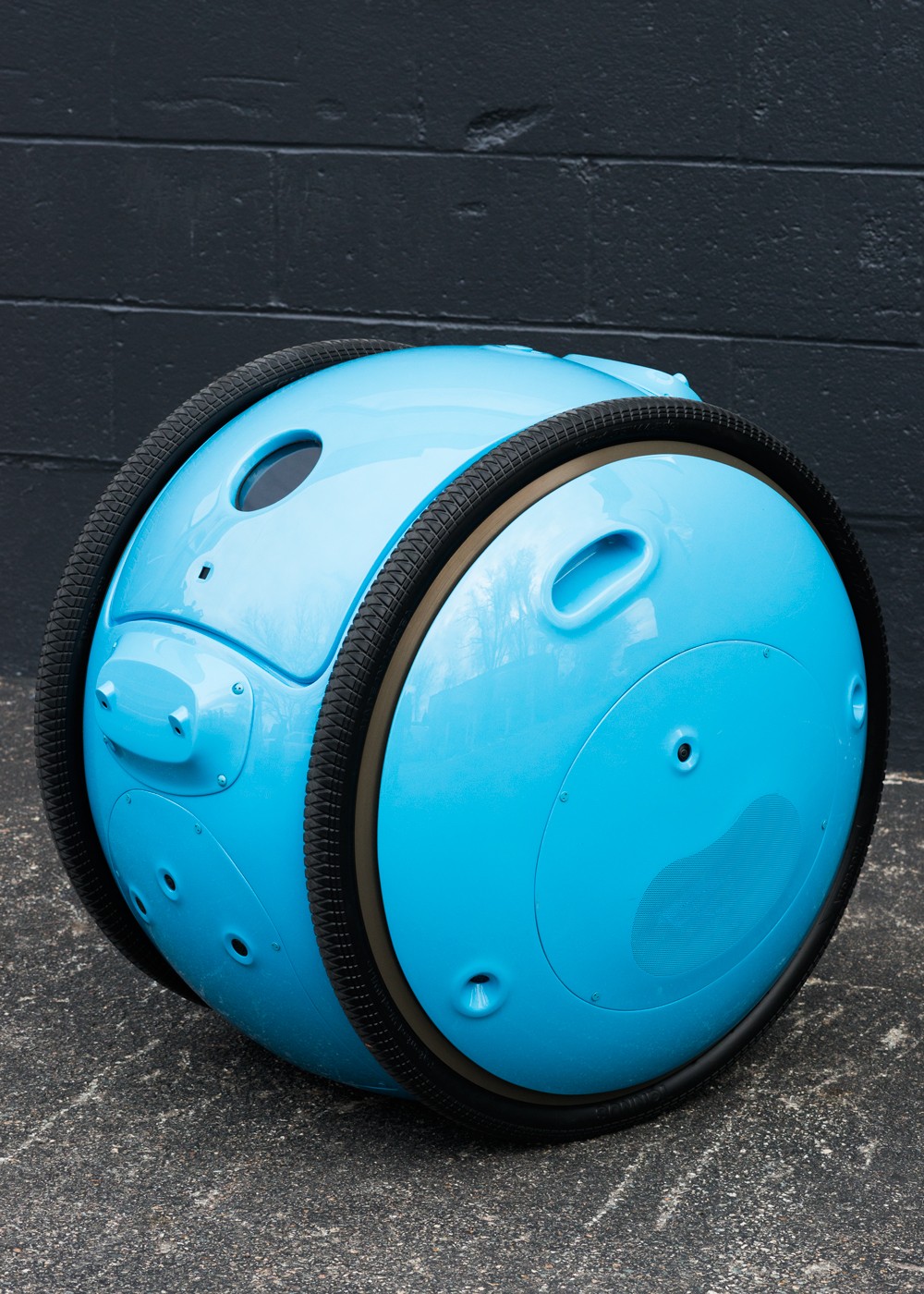
Gita balances itself as it travels, keeping its cargo level. The robot runs for eight hours, and can recharge in a regular outlet. It has three different modes: following someone, driving autonomously, and platooning with other Gita vehicles. The company has not announced a price.
Perhaps the most interesting thing about Gita is its sensor technology. Rather than more expensive sensors such as lidar, which bounce a laser off objects to build a 3-D picture, the robot maps its environment using video cameras. This involves comparing images captured at different points in time, and using the differences to infer the three-dimensional structure of a scene. Gita uses a stereoscopic camera for this and several other fisheye cameras to provide a 360-degree view around the robot. Schnapp says the video mapping system can be less reliable in poor lighting or bad weather, and they are considering adding a light to the robot to address this.
See the full story here; https://www.technologyreview.com/s/603558/this-robot-will-carry-your-stuff-and-follow-you-around/?set=60356
This neural network-based software will automatically color in your line art
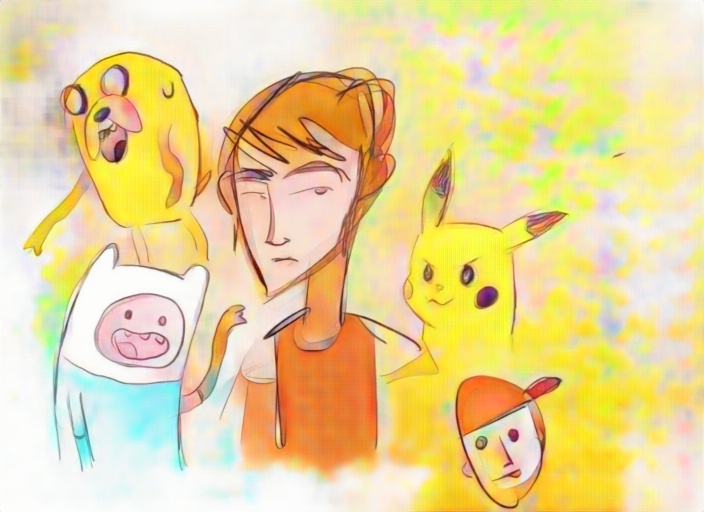 The so-called PaintsChainer project can take your basic line art, created using whatever drawing program you happen to use, in a number of ordinary file formats, including JPG, PNG, GIF or even TIFF, and then automatically apply color, in a dreamy watercolor/colored pencil style that’s a pretty popular style among digital artists.
It’s still amazing what this system can do on its own without any input, and even more so what it can do with just a few hints by way of guidance.
See the full story here: https://techcrunch.com/2017/02/02/this-neural-network-based-software-will-automatically-color-in-your-line-art/
Why augmented reality will be big in business first
 THE history of computers is one of increasing intimacy.
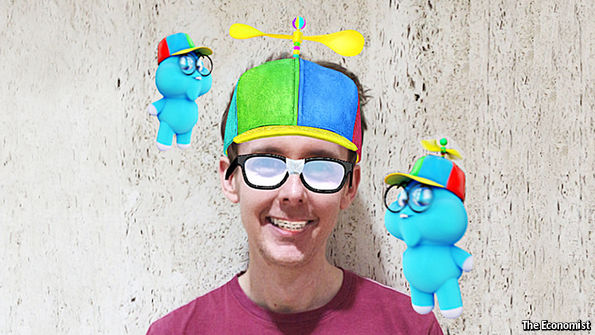
For the time being, the most popular AR apps are still found on smartphones. Pokémon Go, a smartphone game that briefly entranced people in 2016, used a primitive form of the technology. Another popular application is on Snapchat, a messaging app whose parent firm is gearing up for an IPO (see article): when teenagers overlay rabbit ears onto the faces of friends and family, they are using AR.
Designing a nifty piece of technology, though, is not the same as ushering in a revolution. Social factors often govern the path to mass adoption, and for AR, two problems stand out. One is aesthetic. The HoloLens is an impressive machine, but few would mistake it for a fashion item.
The other big problem surrounds consent. The history of one much-hyped set of smart glasses should give the industry pause. ... plenty found the glasses sinister, worrying that their users were covertly filming everyone they came into contact with. “Glassholes” became social pariahs.
See the full story here: http://www.economist.com/news/leaders/21716028-technology-coming-it-will-take-time-consumers-embrace-ar-why-augmented-reality
Ancient history meets modern technology: Lithomodos VR reconstructs the past
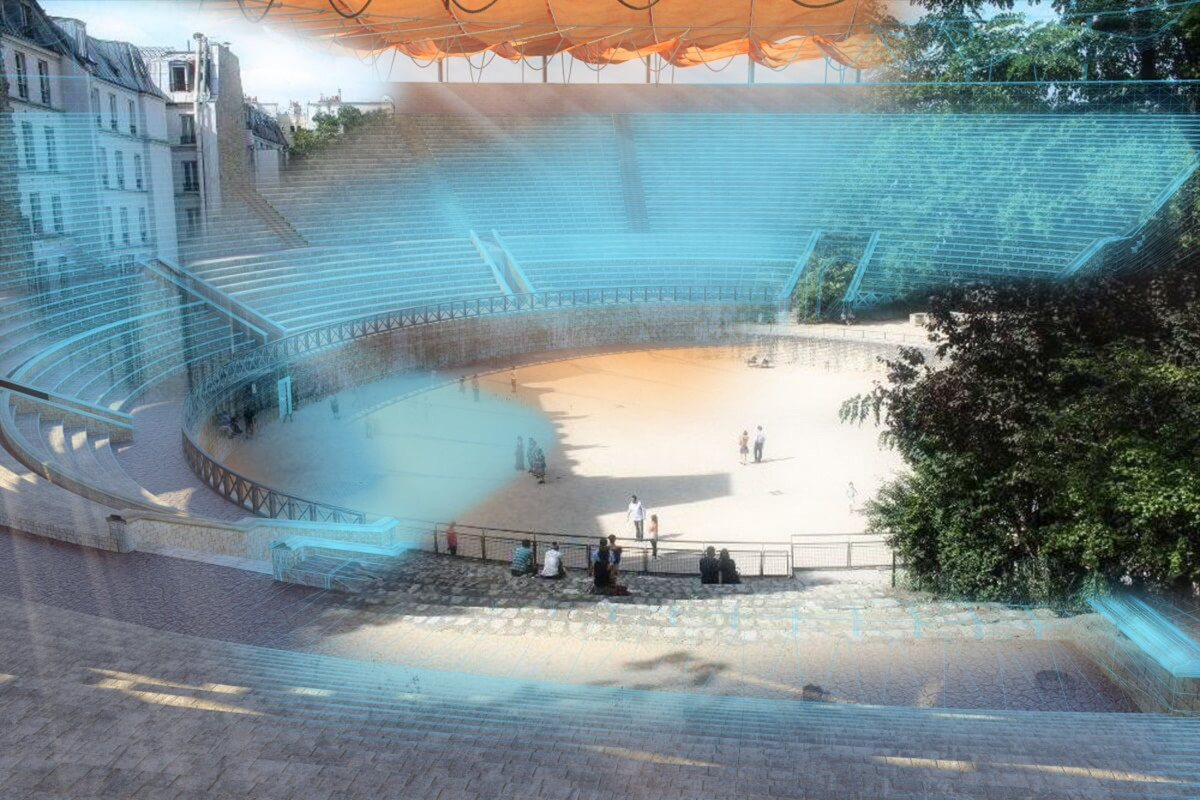 An Australian startup hopes to take advantage of this potential by resurrecting ancient sites in VR environments and, as reported by Venture Beat, a new $679,000 seed funding round will help the firm do so.
Backed by an interdisciplinary team, Lithodomos VR develops archaeologically accurate renditions of ancient sites, such as the ancient city of Jerusalem and Paris’ Arènes de Lutèce as it would have appeared 2,000 years ago. The software can be used for digital tourism, education, and entertainment for the history buffs among us.
Young has both a businessman’s stake and an academic interest in the project at hand — he recently submitted an archaeology PhD thesis to the University of Melbourne and suggested this focus on historical precision makes Lithodomos VR’s work so valuable.
See the full story here: http://www.digitaltrends.com/virtual-reality/lithodomos-vir/
AR Hits Manufacturing
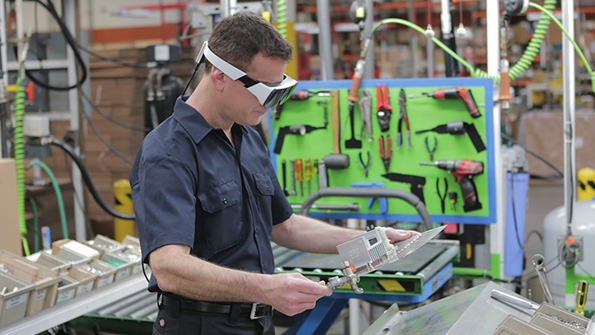 And Kammerait, the DAQRI VP, pitched an idea that could blend AR and workforce—along with the narrowing of the skills gap and the impending exodus of manufacturing workers—for the foreseeable future.
“The old way of solving problems was to have a 30-year expert who had essentially seen most permutations or most potential tasks or problems, and then to have somebody right next to them in training who can become the old hat. But what we’ve seen is with the bifurcation of the workforce, the person standing next to them, instead of having 25 years of experience typically has three or four. There’s this big knowledge gap. There are fewer people who have those 20-year apprenticeships and need access to information in a totally different way.
“The good news is that a lot of those people are digital natives, so they’re consuming content in a very different way. …
See the full story here: http://www.industryweek.com/emerging-technologies/real-life-just-fantasy-ar-hits-manufacturing?page=2
Snapchat’s next augmented reality feature to focus on places, not faces
 With lenses, Snapchat has already made augmented reality a large, core part of its platform. And now the popular app is looking to further expand into AR with environment-detection that'll augment your surroundings.
The new lenses, which don't have a name yet, will reportedly be able to "identify environmental elements" and let users "layer an object like a blimp in the sky."
Apple Is Innovating Towards An Augmented Reality Future
 While terming Apple Inc. AAPL 0.3% as a pioneer of the mobile-first world in we live today, Loup Ventures’ Gene Munster said in a report Q1 2017 results indicate “the company is driving towards a future where natural user interfaces (e.g., Augmented Reality) replace the smartphone as the dominant computing platform.”
Munster mentioned that Apple is innovating towards an Augmented Reality [AR] future and is focusing its efforts on the Services business, which will be “increasingly important” once smartphones cease to be the primary computing platform.
See the full story here: https://www.benzinga.com/analyst-ratings/analyst-color/17/02/8977787/apple-is-innovating-towards-an-augmented-reality-future
The Three Biggest Challenges Facing Augmented Reality, According to Disruptive Technologists
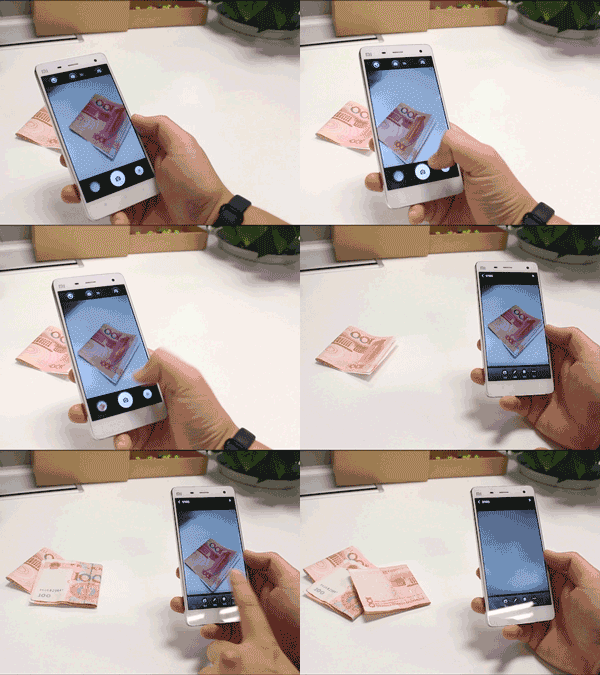 1 Depth Sensing phone cameras
2 Educating the public
3 Avoiding the Google Glass stigma
See the full story here: http://www.outerplaces.com/science/item/14230-augmented-reality-disruptive-technologists-microsoft-hololens
Two Artists Ask, is Virtual Reality Becoming “A Nightmare You Can’t Wake Up From?”
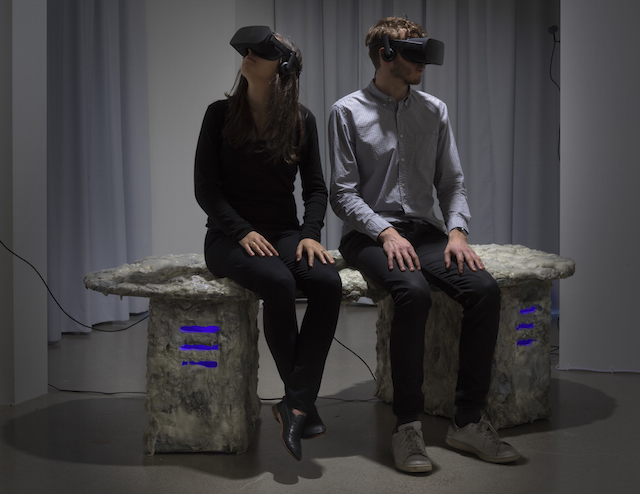
Before virtual reality and augmented reality were common, way back in the 50s and 60s, West Coast artist Stan VanDerBeek was breaking ground in immersive experiences with expanded cinema, video, and computer art. His Movie-Drome, with its multiple projections on the inside of a dome, took the idea of cinema and made it into a 360-degree experience of immersive audio and visuals. In a new exhibition at Sprüth Magers Los Angeles, VanDerBeek (who passed away in 1984) is paired with artist Jon Rafman, a modern maker of immersive, expanded realities.
Rafman finds shades of this nightmare in our everyday reality. Some might experience it as constant psychological suffering, while others might experience it as a political ideology from which there seems no escape.
Jon Rafman / Stan VanDerBeek runs through March 4 at Sprüth Magers Los Angeles.