 The company's board includes Highland partner Alex Taussig, Redpoint partner Tim Haley, Gotcher and board observer Stuart Murphy, director of entertainment at Sky. In addition, Jaunt has assembled a team of advisors including Academy Award-winnerJared Leto, director Mark Romanek, Fox futurist Ted Schilowitz and IMAX chairBrad Wechsler.
Jaunt is taking aim at supporting what it calls "cinematic VR," or narratives and content such as music videos (compared with games). “We see ourselves as an engineering company,” Christensen said. “We’ll provide the technology and services, and rely on the creative community to execute the production. Once people have access to the [VR goggles], there’s going to be a tremendous need for content. We want to establish partnerships with the creative community.”
The iconic sound company has been working with partners to develop the consumer electronics and the content to bring Atmos — a theater system that uses "objects" rather than channels to precisely place sound around a room — to home entertainment.
Separately, Dolby has been working on a new format, Dolby Vision, to improve the images that can be viewed in the home with a wider dynamic range, meaning the range between the brightest and darkest colors that can be reproduced on a display.
See the full story here: http://www.hollywoodreporter.com/behind-screen/dolby-readying-atmos-home-come-724563
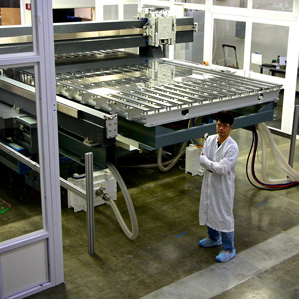 Kateeva has developed an inkjet printing process that can apply a protective coating to OLEDs far faster than previous methods. This promises to cut manufacturing costs in half, and make it possible to integrate the process into existing production lines more easily.
Canatu, based in Helsinki, Finland, makes thin films covered with a network of carbon nanobuds (a nanotube with a sphere of carbon atoms attached to it) for flexible touch displays. The nanobuds have better conductivity than conventional nanotubes, and can be both stretched and curved around a radius as thin as a millimeter.
Raupp says Samsung and other phone makers are taking a conservative approach, starting with curved displays that can’t be bent to make sure the flexible screens inside them work well. He says the first truly flexible displays will probably be in designs that control how much they can be folded, to prevent damage to the display.
See the full story here: http://www.technologyreview.com/news/529991/bendable-displays-are-finally-headed-to-market/?utm_campaign=newsletters&utm_source=newsletter-daily-all&utm_medium=email&utm_content=20140820
 Theaters across major cities in China have begun experimenting with "bullet screens," allowing audience members to interact with films by sending text messages that are displayed directly on the big screen, according to a recent report in China Youth Daily. Great.
If listening to people close business deals on their cell phones mid-movie isn't enough, patrons to some cinemas across China will soon have the privilege of hearing (seeing, really) other audience members' every thought on the film in front of them thanks to the bullet screens. The system is set to be institutionalized during various movies for young people who can't seem to fathom the thought of staying off their phones for two hours,...
See the full story here:http://shanghaiist.com/2014/08/20/bullet-screens-chinese-theaters.php
and here: http://www.hollywoodreporter.com/news/chinese-theaters-test-system-onscreen-726204
The study focusing on device penetration and consumption habits found that throughout the country daily live-viewing still heavily out ranks time-shifted viewing for adults 25-54. Pittsburgh watches the most live TV daily, clocking in at 5 hours and 19 minutes, while San Francisco watches the least: 3 hours and 27 minutes. Cities average between 27 and 49 minutes of time-shifted viewing daily, and 3 minutes to 15 minutes of OTT viewing.
See the full story here: http://www.broadcastingcable.com/news/currency/nielsen-report-finds-live-viewing-alive-and-well/133194
The robots are simple, free of many of the sensors and state-of-the-art hardware typically found on other bots. While that means that the Kilobots are somewhat limited in function — they have trouble moving in a straight line, for example — it also means that each bot is inexpensive and easy to build, said Michael Rubenstein, a postdoctoral fellow at Harvard University and lead researcher for the Kilobot project.
But Rubenstein and his colleagues have big plans for their tiny robots. One day, they'd like the bots to function as "programmable matter," which is based on a concept similar to 3D printing — only without the printer, he said.
See the full story here: http://www.csmonitor.com/Science/2014/0815/Scientists-build-army-of-robots-capable-of-swarming-into-3D-formations
As early as Sept. 3, at the product launch for its new Note line of smartphones, Samsung is reportedly set to announce a virtual reality headset which has been developed under the codename Project Moonlight.
A report in The Verge states the headset is made up of a focus dial which could connect to a user’s smartphone via USB and a handheld controller that could possible connect to other devices such as gaming consoles or TVs.
Oculus and Samsung are not alone in their pursuit of the virtual reality space. Google Cardboard is a DIY approach to VR that allows consumers to create their own headsets using cardboard and their smartphone.
In March, Sony announced Project Morpheus, a VR headset whose intention was to extend the power of its Playstation gaming ecosystem. The Japanese electronics company has become sending our development kits to developers but has yet to announced pricing or availability of the headset.
See the full story here: http://www.dailydot.com/technology/samsung-virtual-reality-oculus-rift/
Director Ron Howard and producer Brian Grazer’s newly launched digital studio, New Form, will team up with students from the University of Southern California’s School of Cinematic Arts to develop digital content. Two-person teams of students will participate in the year-long program to develop scripted series for the Web and pitch their projects. At the end of the first semester, three of the pitches will be selected for production to take place during the second semester.
 New Form Digital, the multiplatform studio from Discovery, will contribute to the students’ exercises and guest lectures at USC. Jack Epps Jr., the chair of the cinema school’s screenwriting program, and Michael Fink, the chair of the school’s TV and film production program, will direct the new program.
See the full story here: http://www.etcentric.org/new-form-digital-studio-to-launch-program-at-usc-this-fall/#more-83192
He envisioned a service that would let vloggers create video “episodes” together, which would be like independently produced reality TV shows.
...with Groopie, friends can shoot the episode at the same time, then merge their videos together with a built-in editing tool where you can select which camera angle and audio source you want to use for each shot in order to create one continuous video.
Groopie users each get their own profile which lets them feature their shows, each of which can have an unlimited number of episodes. This setup lets viewers follow the individual shows they like, as opposed to a vlogger’s whole channel. Shows can be shared to Facebook and Twitter, but not published to YouTube, which is by design for this startup itching to become the “YouTube of mobile.”
See the full story here: http://techcrunch.com/2014/08/08/vine-competitor-groopie-lets-vloggers-create-tv-style-shows-together/
... recent reports suggest that Facebook is now going after Hollywood studios and directors, asking them to create “Oculus Experiences” specifically for its virtual reality device, the Oculus Rift.
The current talk is of developing companion shorts for feature-length films (the way Guillermo del Toro did with “Pacific Rim: Jaeger Pilot”), and then of creating other types of shorter-form entertainment content specifically for the Oculus Rift.
But take a look at the broader tech zeitgeist. Hollywood has already shifted our behaviors, convincing us to a pay a premium ticket price for a 3D film and spend the better part of two hours wearing cheap, plastic 3D glasses. The consumer technology industry has already conditioned us to buy gaming devices for entertainment experiences at home. And Netflix and iTunes have conditioned us to buy movies on-demand. From this perspective, the Oculus Rift experience fits in perfectly with the current technological zeitgeist.
See the full story here: http://www.washingtonpost.com/blogs/innovations/wp/2014/08/12/move-over-3d-movies-here-comes-virtual-reality?curator=MediaREDEF
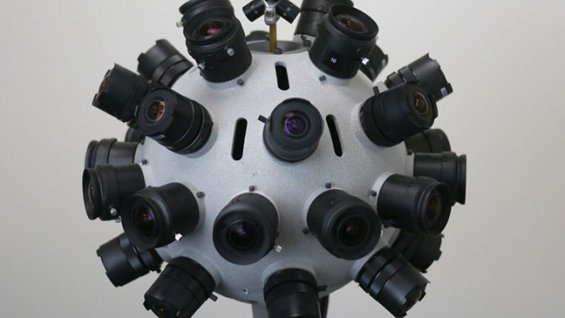 The company's board includes Highland partner Alex Taussig, Redpoint partner Tim Haley, Gotcher and board observer Stuart Murphy, director of entertainment at Sky. In addition, Jaunt has assembled a team of advisors including Academy Award-winnerJared Leto, director Mark Romanek, Fox futurist Ted Schilowitz and IMAX chairBrad Wechsler.
 Theaters across major cities in China have begun experimenting with "bullet screens," allowing audience members to interact with films by sending text messages that are displayed directly on the big screen, according to a recent report in China Youth Daily. Great.