Sam Altman Wants to Scan Your Eyeball in Exchange for Cryptocurrency
Among the many parts of its plan, Worldcoin has designed an orb-shaped device that would scan a person’s iris to construct a unique personal identifier.
The company is backed by Andreessen Horowitz, the venture capital arm of Coinbase Global Inc.,LinkedIn founder Reid Hoffman and Day One Ventures. It recently raised about $25 million from investors.
The intention was to use cryptocurrency to spread money around equitably, inspired by the trendy economic theory known as universal basic income.
The head of the venture is Alexander Blania, 27, a former student of theoretical physics at the California Institute of Technology and the Max Planck Society. He co-founded Worldcoin with Altman and Max Novendstern, who previously worked at Ray Dalio’s investment firm Bridgewater Associates LP and at money-transfer startup Wave.
With Worldcoin, the startup promises “a new global digital currency that will launch by giving a share to every single person on earth,” according to an online job description. The company aims to help economies transition to cryptocurrencies “through a novel approach: a dedicated hardware device ensuring both humanness and uniqueness of everybody signing up, while maintaining their privacy and the overall transparency of a permissionless blockchain.”
See the full story here: https://www.bloomberg.com/news/articles/2021-06-29/sam-altman-s-worldcoin-will-give-free-crypto-for-eyeball-scans

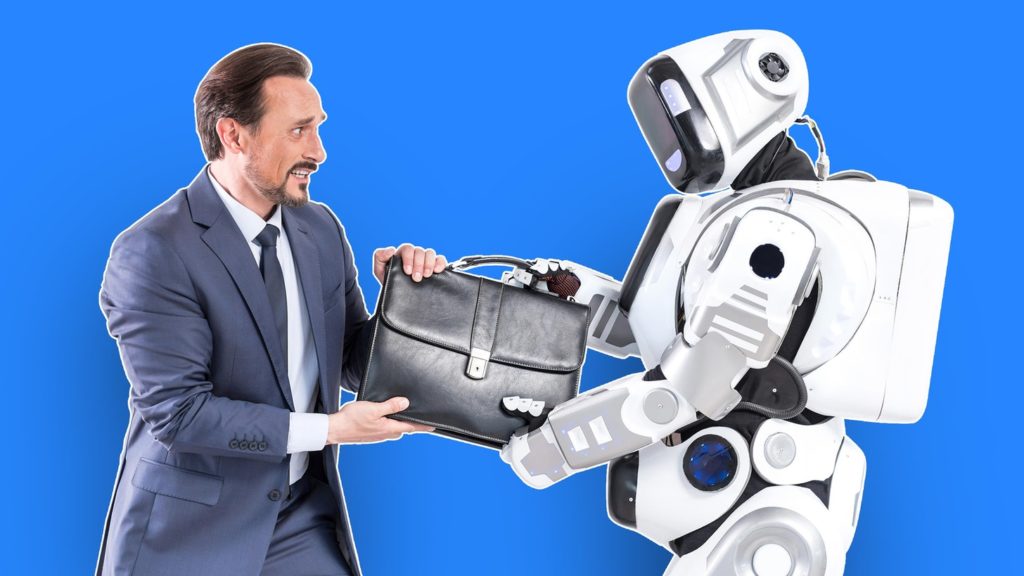
Can AI Negotiate? Walmart Is Betting on It
Walmart and Wesco International are among the first major companies to use this so-called Negotiation-as-a-Service (NaaS) product from Pactum. Logistics giant Maersk has also recently begun developing a pilot with the U.S.-Estonian startup.
"The system learns how people negotiate. It tries different strategies and tactics and gets better with each subsequent negotiation."
How it works: Pactum's AI is capable of reading contracts, integrating the priorities and instructions of both parties, negotiating on behalf of clients — and learning from the process.
Cold water: Pactum isn't a person, so it's likely there will be cases in which its natural language processing doesn't understand a term, or the more human aspects of conversation like tone and subtext.
There is also the risk that vendors will feel devalued or dehumanized in the negotiation process. However, Rand says that vendors that have used the system so far report feeling more heard in negotiations because the chatbot interface was more than they were offered by these companies previously.
Peabody Awards Adds Immersive Media Category For VR & AR
Established roughly 80 years ago by the National Association of Broadcasters, the Peabody Awards was originally created in order to celebrate the very best in radio broadcasting. Since then, the program has expanded to include additional categories such as news, entertainment, documentaries, children’s programming, education, and public service.
This week the prestigious organization expanded its awards categories even further to honor achievements in digital and interactive storytelling. Composed of ten newly appointed jurors—industry experts from across interactive, immersive, and new media—the Peabody Interactive Board will honor a wide range of digital formats. This includes AR, Gaming, Interactive Documentary, Interactive Journalism, Social Video, Transmedia Storytelling, and VR.
See the full story here: https://www.virtualrealitypulse.com/edition/daily-apple-google-2021-06-30?open-article-id=16440179&article-title=peabody-awards-adds-immersive-media-category-for-vr---ar&blog-domain=vrscout.com&blog-title=vrscout
TikTok is rolling out longer videos to everyone
TikToks are about to get longer. The app is now rolling out the ability for everyone to publish videos up to three minutes in length, three times the existing one-minute limit.
TikTok didn’t say how longer clips might affect its much-loved recommendation algorithm. But it’s worth considering the possible parallels to YouTube: as the platform grew, YouTube biased its algorithm toward viewer retention, which meant longer and longer videos — it’s why just about everything on YouTube is over 10 minutes long now. TikTok may not take the same approach, but if it turns out that longer videos = longer TikTok usage, we might see less of the app’s short, snappy, and strange viral clips.
See the full story here: https://www.theverge.com/2021/7/1/22558856/tiktok-videos-three-minutes-length

What Neuralink and other BCIs can and can’t do
...the prospect of using BCIs to not only heal injuries back to full functionality but to actively enhance human performance and cognition leads — as nearly all cutting edge technologies do — to a morass of ethical issues. Who gets access to the technology and when? Will having computers in our heads exacerbate existing societal inequality? How do we keep these machines secure from hacking attempts, and build public trust in a radically new form of biotechnology such as this?
See the full story here: https://www.engadget.com/what-neuralink-and-other-bc-is-can-and-cant-do-140014162.htmlhttps://www.engadget.com/what-neuralink-and-other-bc-is-can-and-cant-do-140014162.html

Stanford VR experiment library
Explore highlights of nearly two decades of research from Stanford's Virtual Human Interaction Lab and discover how we can use this medium to enhance our everyday lives.